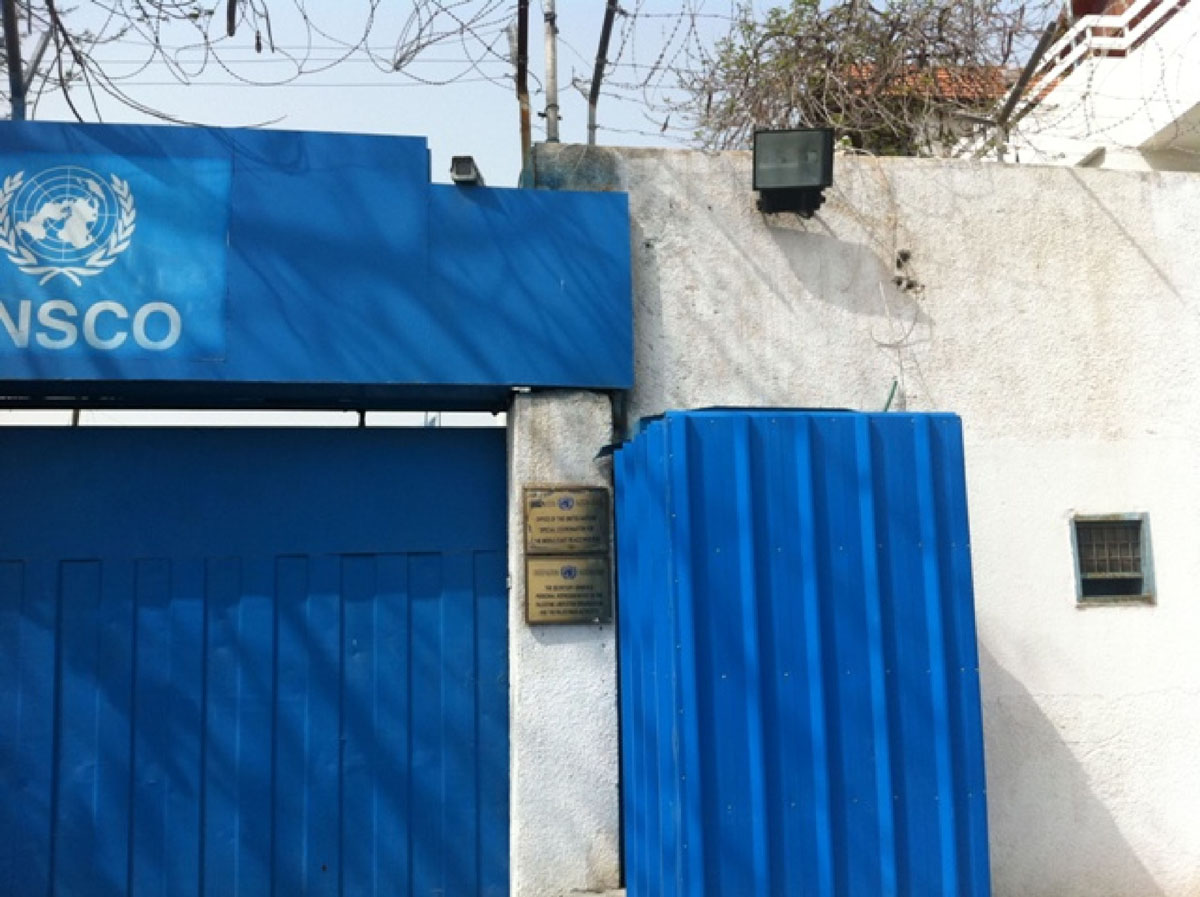
Behind high walls and narrow doors: another ugly face of international institutions in the Gaza Strip
By Omar Shaban. The division and the Israeli blockade offered golden opportunities for some international organisations and their staff to profit enormously from the international and Arab funding pumped in to counter the blockade's effects on Gaza.
- Author
- Omar Shaban Ismail
- Date
- 2013-05-08
By: Omar Shaban
There is no doubt that the Palestinian division and the Israeli blockade of the Gaza Strip have presented golden opportunities to some international institutions and their employees to benefit enormously from the international and Arab funding that was pumped in to confront the effects of the Israeli blockade on the Gaza Strip. Many international institutions that were on the verge of bankruptcy opened offices in the Gaza Strip in order to benefit from the share of the international and Islamic funding allocated to the Gaza Strip. These institutions do not benefit only in funding their offices in the Palestinian territories, but allocate a proportion of no less than 30% to support their head offices in their own countries. Some international institutions classify the Gaza Strip area as a dangerous work area, despite reality's contradicting this claim. The fundamental danger that makes the Gaza Strip a danger area is the expected Israeli incursions and the assassination operations the Israeli forces carry out from time to time in response to the firing of rockets from the Gaza Strip — which has declined greatly in the past months.
The employees of the international institutions working in the Gaza Strip receive huge allocations in return for what is called a “danger allowance”; therefore it is in the interest of some international institutions and some of their employees, especially those who work in the field of security, that the security fears be inflated in a way that enables them to market justifications for their obtaining these allocations and to guarantee their jobs for the longest possible period. Inflating the security fears pours into the interest of some institutions and their employees and causes severe harm to the Palestinians of the Gaza Strip, and draws a bleak picture of life in the Strip, which reality denies — for the number of incidents that occur in the Gaza Strip is very much less than their counterpart occurring in the most secure of the world's capitals.
We understand very well the security fears of the international institutions, but that the matter should reach the point where some international institutions behave as though they were independent entities inside the Gaza Strip, and in a supercilious and arrogant manner — this contradicts the simplest foundations of the humanitarian work these institutions propose in their programmes, and violates the principles of hospitality and respect the Palestinians of the Gaza Strip harbour toward these institutions.
The UNESCO organisation in Gaza set up a small gate whose width does not exceed 60 centimetres, inside which is a revolving column that allows the entry of one person only. This gate compels anyone who wishes to enter UNESCO's paradise to surrender himself to this gate so that it revolves with him and spits him out on the other side after making certain of his security purity. It is a gate exactly similar to the revolving gates the Israeli government uses at its crossings with the Palestinian territories. It appears that UNESCO, one of the United Nations organisations, has decided to transfer the Israeli occupation's experience in organising the movement of Palestinians at the crossings. But the truth be told, the gates of the Israeli occupation, with all their harshness, are more merciful and compassionate than the UNESCO organisation, since the gates used at the Israeli crossings are more spacious and wider than UNESCO's gate.
Several years ago a car belonging to the Red Cross in the Gaza Strip passed over a land mine that had been planted on the Beit Hanoun road — an incident Palestinian society denounced sharply. Yet the director of the Red Cross at that time decided to confiscate half the area of the street extending in front of the Red Cross's former headquarters on al-Jalaa Street in Gaza, preventing cars from stopping in front of the headquarters. The behaviour of the Red Cross director at the time did not differ from the conduct of the Israeli settlers, who confiscate dozens of agricultural dunams in the event that one of them is exposed to stone-throwing. This is what I said to the former Red Cross director in an attempt to denounce this conduct, which contradicts entirely the philosophy of the Red Cross's work — the institution founded by a Swiss doctor to work only in the areas of conflict.
How can an institution belonging to the United Nations organisation, which was founded in the forties of the last century in order to protect world peace and to share the concerns of the peoples whose affairs are overpowered, carry out this disgraceful conduct — conduct exceeding in its harshness the apartheid system in South Africa? And how can these UN institutions propose a position rejecting the Israeli measures at the crossings while they practise the same conduct and to a more hideous degree? What understanding governs the UN employee whose mind hatched the idea of installing a gate of such hideousness at UNESCO's headquarters! How did this employee allow himself to build this accursed gate between himself and the citizens of the Gaza Strip, while his employment contract provides for serving them and not humiliating them! Such an employee, who enjoys the generosity and respect of the people of the Gaza Strip, ought to have met the treatment with its like!
It appears that many of the United Nations employees in the Palestinian territories are in pressing need of “re-education” and of reading the alphabet of humanitarian and UN work in the areas of conflicts. They must know that the best kind of protection is the appreciation of the society with which they work, and not through separating from it and practising haughty and supercilious behaviours that touch its dignity. Is the Israeli blockade not enough for the Gaza Strip, that a UN institution should come to practise the same conduct?
It appears that Mr Ban Ki-moon, secretary-general of the United Nations organisation — whom I described in a previous article as a man with no taste and no smell, whom you do not feel if he is present and do not miss if he is absent — is striving with his employees to transform the United Nations offices in the world into military barracks, after he succeeded remarkably in transforming the United Nations organisation from an institution working to prevent conflicts and achieve justice in the world into a large contracting company.
The civil-society organisations, the government, and the people in the Gaza Strip must express strongly their severe rejection of this conduct, hostile not only to Palestinian society but to the principles of those institutions themselves.