Trump's election: is the idea of a Palestinian state truly finished? / Dr. Fadi Elhusseini
By Dr. Fadi Elhusseini (the views are the author's own). «Trump's election: is the idea of a Palestinian state truly finished?» — a shock not only to the world's decision-making centres but to every observer who had assumed a Clinton victory.
- Author
- The editorial team
- Date
- 2016-11-20
The opinions contained in the article express only the opinion of their author and do not necessarily express the opinion of Pal-Think for Strategic Studies
The election of Trump: has the idea of the Palestinian state truly ended?
By: Dr Fadi al-Husseini
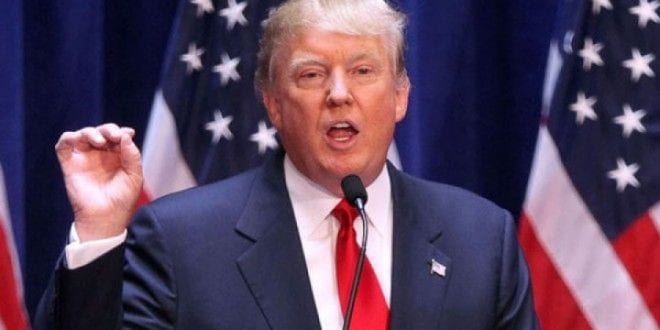 The election of Trump as president of the United States of America formed a shock not only for the decision-making centres in the whole world, but for all the observers who saw in the election of Hillary Clinton a matter decided and not open to discussion. The surprise happened, and it was followed at once by the president-elect's declarations of his readiness to meet the Israeli prime minister; then followed Israeli declarations to the effect that the coming era is the golden era of American–Israeli relations, and that the chances of establishing a Palestinian state have become non-existent.
In the midst of these developments, the observers began presenting their analyses of what the affairs of the peace process and the Palestinian cause in its entirety could come to — and indeed most of these analyses were extremely pessimistic. Before beginning to present a new view, it is necessary here to highlight Trump's most important declarations during his electoral campaign or even after his victory, and the positions that clearly influenced the various analyses and opinions.
Trump's fiery declarations were one of the most important pillars on which the observers built their analyses — especially what he said during his electoral campaign before AIPAC, where his clear words dissipated any chance of attempting to understand that Trump might be neutral, or at the least similar to the previous American president, who was not tied by good relations to the Israeli prime minister.
Trump pledged to move the American embassy to the city of Jerusalem, in a clear indication that he sees the city of Jerusalem as the capital of the State of Israel. Trump said also that he would not allow the establishment of a “terrorist” Palestinian state, and that he would not accept any dictates upon the bilateral negotiations between the Palestinians and the Israelis — in a clear indication that the Palestinians' talk of the necessity of setting a timetable and stopping settlement before any negotiations is a matter unacceptable. And so that matters be clear to whoever believed that Trump did not intend the Palestinians by these declarations, Trump followed this position with declarations only two days after his election as president that he does not see in settlement an obstacle in the face of peace or the two-state solution — rather he saw in settlement a legitimate right of Israel's. Trump spoke also during his electoral campaign of being proud that his daughter married a Jew and that she would deliver a Jewish child — a matter that leaves no place for doubt that Trump will be one of the supporters, indeed the callers, for the Jewishness of the State of Israel.
The pillars of any electoral campaign are usually candidates for assuming principal posts in the new administration; as for the pillars of Trump's campaign, most of them are flagrant supporters of Israel and specifically of Netanyahu's extremist orientations — such as John Bolton and Rudy Giuliani, the candidates for the post of secretary of state, and Newt Gingrich, and Michael Pence: names whose measure of support for Israel and hostility to the Palestinians is not difficult to know. And contrary to how things stood during Obama's rule, Trump's election came as representative of the Republican Party, which enjoys a majority in the Congress and the Senate — a matter that means his policy will find support from both legislative institutions.
The Israelis themselves did not believe what happened in the United States of America, and the declarations of Netanyahu's office and the Israeli education minister came plain: that Trump will be a loyal friend to Israel, and that there is no room, after Trump's election, for the establishment of a Palestinian state. In the same context, Israeli observers considered that Donald Trump's victory would bury the two-state solution, and the solution of a Palestinian state alongside the State of Israel became a matter ruled out — and that Trump's victory exempts Israel at once from thinking of the two-state solution.
Although all these declarations and indicators go to an extremely pessimistic conclusion, I consider it early to judge that the consequences of Trump's election will turn absolutely against the direction of the Palestinian cause's interest, for several reasons.
Concerning the Israeli declarations, I consider there is great exaggeration in them, and that they are part of a psychological war in which Israel presses on the newly elected American president to carry out his electoral promises, and on the Palestinian president to weaken the front of moderation that embarrassed Israel internationally — and I would not have expected the Israeli declarations to be completely different had Hillary Clinton won, she being the closest to Israel in the Democrats' camp.
As for the chances of establishing a Palestinian state, it is a matter not tied to the name of the American president; rather it is built on deeper givens: the first of them the Palestinian element, with its steadfastness, its unity, and its capacity to engage with the international changes; the second the Arab and Islamic element, which still represents a cornerstone in any international decisions related to the Palestinian affair; and the third the international decision, which has not until now seen that the moment of the establishment of a Palestinian state and the ending of instability in this spot has come. It is true that the role of the United States of America, the most influential, cannot be denied — yet American policy as we have known it does not much recognise names; rather there are broad lines of policy, and the margin of distance from or closeness to them (by a short distance) is what makes the difference upon the election of a Republican or a Democratic president.
Trump's party enjoys the majority of the Congress and the Senate, yet two truths must not be overlooked: the first is that Trump himself was never of the political elite in the Republican Party — indeed many of his declarations and positions stirred the displeasure and vexation of many Republicans until the final moments of the elections; and the second is the importance of the role of the deep state governing the policies of the United States of America over the years.
From here, the most important challenge lies hostage to Trump's capacity to manoeuvre and to distance himself from, or rebel against, the broad lines drawn in advance for American policy. If he manages — whereupon it would represent a precedent in a state of institutions like the United States of America — the effect will be plain, not only toward the Palestinian cause but toward the whole Arab region. In truth, a change like this would not necessarily be catastrophic for the Palestinian cause: distance from the broad, traditional lines of American foreign policy would then distance it from traditional allies and friends — and perhaps then Palestine and its cause would have gained friends who were never in the reckoning.
And at this bend comes the question: can Trump carry out his electoral promise of moving the American embassy to Jerusalem? If he actually does so, he will in practice have begun to distance himself from these lines we mentioned above. The preliminary indicators say that Trump will not stray far from the givens in the book of American foreign policy: his latest declarations that he will work to reach a peace agreement between Israel and the Palestinians confirm that he has indeed begun reading the White House's booklet for new presidents.
The time may be early for issuing judgements and estimates; indeed all that can be done now is not to bet on his election positively nor to expect the worst, but to watch and analyse the indicators that may lead to a clearer view and a more effective strategy of dealing. And all these criteria remain, for the Palestinians, external elements: there is no value in betting on elections in Washington or Moscow or even Tel Aviv without beginning to mend the internal division and strengthen the building of the house from within — in education, health, culture, and economy — as these givens remain the foundation of survival and steadfastness and of neutralising the effects of an occupation whose disappearance has long been awaited.