The Swiss paper: a roadmap for resolving one of the division's gravest consequences and achieving national unity
By Omar Shaban. «The Swiss Paper» is the road map proposed to resolve one of the division's thorniest legacies — the employees file created by the 2007 split — prepared by Pal-Think with Swisspeace.
- Author
- Omar Shaban Ismail
- Date
- 2021-04-21
Omar Shaban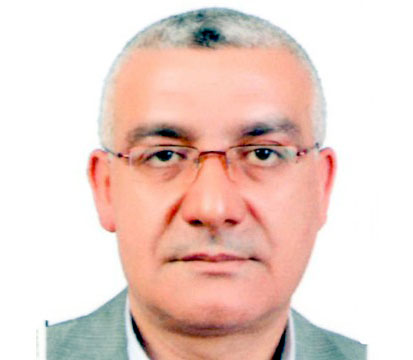
Pal-Think for Strategic Studies
The term “the Swiss Paper” was given to the road map proposed to solve one of the most important repercussions of the division, and one of the problems that has always been a point of dispute between Hamas and the Palestinian National Authority: the employees file, which resulted from the internal division of 2007. It was prepared by Pal-Think for Strategic Studies, the Swiss organisation Swisspeace, and the United Nations Development Programme, with facilitation, backing, and support from the Swiss government, represented by its ambassador to the Palestinian Authority in Ramallah.
The road map — “the Swiss Paper” — was worked on quietly between Gaza and Ramallah over the years from 2012, continuing beyond the formation of the national unity government in 2014. The “Swiss Paper” road map is the only product that treats this thorny file in a professional, integrated manner. It was referred to, and its contents drawn on, in the reconciliation rounds between Hamas and the Palestinian Authority — most recently the October 2017 agreement in Cairo. With renewed talk of the legislative elections set for 22 May, and the deferral of the employees file to the Palestinian government due to be formed after the elections, it may be useful to place the “Swiss Paper” road map on the coming government's agenda for discussion.
Describing the problem:
With Hamas's takeover of the reins of government in the Gaza Strip in June 2007, the Palestinian Authority in Ramallah issued a decree dated 27 August 2007 containing instructions to its employees in the Gaza Strip not to report for duty under the Hamas government, which President Abu Mazen had declared dismissed. The Palestinian government headed at the time by Dr Salam Fayyad, together with the teachers' union and other syndicates, called on public-sector employees in the Gaza Strip to stay at home while their salaries continued to be paid by the Palestinian government in Ramallah. This decision put Palestinian public-sector employees in an unenviable position: some complied with the decision and stayed home; a second group did not comply, for various reasons personal and professional, which drove the government in Ramallah to cut their salaries for non-compliance; a third group managed to obtain permission from the government in Ramallah to continue working without their salary being cut. The number of civil public-sector employees at the time was estimated at 35,000, most in the education and health sectors. This decision, coming just before the start of the school year in September 2007, produced severe disruption in all walks of life in the Strip — especially in the vital sectors: health, education, social services, family affairs, and others. The dismissed Gaza government — as it was called at the time — realised it faced a great challenge in preventing the collapse of basic services, particularly as it was not prepared for such a situation. The dismissed Gaza government therefore hired thousands of new employees, especially in the health and education sectors, to fill the void — and it was noticed that many of those hired hastily were not qualified to the required degree. Some Palestinian Authority employees continued working with the Hamas government with the same salary and grade guaranteed (their salaries were cut for non-compliance with the government's decision), while some Authority public-sector employees managed to return to work with permission from the government in Ramallah. By the end of 2013 the situation in the Gaza Strip's public sector comprised the following groups:
- New employees working with the Gaza government and drawing their salaries from it.
- Palestinian Authority employees whose salaries were cut for non-compliance, working with the Gaza government and drawing their salaries from it.
- Palestinian Authority employees (in the education and health sectors, about 10,000 employees) who continued working with the Gaza government while drawing their salaries from the government in Ramallah.
- Palestinian Authority employees who complied with the decision to stay at home and draw their salaries from the Palestinian government in Ramallah.
These statistics changed with time, as thousands of the employees who had boycotted work with the dismissed Gaza government began gradually returning to work. This came with the emergence of the need for them (health, education, social services, and civil defence), especially in the times of the three wars on the Gaza Strip. In the wake of the 2008–2009 war President Mahmoud Abbas asked all employees to return to their work, yet the return was partial, leaving the problem unresolved. On another front, because of the sharp decline in the Gaza government's financial revenues beginning in September 2013, the Gaza government became unable to pay its employees' salaries in full — a Gaza-government employee came to receive 40–50% of his salary, irregularly.
The road map — the Swiss efforts:–
- The philosophy of the “Swiss Paper” road map rested on an important, fundamental principle: the division's repercussions are many and interlocking, and it is difficult to treat them all at once — it became necessary and logical to follow gradualism and phasing in the treatment. It was likewise essential to work on building trust between the two sides of the division by achieving a breakthrough in one of the most problematic files. The choice of the employees file was very apt, because it touches the concerns and causes of thousands of employees and their families — which would later create broad support for a comprehensive reconciliation process.
- Switzerland is a neutral state and not a member of the European Union; it is therefore free of the Quartet's conditions, which prevent Western states from engaging with the Hamas government. This position allowed Switzerland to engage freely with all parties. Switzerland has accumulated distinguished experience in achieving reconciliations in many conflict zones — Colombia, Indonesia, Sudan, Chad, Burma, and other conflict areas of the world. The Swiss government obtained the agreement of the Gaza government and of President Abu Mazen's office to Swiss mediation in this file, with full cooperation affirmed from the official institutions in Gaza and Ramallah (the ministry of finance, the civil-service bureau, the ministries of health and education, and the syndicates) to complete the work.
- The Swiss government commissioned Pal-Think for Strategic Studies as the Palestinian partner, the Swiss conflict-resolution organisation Swisspeace, and the United Nations Development Programme (UNDP) as a UN institution to draw up the work plan and carry it through.
The working methodology and its governing foundations:-
The work continued for more than a year, involving intensive, quiet movement between Gaza and Ramallah. It included conducting dozens of focus meetings with thousands of employees in the Gaza Strip through face-to-face interviews and the completion of electronic questionnaires, analysed in a computerised programme — with the aim of updating the statistics and learning the employees' attitudes toward the problem and the possible solutions. Many meetings were also held with civil and international institutions in Gaza, the West Bank, and Jerusalem.
-The “Swiss Paper” road map was produced in a fully participatory manner at all administrative and political levels. While the role of the institutions (Pal-Think, Swisspeace, and UNDP) was confined to gathering statistics and meeting the official bodies at the technical level, the employees, and the civil and international institutions, the Swiss government worked to promote the work plan at the political level in Ramallah, Gaza, Cairo, Doha, Brussels, and the other relevant capitals.
-The “Swiss Paper” road map presented solutions for integrating the Gaza government's employees consistent with the Palestinian civil-service law, not overriding it as some supposed. The road map affirmed its respect for the civil-service law and the Palestinian Basic Law, and the application of the principles of transparency and professionalism in public employment.
-The work on this file was by no means easy; it was shadowed by much scepticism and mistrust, since the effort to produce the road map was the first attempt since the division occurred to discuss a hot file. The level of trust between the division's two sides was very low. Preserving independence in the work and guaranteeing professional and personal integrity were very important principles for winning the parties' trust and cooperation.
-The “Swiss Paper” road map rested on a fundamental principle: “a regular salary for everyone who works (the Gaza government's employees), and everyone who receives a salary must work (the National Authority's employees)”.
-The Swiss Paper presented a precise analysis of the Palestinian public sector's needs, present and future, and of the available resources and how to distribute them in the service of Palestine's development goals. The paper likewise included an international financial-support plan for implementing the employees' integration and training, developing the public sector, and compensating for the gap in knowledge and experience caused by many years' interruption of work. The paper also affirmed the right of new graduates to obtain jobs, to help solve the unemployment crises among them.
-The paper included proposals for voluntary retirement for those not wishing to return to work — having left the Gaza Strip, or being unable to work for health or social reasons, or having taken another job, or owning a private business. The Swiss Paper likewise included forming the legal and administrative committee to supervise the integration process, along with committees of specialised experts to assist in the integration process with external technical support.
-The paper offered creative visions, tools, and solutions for re-placing the Palestinian Authority's employees in their workplaces or in similar workplaces, and integrating the Gaza government's employees on objective criteria bound by the Palestinian civil-service law, which stipulates specific qualifications for senior positions. The paper also proposed the possibility of absorbing some of them, by choice, into civil-society organisations and international institutions, especially UNRWA.
-The Swiss Paper gave employees the right of challenge and appeal should they be dissatisfied with the integration or re-placement. The road map would not be implemented without the agreement of all the employees and without cooperation and flexibility shown by all parties to solve the crisis. The paper likewise stipulated the Palestinian government's official ratification; the government would thereupon call its employees to return to work as the road map proposes, with a positive environment provided to welcome their return. The paper also recommended insulating the public sector from politicisation and separating it from any political organisation — requiring the prevention and removal of all manifestations of politicisation in the public sector, such as pictures and slogans, etc.
-In the stages of producing the road map, many employees affirmed their welcome for these efforts that would return them to their jobs — restoring their sense of self and their self-respect, restoring their social acceptance, and enabling them to serve their families and their society.
-The “Swiss Paper” road map did not stop at treating the division's repercussions; it included a plan for developing and modernising the Palestinian public sector for the years ahead — to be accompanied by a broad reform programme for the Palestinian public sector that raises the level of performance and strengthens cohesion and professionalism. The “Swiss Paper” road map likewise aimed to raise the level of the health and education services, which had seen great deterioration because of the boycott decisions and the deprivation of dozens of competent employees from continuing their work.
The relevant parties' agreement:-
With the formation of the consensus government in June 2014, the Swiss government declared its readiness to work with the Palestinian government on implementing the road map — to be applied in the health and education sectors first, given the pressing need to develop performance in these two sectors and to enable the consensus government to present a practical model that dismantles one of the division's files and builds trust. President Mahmoud Abbas declared his acceptance of the Swiss Paper at the joint press conference with the president of the Swiss Confederation, Simonetta Sommaruga, in March 2015. Hamas likewise declared its acceptance of the road map.
It is worth noting here that the Swiss effort on the employees file was followed, coordinated with, and supported by some Western parties that did not enjoy the same degree of flexibility and freedom in engaging with all parties in Palestine.