Research paper: East-Mediterranean gas reserves and their bearing on the Palestinian question / young researcher Sabreen Al-Qaisi
States possessing oil and gas wield enormous economic power in the service of their policies; growing dependence on those resources has turned pipelines from mere fuel conduits into the ruling orders' arteries of life — and instruments of pressure and bargaining.
- Author
- The editorial team
- Date
- 2017-05-17
Introduction: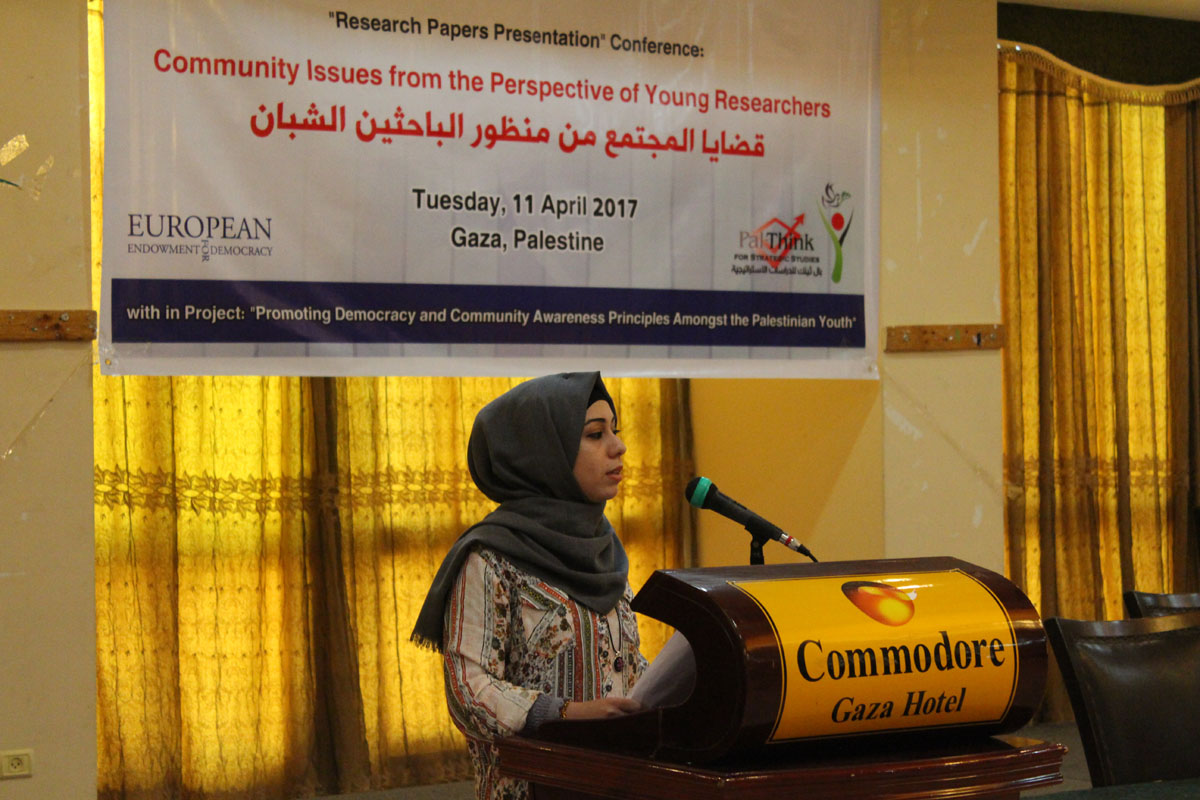
The states that possess petroleum and gas enjoy an enormous economic power that helps in achieving the goals of their states' policies; and the growing reliance on the energy sources of petroleum and gas has increased the importance of their transport lines, which have transformed from a mere means of transporting fuel into life arteries for the ruling regimes — in addition to their role as means of pressure and bargaining to achieve the goals of foreign policy.
Natural gas is considered one of the most important alternative energy sources to oil, as it is among the fuels of high efficiency, low cost, and low environment-polluting emissions; it is likewise counted among the clean energy sources, because the process of transporting gas is done by way of equipment located in the interior of the earth that contributes to preventing the pollution of the environment. It is a gas with no smell and no colour, distinguished by being lighter than air; it is volatile and flammable if exposed to a heat source, and it is placed in tightly sealed cylinders that are not filled completely but only at a rate of 80%–85% to prevent explosions occurring. (Al-Ashqar, 2014)
In recent years natural gas has become one of the most important clean energy sources in demand in most parts of the world; and although the Middle East region has entered the orbit of regional and world attention after the successive discoveries of natural gas, the facts the region is witnessing indicate that this region will for years to come form a theatre of conflict and of world geopolitical tug-of-war, and that the region's states revolve in a circle of violence — particularly those that contain enormous potentials of gas (Alou, 2014). In this frame, the revolution of the Israeli discoveries of natural gas witnessed wide developments, passing through three stages beginning from 1999 to 2009, such that the quantities of gas that can be extracted from Israel's economic waters reached approximately 1,480 billion cubic metres (Henderson, 2013), and its reserves may rise to a trillion cubic metres — compared with the natural gas reserves of the Arab Gulf states and Iran, estimated according to British Petroleum at 80.5 trillion cubic metres at the end of 2012. Thus all that has been discovered does not exceed 1.2% of the gas of the states bordering the Arab Gulf and about 7% of the reserves of North Africa and Nigeria (Al Arabiya, 2014).
Some researchers consider that these enormous discoveries cover “Israel's” needs for tens of years, and allow it to export abroad; accordingly the Israeli gas stock will have an effect on the nature of “Israel's” international relations, especially with Turkey, it being considered the most important regional state in easing the process of exporting Israeli gas.
From this starting point, this paper attempts to answer the following questions: What is the extent of the effect of Israel's entry into the world's gas-export system on the Palestinian cause? And what are the most important strategies Israel follows aiming to improve its relations with the region's states at the expense of the Palestinian cause?
To view and download the full paper:
 The effect of the East Mediterranean gas stock on the Palestinian cause
The opinions contained in the paper express only the opinion of their author and do not necessarily express the opinion of Pal-Think for Strategic Studies