In partnership with 15 Palestinian civil society organisations, Pal-Think continues its project on the future of the Palestinian political system
Amid the current political transformations, Ajyal Association in Gaza — with the University Graduates Association, Bozour Association in Nablus, and the Centre for Research and Strategic Studies in Ramallah — held an interactive round table discussing two policy papers on youth access to decision-m…
- Author
- The editorial team
- Date
- 2025-03-10
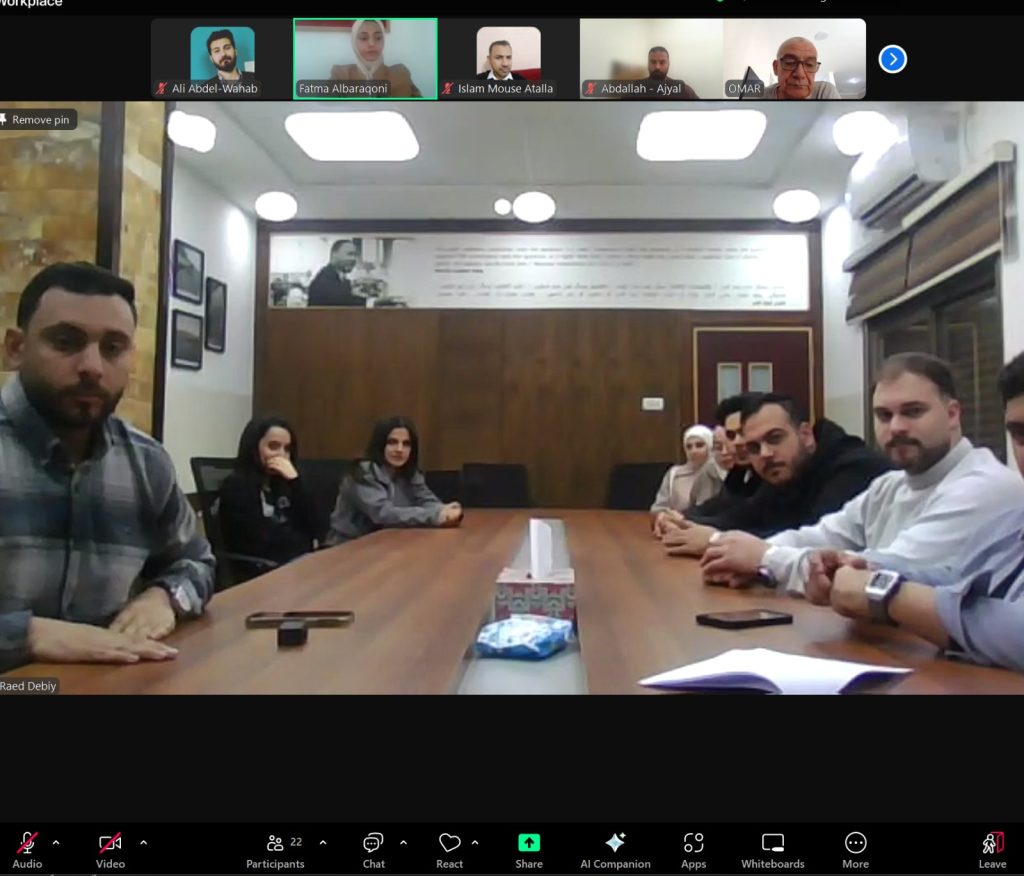
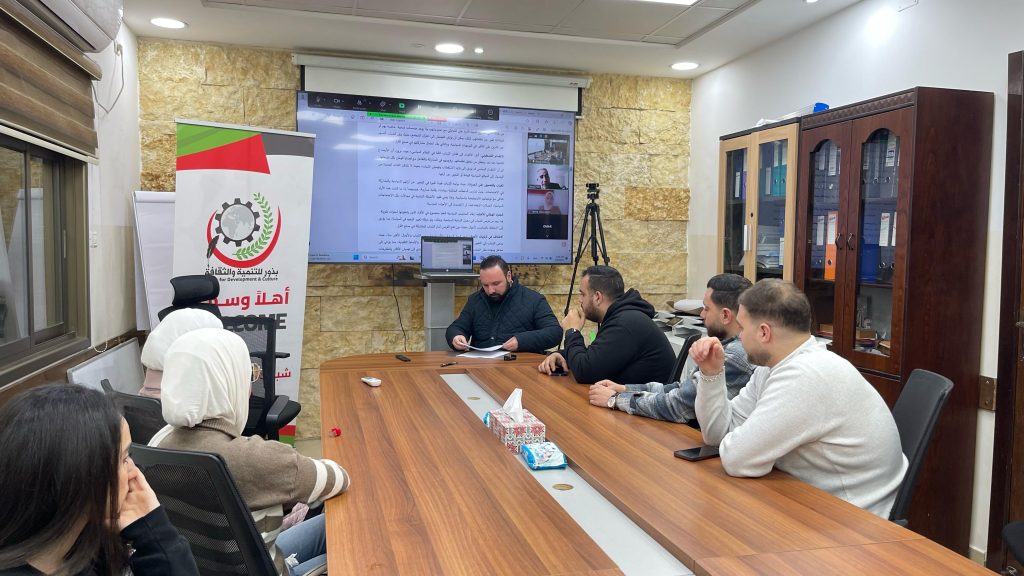
Amid the current political transformations and challenges, the Ajyal Association for Creativity and Development in Gaza — in partnership with the University Graduates Association in Gaza, the Bozoor Association for Development and Culture in Nablus, and the Centre for Research and Strategic Studies in Ramallah — organised an interactive round table to discuss two policy papers: on youth opportunities to reach decision-making positions, and on foresight into the future of the system of government in Palestine.
The session came under the project “Strengthening Palestinian civil society's contribution to shaping Palestine's future”, implemented by Pal-Think for Strategic Studies in partnership with a coalition of 15 community organisations from the occupied Palestinian territories.
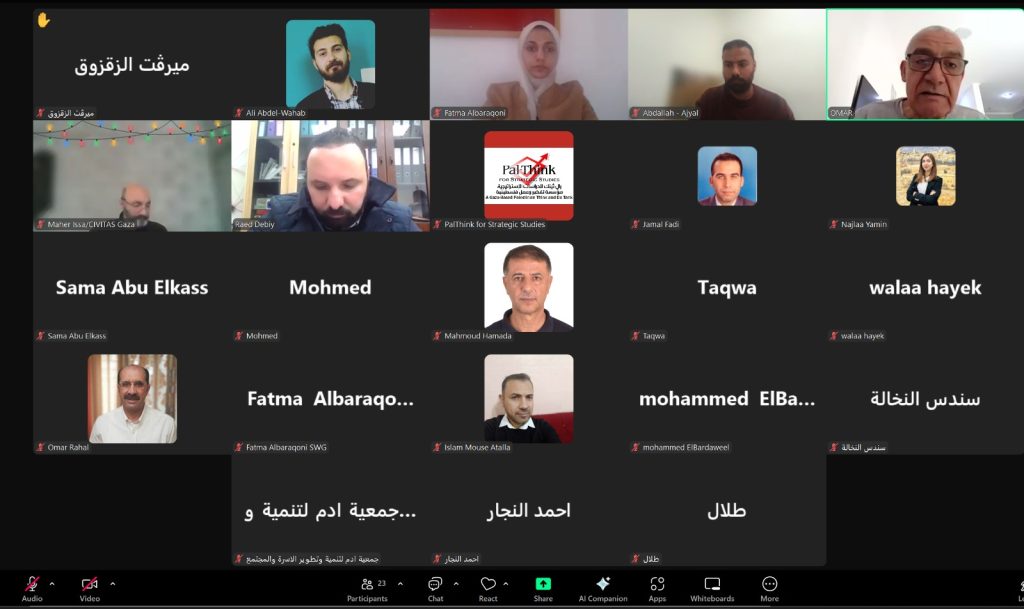
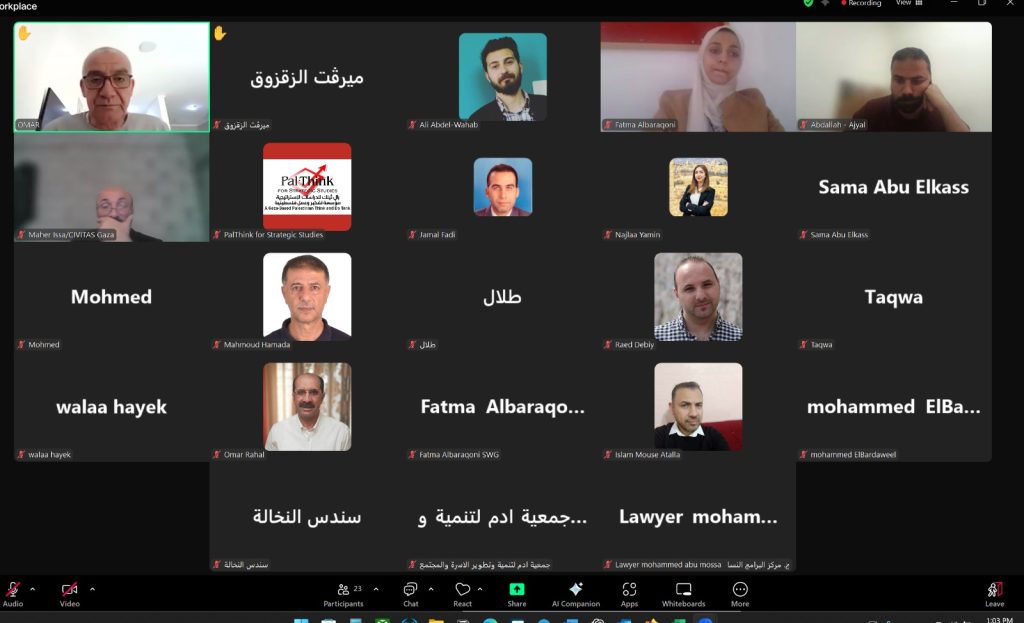
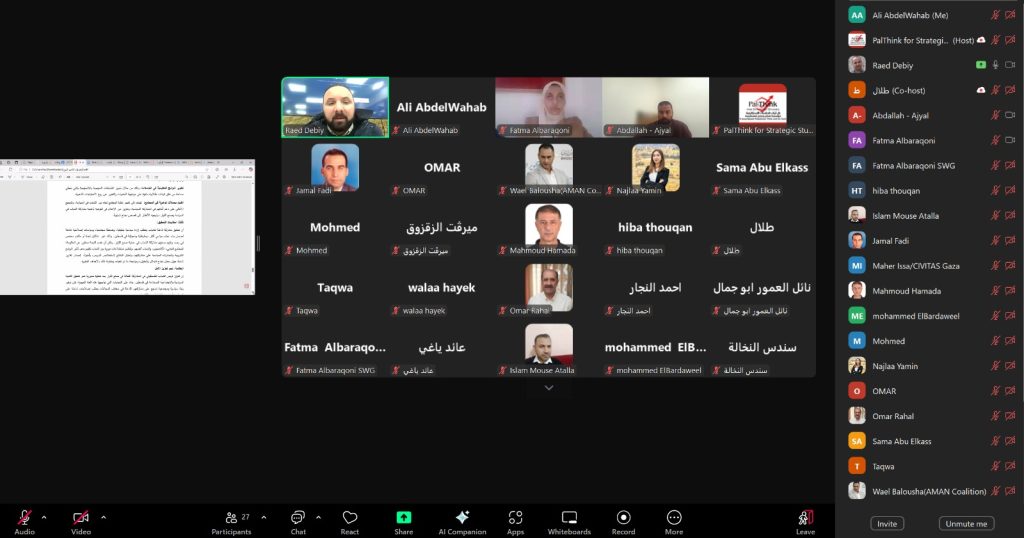
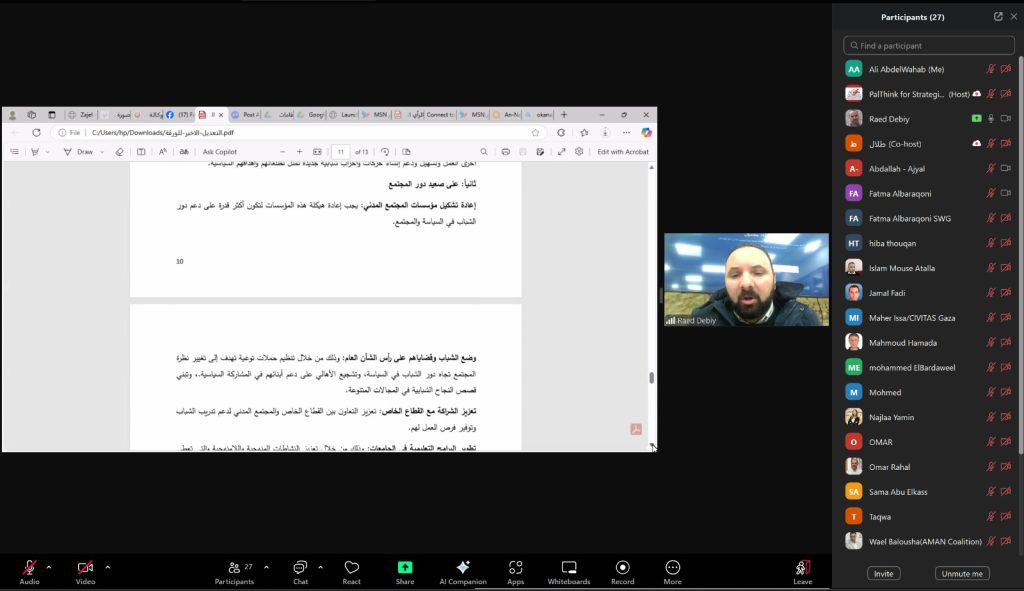
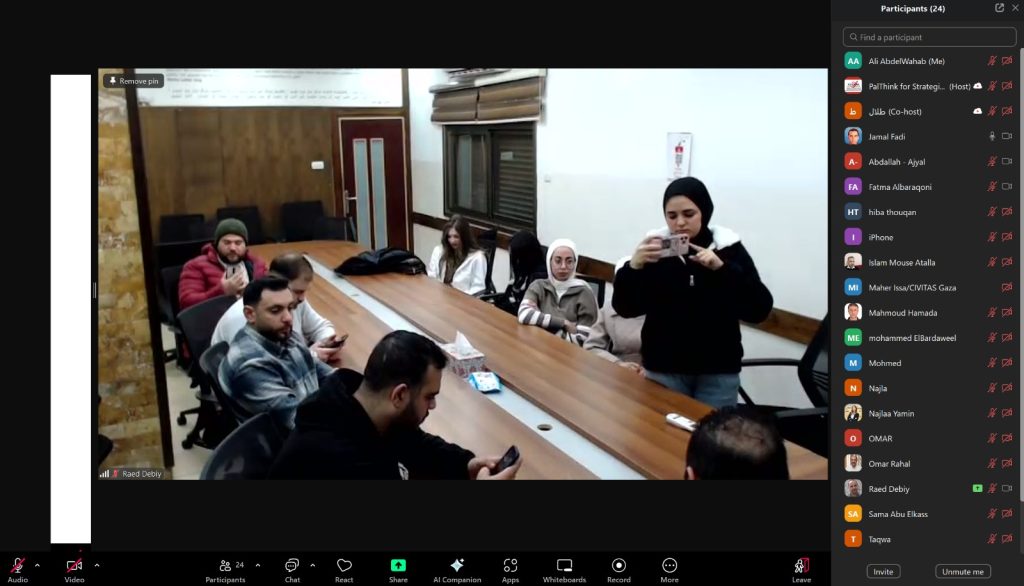
The session convened on Thursday 6 March with the participation of more than 40 researchers and interested attendees, present in person or via Zoom. The discussions took up two principal axes: strengthening youth opportunities to reach decision-making centres, and foresight into the future of governance in Palestine amid the political and social changes.
The first paper, titled “Visions for strengthening youth opportunities to reach decision-making centres in the Palestinian context”, prepared by Dr Jamal al-Fadi and Dr Raed al-Debee, addressed the challenges obstructing Palestinian youth from reaching leadership positions, especially under the prevailing political, economic, and social conditions. The paper recommended empowering youth by strengthening youth institutions, improving education and training opportunities, and providing a more open participatory environment. It also proposed practical solutions such as launching youth political platforms and strengthening their role in parties, unions, and national federations — helping to break the exclusion young people face in the political scene.
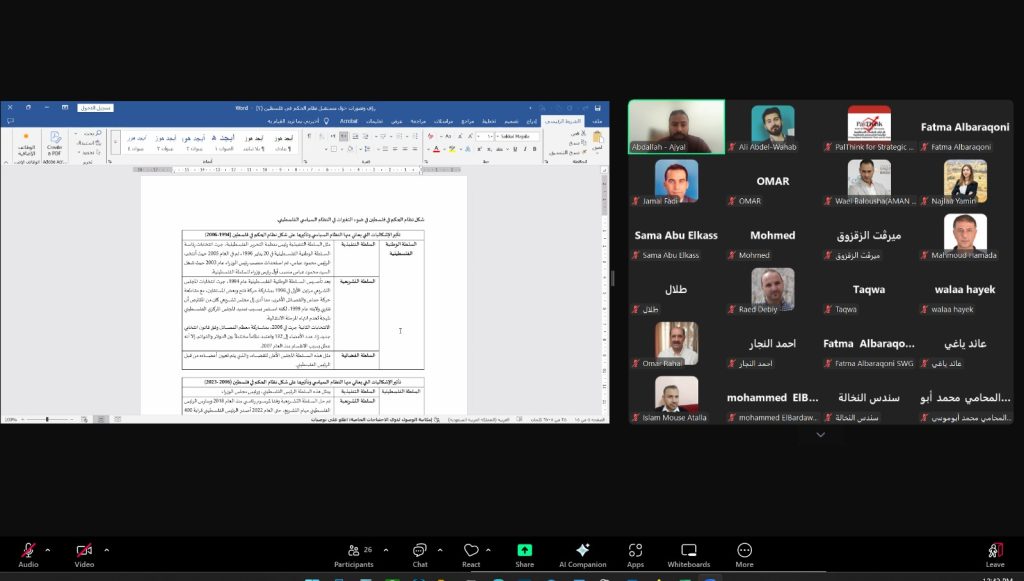
The second paper, titled “Perceptions and forward-looking visions for the future of governance in Palestine”, prepared by Mr Abdullah Sharshara and Dr Ahmed Rafiq Awad, addressed the probable scenarios for the future of the Palestinian system of government amid the continuing political division, the Israeli occupation, and the regional and international changes. The researchers discussed the developments the Palestinian political system has seen — such as the creation of new posts like prime minister and deputy prime minister, alongside the creation of the administrative committee in Gaza — and the extent of these changes' effect on the structure of Palestinian governance. The paper set out several possible paths, among them the possibility of reforming the political system within an inclusive national framework, the persistence of political stalemate, or even the emergence of new patterns of rule as a result of regional and international transformations.
The round table closed with a set of practical recommendations underscoring the importance of strengthening the role of youth in political decision-making, and of working toward structural reforms that develop the Palestinian system of government to become more representative and responsive to the demands of the moment. The recommendations also stressed the importance of civil society's role in supporting political transformations and creating interactive channels among the various political and civic actors — contributing to a political system that is more stable, just, and democratically participatory.
This event flows from the importance of the aforementioned project in strengthening Palestinian civil society's role in policy-making by building a coalition of Palestinian community organisations and organising round-table sessions that discuss vital political and social issues. Through these activities, research working papers will be produced that contribute practical solutions to the challenges facing Palestine. The project will also help deliver the policy recommendations decision-makers need, strengthening the chances of achieving the required reforms across the different aspects of Palestinian life.