Seminar on popular and international efforts against nuclear weapons in the Middle East and the challenges of non-proliferation
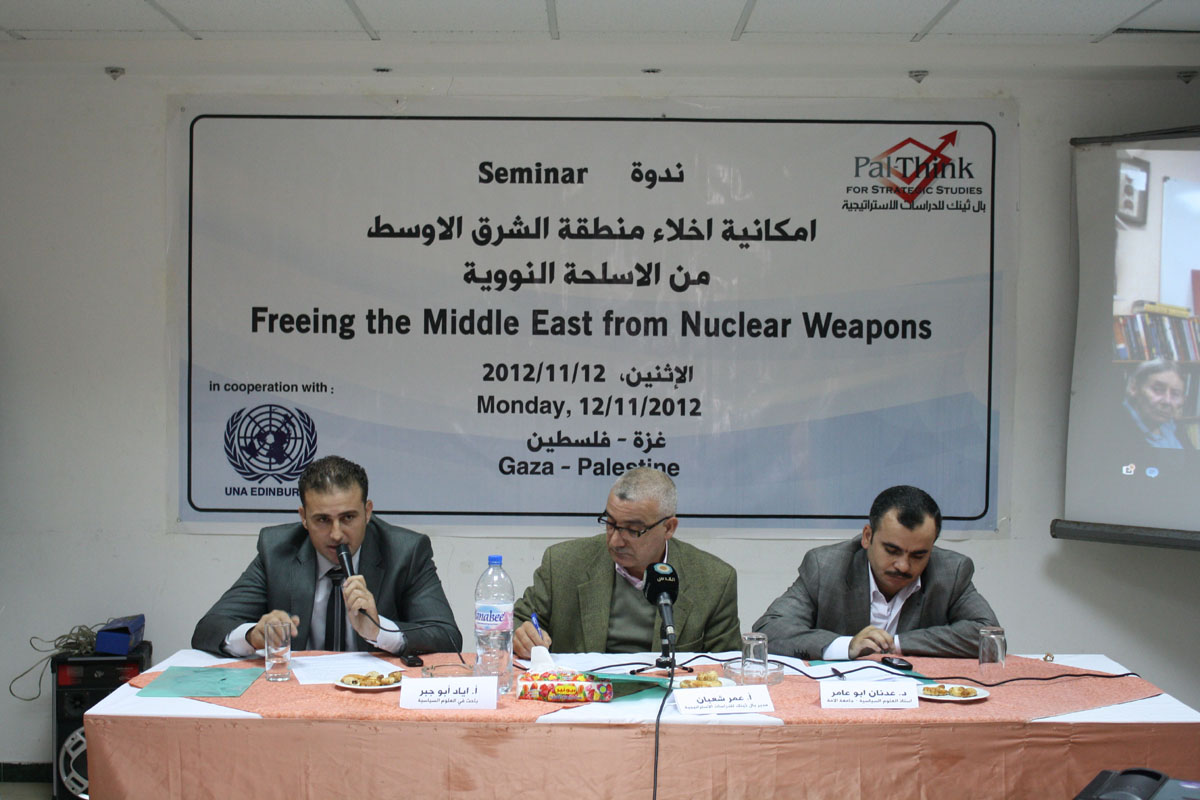
Pal-Think held a seminar on the possibility of a Middle East free of nuclear weapons, at the Al-Quds International Hotel in Gaza, with notable figures and academics — part of its work to deepen thought and constructive debate on Palestinian affairs.
- Author
- The editorial team
- Date
- 2012-11-17
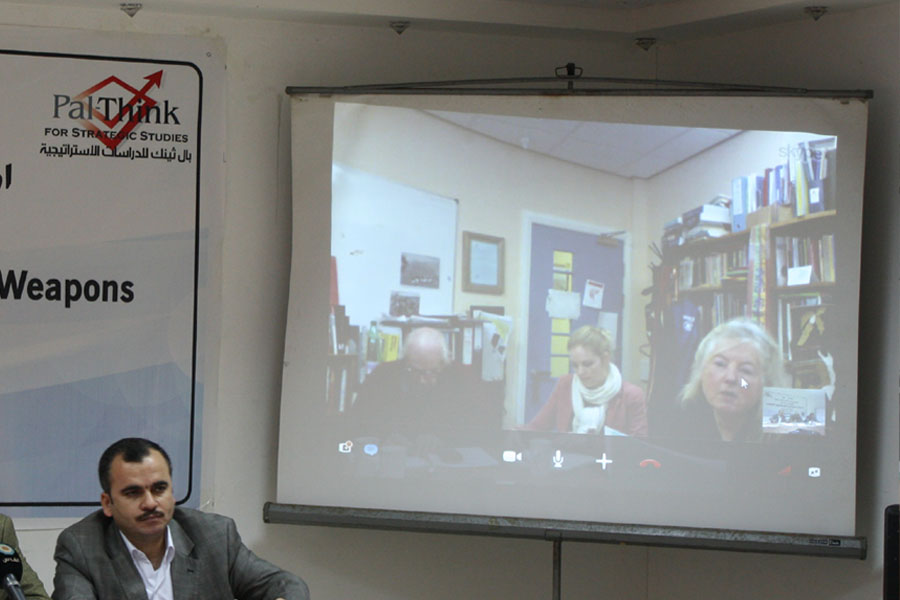
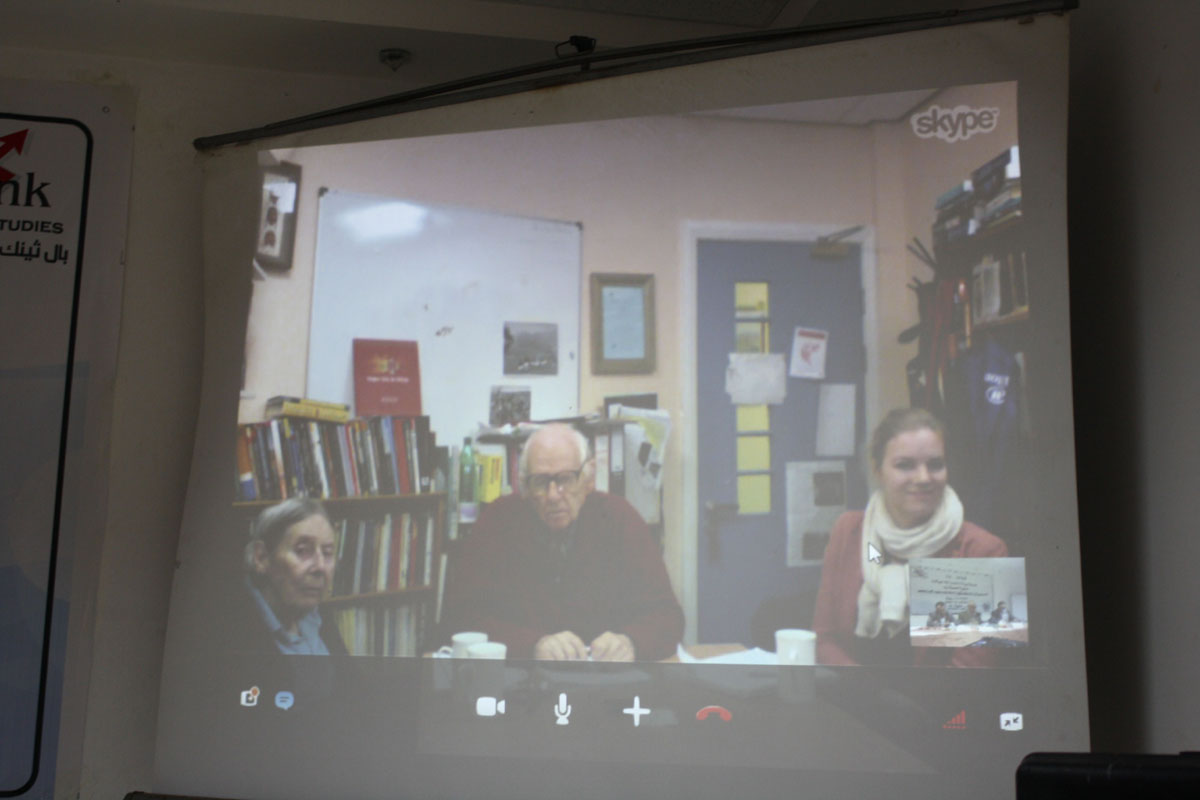
Monday 12 November 2012 – Gaza – As part of the activities of the Pal-Think for Strategic Studies centre, which aim to promote deep thinking and constructive discussion of the issues that concern the Palestinian situation, the centre held a seminar on the possibility of clearing the Middle East of nuclear weapons, which was held at the Al-Quds International Hotel in Gaza in the presence of many prominent figures, academics and specialists, alongside the participation of members of the Scottish United Nations Association (UNA – Edinburgh) via videoconference technology. At the beginning of the address, a representative of the Scottish United Nations Association, Gallery Dowan, pointed out that any explosion of a single nuclear and radiological bomb would extensively affect most of the countries of the Middle East, and referred to many countries such as the United States of America, which keeps such weapons on the fleets present in the Middle East region, and mentioned that the NATO alliance stores a number of those weapons in southern Turkey, in addition to the great concern about Iran's current efforts to produce nuclear bombs. On another level, he stressed the necessity of pressing the Helsinki conference and moving the confidence-building process along several tracks, and of forming a regional technical and scientific group of experts whose task would be verification, follow-up and discussion of technical issues in order to face the challenges and avoid falling into the political trap; and he emphasised the role of civil society as well as governments and individuals such as young people and women in mounting movements to exert pressure to reduce the dangers of nuclear weapons, especially in the Middle East.
For his part, Mr Iyad Abu Jabr, a researcher in political science, presented a working paper covering the seminar's themes, in which he recalled the history of the nuclear era when the United States of America struck the Japanese cities of “Hiroshima and Nagasaki” with the nuclear bomb, passing through the establishment of the bipolar international system, the outbreak of the Cold War and the escalation of the option of producing and spreading those weapons around the world. In the same context, especially with the growth of the capacity of the Israeli nuclear arsenal, which is considered the greatest threat to the region given its arrogance and its exclusivity in the nuclear question in order to satisfy its national interests. He pointed out that there have been many regional and international attempts to establish zones free of nuclear weapons, in which the United Nations played an important role by putting forward approximately 25 proposals, yet only 4 zones have been established as a result of the obstacles facing the international frameworks dealing with such problems, especially in the Middle East region, which prevent it from being made a nuclear-weapon-free zone (NWFZ). The researcher explained that the problems of the Middle East lie in its geographical scope, being a region of undefined features, in addition to the strategic complexities that have prevented genuine agreement among the principal states; the rigidity of the impossible Israeli position, which rests on postponing the establishment of a nuclear-weapon-free zone; in addition to the existing regional political and military conflicts and their repercussions, the most important of them the Arab–Israeli conflict and the problem of the Israeli–Iranian nuclear race, which is based on Israel's monopoly of a huge nuclear arsenal and, in return, Iran's pursuit of the development of its nuclear programme, which is political in character more than technical. Finally, the researcher considered that the future of the Middle East as a nuclear-weapon-free zone passes through the spread of those weapons in order to create a balance of power, and he believes that there is no possibility of establishing a nuclear-weapon-free zone in the region in the near term, but that this may be possible in the long term through the emergence of a new nuclear power, whether Arab or Islamic.
Dr Adnan Abu Amer, professor of political science, presented a comprehensive outline of the scenarios put forward for the nuclear question in the Middle East in light of the political changes taking place. He added that the United States of America coexists with the nuclear systems of Islamic countries and has no real problem with Iran, and that the war options would be costly and their consequences would exceed the bounds of reason. In the light of what the American elections produced in Obama's winning a second term, Abu Amer cast doubt on the new Obama administration's inclination towards the option of war, which he described, should it break out, as comprehensive and devastating; whereas the Iranian side sees, from a sectarian and national standpoint, that external war has not been placed on its agenda; and the Israelis believe that touching Iran might prompt its allies in the region such as Syria and Hezbollah to answer the Ayatollah's call to embark on this adventure. Abu Amer also touched on other scenarios, such as Iran provoking skirmishes with the American forces present in the Arabian Gulf and in the Strait of Hormuz in particular. At the end of his remarks, Abu Amer indicated that the last scenario would be represented by contenting oneself with silent wars without using a single shot, through electronic and technological warfare, because in the long term this costs Iran a great deal; alongside activating the weapon of assassinations, since Tehran is no longer immune; tightening the economic blockade; and stirring up instability in the Iranian internal situation along the lines of the Arab Spring and widening the gap between the institution of the Supreme Leader and the presidency.