A radio episode on a paper about COVID-19's toll on psychological support for women
Since early 2020, institutions offering psychological support to women adapted their services — replacing face-to-face meetings with phone, WhatsApp and Zoom; the health ministry alone delivered some 60,000 consultations.
Since the beginning of 2020, the institutions that present the psychological-support service for women have been able to adapt the manner of presenting their services to women and men, replacing face-to-face meetings with the telephone and the WhatsApp and Zoom applications. The Palestinian Ministry of Health, for example, presented some 60 thousand consultations to beneficiaries during the pandemic, while 2,565 men and women benefited from the free line of the Gaza Community Mental Health Programme.
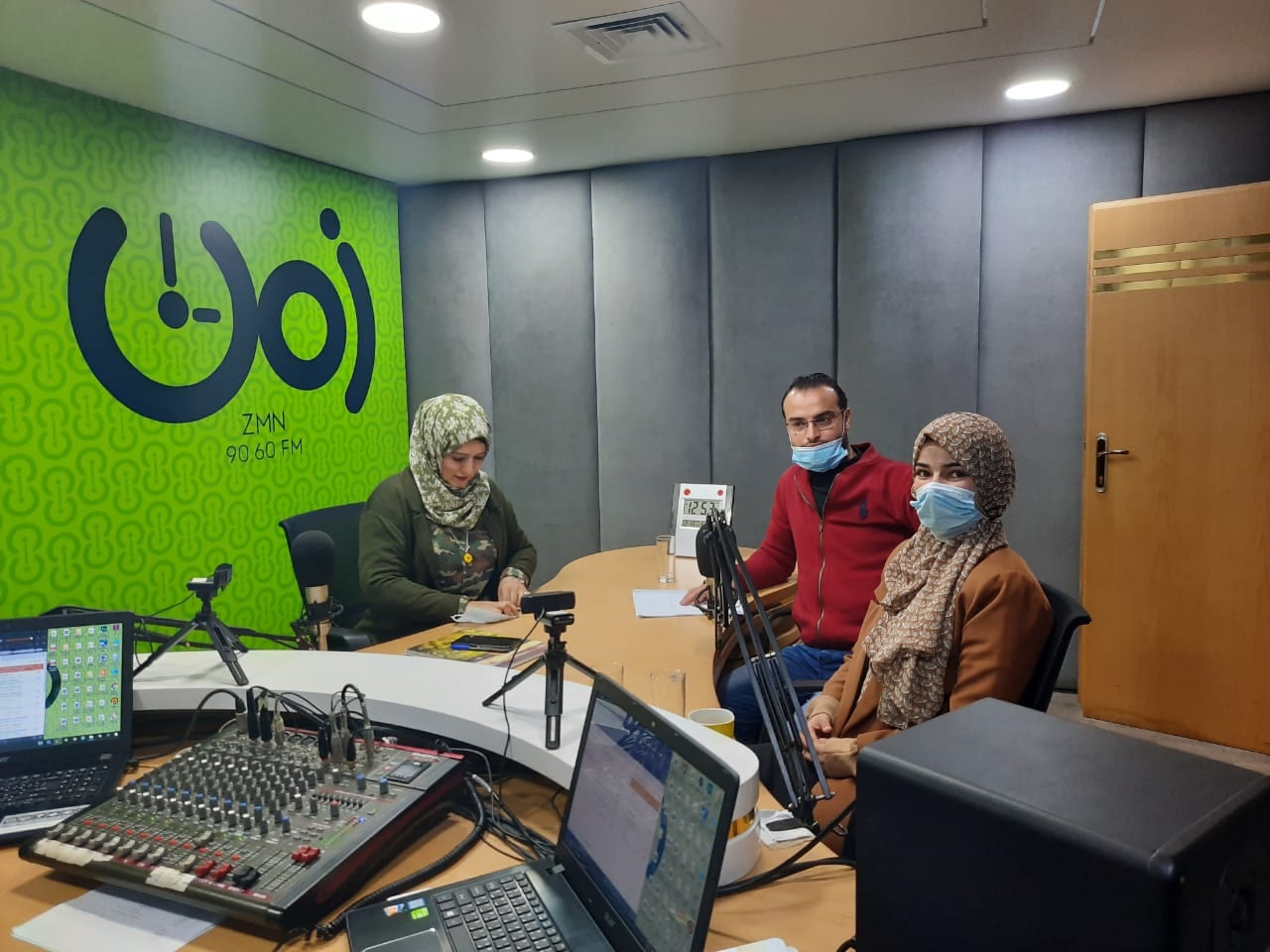
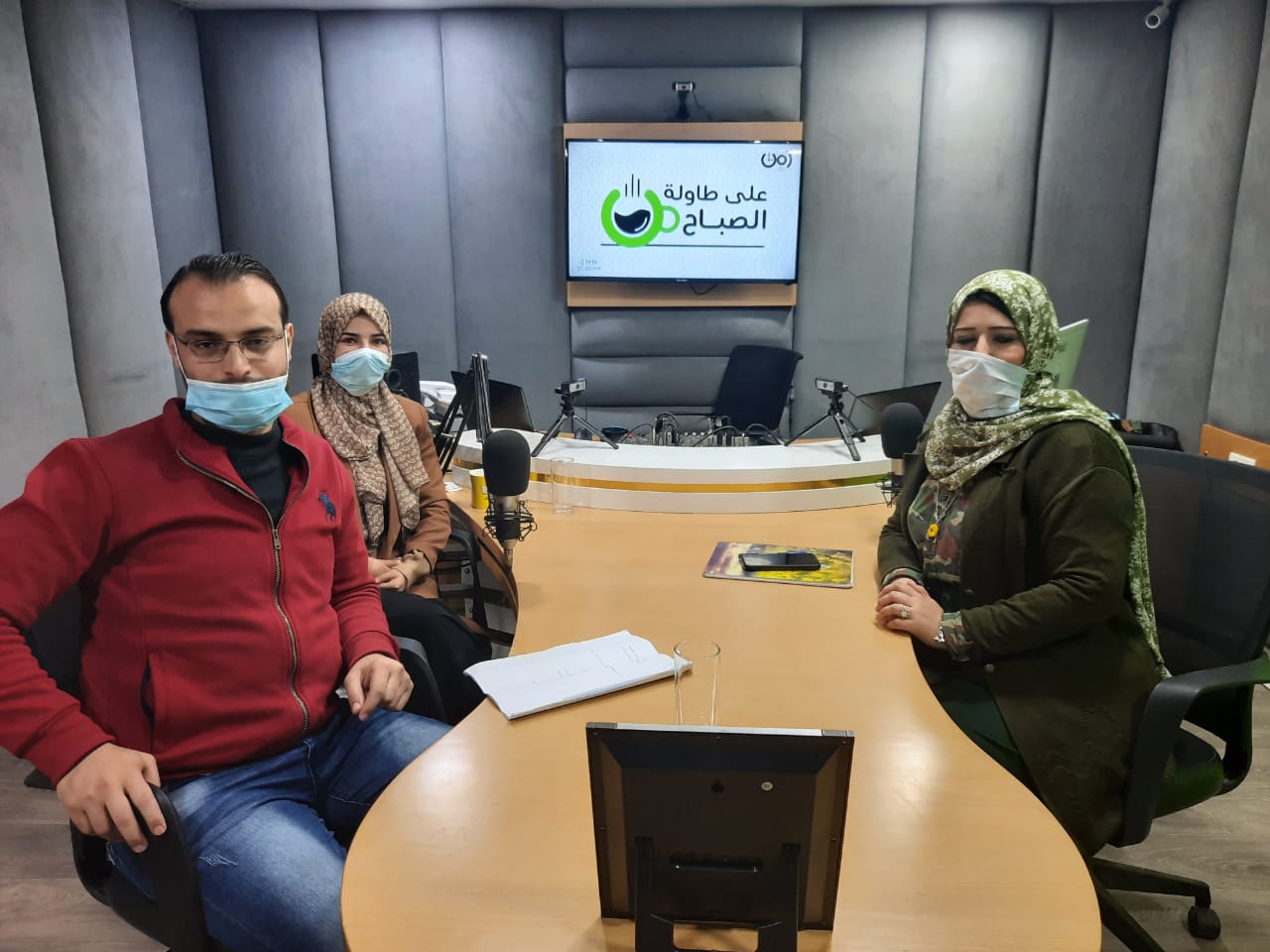
In the fifth episode of the programme “Youth Creations”, broadcast on the local Zaman radio, a research paper was discussed titled “The repercussions of the coronavirus pandemic on women recipients of the psychological service in the Gaza Strip”, prepared by the researchers Ahmed al-Sammak and Mona al-Masdar, within the project “Research writings in gender and feminism”, implemented by Pal-Think for Strategic Studies with funding from the Government of Canada.
Ms Tahani Qasem, coordinator of the Hayat Centre for the Protection and Empowerment of Women and Families, said during her intervention in the episode that the inhabitants of the Gaza Strip suffer from great pressures because of the occupation and the rise of the unemployment rate. The coronavirus came to aggravate the crisis, a matter that loaded women with an additional burden; thousands of women were subjected to the different kinds of violence, most prominently psychological violence, during the period of home quarantine — and this caused negative results for women, the family, and society.
She pointed out that the women's and international centres began preparing an emergency plan since the beginning of 2020, to work during the coronavirus pandemic, for the continuation of presenting psychological, social, and legal support services to women.
Qasem added: “We presented about 5 thousand legal, psychological, and social consultations during the pandemic, and we also received 14 women who were in need of protection and threatened with danger, accompanied by their children.”
For her part, the researcher Mona al-Masdar said this paper discusses the effect of the coronavirus pandemic on the psychological service for women, in addition to the effect of social distancing and the safety measures on their psyche. The paper likewise follows the quantitative and qualitative methods.
She set out that communal stigma and the economic reality were among the most prominent challenges facing the presentation of the psychological-support service before the pandemic; while the presence of the abuser in the home, women's inability to leave the home to go to the institutions to obtain psychological support, and some of them not possessing telephones, were the most prominent impediments that prevented them from obtaining the psychological service.
Al-Masdar made clear that there are government institutions that present the psychological-support service, such as: the Ministries of Health, Education, and Social Development; and other non-governmental ones such as: the Gaza Community Mental Health Programme, the Aisha Association for the Protection of Mother and Child, the Women's Affairs Centre, and the Culture and Free Thought Association.
She noted that anxiety and depression are among the most frequent psychological disturbances that appeared during the pandemic.
For his part, the researcher Ahmed al-Sammak said that among the most important challenges facing the institutions while presenting the service during the coronavirus pandemic are the occupational pressure on the Ministry of Health and the police apparatuses, which led to the faltering of immediate coordination in the case of the necessary face-to-face support during the closure for the difficult cases; the occupational burden on the male and female psychological specialists; and the difficulty of direct face-to-face dealing in the case of presenting the service to the quarantined because of the preventive measures for the virus.
He pointed out that the coronavirus pandemic left negative effects on women: those infected with the virus suffered from communal stigma and bullying, and those quarantined inside the home were subjected to increased disputes with the husband, in addition to increased violence against them — not to mention the growth of women's burdens because of the household tasks, childcare, and distance learning.
Al-Sammak concluded with the study's results, namely: the growth of psychological pressure and the increase of social roles upon women; and the pandemic and the closure policy contributed to the aggravation of the phenomenon of violence against women and the weakness of protection for them, given the near-stoppage of the official and unofficial institutions.
The designations used and the presentation of materials in this programme entail no expression of any opinion whatsoever on the part of the Government of Canada