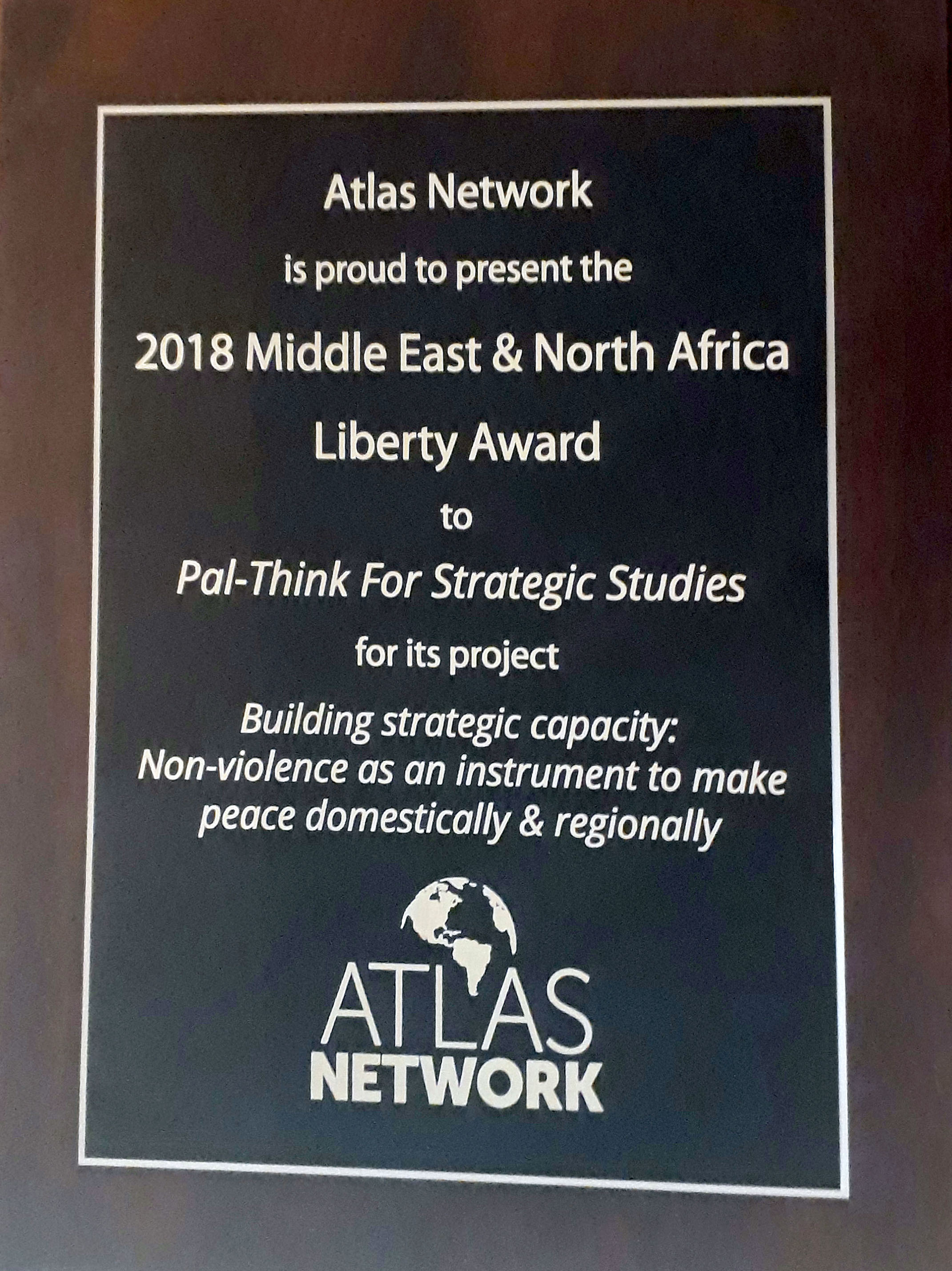
Pal-Think wins the 2018 Liberty Award for the Middle East and North Africa
In Rabat, Pal-Think won the Atlas Network's 2018 MENA Freedom Award for the whole of its community-development work — above all its programmes promoting the culture and values of nonviolence and civil peace.
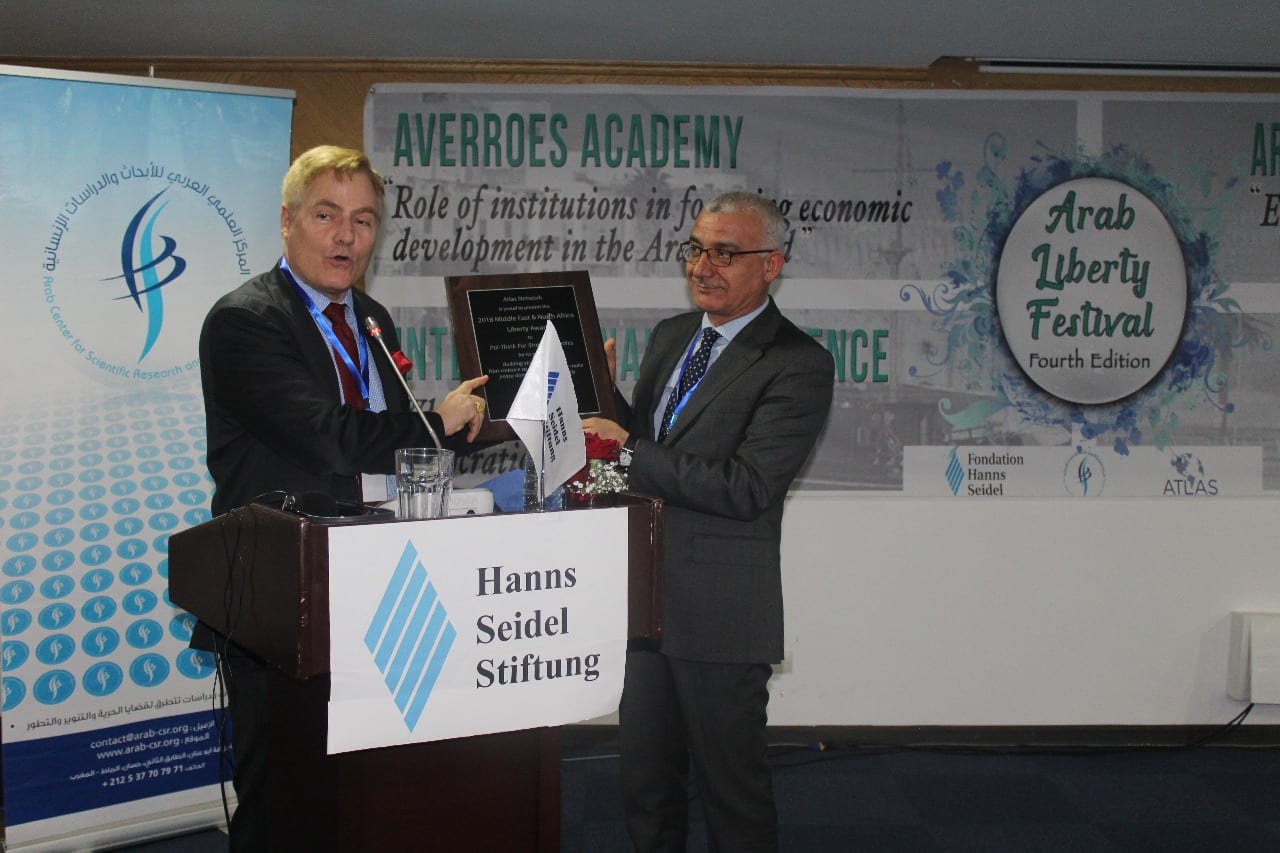
Rabat, Morocco — Pal-Think for Strategic Studies wins the Freedom Award for 2018 at the level of the Middle East and North Africa, presented by the American Atlas Network, for the entirety of its work in communal development, and especially its programmes aiming at strengthening the “culture and values of non-violence and building civil peace”, which was carried out in cooperation with the FXB foundation.
The award, and a financial value of 5000 US dollars as a grant to the institution, was conferred on the margin of the international conference in which a large number of the think tanks and research centres in the Arab world took part, organised by the “Arab Scientific Center for Research and Humane Studies” in the Moroccan city of Rabat in the first week of December 2018.
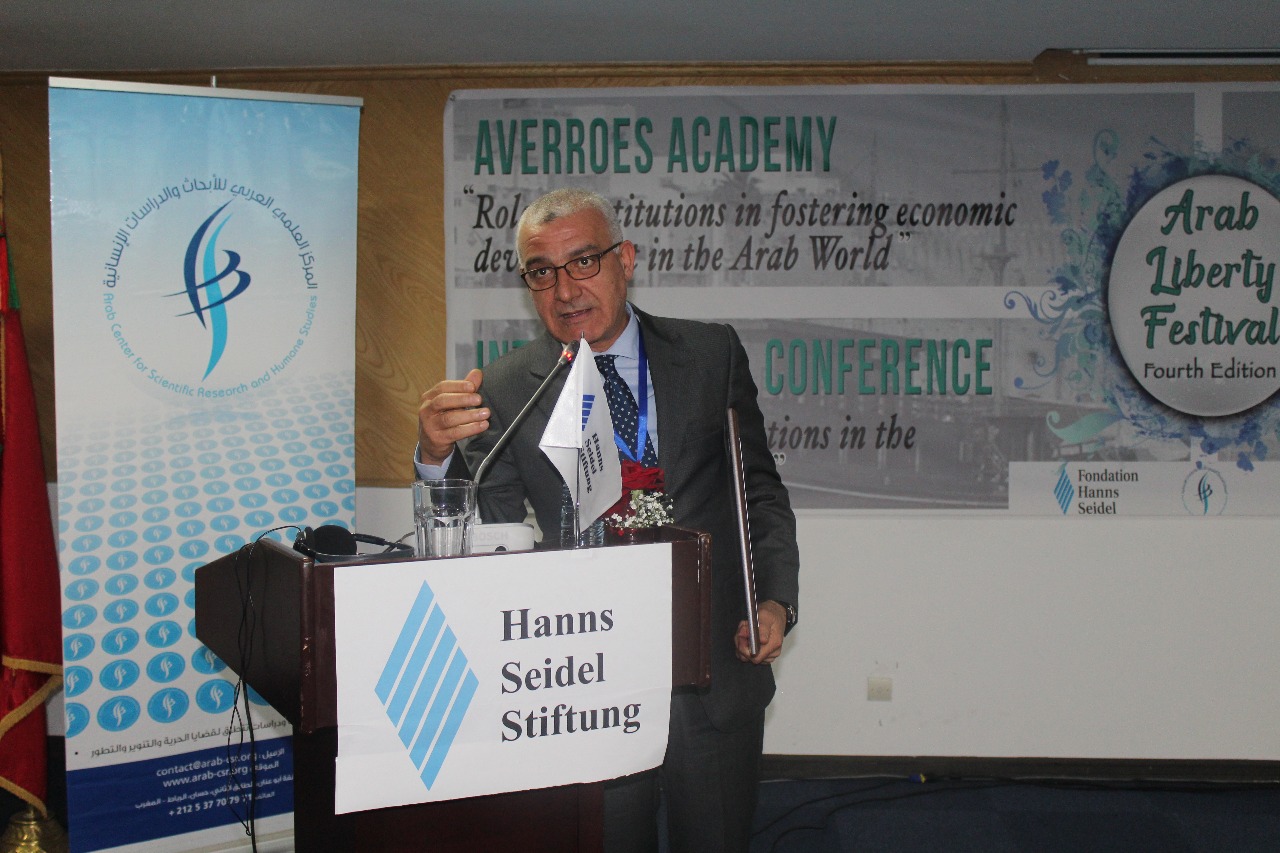
In the award-acceptance speech, the director of Pal-Think, Mr Omar Shaban, expressed his gratitude to the partner foundation FXB and the Atlas Network for economic research, which includes more than 482 institutions in about 95 states around the world, and which is concerned with the most exceptional contributions of the think tanks around the world, and the public policies that encourage flourishing and innovation and strengthen the concept of freedom, democracy, civil peace, and entrepreneurship. Mr Shaban presented in his word before the conference in Rabat thanks and appreciation to the work team at the Pal-Think institution, which contributed with all effectiveness to the project's success, and continuously realises great achievements despite being a team small in quantity but presenting much in quality.
This came within the frame of the work of the Pal-Think institution, which works in difficult circumstances and challenges from which the Palestinian territories suffer, especially the Gaza Strip. These difficult circumstances have not prevented the institution's team from insistence and perseverance for the sake of realising change and a positive impact in society — and that was thanks to its professional, scientific, and participatory approach over the previous years, as it has worked on several essential issues for the elevation of Palestinian society and its intellectual development, such as: scientific research and strategic thinking, the Palestinian reconciliation, confronting the intellectual blockade on the Gaza Strip through networking with international institutions and personalities, strengthening the concepts and values of democracy, empowering youth and women, spreading the culture of non-violence and tolerance, entrepreneurship, developing society's institutions, and presenting visions and solutions to confront challenges such as the blockade and the crisis of electricity, water, unemployment, and the reconstruction of the Gaza Strip.
Source: https://goo.gl/kmgQNM