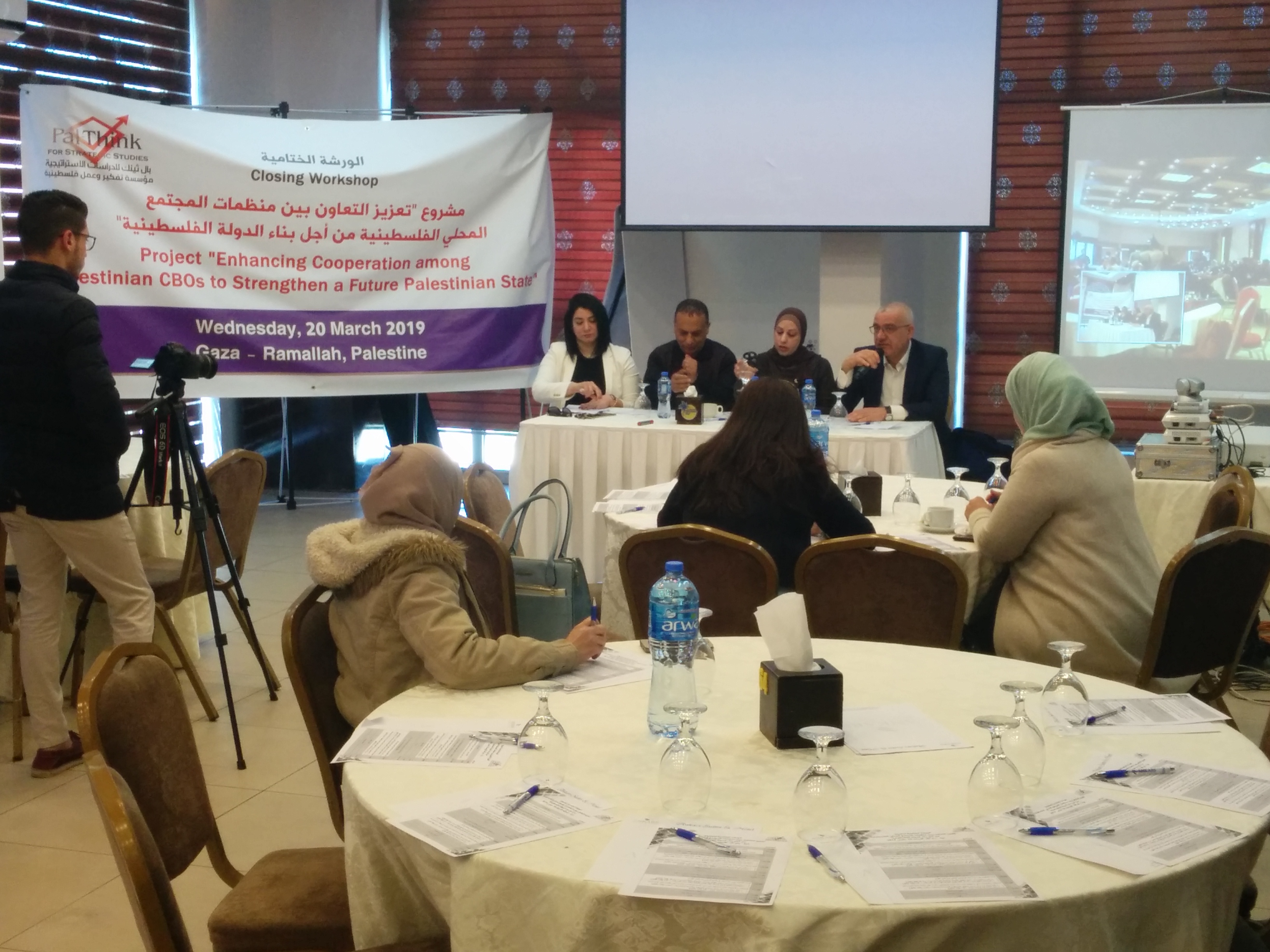
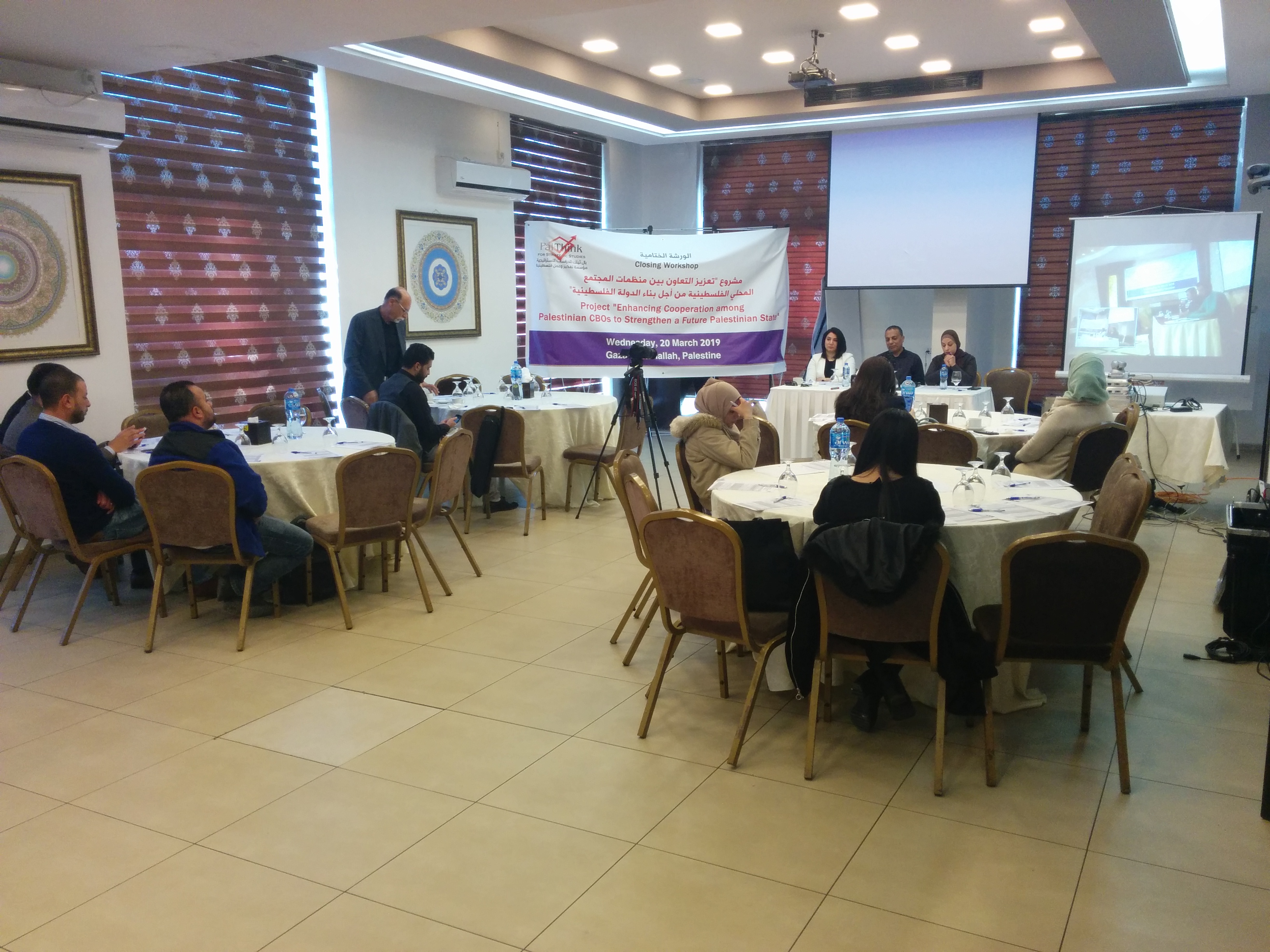
In Gaza and Ramallah, Pal-Think holds the conference on cooperation among Palestinian community organisations for state-building
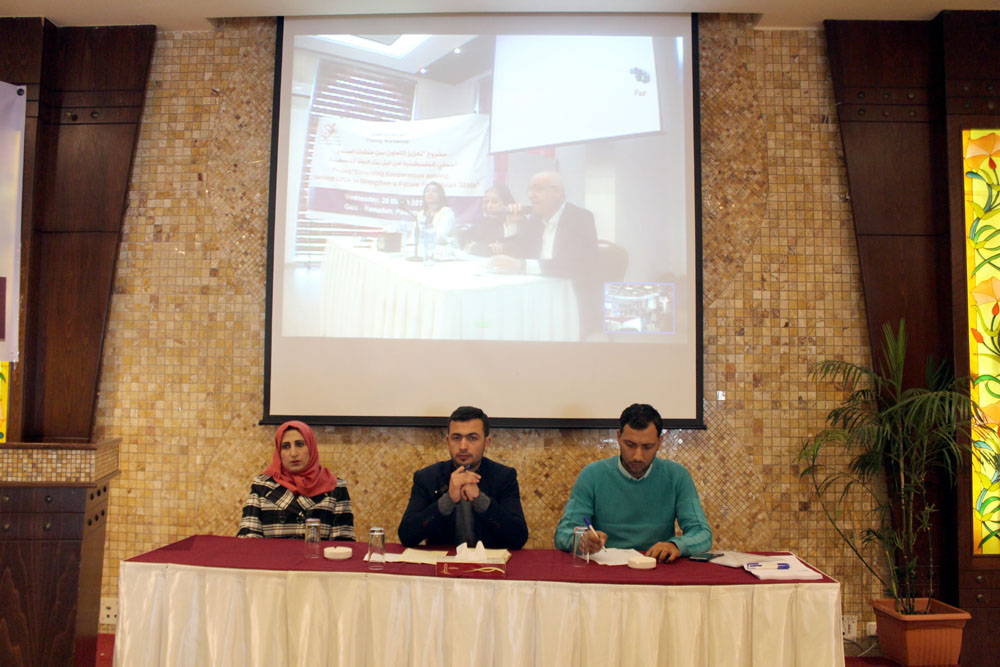
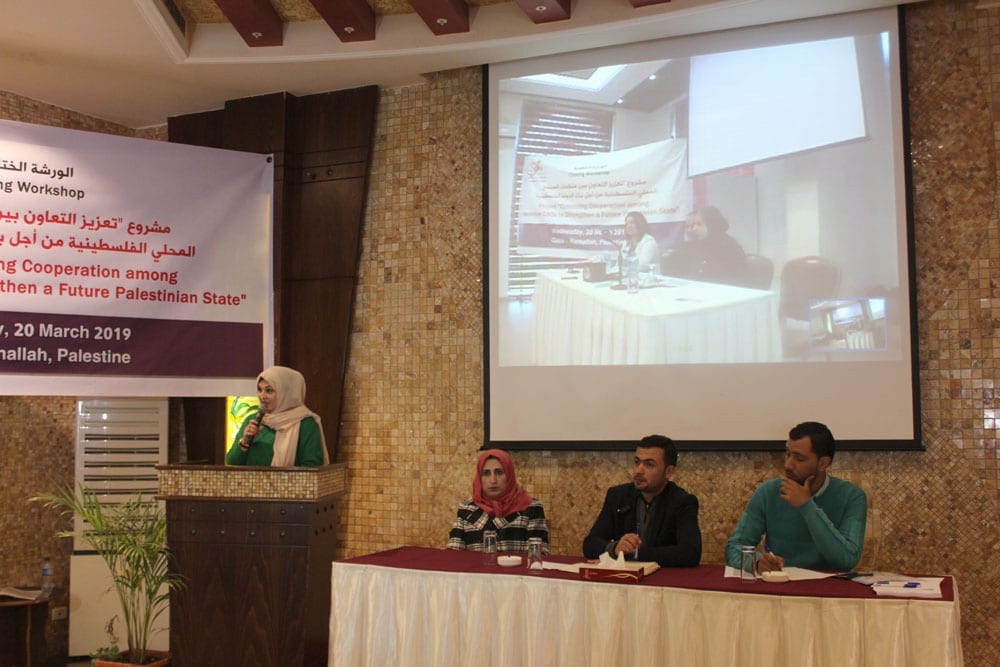
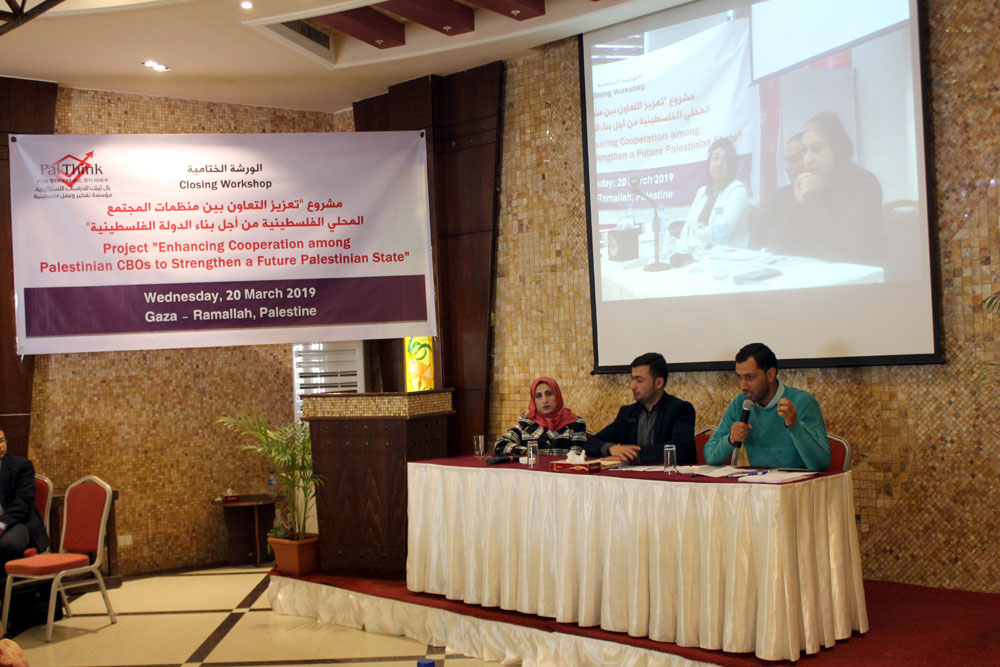
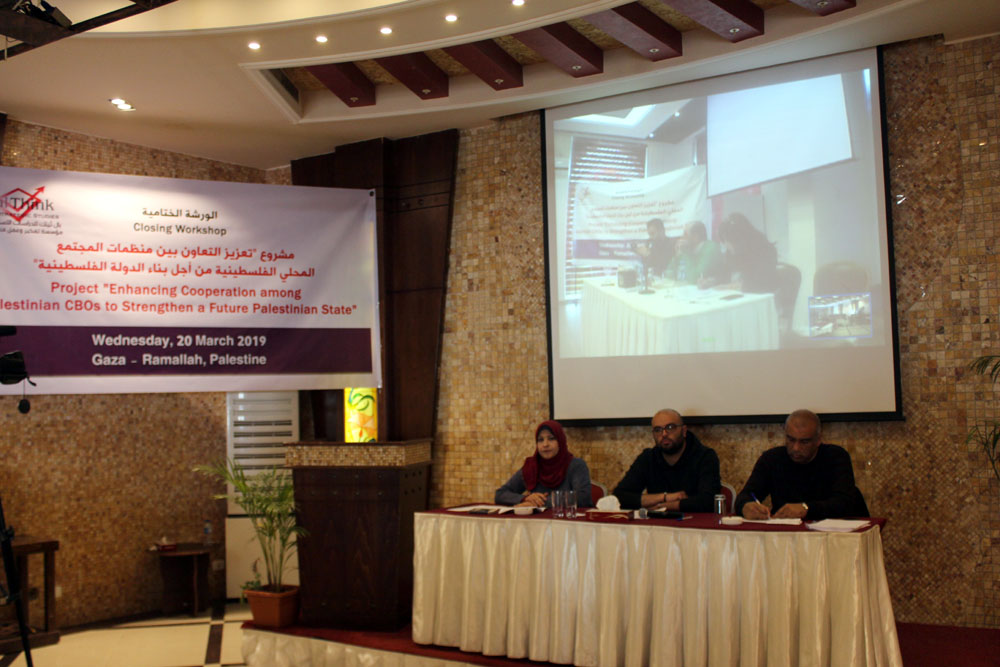
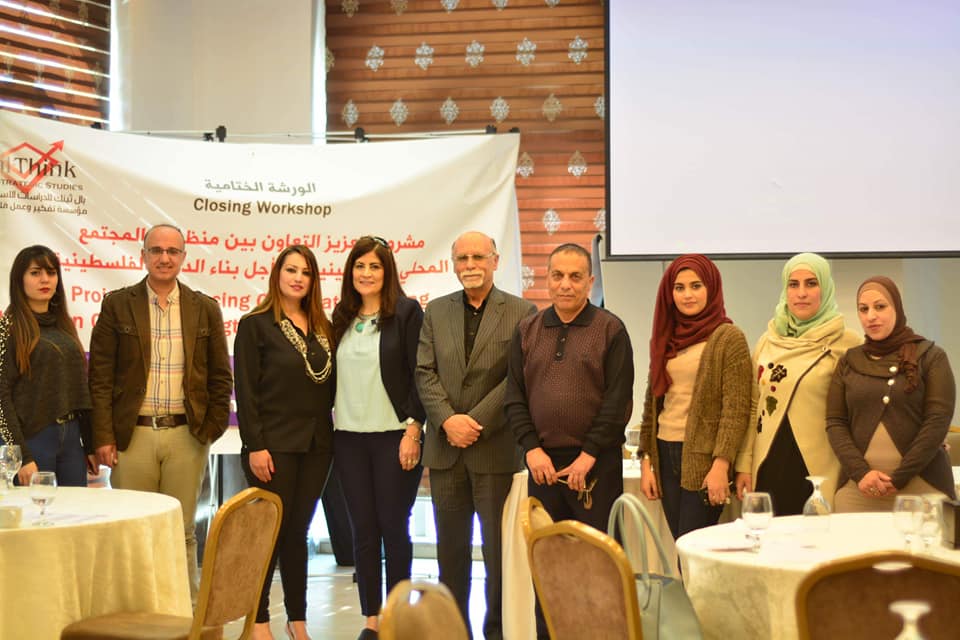
Pal-Think held a closing conference in Gaza and Ramallah simultaneously by video-conference for «Strengthening cooperation among Palestinian community organisations for building the Palestinian state».
Pal-Think held a closing conference in the two cities of Gaza and Ramallah at once via video-conference technology, for the project “Strengthening cooperation between Palestinian community organisations for the sake of building the Palestinian state”, which aims at strengthening the work and interaction between civil-work organisations at the national level, and enabling them to confront and treat the repercussions of the division, through carrying out joint activities and events that contribute to finding solutions for the challenges and issues facing Palestinian society and presenting scientific visions and policy proposals that support the National Authority's efforts in building the Palestinian state.
The conference was opened by Mr Omar Shaban, director of the Pal-Think institution, affirming that civil society was and remains a supporter of Palestinian society, and that society's institutions are always prepared to present visions and recommendations to decision-makers, who in their turn value the role of civil-society organisations and its influence. Shaban likewise shed light on the success of the project “Strengthening cooperation between community organisations”, which continued for 9 months, pointing out that there will be future endeavours aiming at strengthening and developing the relations between civil-society organisations.
In her turn, Sally al-Sammak, the project's coordinator, presented a summary of the project's role in strengthening the relationship between civil-society organisations in the northern and southern governorates, pointing to the joint work between 34 institutions in the areas of the West Bank, Jerusalem, and the Gaza Strip within this project, which worked together on carrying out 17 initiatives and drafting policy papers that treat some communal issues and present practical recommendations. Among the project's most prominent achievements is that some of the partner institutions in the project set plans for projects and initiatives among themselves for the coming stages, and consequently the completion of the cooperative work and the real partnership between the institutions. Al-Sammak pointed out that Pal-Think works on developing other efforts that serve cooperation and the building of relationship and trust between civil-society organisations to serve the Palestinian national interest.
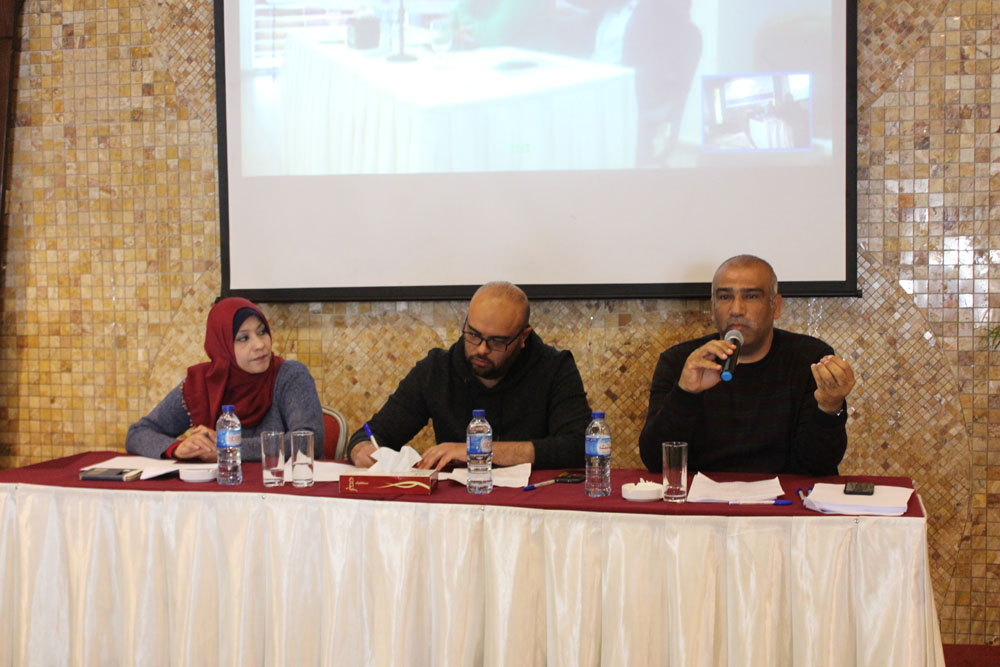
Speakers from the partner institutions took part in the conference during two sessions in which several axes were touched on, comprising some subjects that concern all civil-society organisations in general, and the side of the institutions' experience within this project in particular. The first session comprised two fundamental axes, the first of them cooperation and partnership between civil-society organisations in the northern and southern Palestinian governorates, in which took part Mr Jamil al-Darbashi from the Palestinian Center for Communication and Development Policies in Hebron, pointing out that the division has weakened the interaction between civil-society organisations, and that the institutions must strive to surpass the division and cooperate according to unified goals that bring about change at all levels, and that civil-society organisations must give greater attention to networking and joining international institutions and networks.
In the same context, Ms Ihsan Awad from the Bunyan Association in Khan Younis spoke of the project's role in creating real partnerships between the institutions of the Bank and Gaza, affirming the importance of providing the possible resources and capabilities to keep the communication and work between the institutions in Gaza and the Bank and to continue defying the difficulties and impediments.
As for the second axis, the subject of the communal dimension of the partnership between the institutions in the northern and southern governorates and its effect on society's categories was discussed. In it spoke Ms Maali Abu Mousa, a women's activist from the Palestinian Working Woman Society for Development in Tulkarm, about the project's role in presenting the opportunity to think of the needs of the individuals in the Bank and Gaza in order to reflect them in practical projects that serve society as a whole and in the form of a strategic vision. Mr Hatem Abu Taha from the Muttahidun Cultural Social Association in Rafah likewise spoke of the communal and developmental role of civil-society organisations, and their coordinating governmental role of working with the authorities to serve society, and the necessity of the continuation of cooperation between the institutions in Gaza and the Bank — especially as civil society is the only open door in light of the current circumstances for bringing about change and communal reconciliation
In the second session, the focus was on two axes. The first, titled the facets of cooperation between civil-society organisations and decision-makers, in which took part Dr Omar Rahhal from the SHAMS Human Rights and Democracy Media Center in Ramallah, speaking of the necessity of the existence of a legal environment that organises the relationship between civil-society organisations and decision-makers and is an incubator for them, and of opening the opportunity for civil-society organisations to access information. Mr Abdel Moneim al-Tahrawi from the Palestinian Center for Democracy and Conflict Resolution in Gaza likewise took part, affirming that there is a need for the existence of a clear vision among civil-society organisations to determine and organise the relationship with the various categories of Palestinian society and with decision-makers, and the relationship between the authorities and civil society must be strengthened, and the necessity of facilitating and lifting the restrictions from civil society and enabling it.
As for the second axis, it comprised the impediments and challenges facing communal-work institutions and their effect on the efficiency of their work. The speaker on this subject was Mr Kayed Miari from the Shahed Center for Citizen Rights and Communal Development in Nablus, pointing out that Palestinian civil society is strong and of abundant production but faces some laws that impede its work, and there is a need for the events between the institutions of the Bank and Gaza to be sustainable and continuous; since it is not necessary that the efforts be huge, needing a third intermediary that presents funding — rather small efforts of sustainable impact.
In her turn also spoke Ms Rose al-Masri from the Amjad Association for Creativity and Communal Development in Gaza; she affirmed the necessity of a comprehensive review of the laws issued as relates to the work of civil-society organisations in the Bank and Gaza, and the continuation and widening of the joint work between civil-society organisations.
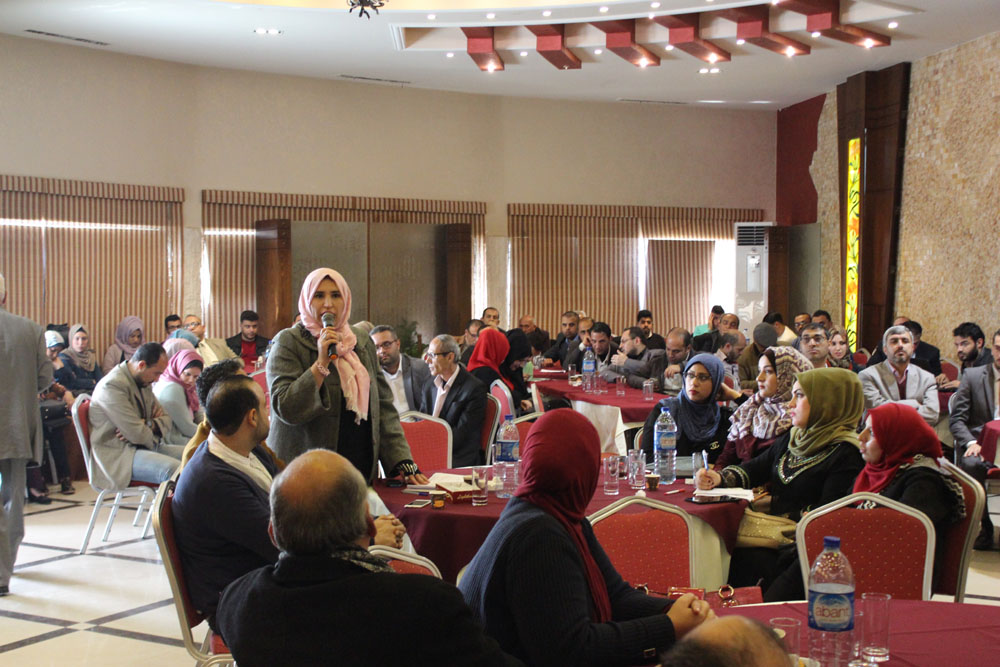
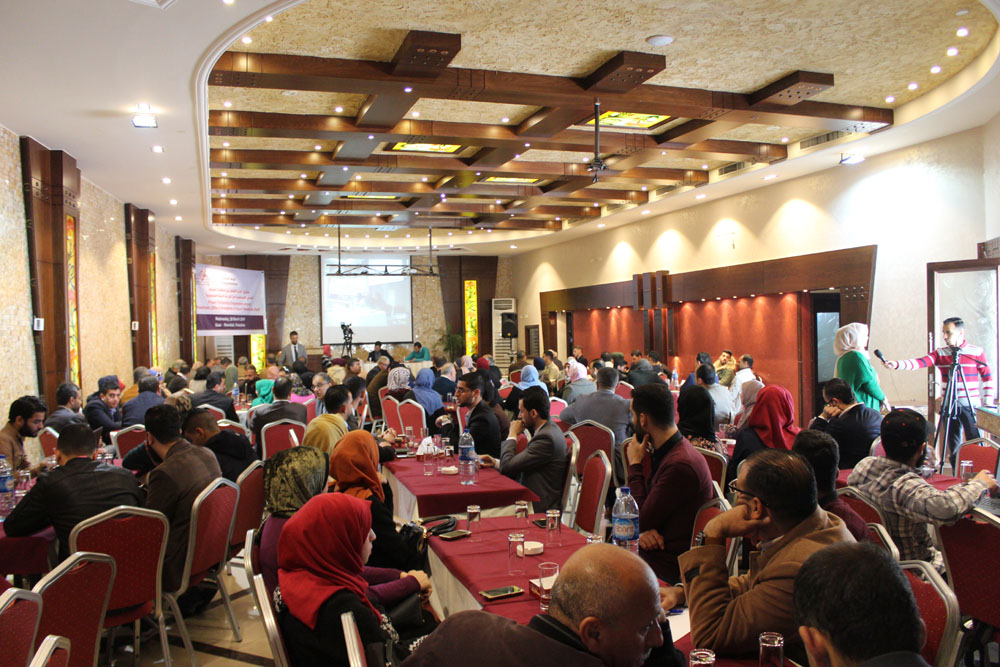
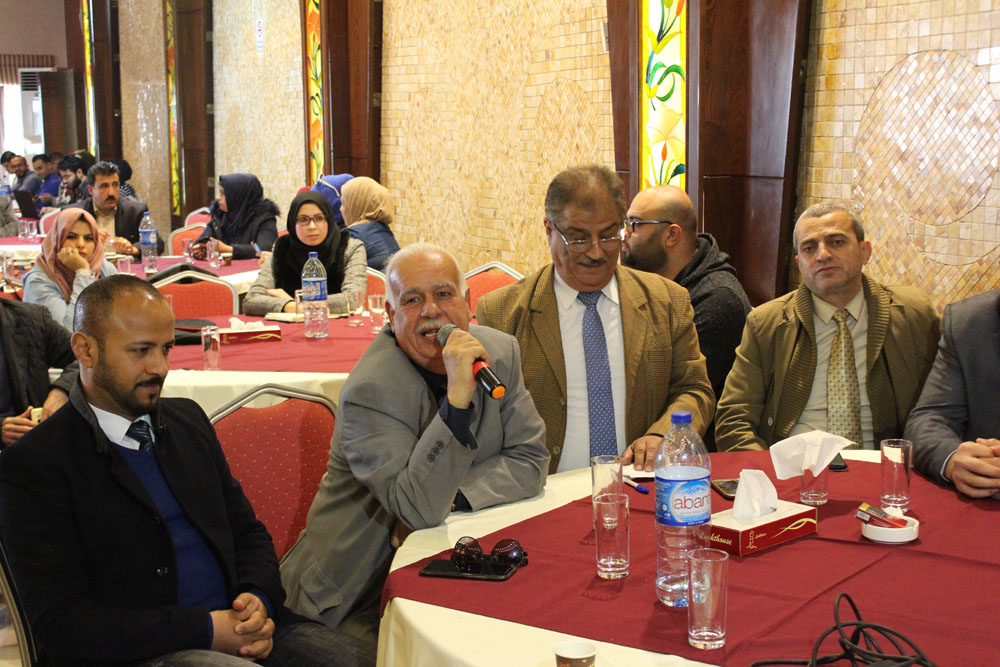
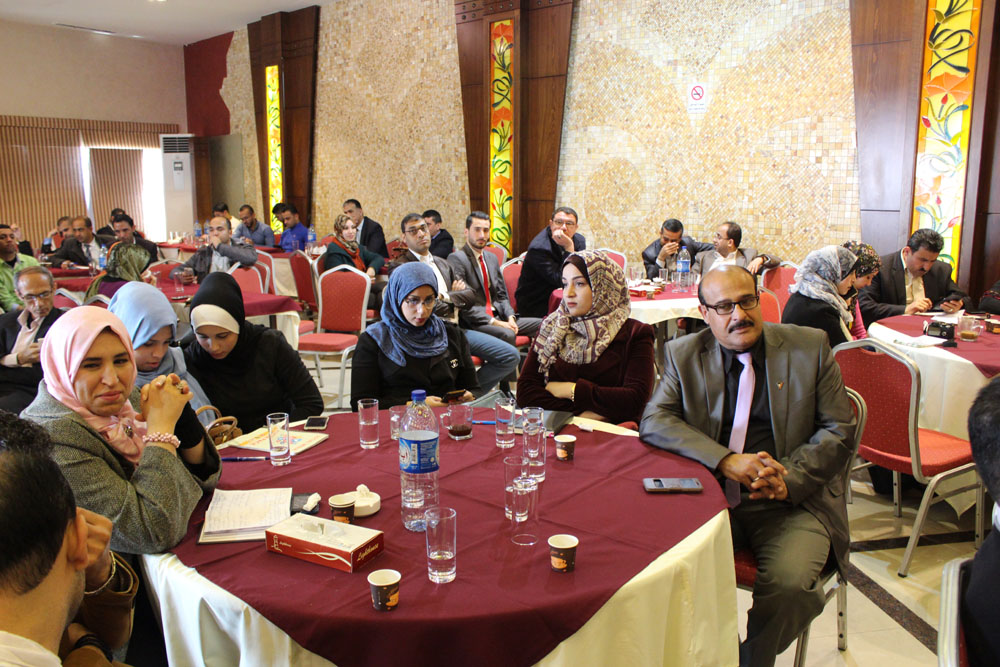
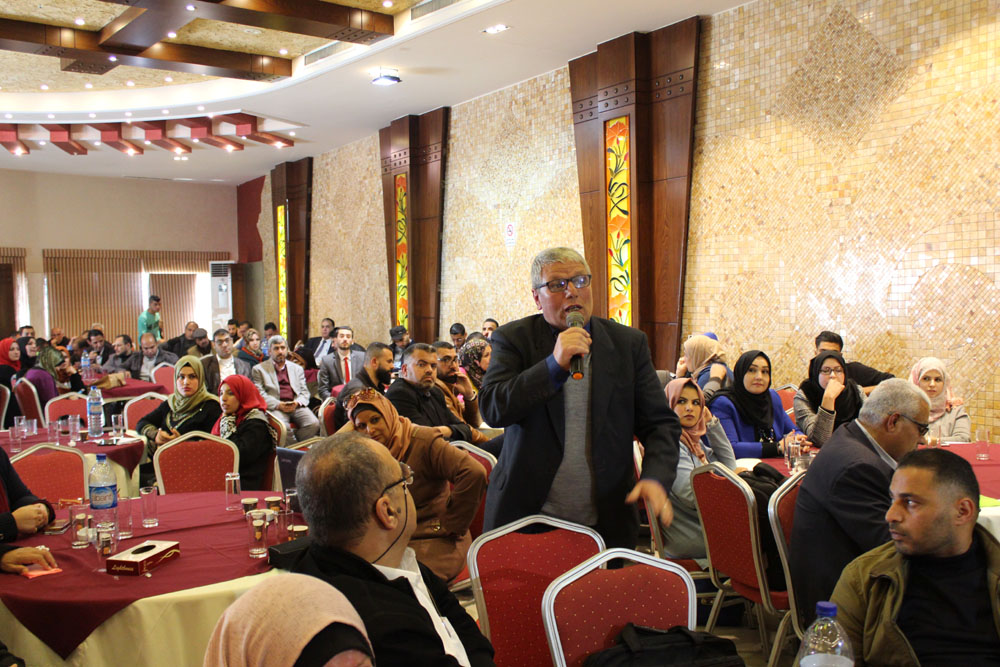
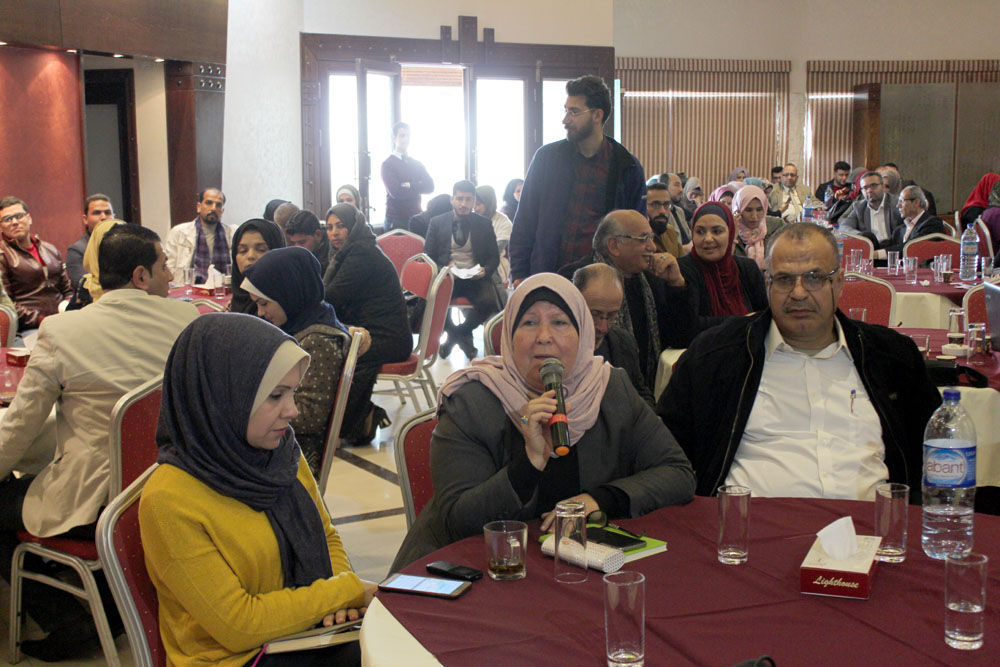
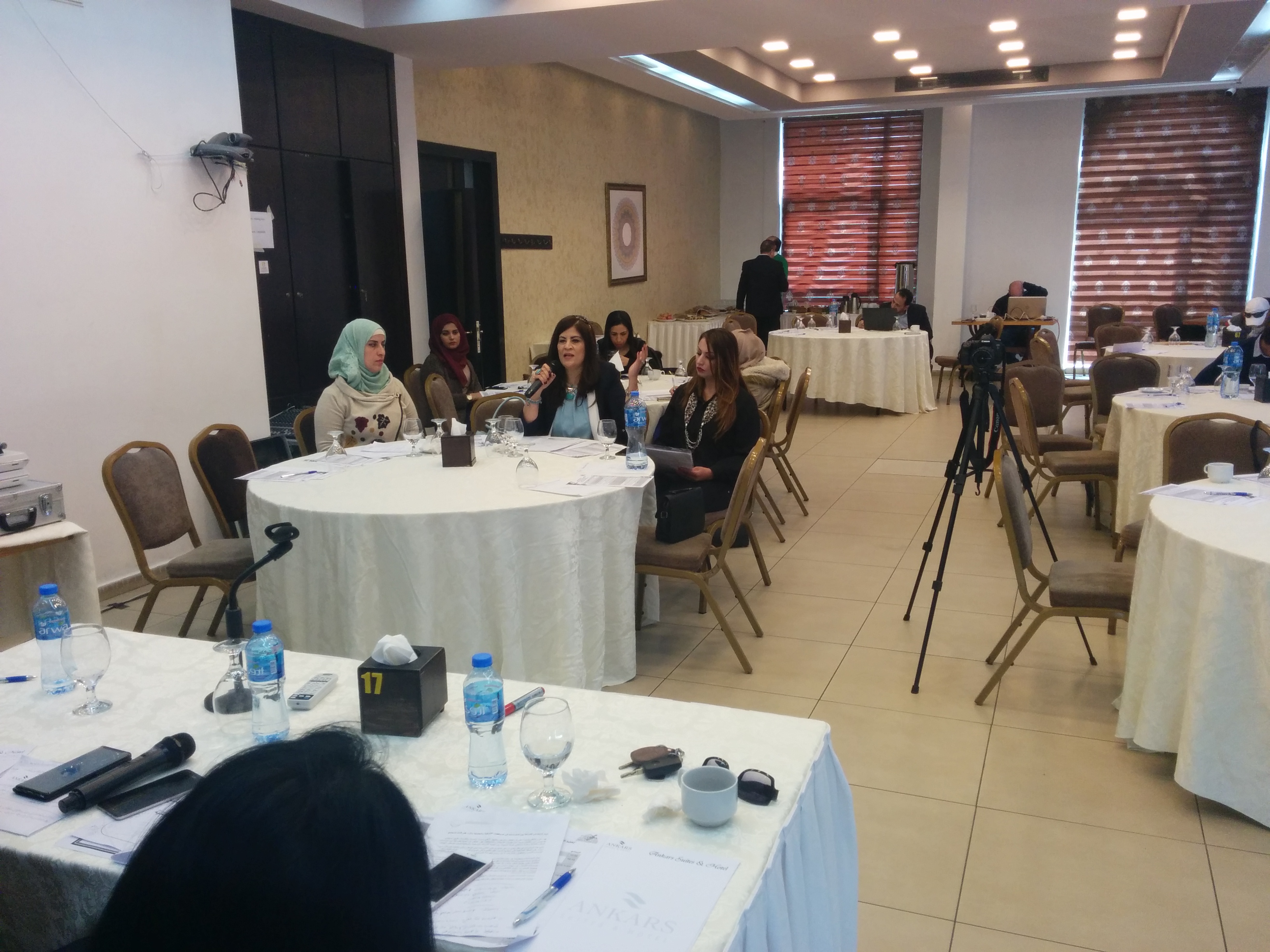
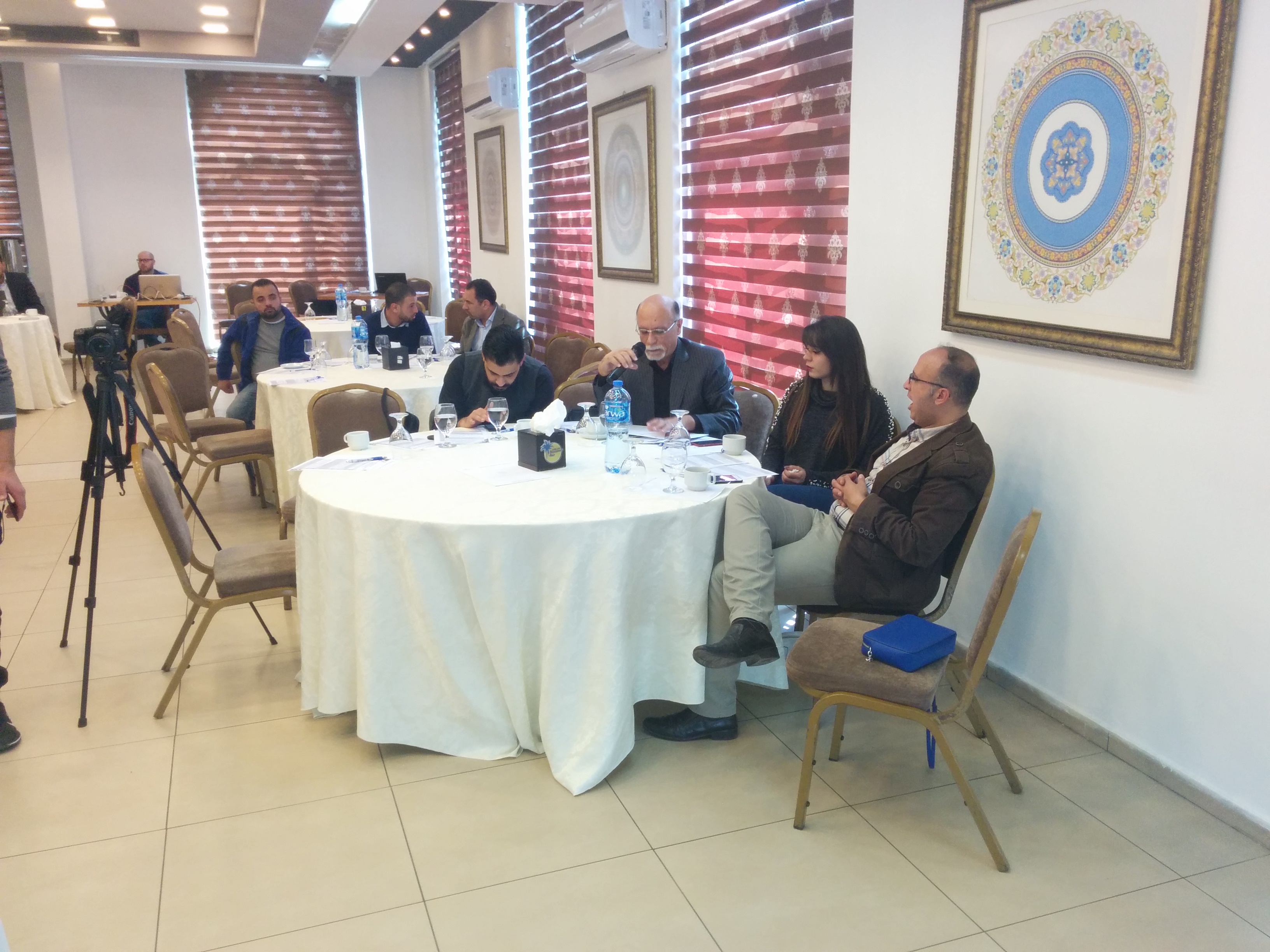
The attendees — who included representatives of civil-society organisations, communal activists, researchers, and related persons — took part effectively in the discussion during the two sessions. The attendees praised the importance of this project, which met wide communal support, it being one that strengthens cooperation between civil-society organisations and contributes to bridging the gulf resulting from the internal Palestinian division — affirming that all the institutions must follow and complete these steps toward a permanent cooperation and partnership between civil-society organisations at the national level, to unify the visions and priorities between the Palestinian civil and official sector.
The speakers and the attendees recommended the necessity of ending the Palestinian division, the continuation and widening of the joint work between civil-society organisations and coordinating together in the northern and southern governorates, and opening the opportunity for civil-society organisations to access information in order to build endeavours that serve the needs and priorities of Palestinian society.