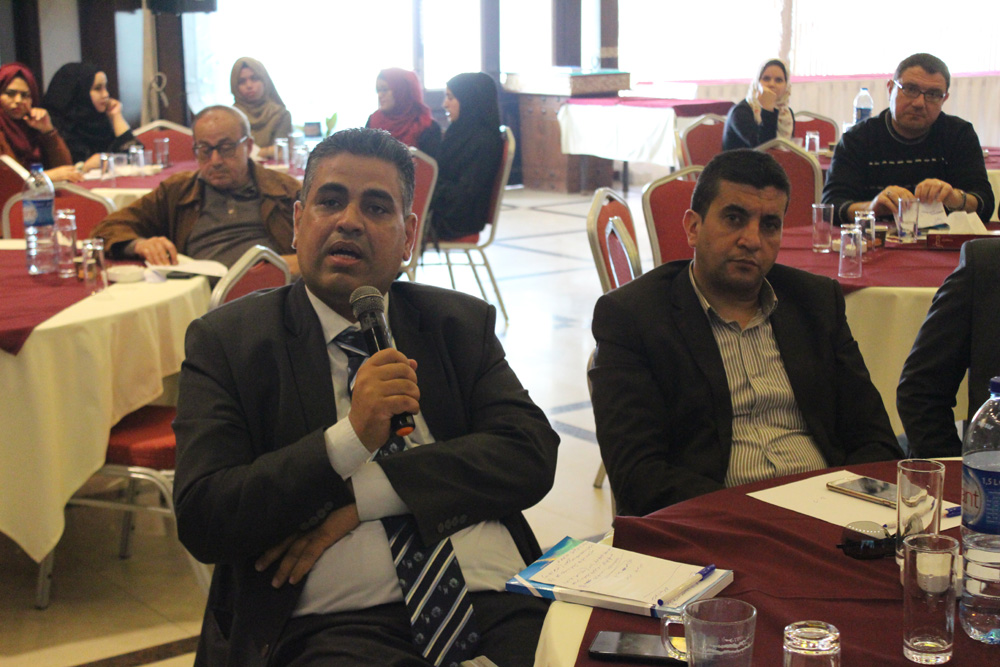
Dialogue: the «Strategic capacity-building for institutions in Palestine» project
Pal-Think held a dialogue under the strategic-capacities project, discussing two research papers — among them «Engaging international civil society: human-rights defenders and advocacy and solidarity campaigns».
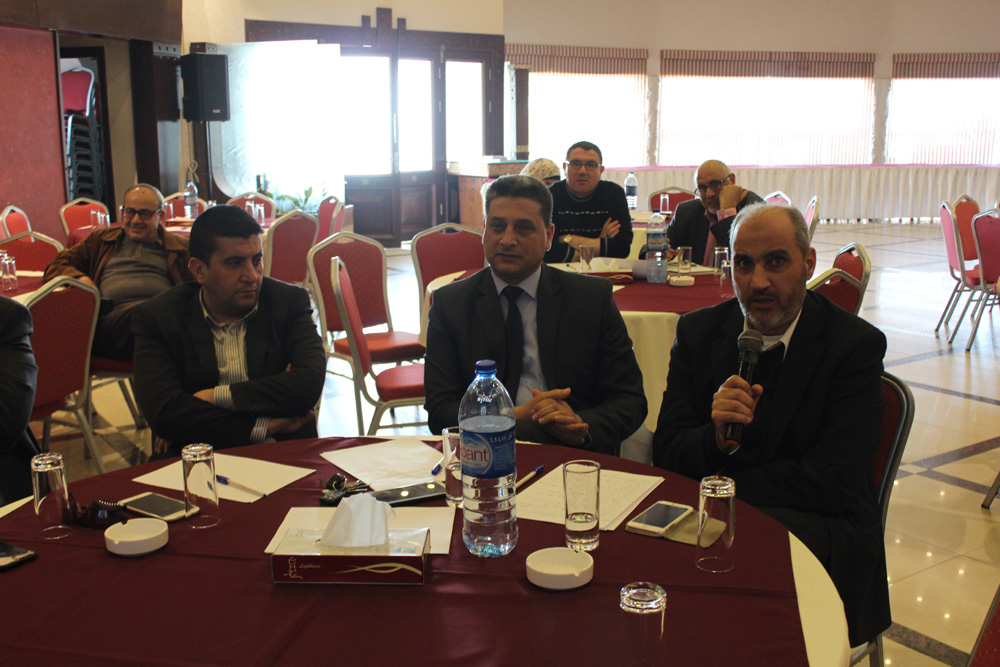
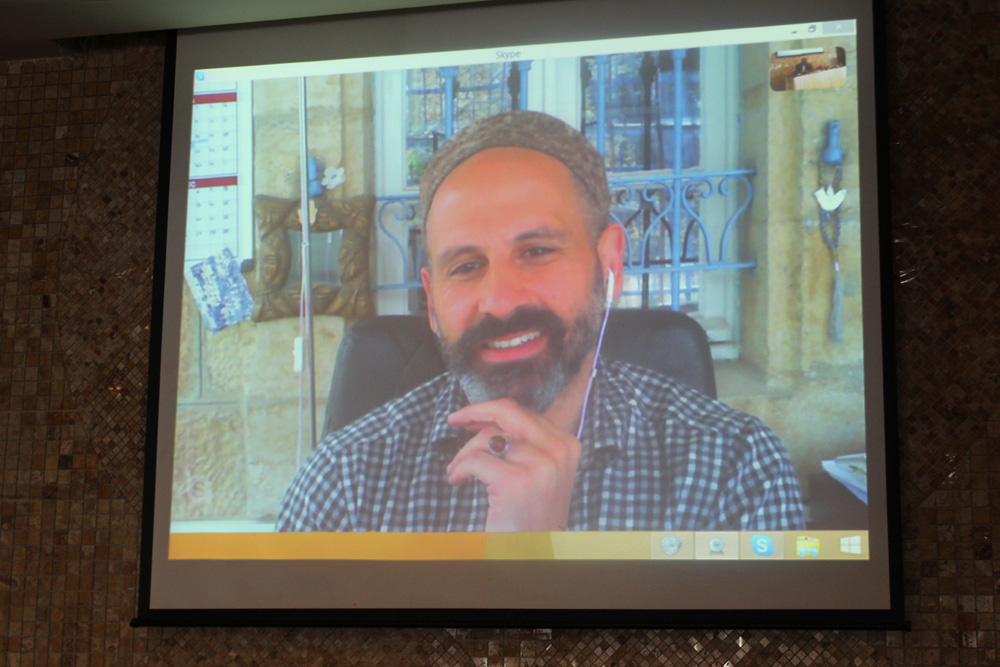
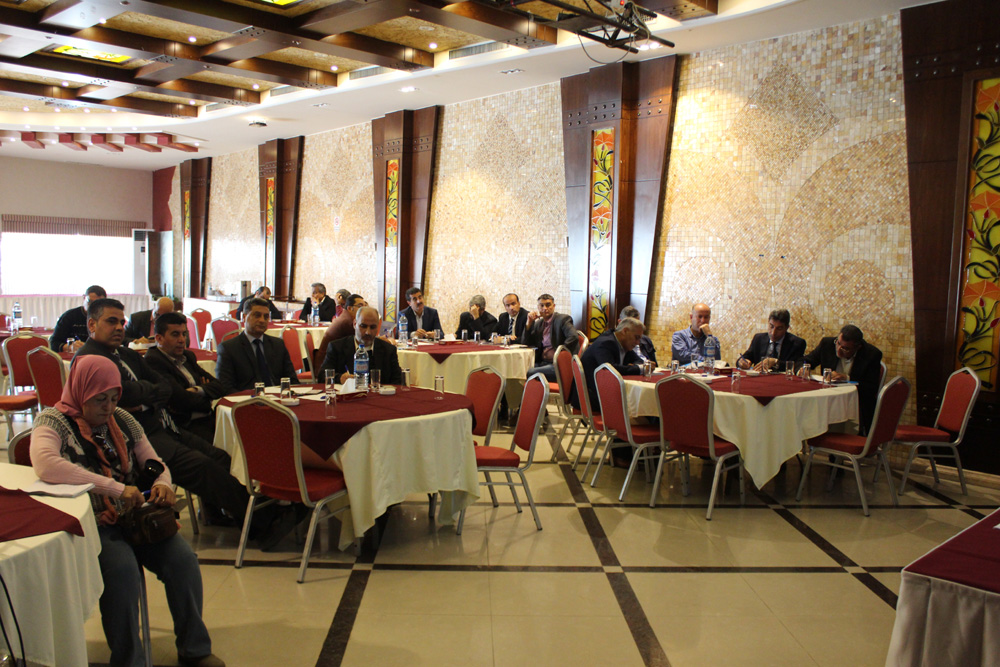
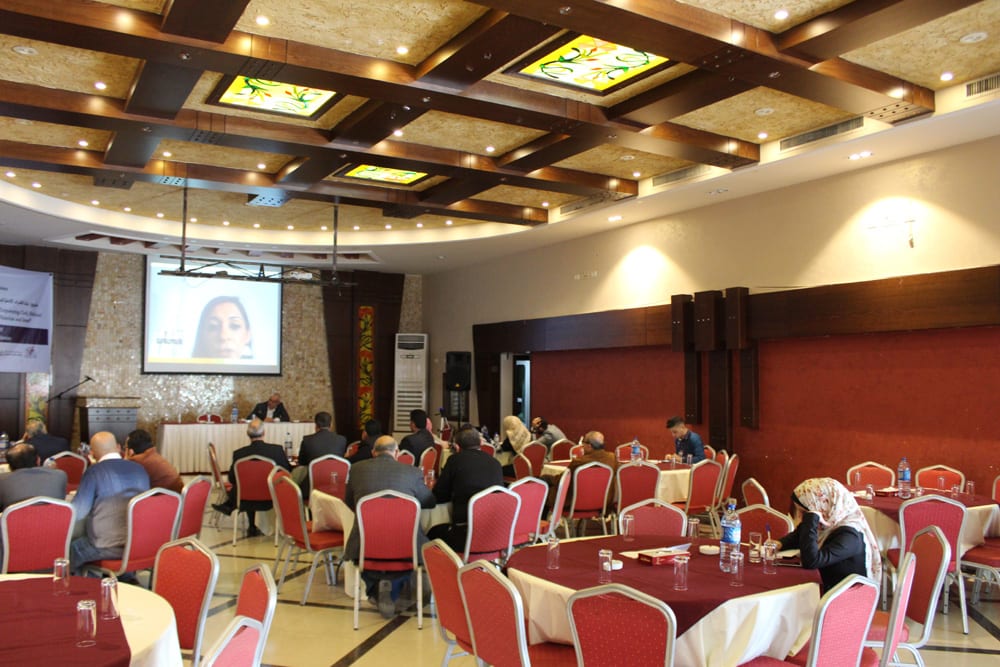
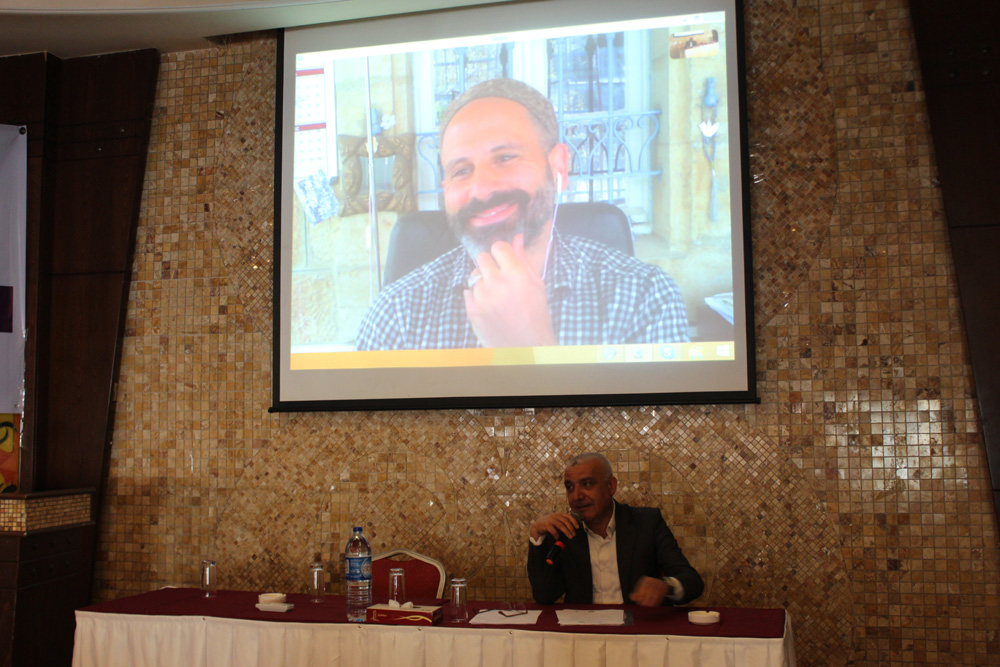
The Pal-Think for Strategic Studies institution organised a dialogue session within the project of building the strategic capacities of the institutions in Palestine, during which two research papers were discussed: one titled “Engaging international civil society: human-rights defenders and the campaigns of advocacy and solidarity” by Dr Cecilia Baeza, professor of political science and international relations; and the paper took up the subject “Evaluating the international geopolitical scene and the position of the Palestinian cause” by the writer Toufic Haddad, author of the book “Toward a new internationalism”.
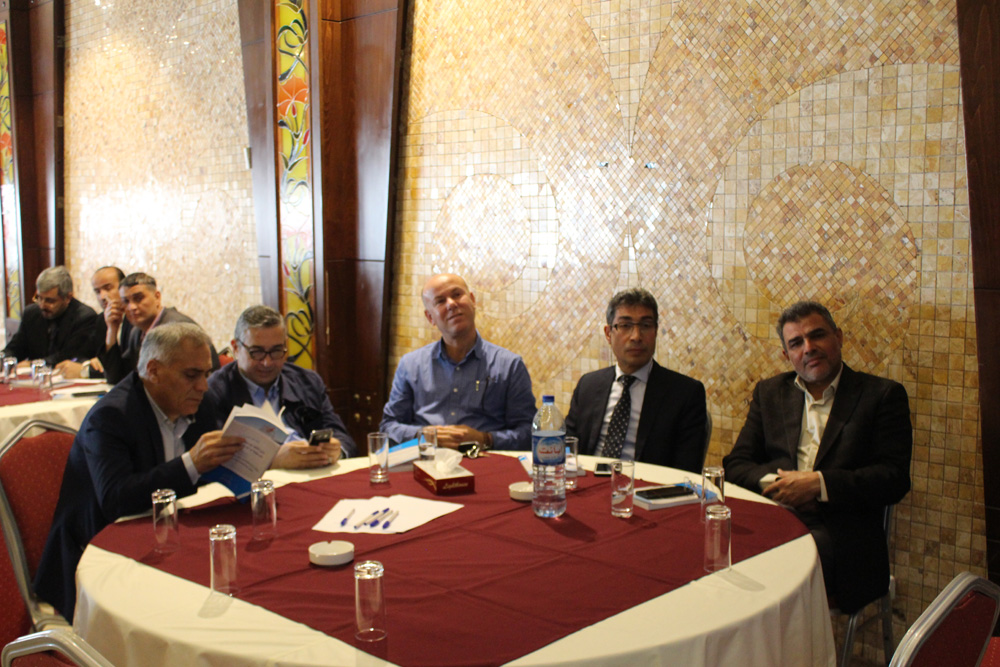
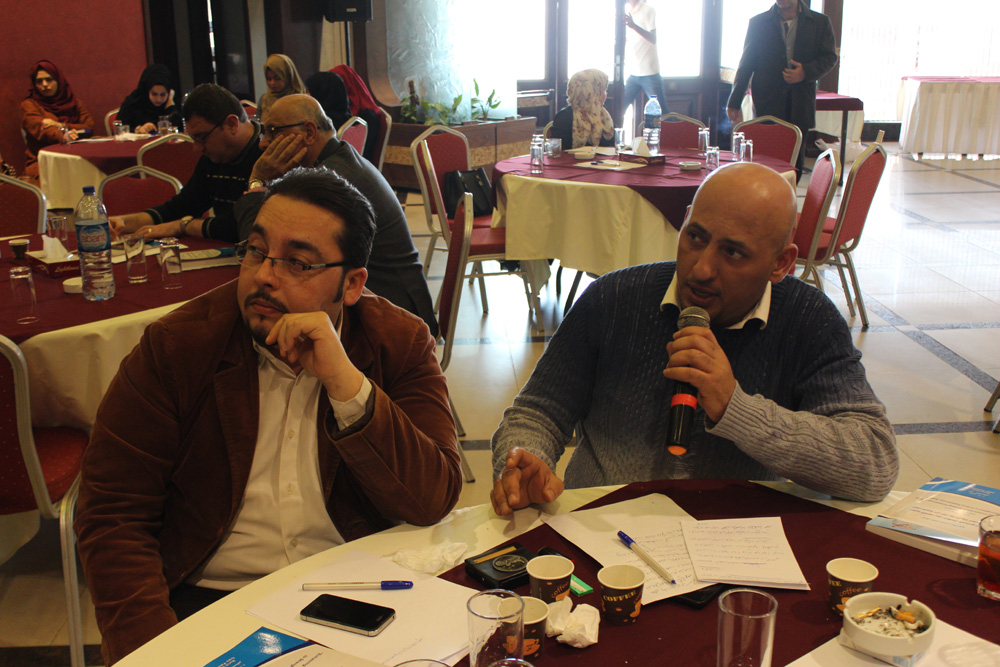
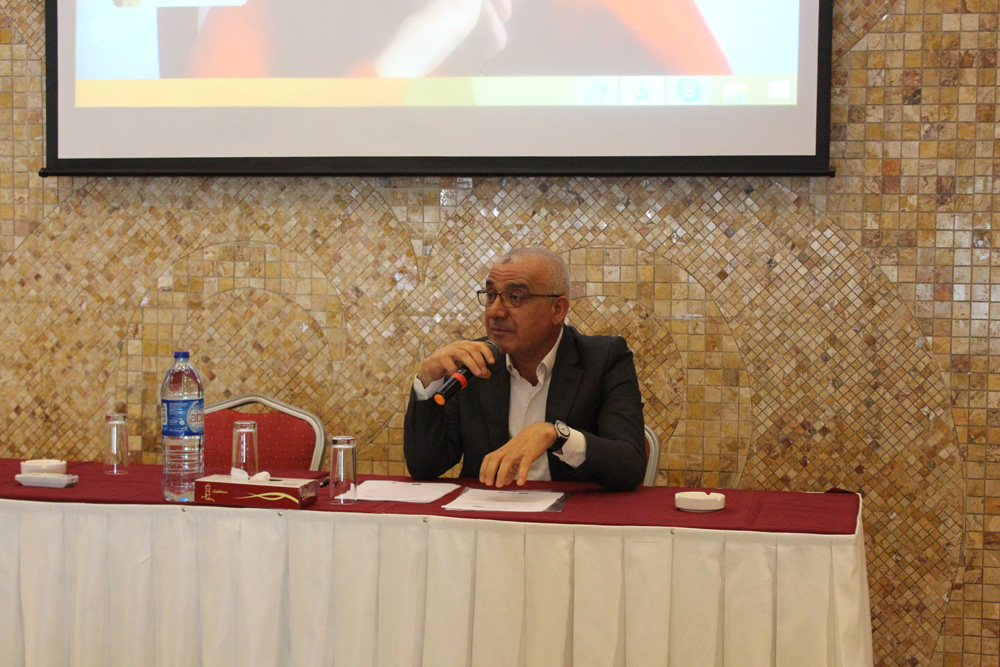
Mr Omar Shaban welcomed the attendance, which gathered spectra of the intellectual, political, and youth elites, affirming the Pal-Think institution's continuation in networking and communicating with all, and putting Palestinian society in the picture of the regional and international developments. He reviewed some of the institution's previous activities in this field, among them the project of discussing research papers produced by the Madar Center for Israeli Studies that took up the Palestinian community in Israeli society, by researchers from the interior; he likewise reviewed what will be organised in this period of presentations of research papers taking up the regional and international position on the Palestinian cause according to the vision of the Palestine 2020 report project.
In her turn, Dr Cecilia Baeza reviewed the most prominent international developments that have influenced the work of the campaigns of advocacy and solidarity, among them the rise of the extreme right and populism with Trump's arrival at the presidency of the United States and the rise of the right in each of India and Brazil, whose interests align to a great degree with the Israeli position and to a lesser degree with the Palestinian position. In addition, the leaders supportive of the Palestinian cause face internal problems that limit the advocacy of the Palestinian cause in a strong way — such as Venezuela, for example. Also, the European Union has become unable to take independent policies, and has become hesitant in taking decisive positions.
Cecilia sees that these elements combined have made the campaign of solidarity with Palestine more important and deeper, and it has become necessary to work in a doubled way to strengthen the efforts of these campaigns to confront the right and populism. Cecilia sees that these factors are at the same time factors that can be exploited to make the boycott movement more effective and challenging, and she reviews here some of the challenges facing the boycott campaigns, among them: The first challenge: the legal campaign to confront the boycott campaign and accuse its members of antisemitism, and prevent its elements from entering the country — and this places a great challenge before the efforts of BDS. The second challenge: the boycott movement's inability to transform its achievements into policies; it lacks the instruments of punishing Israel and has failed to transform into an international power with its instruments. The third challenge: there is a clear lack of harmony between the position of the boycott movement and the official policy of the Palestinian Authority, and at times the interests of the two sides and their political directions conflict — and this weakens the boycott movement's position and reduces its efforts.
To confront these problematics and to strengthen the boycott campaign's methodology, Cecilia sees the necessity of working along two tracks to realise that. The first track: how to strengthen and raise the awareness of internal Palestinian society about the boycott movement's concepts and values — and this falls on the shoulders of civil-society organisations in the first degree. And the second track: an international track resting on networking with all the active parties and strengthening the communication and efforts among all; she sees that the rise of the right in the world gives a golden opportunity to strengthen the interconnection among the effective actors in the boycott movements. On the tracks of the boycott movement's intervention strategy, Cecilia sees as a first track: the necessity of resetting priorities in confronting the American administration's making the Palestinian cause less important in exchange for raising the importance of the Iran issue, and confronting the deep alliance between the United States and the states of Eastern Europe, which witness a rising of the right and populism. As for the second track, it rests on confronting and fighting the confusion and controversy between anti-Israelism, anti-Zionism, and antisemitism and clarifying what is meant by each term. And the third track of the intervention strategy rests on strengthening the relations between the boycott movement and the rights institutions around the world to realise justice. Building on this, and in the short term, the boycott movement has been able to realise noticeable victories, such as exploiting the gaps in the states where the right is rising, such as Spain and Mexico. The constant strategy in this field remains the strengthening and networking with the bases and the universities in these states and the alliance with the victims of the extreme right in Europe.
Evaluating the international geopolitical scene, by the writer and researcher Toufic Haddad, policy advisor of the Palestinian Policy Network.
The researcher took up in his paper the opportunities available to the Palestinian movement in the world strategically, economically, and politically, and the relations between the Palestinian movement and the American administration, the European Union, and the BRICS states. He likewise took up some observations required to be taken into consideration when setting a study of this kind: it requires of us knowing the complications in the international system and the economic system and analysing them, and finding possibilities for developing our policies according to an understanding of this system. This kind of study rests on understanding the bilateral relations and the relations and role of civil society and how they influence policy-making; and for these studies to have meaning and importance we must determine the goals and the policies and determine the answers to that — at the level of the state, the peace process, and the right of return, and what do we want? And the beginning is by determining the instruments of implementing these goals.
Haddad sees the factors of understanding the Palestinian movement's relationship with the great powers through understanding the importance of our Arab region in international politics, the role of the great powers in the emergence of the State of Israel, the Second World War and the Holocaust, and the projections of that onto the region and understanding its importance. Haddad affirms that despite the existence of the preceding factors we must understand politics according to the objective interests and how its goals can be realised, taking into consideration understanding the state's political system and the mechanism of the international organisations' work.
The researcher reviewed the region's geopolitical scene from the beginnings of its formation: since 1967 the political Arab–Israeli conflict falls under the sponsorship of the American administration, and most important, these policies do not come from the Jewish lobby, but from the economic system and the self-interests. From this standpoint, support in its various directions for Israel was an American interest, and the Americans used to say that Israel is the largest aircraft carrier that cannot be sunk. In addition, the fact cannot be overlooked that Israel is a European-American entity; but after 1956 it can be said the scene transformed from the European to the global with the exit of France and Britain from the files of the Middle East, specifically the Palestinian cause, and the European Union's incapacity to crystallise a policy independent of the American administration just after the Second World War — rather it divided the roles with it in the region; and Russia has become a non-influential player in the region, specifically in the Palestinian cause, and is occupied with regional files relating to its national security.
The researcher focuses in the paper on the role and standing of the BRICS group, which has diverse histories with respect to the Palestinian cause — among them those who were loyal to the Palestine Liberation Organization, presenting it financial, military, and political support, and who had the role of the backer in the United Nations. But their current role does not exceed moral assistance; they do not have the ability to defy the American administration, and they do not represent a competing role to the American project in the region. With the signing of the Oslo agreement between the Israeli government and the Liberation Organization, this change — “the Oslo agreement” — led some states that used to refuse establishing peace with Israel to reconsider this issue: today India has become a strong ally of Israel, for example, and trade has strengthened between India and Israel, and likewise China in the subjects of technology — but the ceiling of the commercial relationship between Israel and China has remained short of development in the military relationship. China today has obtained the project of managing the port of Haifa, and the deal of developing the port of Ashkelon. South Africa remains the closest to Palestine, but its limits do not exceed the regional, and this prevents it from having a large international role.
The researcher concludes by saying that this region is subject entirely to American sponsorship, which presents Israel sufficient support, while the position of the Palestinian leadership is marginalised and weak and has no capacity to leap in its positions. But are there possibilities? If we keep focusing on the governments of Europe and America, we will not develop ourselves — for these are a fundamental ally of Israel, and the European Union is charged with managing the conflict; rather we must focus on the European street and the civil-society organisations, for politics in the West is made from below, and we must exploit these strata to strengthen Palestine's position in the bases and convince the citizens in Europe and America that what they pay in taxes goes to protect Israel. To realise that, the efforts of the boycott movement must be unified, and work done on policies that convince the West to lower the support presented to Israel — therefore we must study the states and their systems and how they can be reached and dealt with. We must develop the instruments of communication with the European societies not only for our interest, but to help them strengthen progressivism.