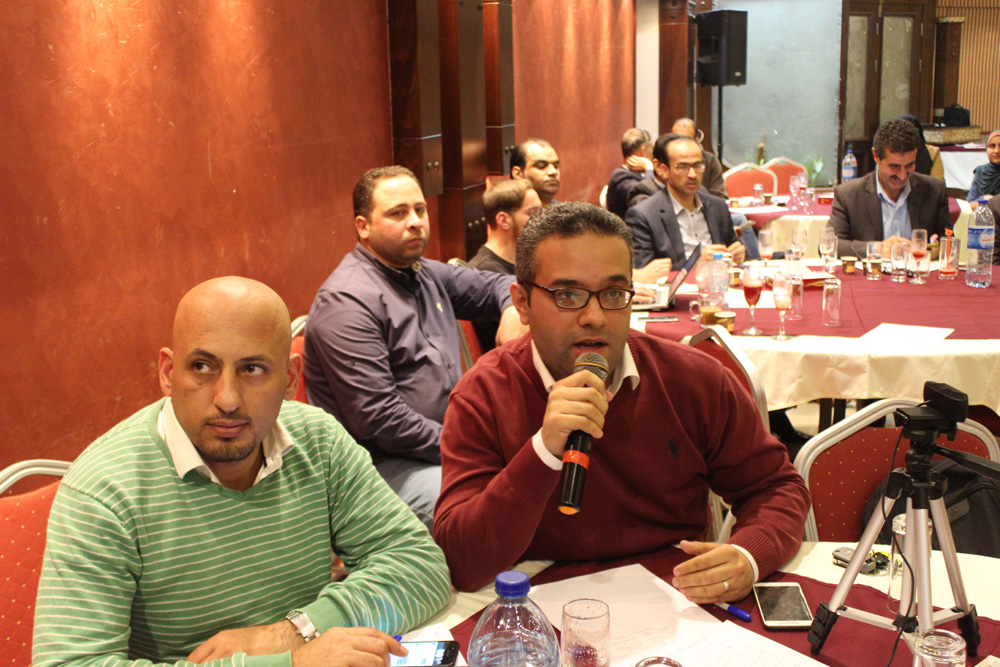
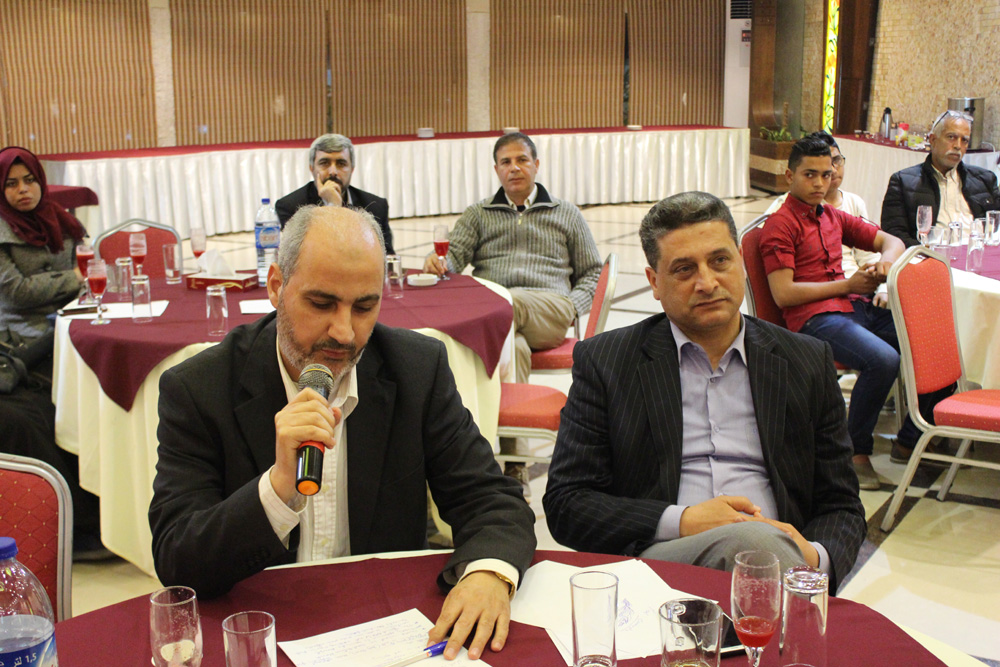
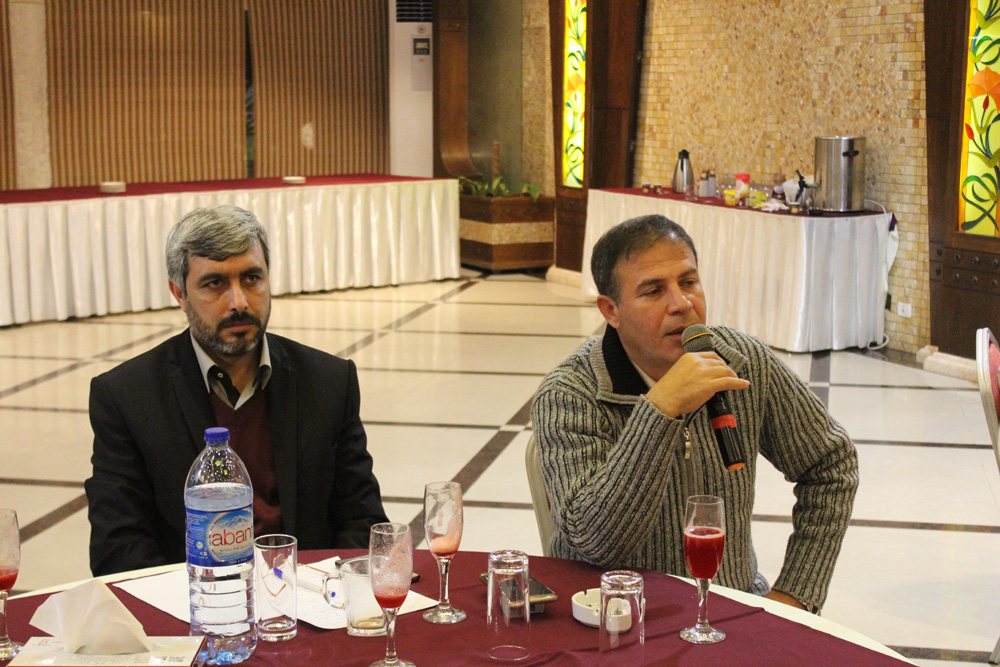
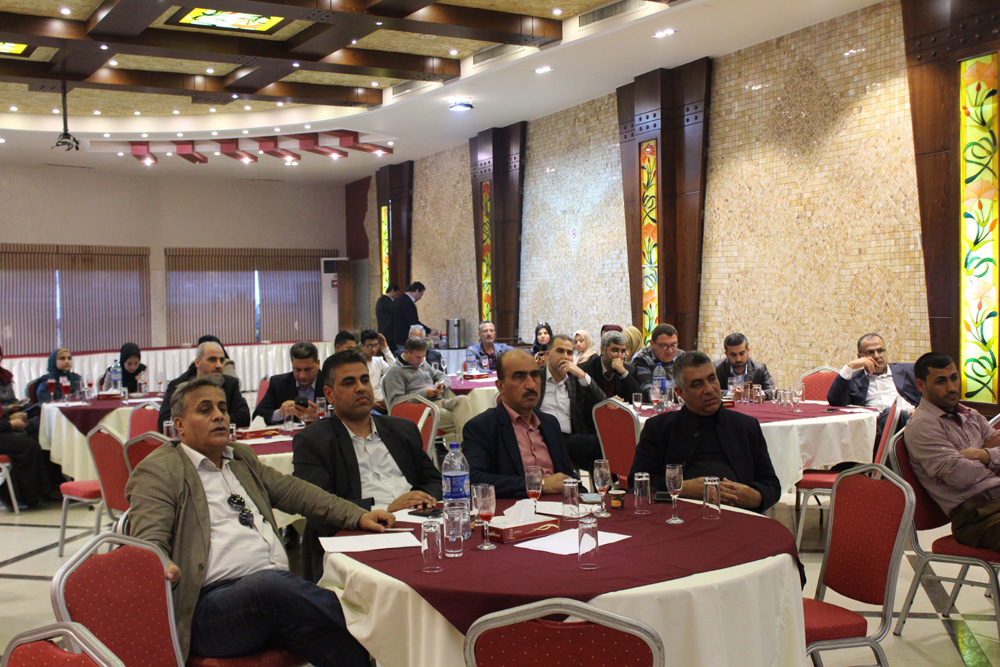
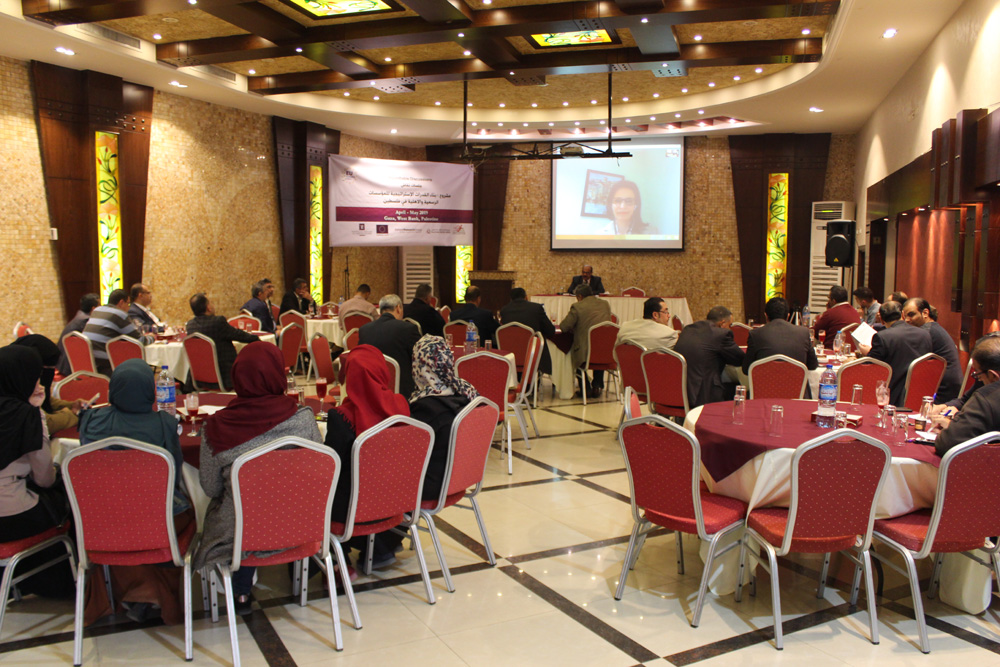
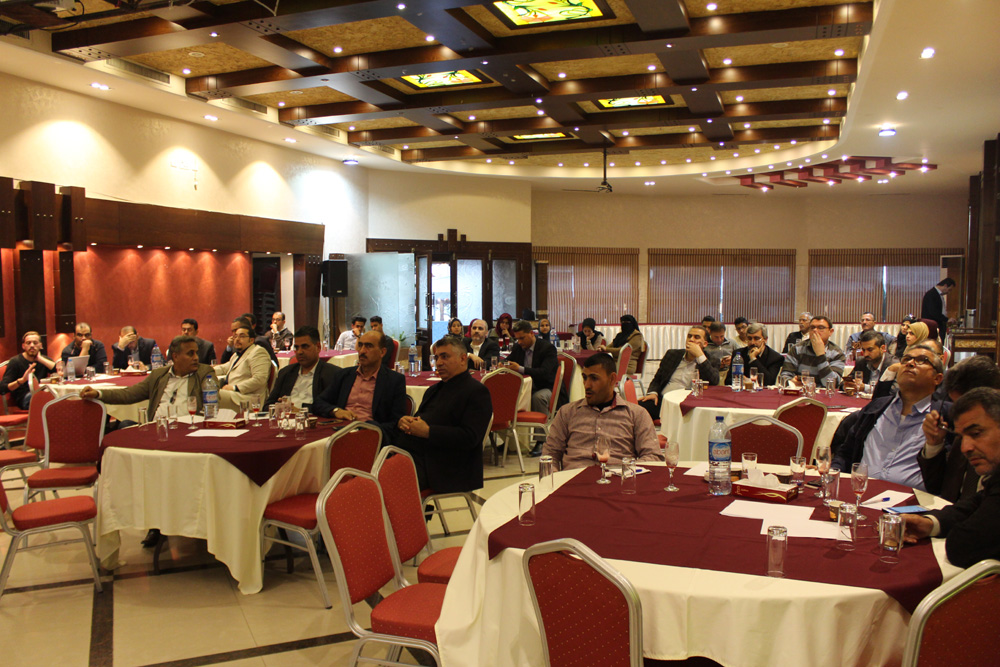
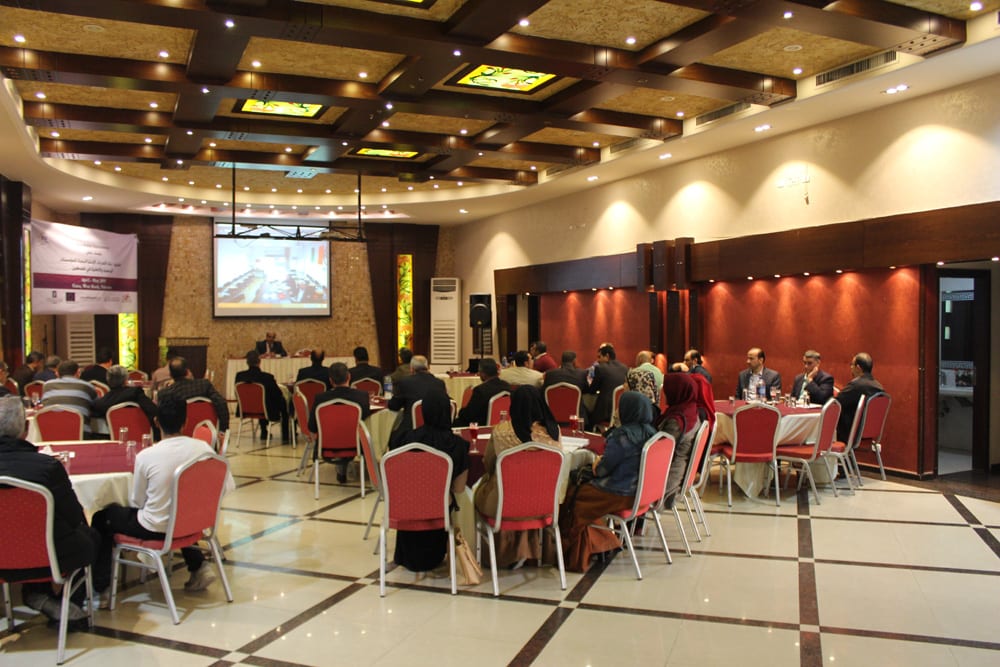
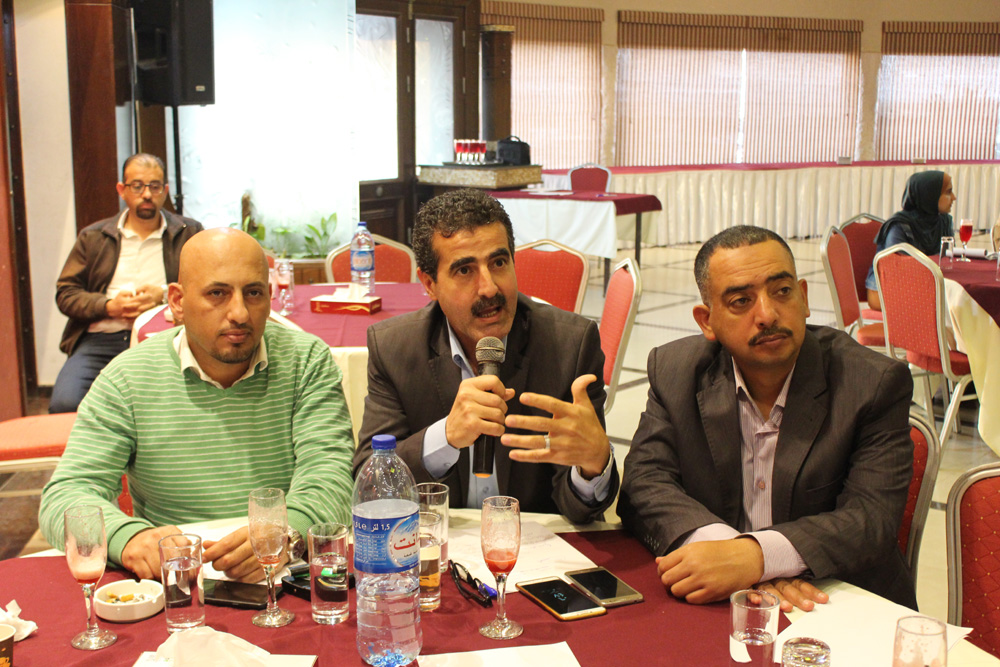
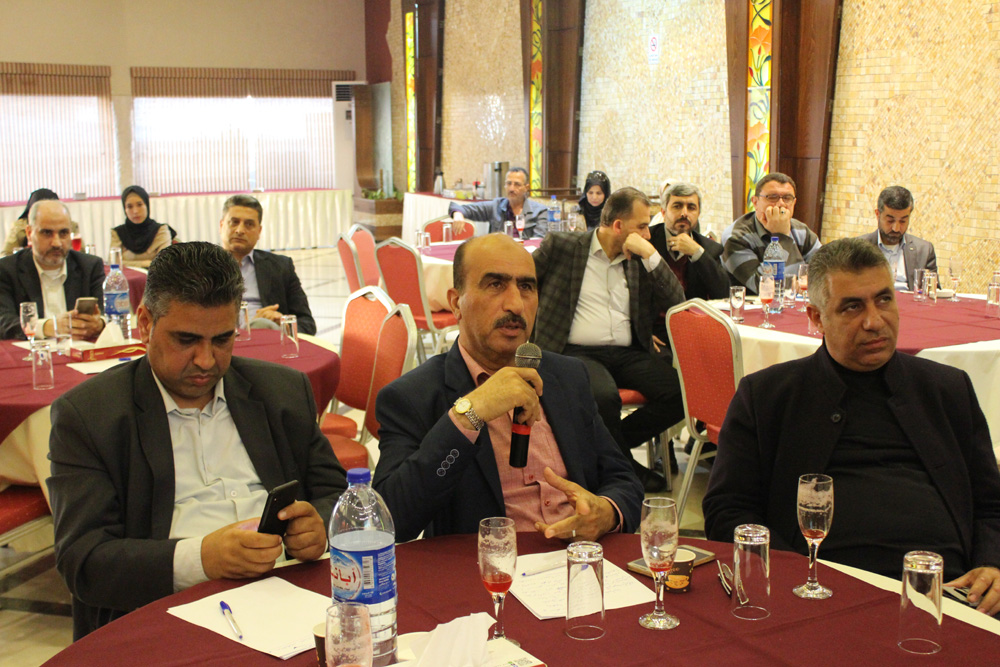
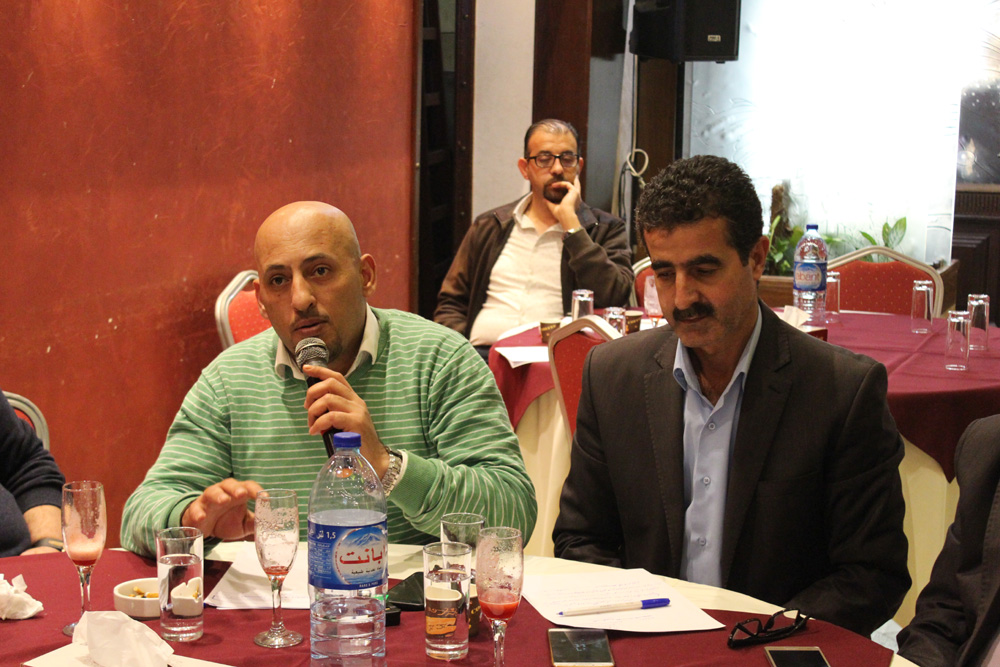
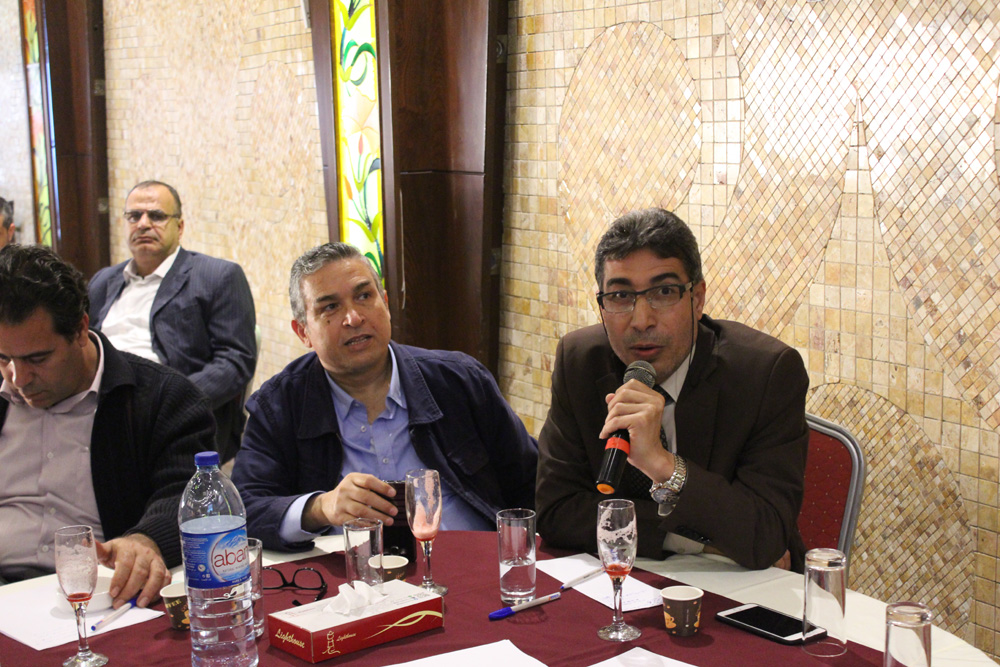
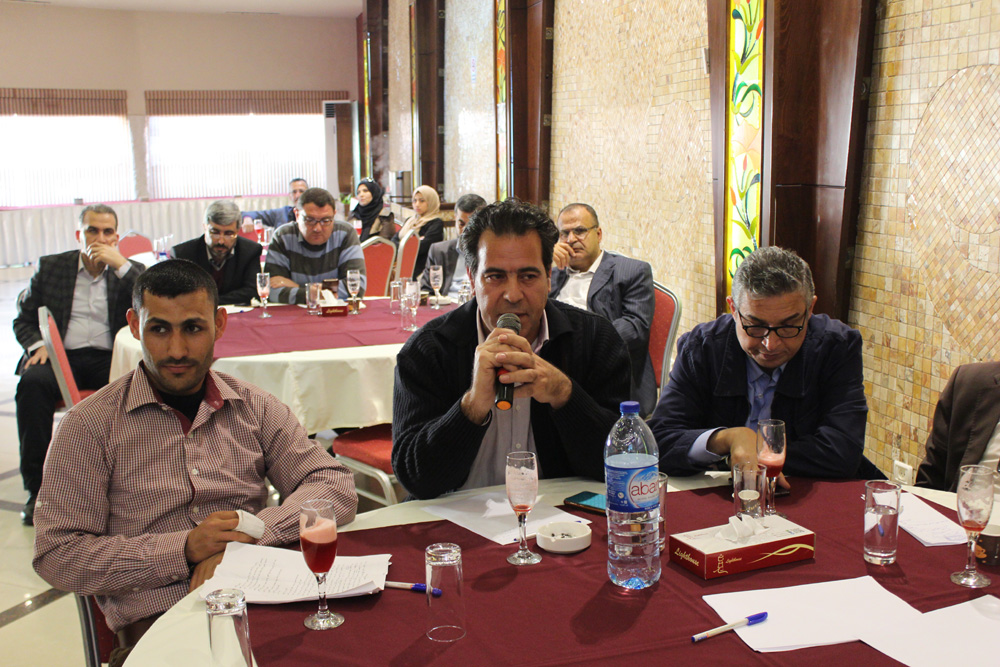
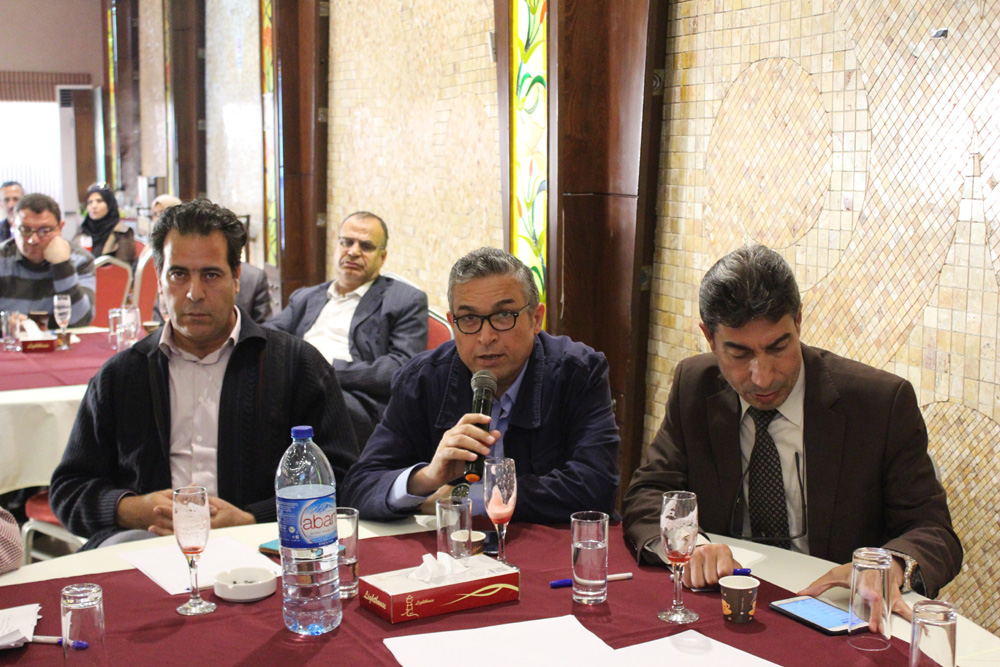
Second dialogue of the «Strategic capacity-building for institutions in Palestine» project
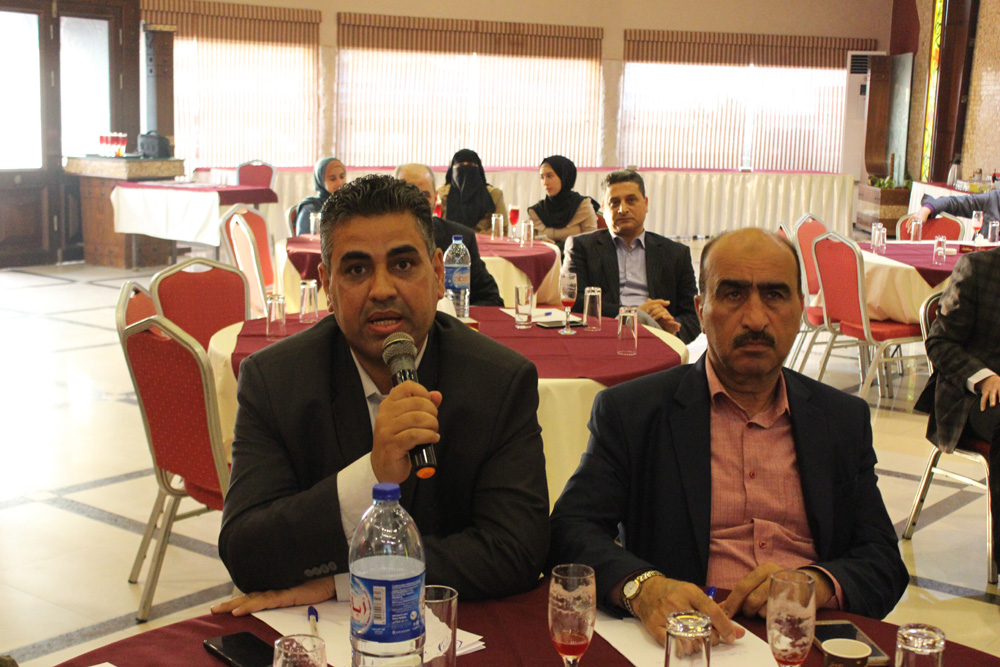
Director Omar Shaban welcomed the audience, affirming that the institution's dialogue sessions enrich the debate and found a new phase in which knowledge rises above imitation and the mistaken policies we have pursued.
The director of the Pal-Think institution, Mr Omar Shaban, welcomed the attendees and affirmed that the dialogue sessions the institution holds enrich the discussion and lay the foundation for a new stage in which science and knowledge rise above imitation and the mistaken policies we pursue as Palestinians. He affirmed that this workshop comes in completion of the project of policy papers that discuss international and regional issues; these papers will discuss the regional and international issues within a project in cooperation with strategic thinking at the level of the Arab homeland and the world — the Pal-Think institution is a partner with the Oxford group. Then Mr Omar Shaban introduced the researcher Shawan Jabarin.
The first paper: the researcher Shawan Jabarin
Relaunching the United Nations campaign as a full state and joining the United Nations as a full member state and joining the United Nations institutions and rebuilding the international legal course through joining the International Criminal Court and the High Court of Justice”
Jabarin reviewed the attempts of the Palestine Liberation Organization since its launch to defend the Palestinian rights in general and to join the international organisations to entrench the Palestinian right in the international arena. He presented in his paper a Palestinian approach that moved from a political approach to an approach that rests in international law on dealing with the particularity of the international condition, in addition to an attempt to understand the conditions placed before Palestine to gain full membership and the role of the international institutions in helping Palestine obtain the membership, as well as the criteria of Palestine's going to join the International Court of Justice and the International Criminal Court.
Jabarin likewise took up some institutions in a focused way in his paper, namely “the World Health Organization and the UNESCO organisation”, for what is in them of importance for entrenching the Palestinian right to self-determination and entrenching Palestine's sovereignty over its territory on land and water; and on the extent of Palestine's capacity to join the international organisations, and how it can contribute to exposing the violations of Palestine's sovereignty especially in the air. The paper discusses these matters from a political perspective and sets a plan for how Palestine can join such international institutions, and makes clear the impediments existing before the Palestinians.
The paper likewise treated the internal Palestinian affair and the state of political division and its effects on Palestine's obtaining membership in the United Nations, and the problematic of its international commitments and how it behaves as a state and not as a political party. Jabarin affirmed that the paper is still under development, review, and building, and that the interventions and additions are an important factor in enriching the paper and making it take up the issue from all its aspects and its different contexts. He likewise affirmed that the matter of joining the United Nations is not a matter of texts but of practice, and that the abstract academic criterion is not acceptable and is not objective — there are reasoned studies in the United Nations that serve as margins for its entrenchment; Palestine from the practical respect acts as if it were a state, and it represents the '67 project.
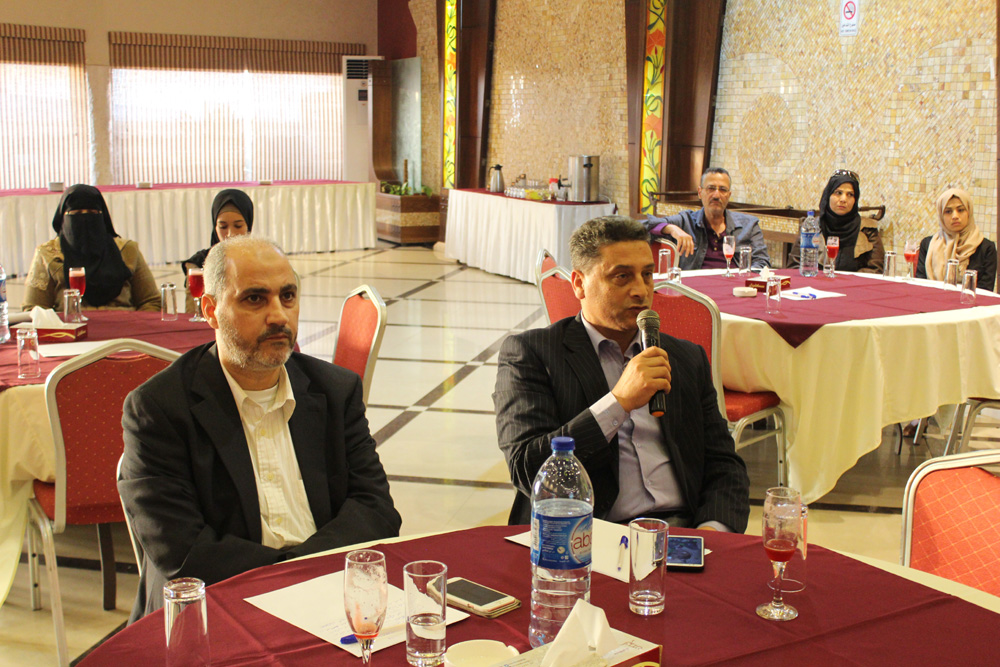
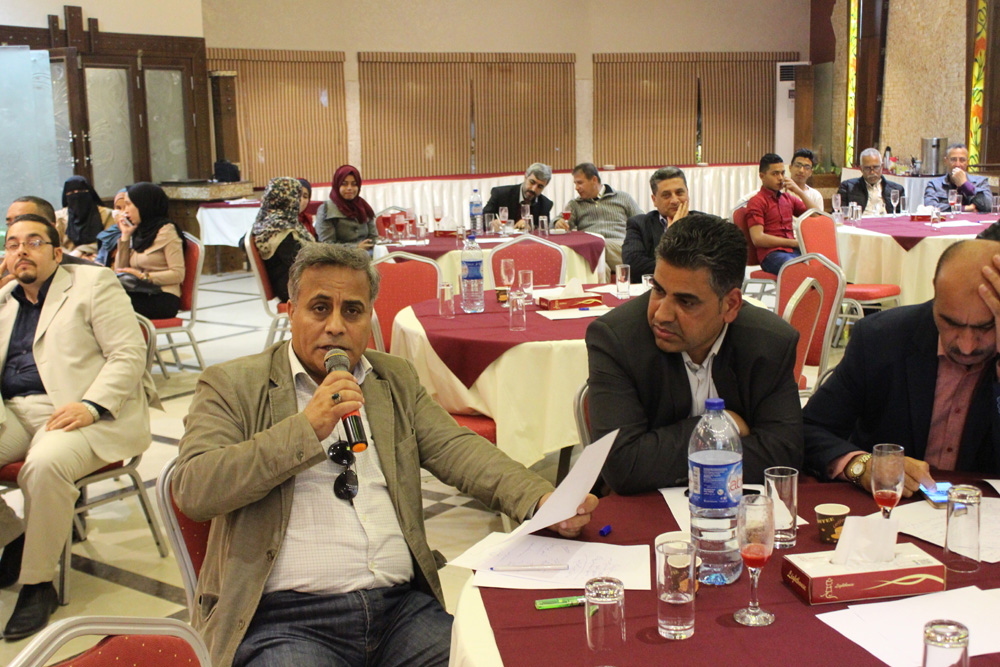
The interventions on the paper:
Dr Wajih Abu Zarifa — writer and political researcher — commented: I think it is important to speak of the United Nations and the Palestinian cause — the legitimacy that is violated today through the conspiracies to circumvent the Palestinian right, at their head the deal of the century, which is concerned with finding a regional solution to the conflict. I think the focus on the United Nations is the cutting of the road before all these conspiracies, and I think the most important thing that can be said is the two-state solution, which means holding to the right of self-determination on the Palestinian land. There is also a targeting of the Palestinians' unity, and I think that through the United Nations, through the Liberation Organization, these are efforts such as to create a Palestinian cohesion and unity on its Palestinian land. It is important that there be a clear Palestinian conception, not only official but popular also and institutional, and that there be integration for the sake of entrenching the Palestinian presence in the United Nations, including joining all the United Nations institutions; unifying the Palestinian position as relates to the Palestinian relationship with the United Nations so that there be no contradiction in the Palestinian position toward these institutions — and this is required alongside setting a Palestinian strategy for dealing with the issues at hand. The paper is important and I hope it will be a reference and an illumination for the decision-taker in the Palestinian arena.
Mr Mohammed Hijazi — political writer — commented: I think the talk of developing the capacities of the Palestinian institutions, especially those working in the international organisations — I think it is good that the Authority joined the international institutions, but the joining of tens lacks the national vision, which is what makes these institutions a platform for the struggle for the sake of entrenching our legitimate rights and contending with Israel — and Israel must not remain escaping its punishment. Why do we not activate the war-crimes cases? I think the files are ready, but they are not activated in the International Criminal Court and the International Court of Justice. I think Israel must feel that there is someone pursuing it, and the Palestinian institutions must be aware in a fundamental degree that these international institutions they have joined — they must give attention to their work and set plans for the work. It is not enough that we merely join; rather we must activate the institutions in the service of the Palestinian cause. I think civil-society organisations have an important role in building capacities, especially in the Palestinian Authority, in order that it have a pivotal role in the Palestinian cause.
Mr Marwan Hammad commented: The first matter is that legal measures must be taken toward the Israeli occupation, such as issuing documents that set out the crimes of the Israeli occupation in the marches of return, and I think the legal statements issued by all the local and international rights institutions in exposing the crimes of the Israeli occupation must be included. Also, legal activity inside the United States of America must be activated so that the decisions conflicting with international law are stopped — such as the arrest of the lawyers who objected to the Trump administration's transfer of the American embassy to Jerusalem.
Dr Husam al-Dajani — writer and political analyst — commented: I hope the paper treats the positives and negatives of joining the international institutions within the Palestinian reality, because we have two projects: a political project led by Abu Mazen and a resistance project led by Gaza. It would be good if the paper laid its hand on which of the institutions guide the two projects on how to deal in the projects, so that the Palestinians are not pursued abroad.
Tayseer Muhaisen commented: I have two matters in the context of activating the subject of joining the United Nations institutions. The first matter: it relates to the mechanism of joining the United Nations institutions directly or the specialised institutions. There is an observation that the Authority's leadership, in the context of joining these institutions — there are political calculations that advance or delay the joining of these institutions, meaning that for long years we hear that the Authority has intentions to join the International Criminal Court but it has been delayed until now; so why does the joining process submit to some political calculations? The principle is that there be no political calculations. The second matter: it relates to activation in the joining, which is the search for integrative mechanisms with the Arab system in its entirety and the world backing the Palestinian project and championing the Palestinian right, so that the Palestinian does not become alone before this Israeli voice and the alliances with it in these organisations. There must be alliances so that Palestine can present visions that have world support so that they can achieve what is in these institutions.
Yusri Darwish commented: My observation falls within a great feeling we have in the direction of “we were not represented in the United Nations except through the Liberation Organization, and the Arab group always carried the Palestinian projects in the Security Council and the United Nations institutions. We have an adoption of the Palestinian cause by a group of states according to what the groups supporting freedom and rights were, and opposite them were supporters of the occupation. I think what we obtained in 2012 is a state of incomplete membership, but that cannot be embodied if we do not act ourselves on the ground — and what I mean is our obtaining this decision years ago; the national form practised on the ground has not embodied this fact that says we transformed into a state, toward the occupation, neither by an official Palestinian declaration nor by national work practised on the ground. I do not think the United Nations bestows on us — that needs a national decision and a national practice in the direction of embodying the state on the ground as an observer until it transforms into a state of full membership. I think our Palestinian form, particularly in the internal situation, is the division. The resistance project is not effective; rather it must be accompanied by politics to be a project. The Palestinian situation is in its weakest states, and the comprehensive national discourse must be unified by establishing a democratic state, and we must present ourselves as a civilised, civil, pluralistic state.
Yahya Qaoud, researcher at the Palestinian Planning Center, commented: I hope the paper includes politics and law and the relationship between them in the United Nations institutions. As you know, the laws are rigid, and the West morally supports the Palestinian cause but legally supports the occupation — the mechanisms of holding the Israeli crimes to account. I hope the paper includes the theory of burning time, and how we can hold Israel to account for crimes — the International Criminal Court is slow in ruling on the cases presented to it. I hope we learn the mechanisms and ways through the theory of burning time and how we can hold the occupation to account in the shortest time.
Dr Fouad Hamada, university professor, commented: I think we need to gather up the distinction between the Security Council and the United Nations. The United Nations is more like the parliament, but the taking of the political decisions and their implementation is the Security Council. The question: is our joining the United Nations only formal or practical? The United Nations' role is relief; the Security Council is executive, political.
Dr Jamal al-Baba, the Palestinian Planning Center, commented: I will set out from the particular of the importance of the legal aspect for the Palestinian cause — meaning we almost agree that the negotiations project and the political-solution project lives a crisis, and we almost agree the resistance project lives the same crisis, and consequently we must search for new instruments to activate our Palestinian cause especially on the international arena. I think Israel is at its weakest in the legal aspect. Targeting Israel legally in the international arena is a challenging step and places the Palestinian cause on its correct course, but that calls for setting a clear, integrated plan by the Palestinian Authority to contend with Israel on the international arena — and we have of the hundreds tens through which we can present the occupation's criminal measures and corner it.
The second paper: Dr Zaha Hassan
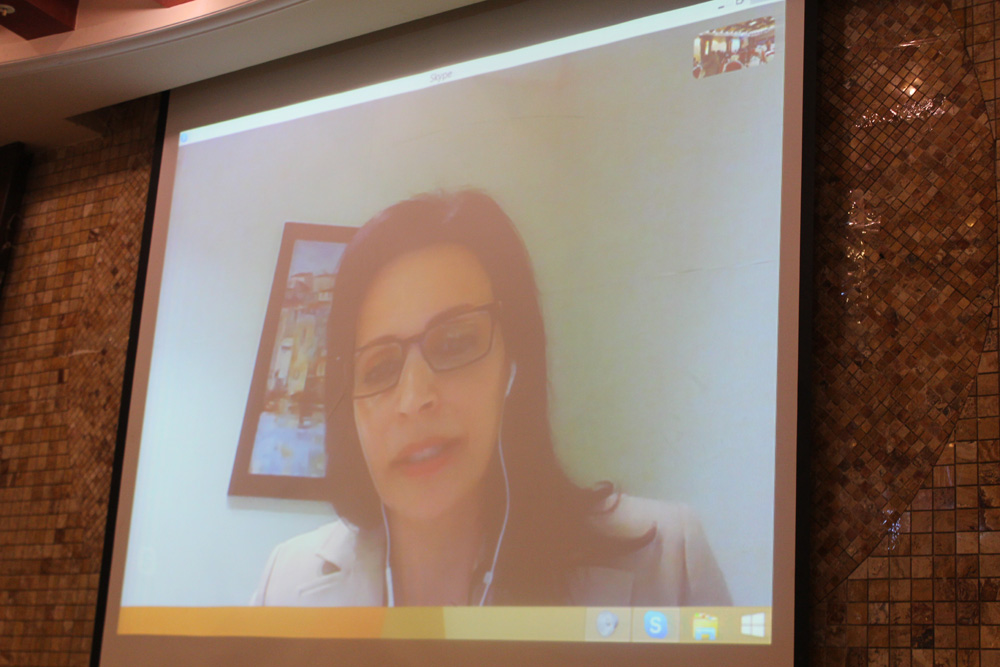
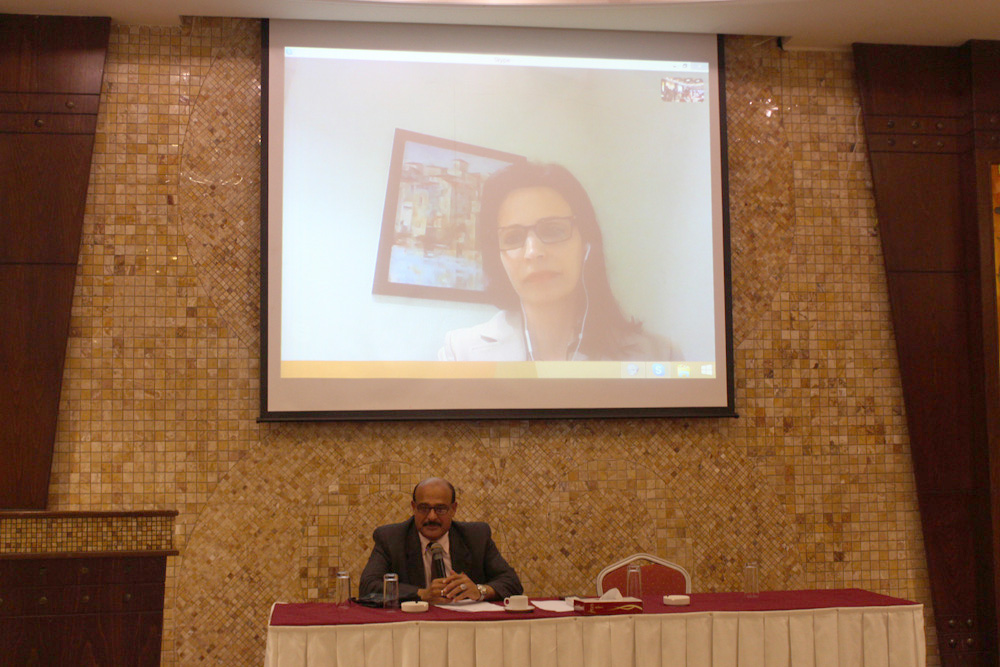
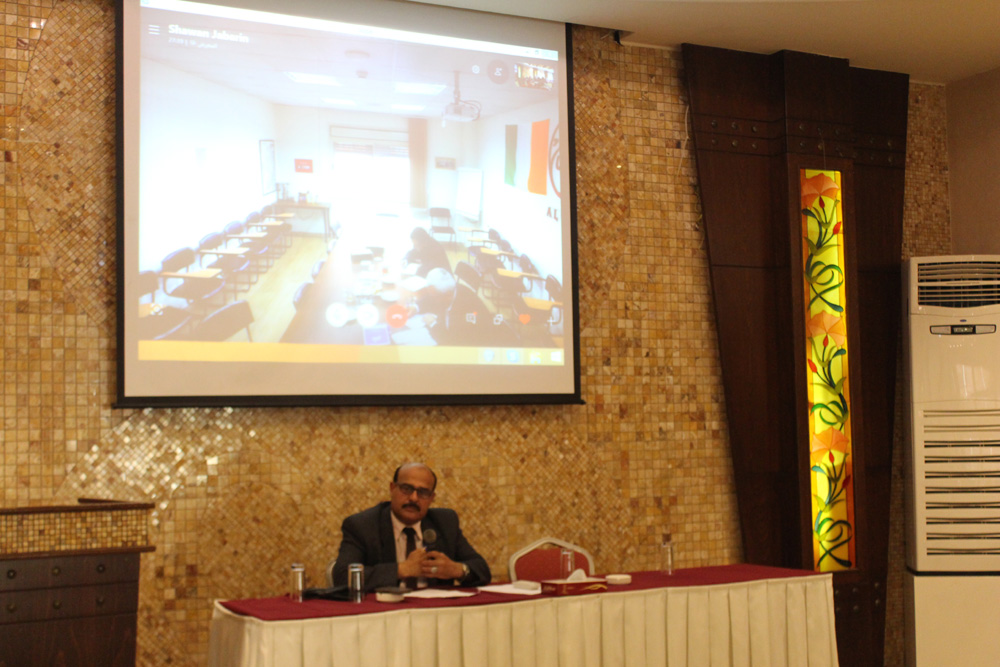
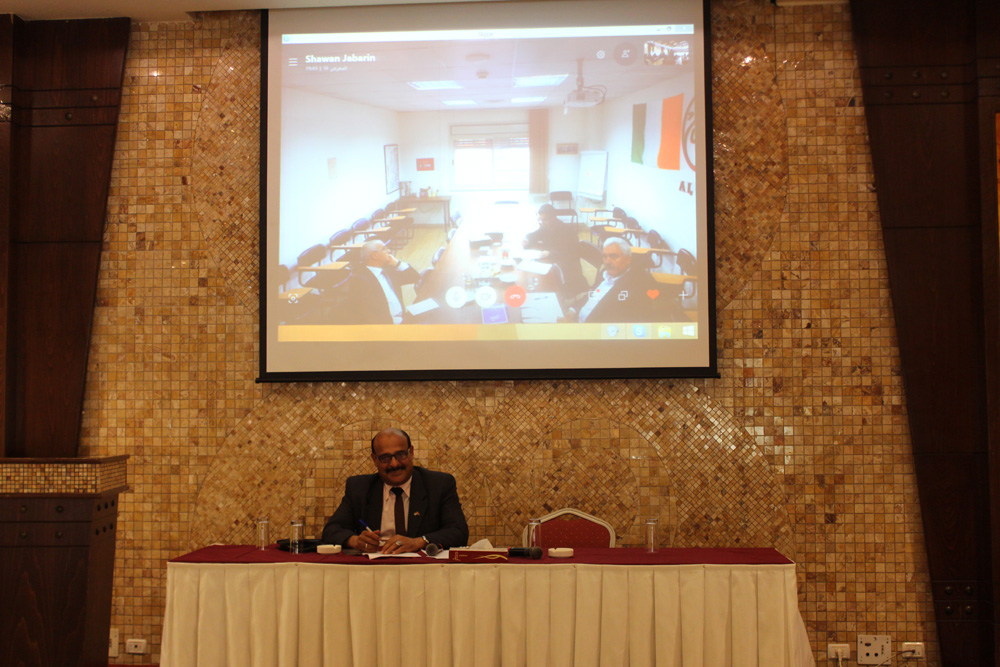
The Pal-Think for Strategic Studies institution, in cooperation with the Oxford research foundation, welcomed the attendees and the researcher Dr Zaha Hassan, who speaks from the United States of America about her policy paper that treats “diplomacy and multilateral peace-building and evaluating the efforts led by the United States of America and its innovations in the world of politics. Zaha Hassan: an international lawyer in the United States who previously worked in the Negotiations Affairs Department in Palestine with Dr Saeb Erekat; she currently works as a human-rights lawyer in the United States of America.
The researcher began by speaking of four principal things:
1- The role of the United States of America in the negotiations.
2- American foreign policy.
3- The lessons learned from the multilateral peace initiatives.
4- Drawing an imagining of the multilateral peace initiatives, especially after the transfer of the American embassy to Jerusalem and the recognition of Israel's sovereignty over the Golan and various Palestinian issues.
She likewise described the American engagement with the Palestinian–Israeli conflict as having three specifications:
1- There is no direct communication with the Palestinians in the peace process.
2- The non-recognition of the Liberation Organization in the negotiations process and considering it a terrorist organisation.
3- The Palestinians have no right to be part of the equation of realising the settlement and the peace negotiations in the region.
She likewise made clear that the American Congress has passed three laws to determine the engagement with the Palestinian cause, and that it spoke of there being no Palestinian–Israeli peace without the United States of America. Hassan affirmed that this is practically incorrect — especially in that the Oslo agreement was not through the United States of America, and that in Taba in 2001 a peace process between the two sides was about to take place without the United States of America being part of this process, and the same thing in 2008. Consequently it is not necessary that the United States of America be part of the peace process, but it is important that it not be an obstacle before the peace process. American foreign policy has not differed for years as relates to the Palestinian–Israeli conflict: Carter's vision of autonomy and Trump spoke in the same vein. Hassan affirmed that the United States of America's contribution in the peace processes always changed these factors not in the Palestinians' favour but against their interests: for example, Clinton said the Israeli neighbourhoods must remain Jewish and denied the idea of the refugees' return; and Bush considered the settlements legitimate with no right to their removal. Also the former president Obama did not support, in his vision of the conflict, the idea of a '67 state, and the basis of the agreement was not on that — rather the Palestinians must recognise the Jewish state. Hassan likewise pointed out that it is not important whether the American administration follows either of the two parties, Democratic or Republican, because the foreign policy will not change much toward the Palestinian–Israeli conflict.
What are the expectations for American foreign policy?
First: as relates to the two-state solution, the American administration led by the Republican Party considers that this solution is no longer fit for realising peace.
Second: the idea of a Palestinian state and an Israeli state — a great and thorny discussion turns around it between the two parties, and this idea is still under discussion.
Third: the Democrats still support the idea of the two-state solution but without setting a practical policy for their relationship with Israel to realise a Palestinian state — their supporting the two-state solution does not mean they will do anything on the ground that supports the Palestinians.
But there is a wide-ranging movement among the members of the Democratic Party of left-wing orientation who support the Palestinians and want a change in American foreign policy toward the conflict, toward the Palestinians specifically; and in the coming elections in 2020 a wide discussion is expected to occur about American foreign policy as relates to the Israeli–Palestinian conflict; but until now there are no great hopes as relates to that — rather they are limited. But there is a very important vision, which is that public opinion in the United States supports the idea of American sanctions on Israel if it does not respond to the peace initiatives put forward.
Dr Zaha spoke of the efforts and initiatives of multilateral peace in the conflict and also the blocs of the Middle East:
First: if the United States takes part in realising peace regionally, it will monopolise the negotiations process.
Second: if the United Nations takes part in multilateral peace agreements and efforts, that will reduce the prestige of the United Nations, it being committed to international law.
Third: if the European Union takes part in such efforts, its role will be constrained by the European consensus.
Fourth: Russia's participation in such efforts is not expected, because its role does not suffice to confront the United States; it does not have a balance of power that helps it defy the American camp.
In addition to that, Hassan spoke of what a multilateral peace process must be, and what applies to today's reality: the geopolitical political situation, especially as Israel now leans to become more extreme and right-wing; besides that the Liberation Organization will not be part of the settlement and negotiations process without the United States accepting the two-state solution; and the Palestinians will suffer economic difficulties because of the United States' stopping of the financial support for the institutions that follow it in Palestine — and consequently all the multilateral peace initiatives in the region must include the economic side for the Palestinians.
In general the United States will continue working with the same foreign policy: first, as relates to the conflict, it will not be interested in the ideas and opinions of the international community and international law; and the European Union will not take the place of the United States in the settlement process, but it can take some opinions contrary to the Israeli and American opinion in the region. Also, the Arab states try to separate themselves from the policy of the United States and Israel so as to have no relation to what the United States and Israel want to do in the region as relates to the Palestinian–Israeli conflict. As for states like Russia and China, cooperation between them increases and they behave as a competitor to the United States in the region; China tries to find a balance in its relationship with the Arab states and Israel through its foreign policies to present an initiative for the peace process — and I think that is not ready yet, especially in light of the international balances; Russia's approach is very similar, and Russia tries to preserve its relations with Israel and the Arab states. Also there must be a rethinking as relates to the international Quartet, which is part of the Oslo agreement, which is considered to have practically ended — and consequently at present we need to think of how to make a mechanism for mediation and negotiation between the two sides. Work must proceed through the states of permanent membership in the Security Council, and the Palestinians must work through them and ask of these permanent members to object to Trump's peace plan as relates to peace and the annexation of the settlement areas. The four permanent members work as one group as an alternative to the Security Council, where the United States of America monopolises the role — and this group must pass the obstacle of the United States' monopoly in such works; it works with the Palestinians on developing this mechanism; the European Union and the Arab states must be part of this of course. In addition to that, the Swiss government must activate the covenants of the Fourth Geneva Convention to form a force that prevents the annexation of lands from the West Bank; since the fundamental goal of the multilateral efforts is first preventing the idea of the annexation of lands and placing an international monitoring body and international parties such as the Court of Justice to prevent the occupation from the operation of annexing lands, and also paving the way for negotiations of a future peace process, with the necessity of setting an external funding mechanism to support the Palestinians economically.
The interventions on the paper:
Dr Wajih Abu Zarifa — I think the United States of America tries to change the equations of the conflict through imposing certain facts on the peace process; that began clearly after the transfer of the embassy and the non-recognition of the Palestinian refugees, and also the great change in the policies the Trump administration follows — and unfortunately the Palestinians are not ready to create an alternative to the United States of America in the peace process.
Dr Osama Antar — I think we need new economic and political mechanisms that strengthen the Palestinian steadfastness in confronting the schemes that target the Palestinian cause, and I would like you to tell us how we can surpass these economic impediments specifically in the future?
Eng. Nihad al-Khatib — What is the project we can present as Palestinians at this time in light of all these challenges the Trump administration has created?