Pal-Think opens the Policy Lab programme
Pal-Think opened the training «Preparing and drafting policy papers» with 18 civil-society staff attending — developing analytical and strategic-thinking skills among the sector's workers.
Pal-Think — Gaza City, the fifth of August —
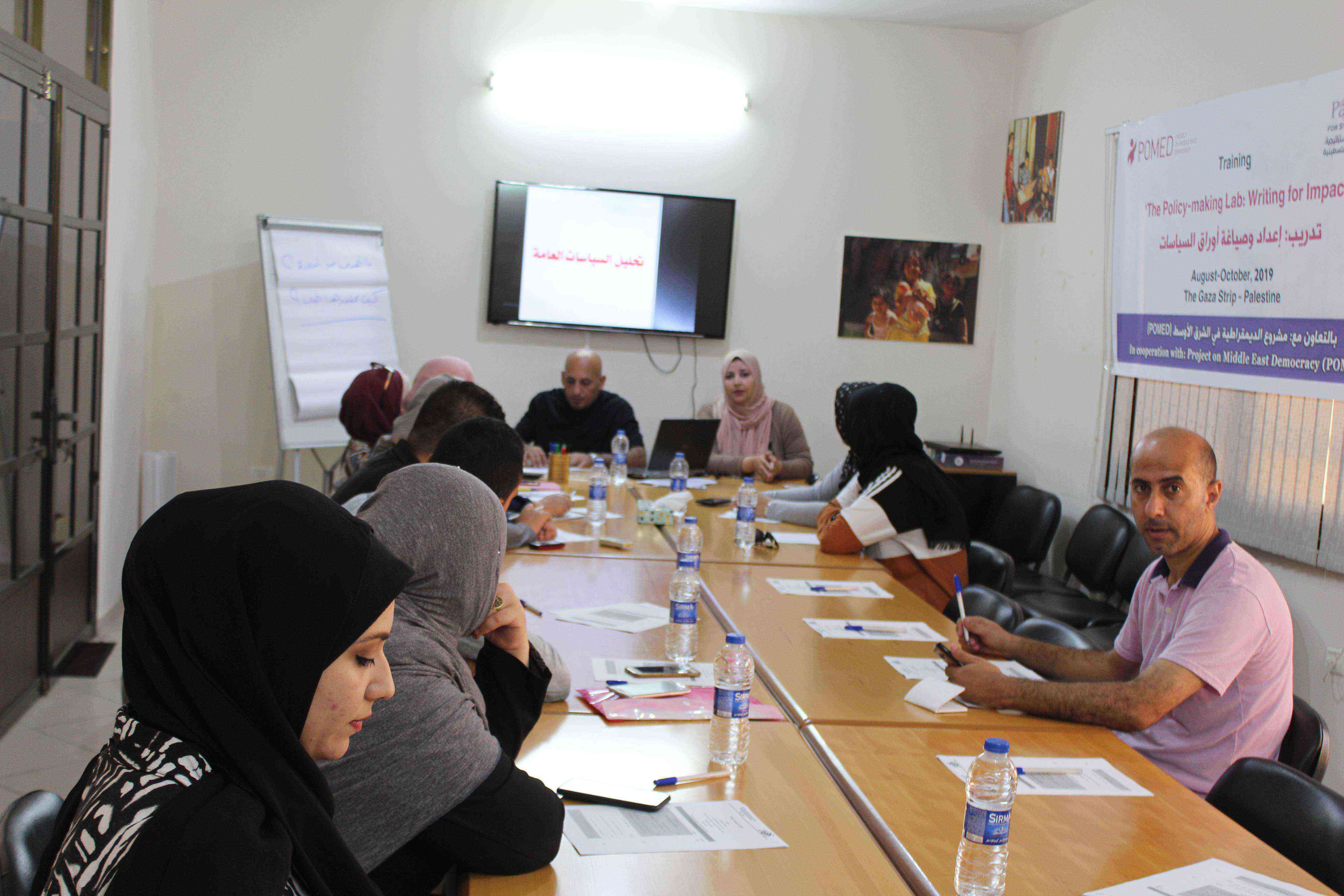
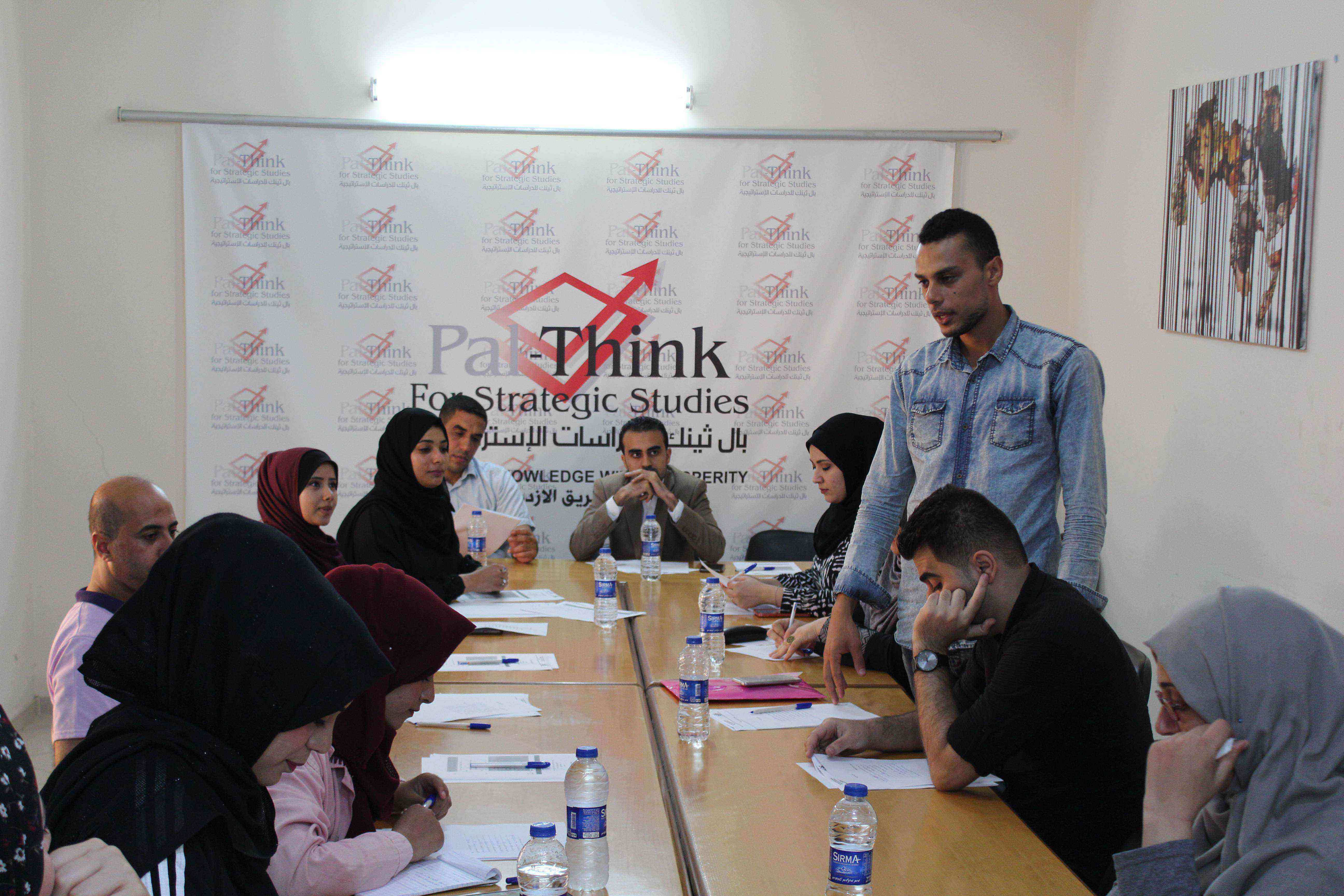
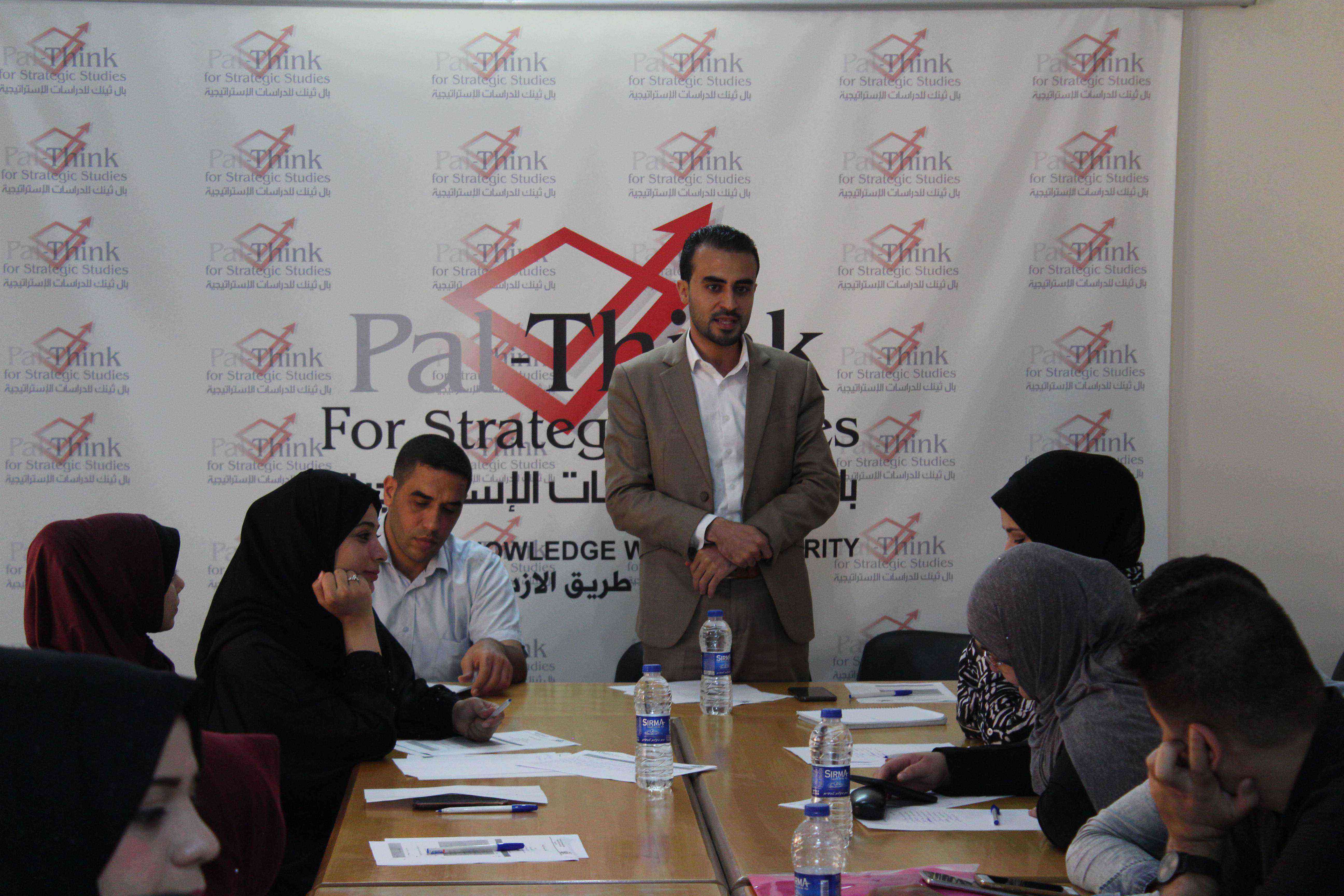
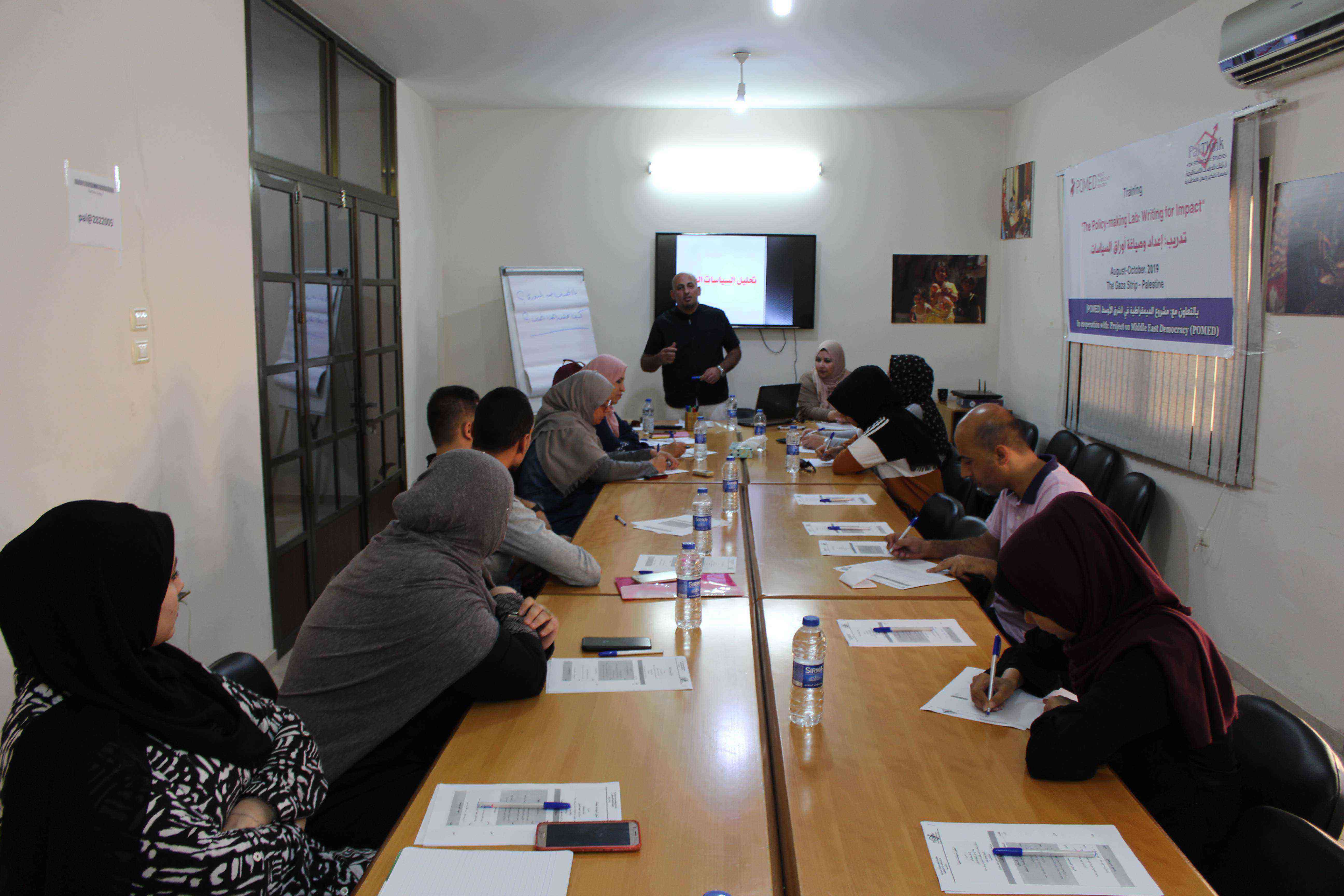
The Pal-Think for Strategic Studies institution opened a training programme titled Preparing and Drafting Policy Papers, with the attendance of 18 of the cadres of civil-society organisations. It aims at developing the skills of analysis and strategic thinking among those working in civil-society organisations, in order to work on describing and analysing the issues and problems resulting from public policies and monitoring their results, whether on society or the state, and thereafter influencing decision-makers. This programme comes in cooperation with the Project on Middle East Democracy (POMED), and will extend over 6 continuous months.
It is worth mentioning that Pal-Think has diverse experience whether in communal-institutional or research-intellectual work; making clear that strategic thinking is one of the traits of advanced societies, for think tanks in the whole world work on presenting proposals and on mobilisation and advocacy for communal development at the social, political, technological, and economic levels. The skill of preparing policy papers is among the most important skills that must be developed among the cadres of civil-society organisations, especially those that come at the middle levels and not the large institutions of higher financial and administrative capacities.
The programme's trainers are: the researcher at the Palestinian Planning Center and expert in writing public policies, Mr Yahya Qaoud, and the trainer in policy analysis and legal activist, Ms Hebatallah al-Danaf.
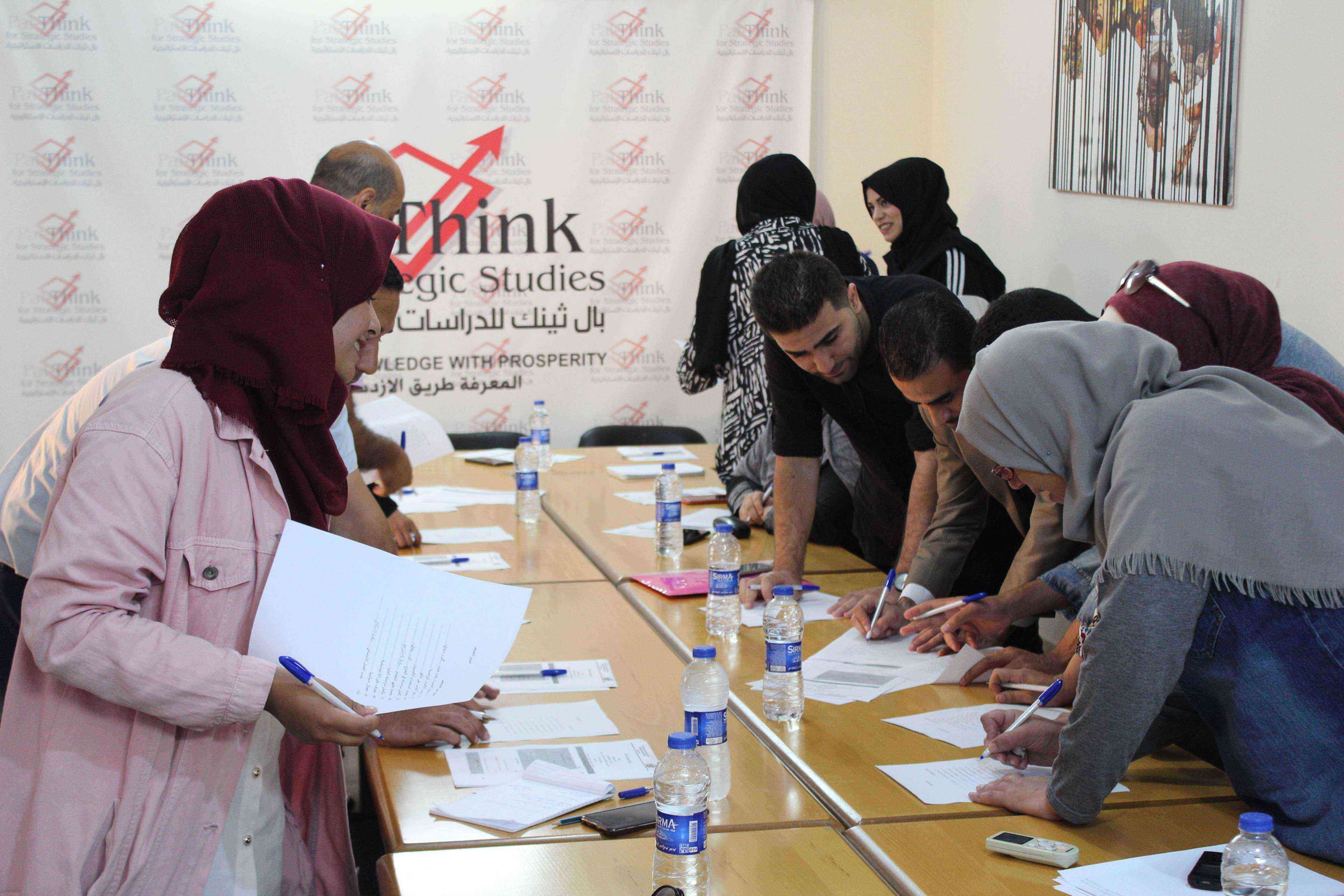
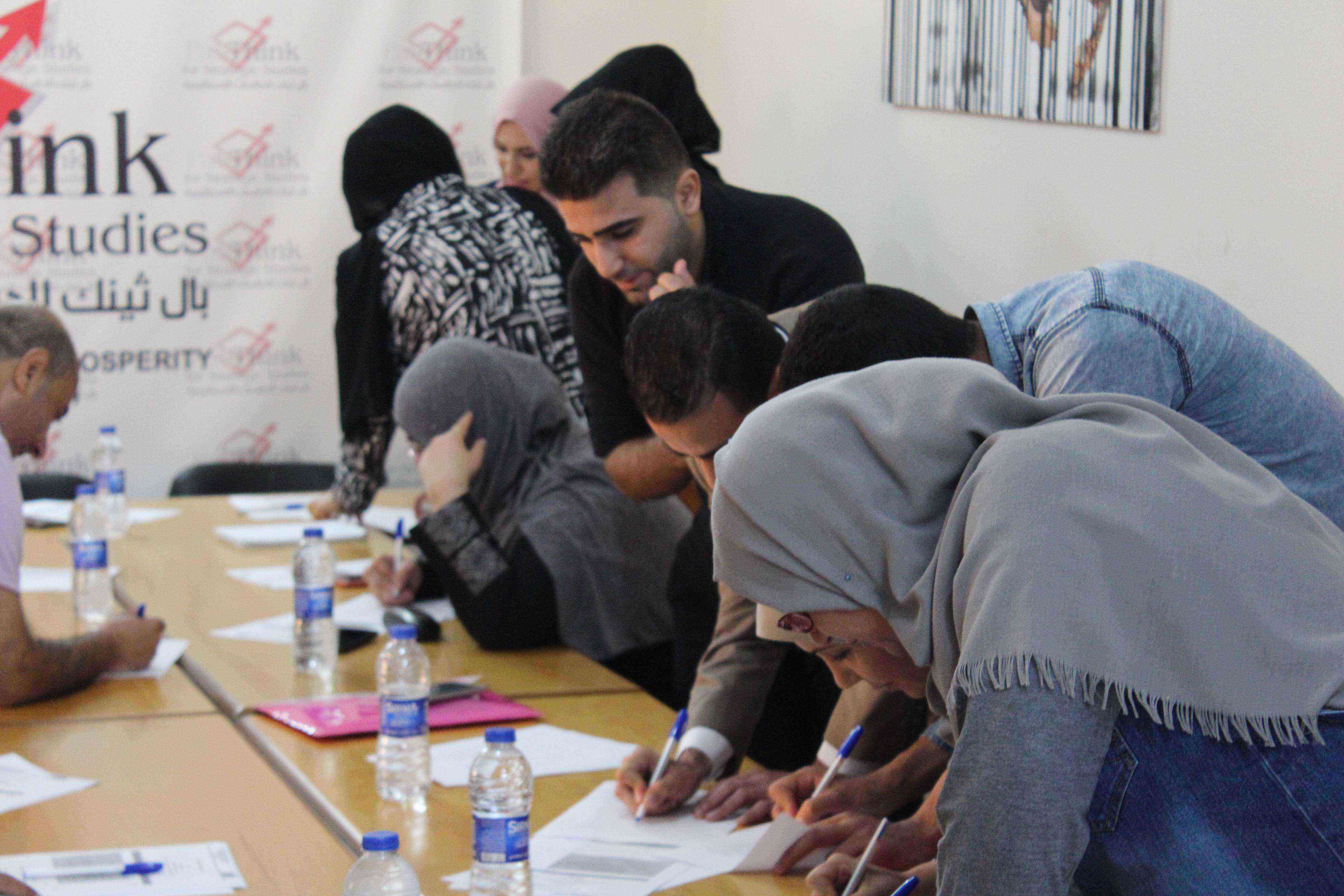
The training's beginning comprised an activity aiming at the acquaintance and the strengthening of the trainees' interaction: each trainee has a list comprising many questions, and they must find the persons related to those qualities and questions in the fastest possible time — which gives an indicator of the person's research capacity and helps break the first-day barrier among the participants.
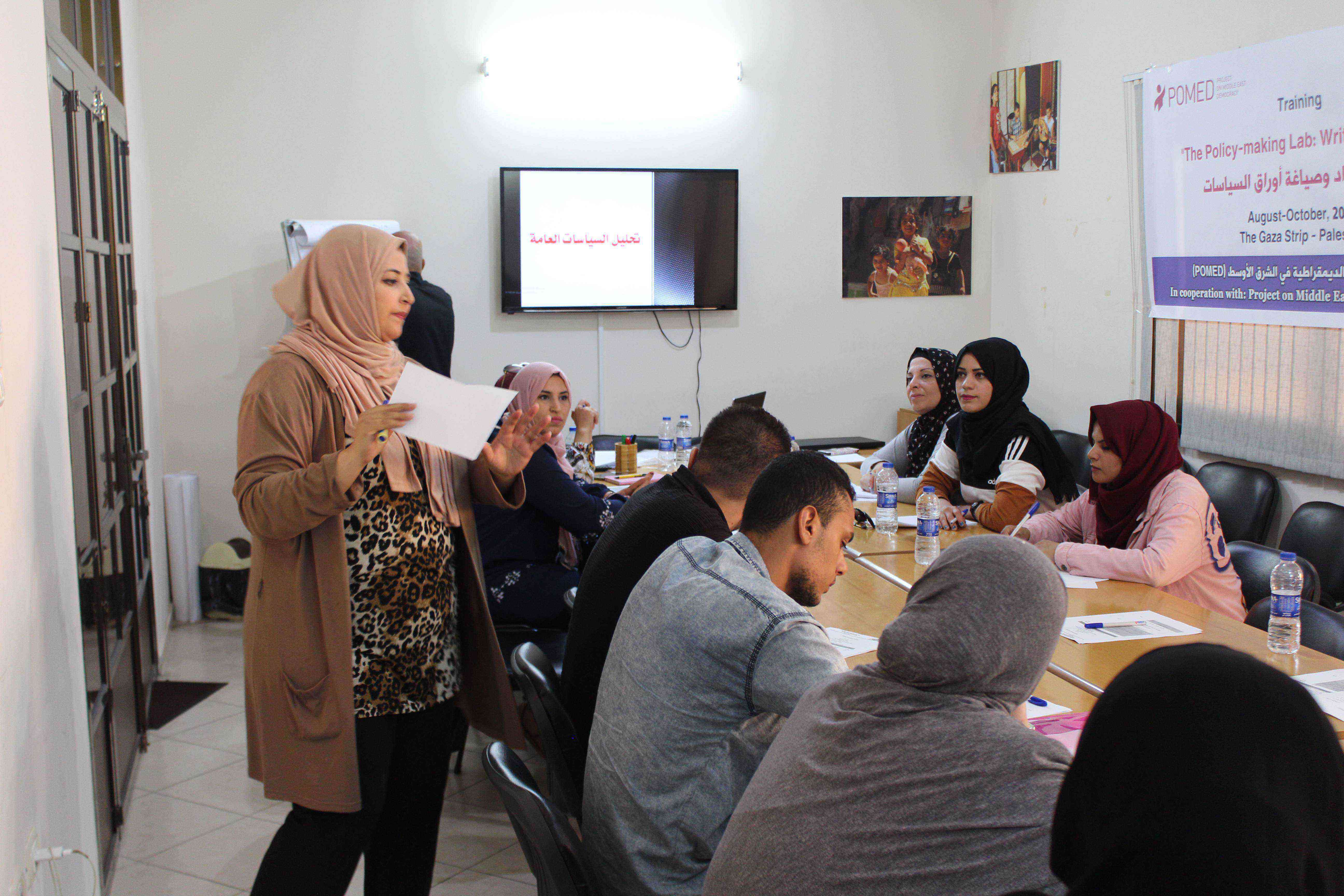
The encounter lasted 3 hours, and took up an introduction comprising acquaintance with the programme and the structure, the goal of the programme, the mechanism of work and the realisation of the programme's goals. In addition to talk of the production presented by think tanks and strategic-studies centres, their role, and its importance; Mr Yahya likewise spoke of public policies, their concept, the fundamental elements the definition comprises, the analysis of public policies, its importance, the difference between the analysis of public policies and decision-making, the difference between public policies and private policies, also who makes public policy, in addition to talk of the public of public and private policies.
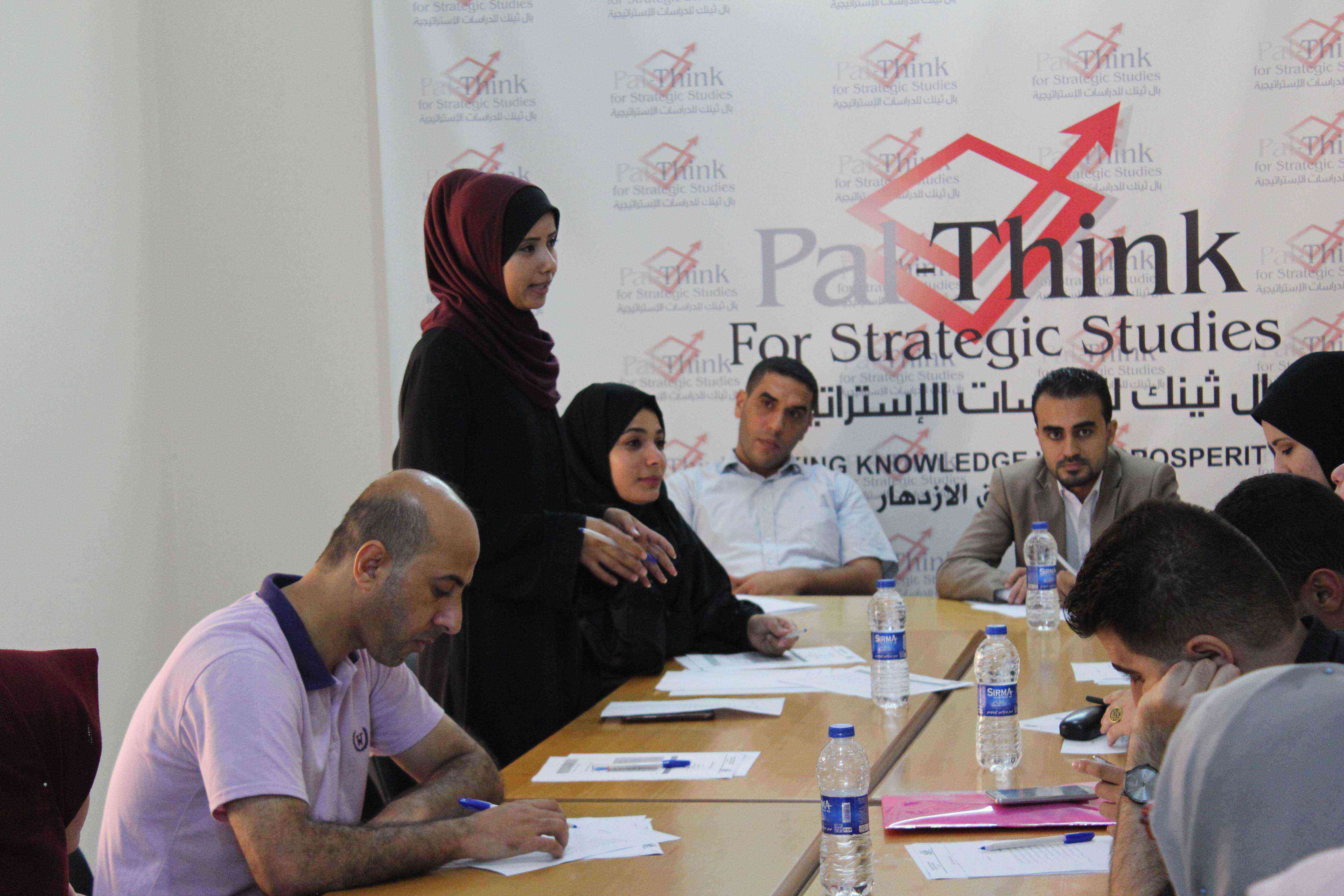
The trainers concluded the encounter with an activity: Ms Heba divided the participants into groups to answer two fundamental questions, namely:
- Why do civil-society organisations care about research and public-policy papers?
- What is the importance of public-policy papers for civil-society organisations?