Dialogue: «What is happening in America — observations from the field»
Pal-Think held a Zoom dialogue, «What is happening in America: notes from the field», hosting American jurist Paula Roderick of Black4Palestine and a fellow researcher.
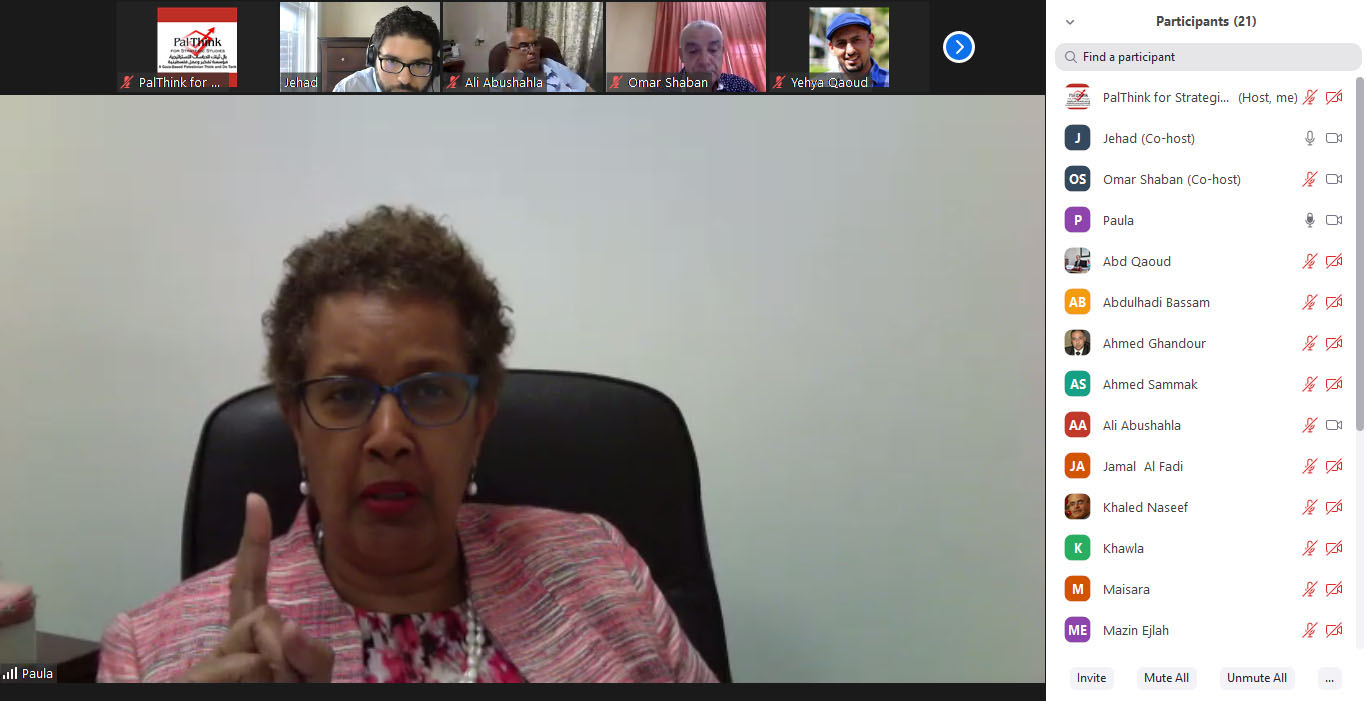
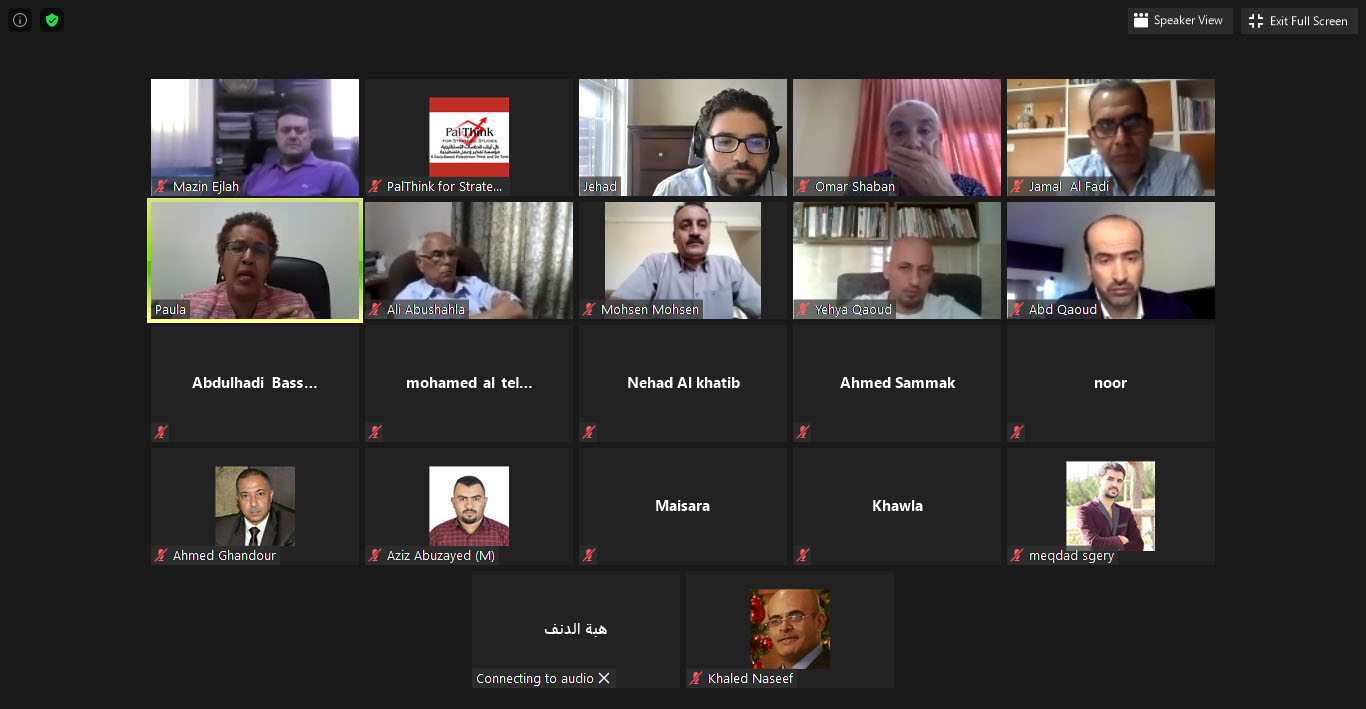
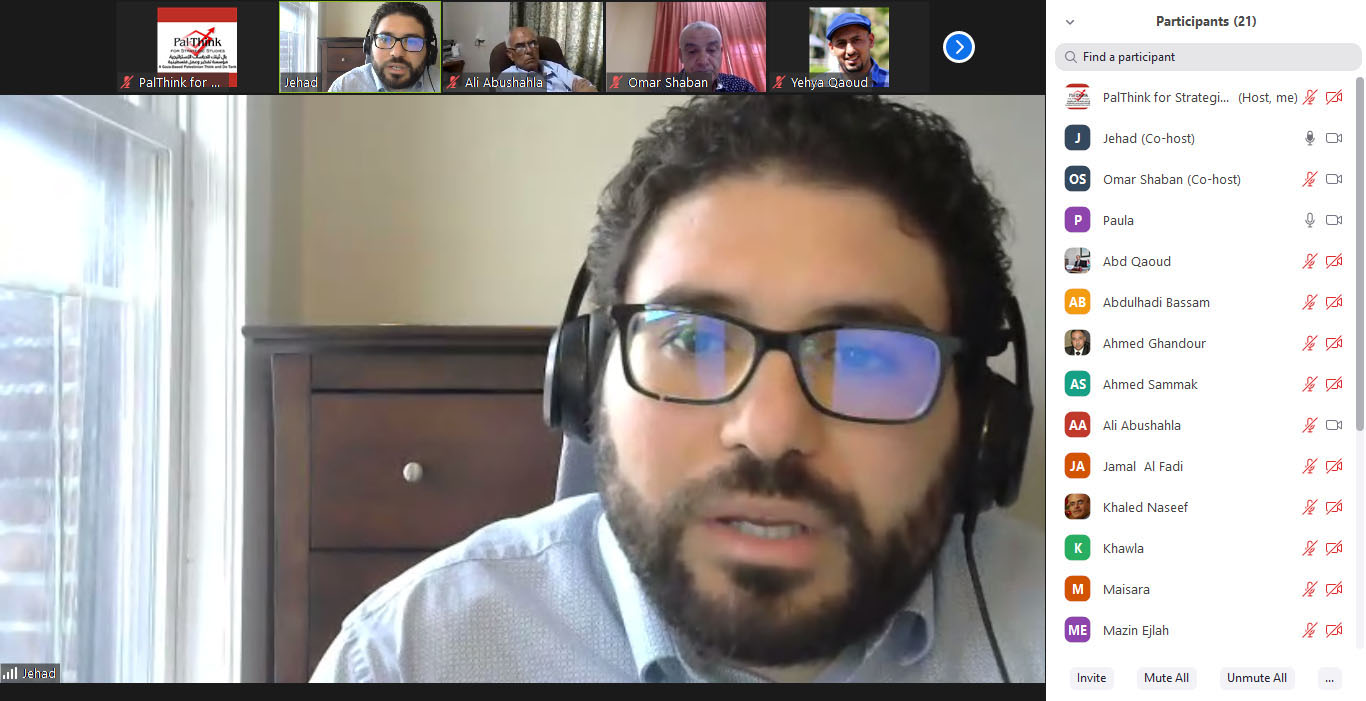
Pal-Think for Strategic Studies organised this week a dialogue encounter titled “What is happening in America: observations from the field”, via the Zoom programme, in which it hosted the American rights advocate Paula Roderick, an activist in the group “Black4Palestine”, and the researcher Jehad Abusalim, to speak of the Black demonstrations in America, with the participation of an elite of intellectuals and researchers — within “Pal-Think's” efforts in spreading knowledge and the latest developments underway in the region and the world.
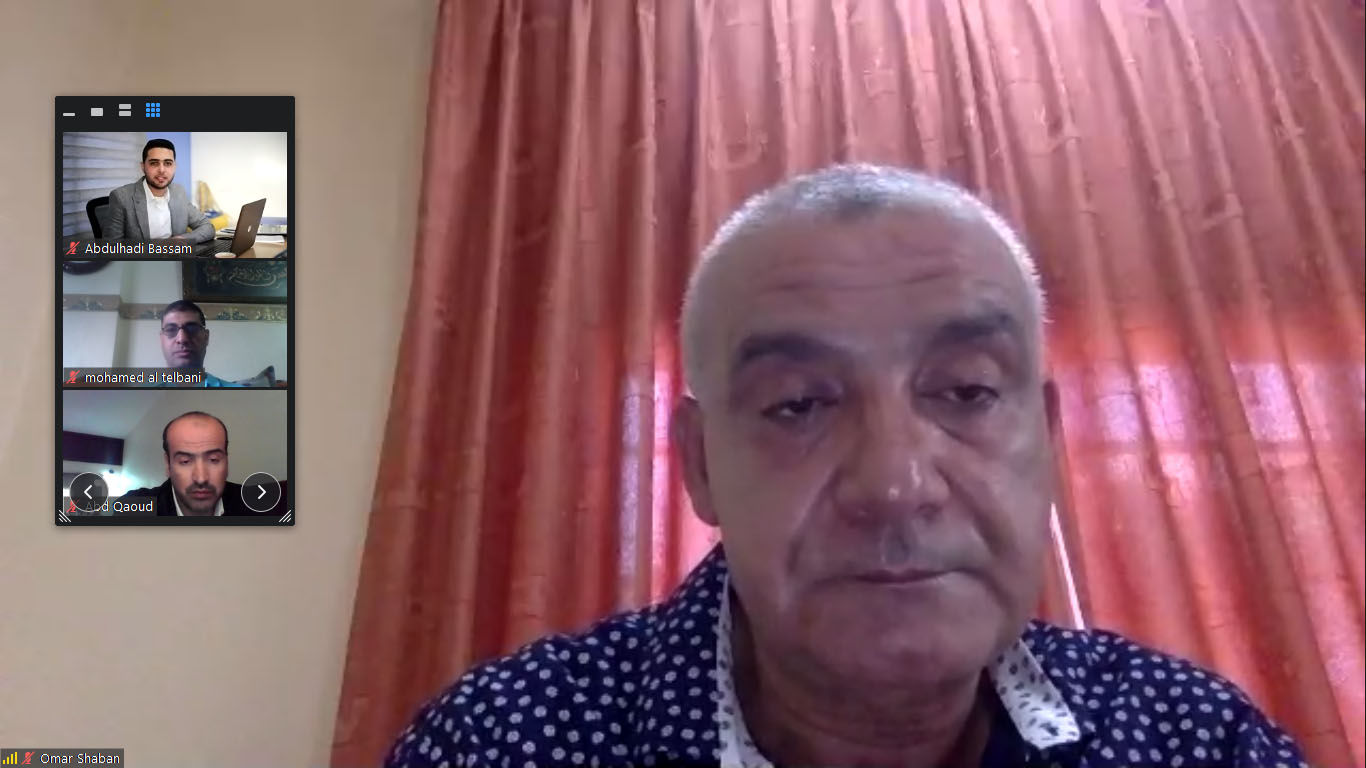
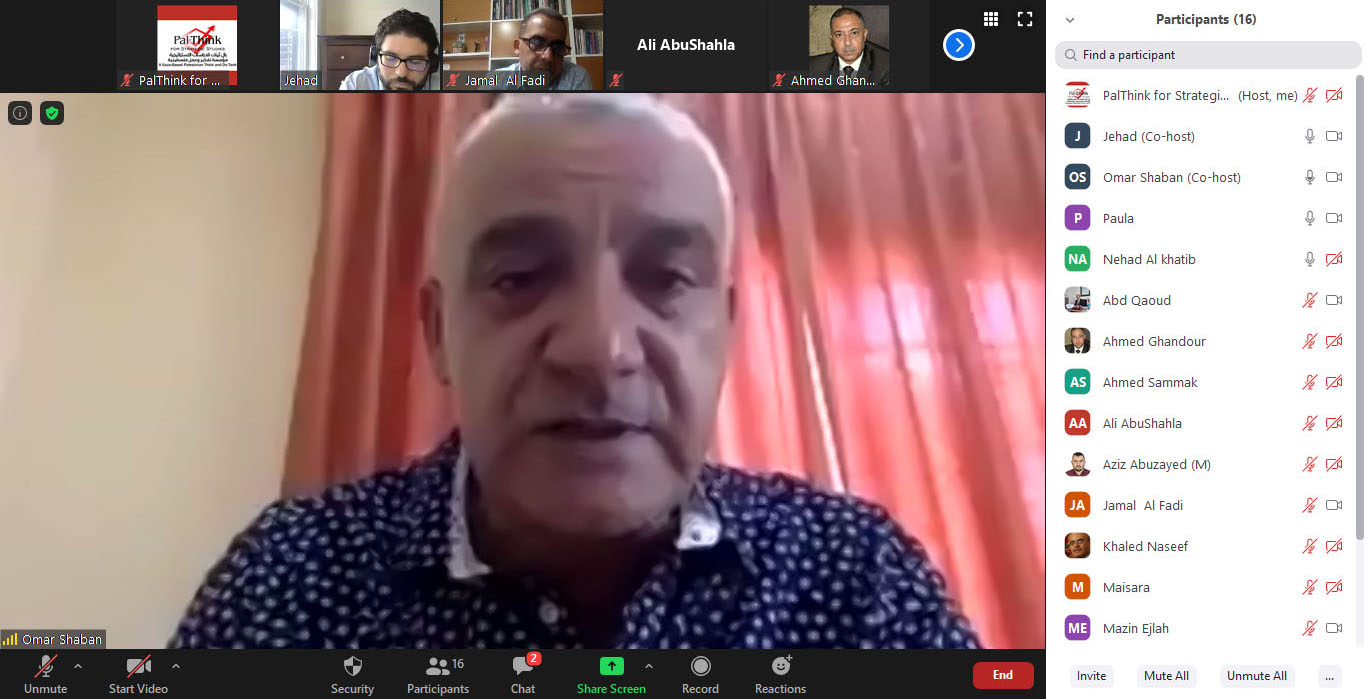
The encounter was opened by the director of the “Pal-Think” institution, Mr Omar Shaban, welcoming the participants, and he said: “Pal-Think is an independent Palestinian institution working from Palestine, and it holds periodic encounters with partners and experts from all parts of the world — within 'Pal-Think's' efforts, continuous since 2007, to spread knowledge among the spectra of Palestinian society about what is happening in the world.
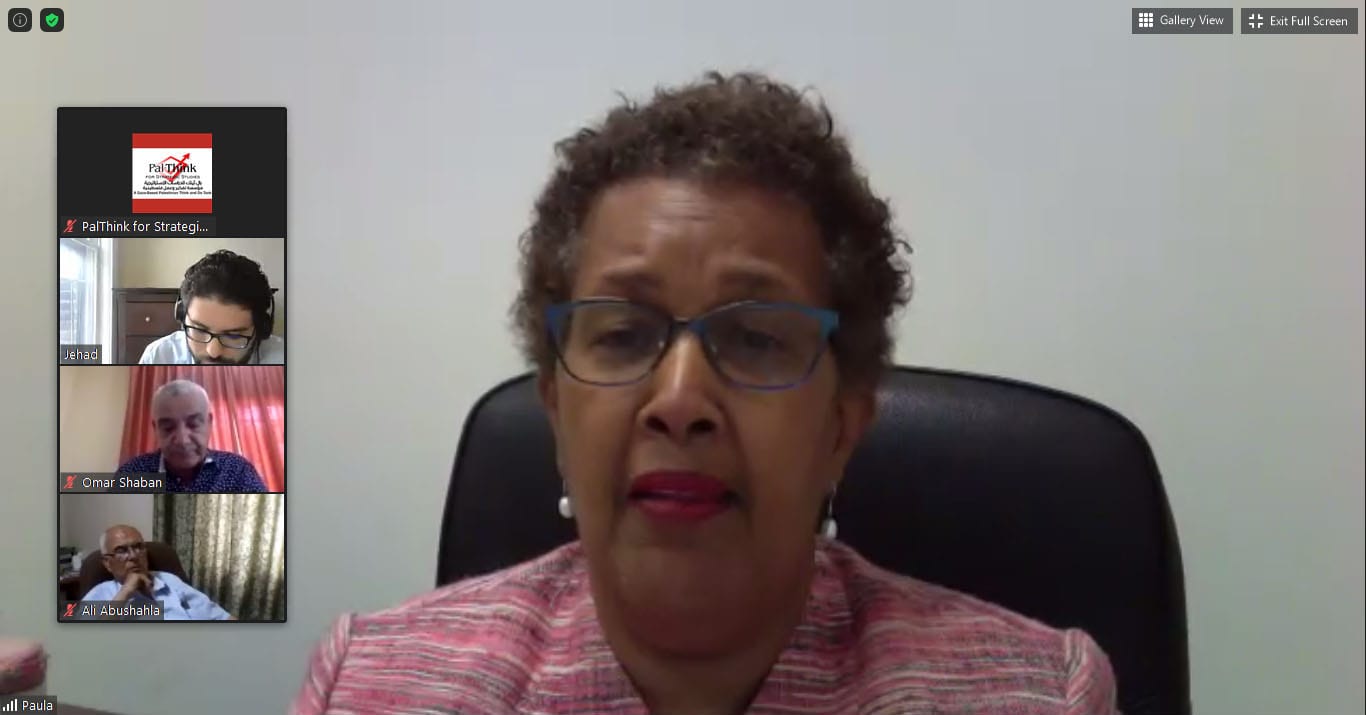
The activist Paula Roderick — a member of the Chicago Alliance Against Racist and Political Repression — opened her talk by thanking “Pal-Think” for hosting her and said: “The Black Lives Matter movement does not have a single leader; they are all leaders. She added: “The crime of the killing of George Floyd tells us what Black people have suffered of persecution and racism for long years in the United States.
She continued, saying: “There is a tendency to believe that the killings against Black people are new, since they are shocking because they were documented and enjoyed wide media coverage in America and the world. In truth, the killing of Black Americans began long ago: in 1951 Africans turned to the United Nations and submitted a complaint of theirs to the effect that the United States had committed a genocide against them. And Black people raised a petition making clear that racism is not new but old, despite the official abolition of slavery — from the point of view of Black people in America, the police system is a true manifestation of racism.”
She continued: “In these difficult circumstances, it is important to know that the Black revolution in America is more than a struggle for their rights, because it forces America to face all its sins, such as racism, poverty, and others; the Black revolution likewise exposes the racism rooted in the structure of American society, and this requires a radical restructuring of society — and this is the true time for it. In 2014, after long decades since Martin Luther's call to transcend racism and persecution against Black people, young Black Americans raised a new petition to the United Nations repeating the same old slogans, affirming the continuation of police violence toward them — and this affects their lives negatively to a great extent in the United States.”
She added: “In 2012, a Black American child was killed at the hands of a white American, and the killer was acquitted despite all the evidence proving that he was guilty and that it was a premeditated killing. Then three Black American activists connected with one another, and one of them tweeted on Twitter that Black lives matter (Black Lives Matter), and the conviction became entrenched among the Black activists that the racial issues are strongly tied to the police system, which plays a great role in impoverishing the marginalised. This was an important event in the founding of the current movement. The government responded by attacking the activists, and they committed violent and disgraceful practices against them. Among the results of these acts was the consolidation of the tie of the Black American activists with the Palestinian activists and the visit of some of them to Palestine, to benefit from them in their struggle against the Israeli occupation.”
She added: “Events reached their peak in 2014, when another hashtag appeared, titled Say Their Names, in reference to the Black people killed in America in that year, and violent, strong, eye-catching demonstrations rose at the time. It was a difficult year for Black people there. In 2016, the police trespassed on a place sacred to the indigenous inhabitants, so the indigenous inhabitants rose in an uprising in America. And also during the corona pandemic in America, Black Americans were killed in America at the hands of white Americans there, and passers-by would film the killing — until the crime of the killing of George Floyd occurred.”
She continued: “I am cautiously optimistic concerning the current protests, because we have not witnessed numbers in the streets of this magnitude; and because of the absence of economic equality between the poor and the rich, and because of the racial racism in American society — and these factors could be obstacles in the Black people's way to the protests' continuation.”
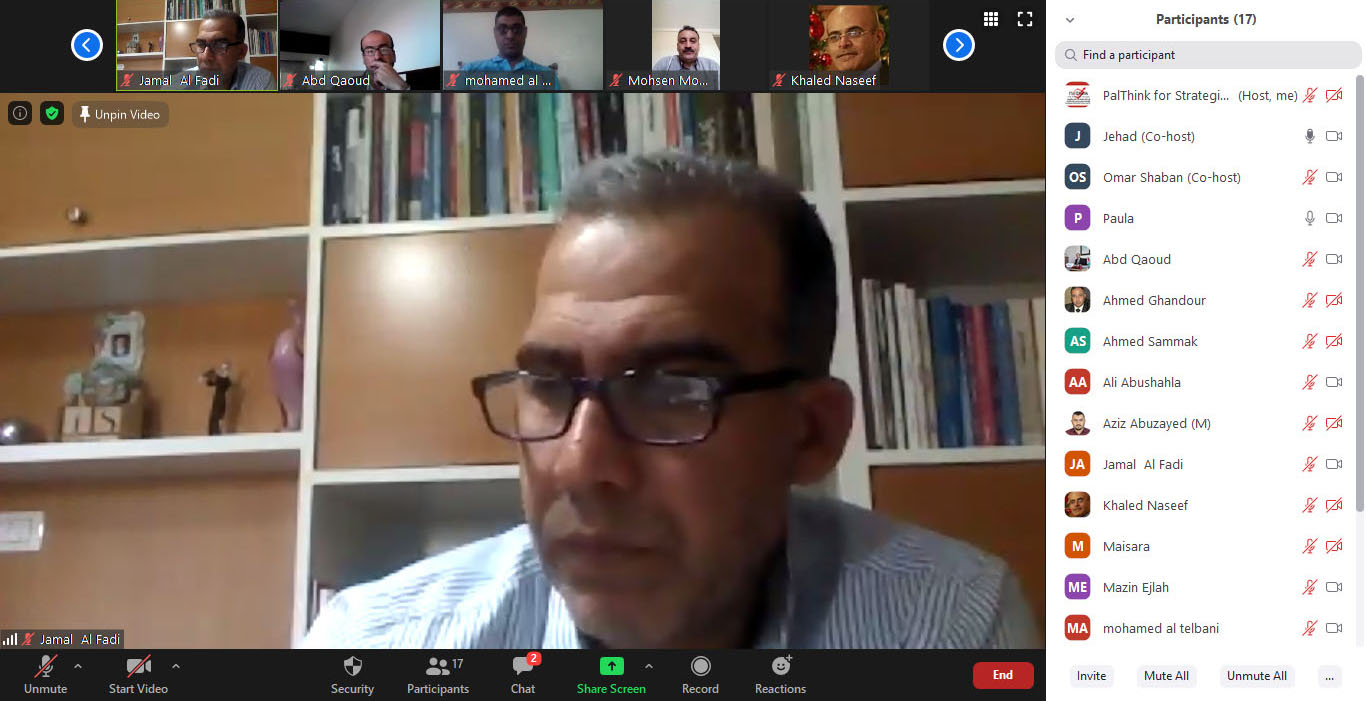
For his part, the activist Jehad Abusalim reviewed the parties supporting Israel in the United States, among them: the official and unofficial lobbies, the Jewish community, the economists of the military and security industries, the traditional institutions of the Democratic Party, the Republican Party, the evangelical Christians, many of the makers of cinema and films, influential personalities, elected politicians, research centres, and the American security and intelligence establishment.
He likewise set out the political and ideological divisions in American society, and spoke of their effect on the United States' relationship with Palestine.
Dr Jehad Abusalim presented some of the changes occurring in America and the effect of that on the Palestinian cause, most prominently: the existence of growing awareness in American society of what is happening in Palestine because of social media sites; the existence of cross-generational divisions in the American Jewish community; the effect of the latest changes occurring inside the Democratic Party, such as: the Sanders campaign, and the rise of Rashida Tlaib and Ilhan Omar; the continuous growth of the movement of solidarity with the rights of the Palestinian people; the arrival of supporters of the Palestinian people's rights at decision-making centres; the support of cultural and artistic personalities for the rights of the Palestinian people openly and without fear of the traditional consequences; in addition to the support of America's most important Black intellectuals for the Palestinian cause.
He concluded his talk with some observations, most importantly: that placing the Palestinian cause within the progressive movement in the United States is not an easy task, and there are great structural and institutional impediments before the achievement of the demands of the marginalised groups in American society, such as Black people, migrants from Latin America, and the racial and social minorities. The same impediments face the Palestinians and their supporters in American society, in addition to the political and legal repression. And that the success of the progressive movement in America will have positive reflections inside and outside the United States, including Palestinian-wise. And that the Palestinians must face the racism against Black people in all its cultural, linguistic, and class manifestations, especially the communities in the United States; and that Black people in America are our natural allies, and building solid relationships with them requires much work outside Washington. And finally, that the Black movement will make America more democratic and open for the Palestinians a door for the struggle for their rights.