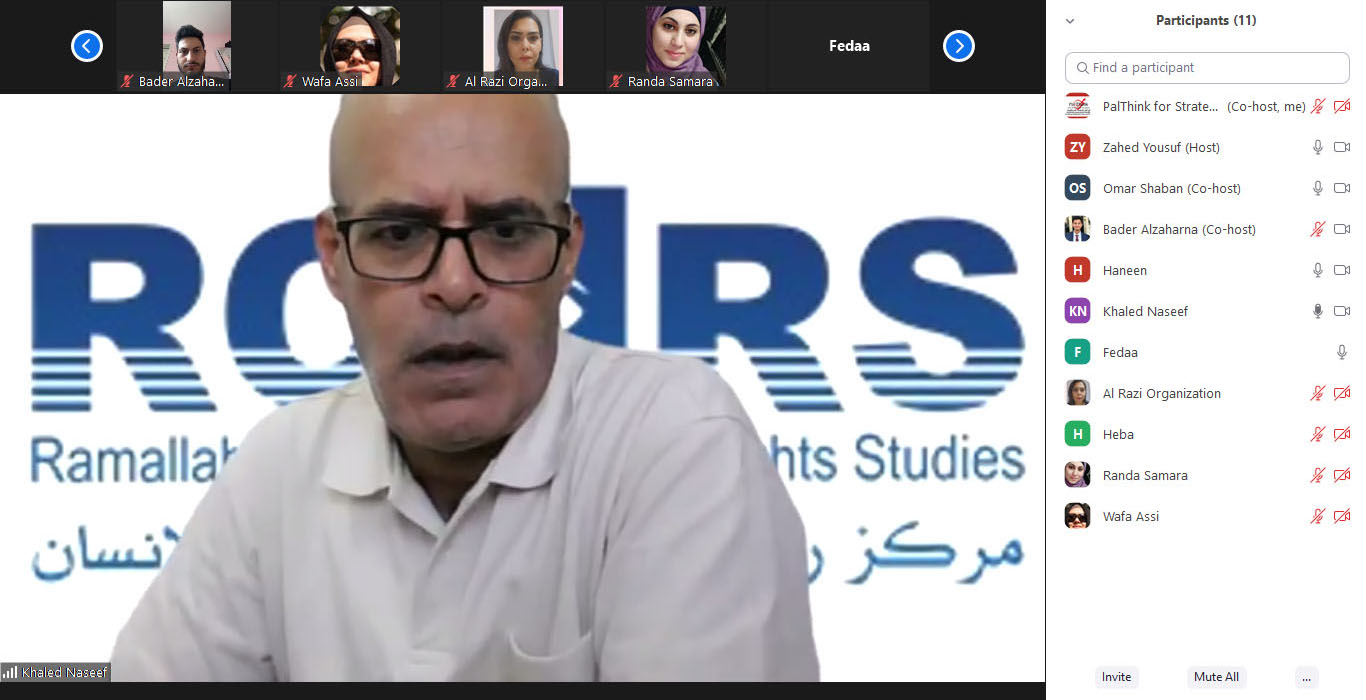
The programme «Analysing Palestinian civil society's role in building sustainable development»
Pal-Think concluded a five-day virtual training for the Palestinian civil sector, with active participation from civil institutions across Jerusalem, Gaza and the West Bank.
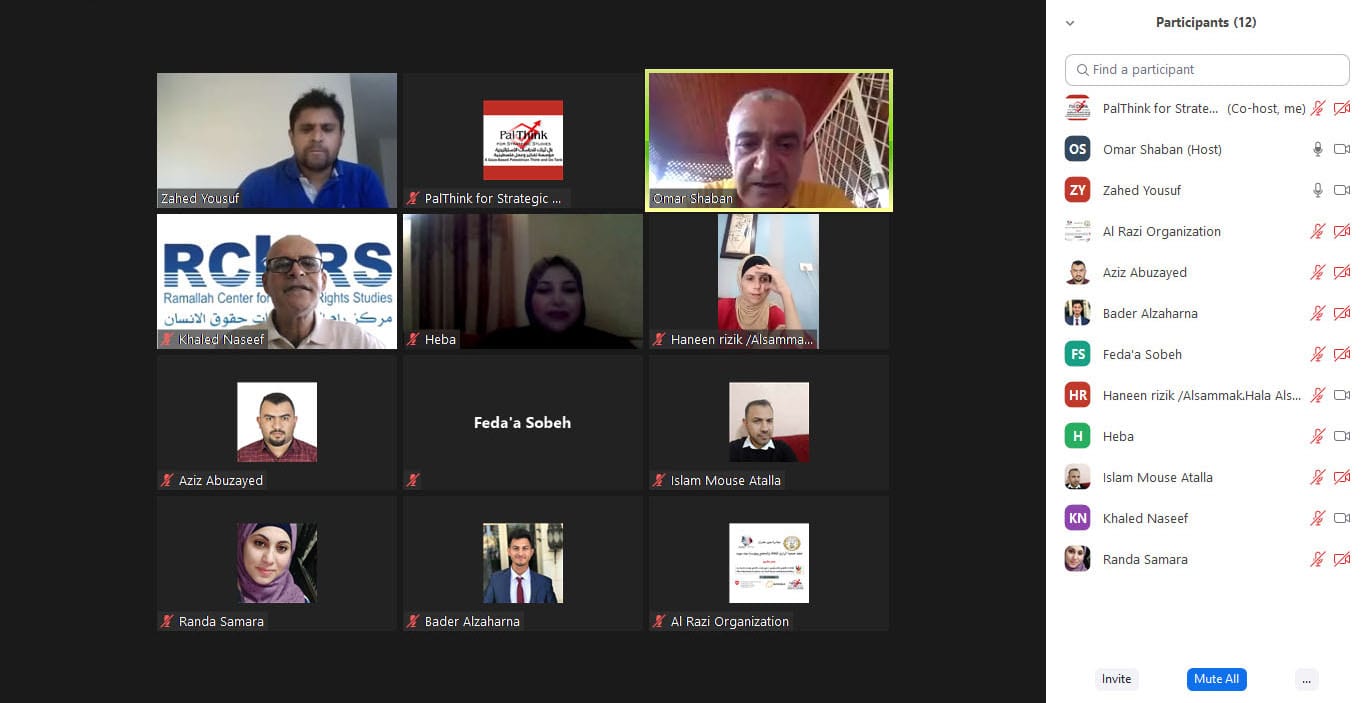
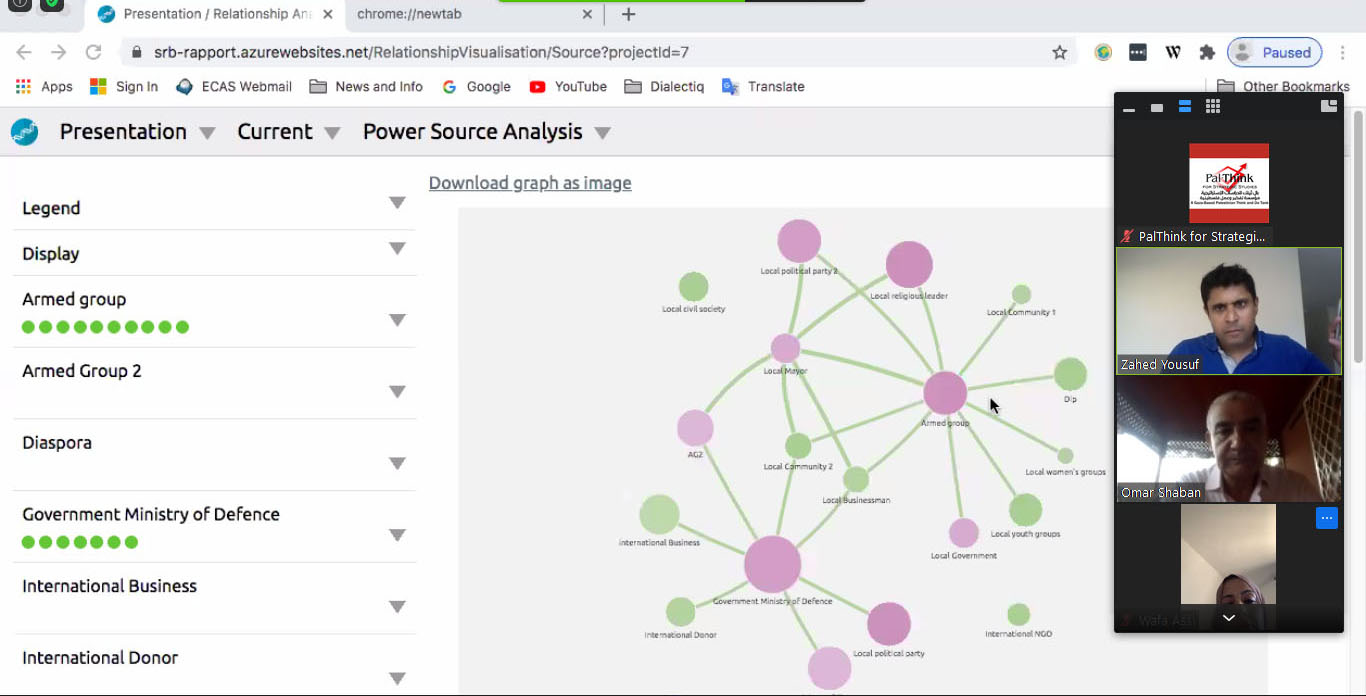
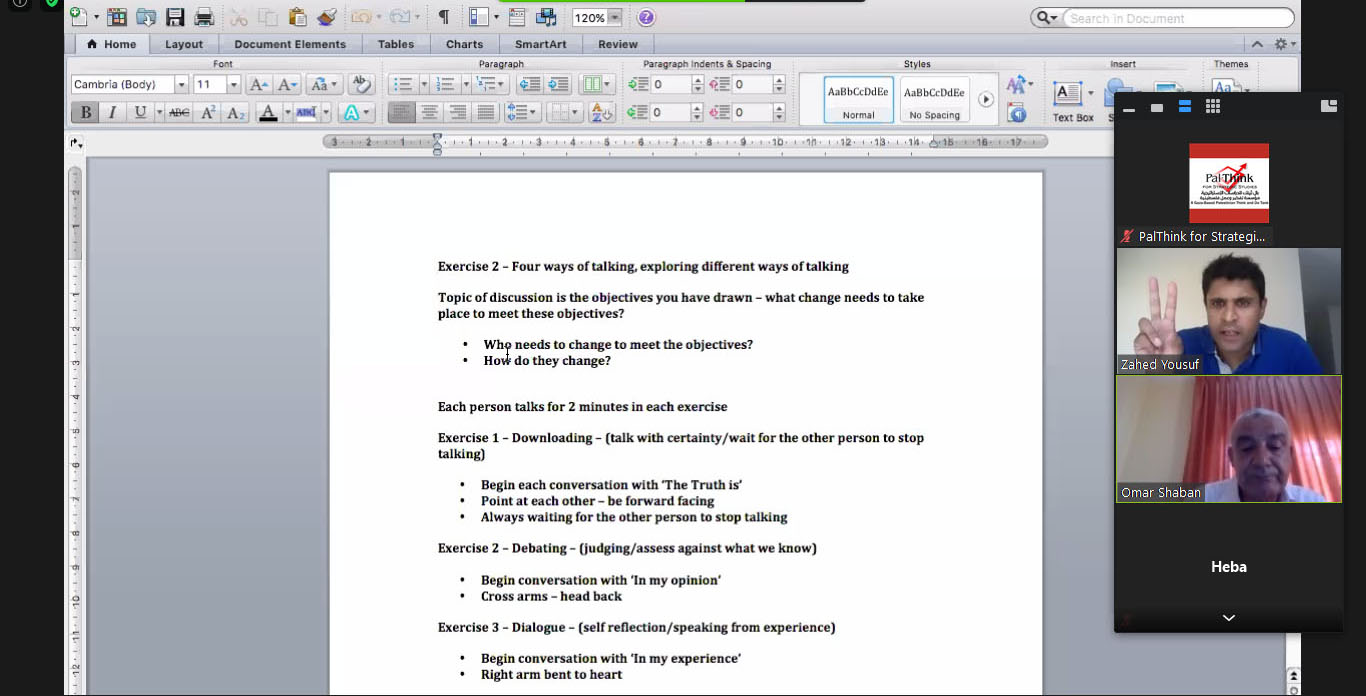
Pal-Think for Strategic Studies concluded this week a virtual training programme that continued for five days targeting the Palestinian civil-work sector, with the effective participation of representatives of a number of Palestinian civil institutions from Jerusalem, the Gaza Strip, and the West Bank. The programme takes place in cooperation with the international consulting institution Dialectiq and with funding from the French Consulate in Jerusalem. The programme aimed to strengthen the collective power of Palestinian civil society through improving coordination between its institutions and with the other bodies, especially the official among them — in a way that helps set strategies to support the civil sector's efforts coordinated with the official and private efforts to achieve sustainable development. The training aimed at the methodical scientific analysis of the civil sector's working environment and the exploration of the fields of improvement and influence — leading to the development of its capacities for strategic thinking and the scientific determination of its fields of intervention. This training is distinguished from many other training programmes in that an interactive digital tool was used, comprising a series of the necessary participatory analytical workshops over the internet, with the goal of designing smart interventions springing from the needs of the Palestinian context and not imposed upon it,
The training enabled the participants to learn new ways of communicating and of analysing the context and working environment in which the civil-work sector works — where the political, economic, and social factors interlace, which makes it a complicated and to a great extent different context. In addition, the trainees were able to discover the diverse interests, the seats of strength and influence, and the nature of the relationships between them. The training likewise focused on the ways of achieving the cooperation of policy-makers, the local authorities, and the private sector, in a way that achieves comprehensive, integrated development. The training was keen to attract participants working in diverse fields of the specialised and grassroots non-governmental organisations that work within the frame of education, community service, health, and the empowerment of youth and women. A limited number of graduates and young activists were likewise brought into this training so that they could share their points of view. The training granted a suitable and equal opportunity for women, men, and youth to take part, discuss, and exchange their own experiences.
The training was led by the international expert Zahid Yousef, founder of Dialectiq, the consulting company that devised this programme and has previously implemented it in many of the world's states. The training programme is a first stage of the project, as advanced training programmes will be carried out in the project's coming stages. And given the turnout for participation in the training programme, another programme will be carried out at the end of this month. The project will end with the preparation of a deepened study of the working environment of civil society and the elements of strength and influence, and how civil society can unite its efforts with the official efforts to form a long-term strategy that contributes to the positive change of the current reality in the various parts of Palestine.