Pal-Think launches the Civic Education project
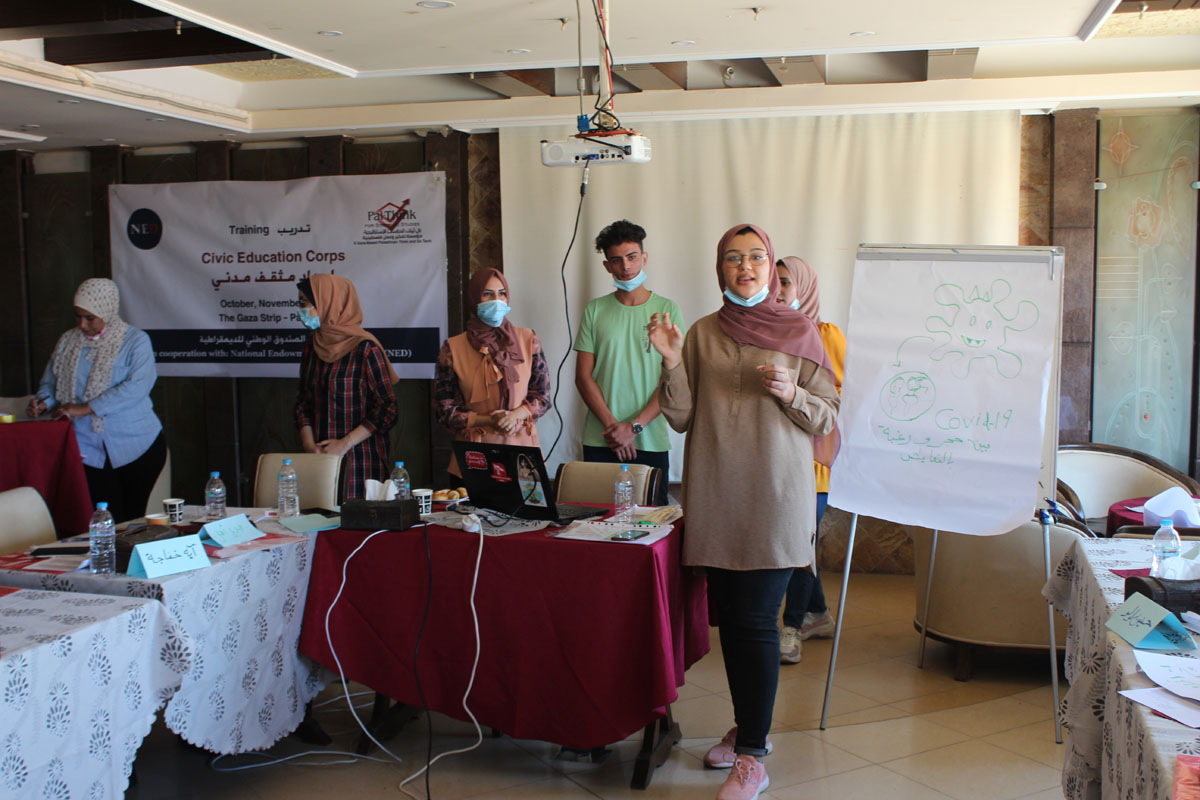
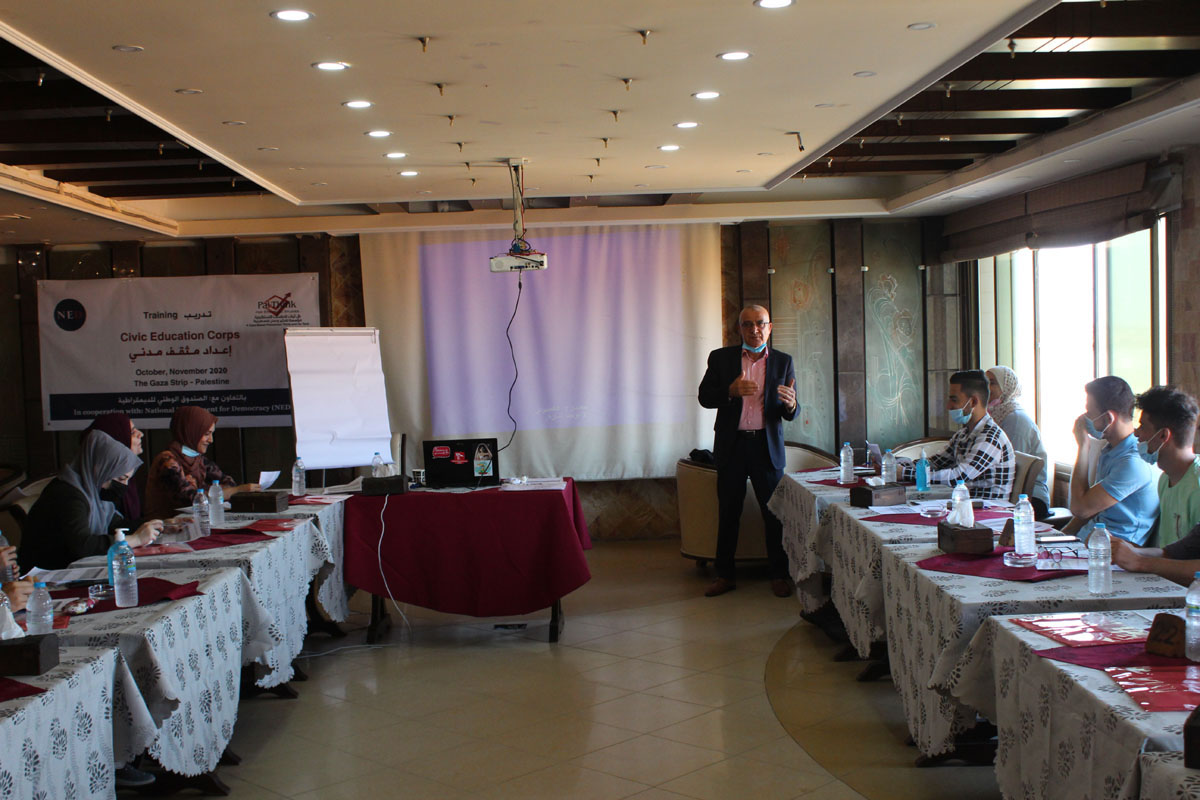
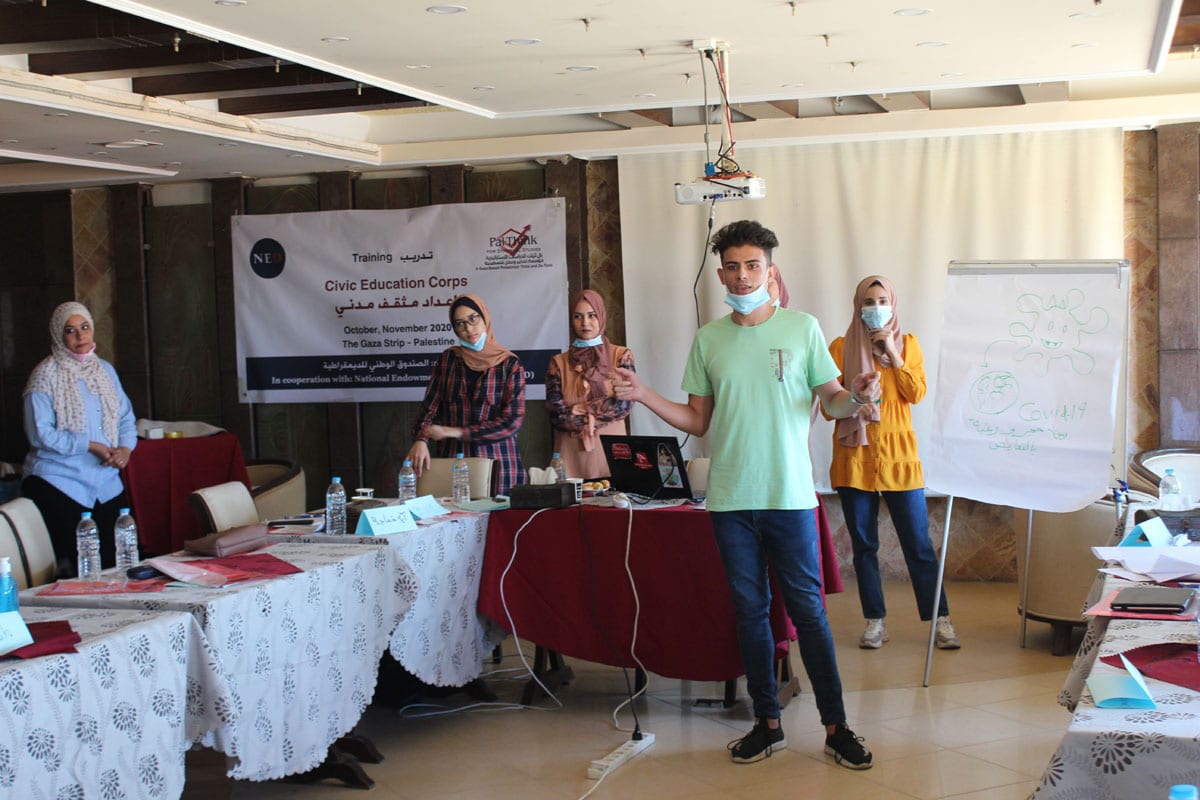
Pal-Think opened the first sessions of the training preparing 20 young men and women as civic intellectuals, under phase one of the Civic Education project with the National Endowment for Democracy (NED).
Pal-Think for Strategic Studies opened the first sessions of the training programme to prepare 20 young women and men as civic educators, within the first stage of the civic-education project implemented by Pal-Think in partnership with the National Endowment for Democracy (NED). Omar Shaban, the institution's director, opened the training and acquainted the participants with the programme's goals — participants chosen from among more than 100 applicants, with several criteria observed, most importantly the participants' interest in communal work and the principles of democracy and human rights; the applicants were evaluated through face-to-face personal interviews of 40 applicants, with their gender diversity and geographic distribution observed.
Shaban affirmed the institution's utmost interest in the youth category and the wager on their awareness and capacities in building a better future, in addition to Pal-Think's constant pursuit of investing in the new energies, working close to the Palestinian citizen and the priorities of building the Palestinian state on solid foundations, and supporting the infrastructure of the Palestinian educational system to include wider content in civic culture and education. In implementing the training programme Pal-Think observes all the health measures necessary for prevention and for limiting the spread of COVID-19 according to the instructions of the specialised government bodies; the institution likewise accommodates the participation of trainees in the restricted areas via the Zoom technique, to guarantee the training's continuity and the trainees' utmost benefit.
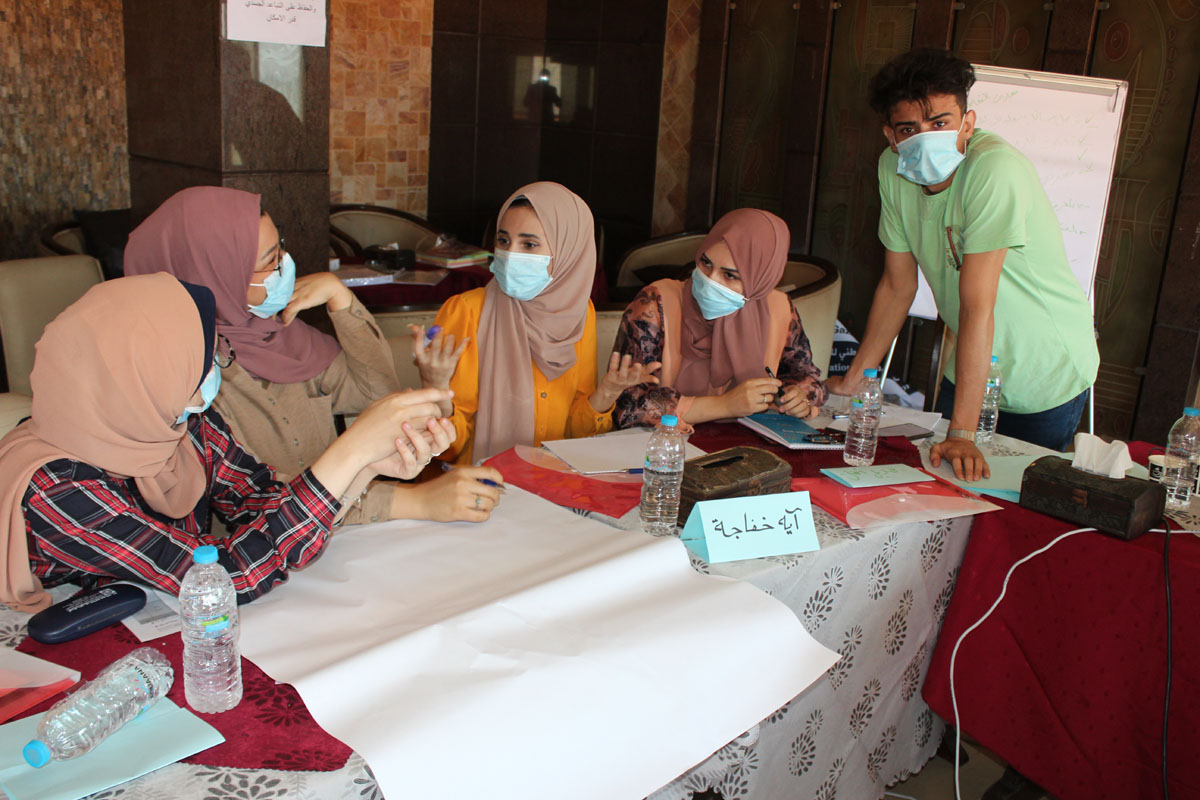
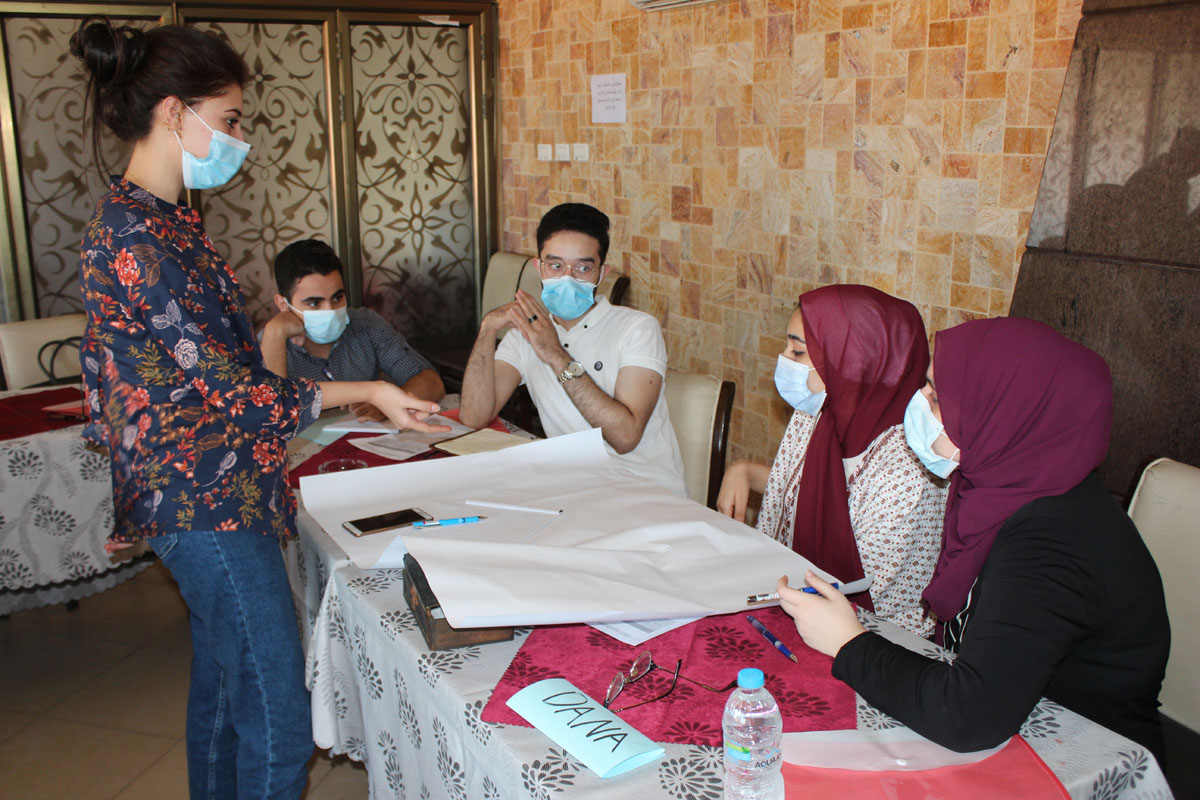
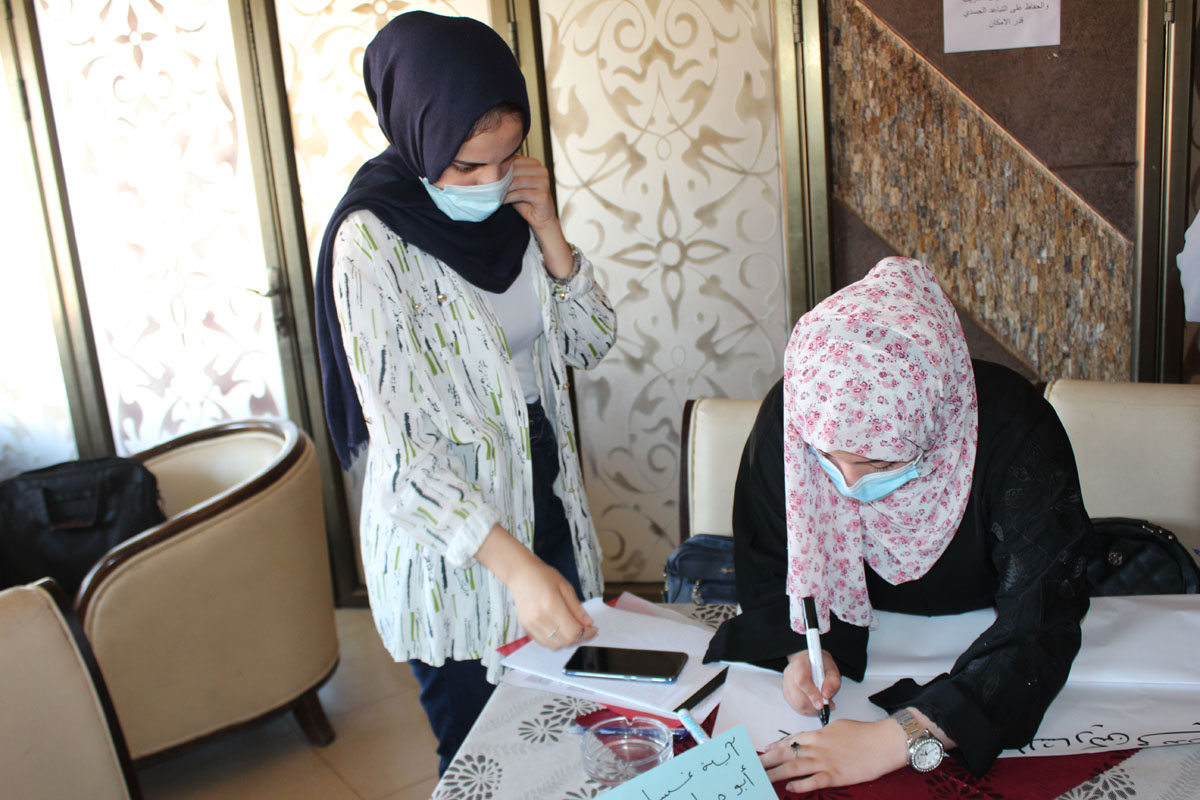
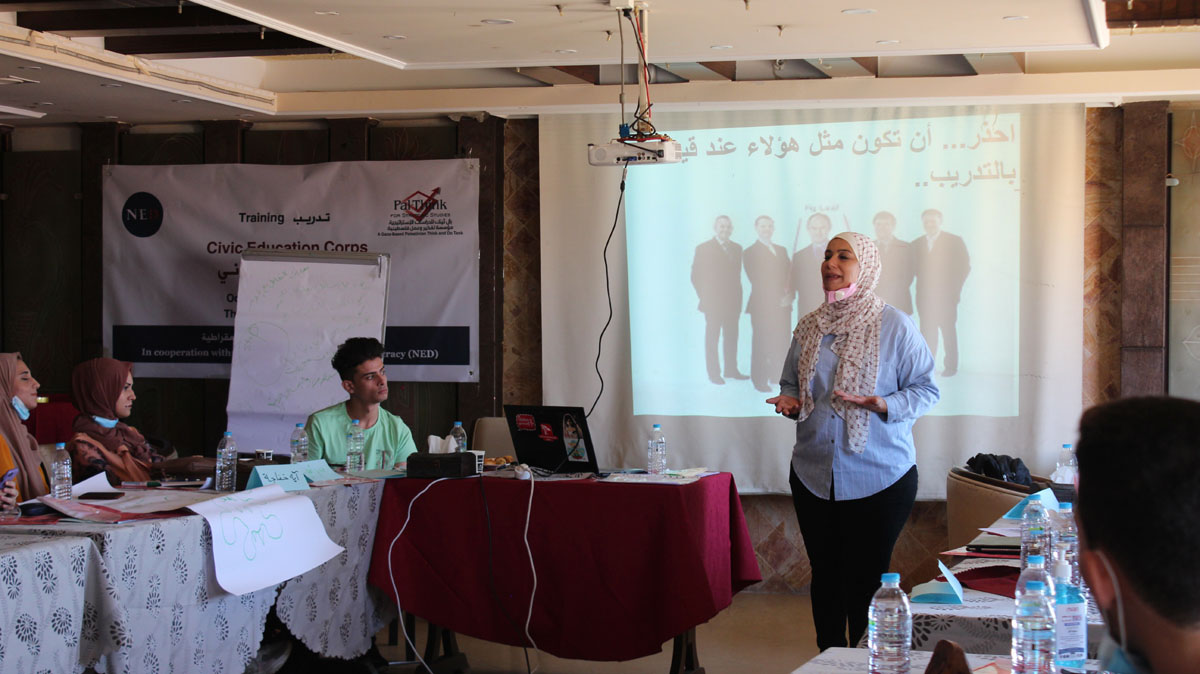
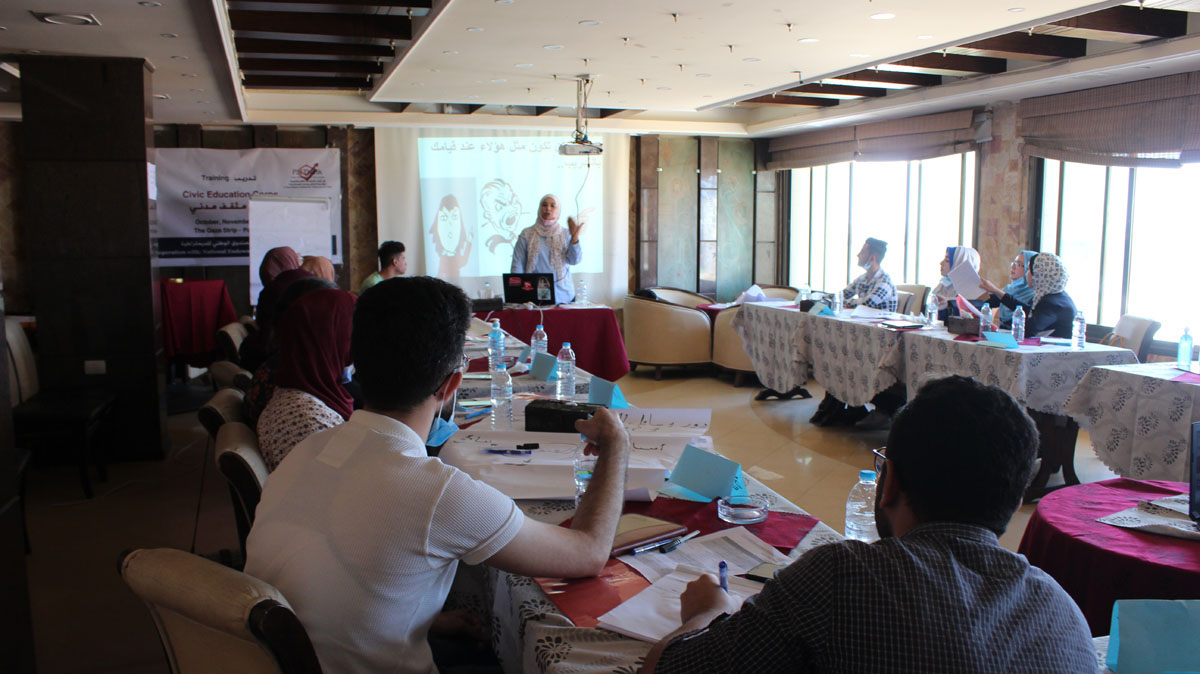
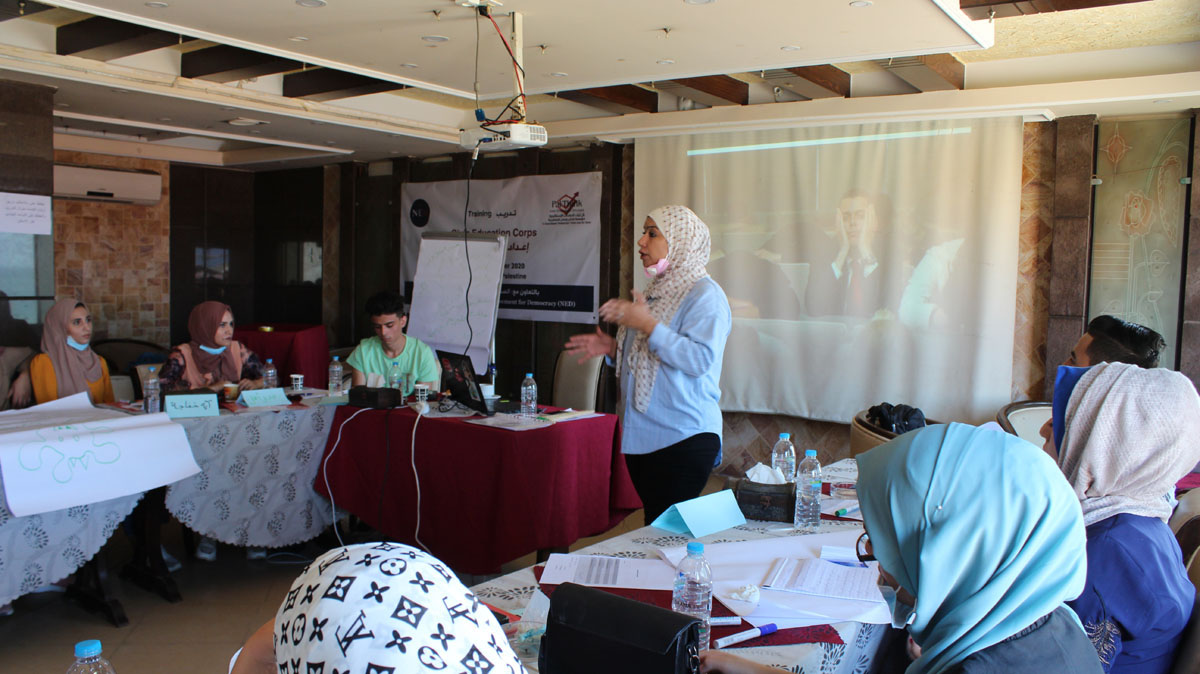
The first day set off within the programme's 10 training days, as the trainer Ms Hanaa al-Zant reviewed the most important presentation and delivery skills to prepare the training's participants for the second stage, embodied in educating peers and different categories of society in the topics that will be discussed and reviewed during the different training days. The participants became acquainted with the mechanism of setting training goals relative to the target category and the message intended to be passed to the audience, and the multiple aspects of the trainer and successful training — from time management and dealing with trainees to using different training instruments and possessing a distinctive personal charisma to increase the capacity to influence. Al-Zant likewise carried out several practical activities to stimulate the participants, simulate the process of presenting the training material, strengthen working in a team spirit, comment on some common errors, and receive feedback on the trainees' performance.
The first encounter of the training programme is followed by several encounters on the training agenda, among them acquaintance with the principles of democracy, human rights, good governance, law, the Palestinian political system, gender justice, and skills in lobbying and advocacy — a total of 50 training hours — in preparation for launching the team's civic-education campaign in the higher-education institutions and the various civil society institutions, through carrying out a number of educational workshops led by the members of the civic-education body participating in the programme.