Young Creations: culture's role in confronting gender-based violence
The role of Palestinian culture in curbing violence, and its challenges — discussed by researchers Abdullah Abu Shamla and Mai Al-Sous in their paper «Cultural activities' role in confronting gender-based violence».
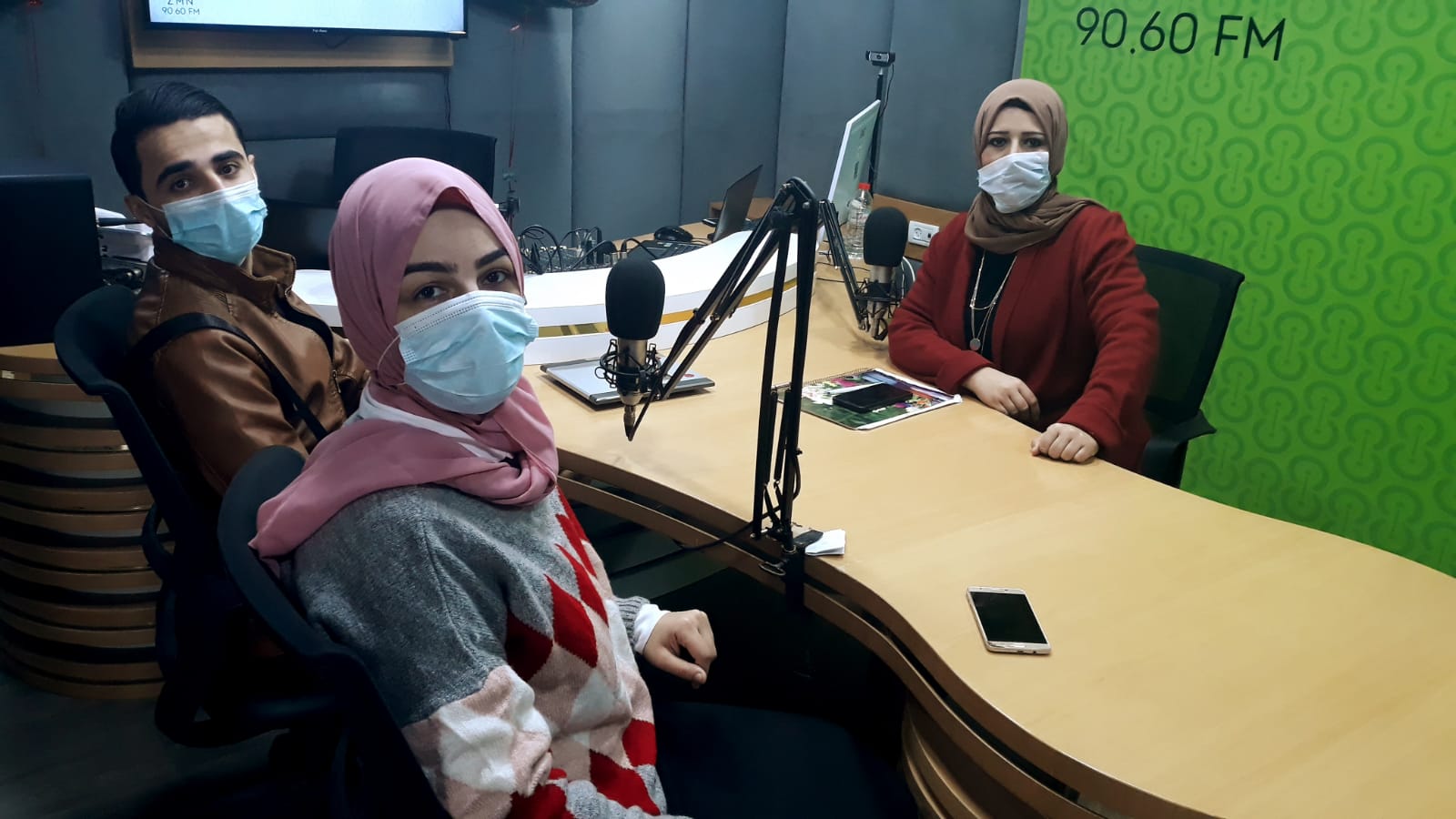
The role of Palestinian culture in limiting violence, and its challenges — this is what was discussed by the researcher Abdallah Abu Shamala and the researcher Mai al-Sous in their research paper titled “The role of cultural activities in facing gender-based violence”, in the third radio episode of the programme “Youth Creations”, within the project “Research writing in gender and feminism”, implemented by Pal-Think for Strategic Studies with funding from the Government of Canada
The Palestinian writer Yusri al-Ghoul said in his intervention in the episode: “We believe in women's role in society. The Palestinian woman is a resisting woman at work, at home, and everywhere; therefore we respect her struggling, human role in Palestinian society. And we, through what we write, deliver a message to the world that the Palestinian woman is like any woman in the world, and she must obtain all her rights — therefore we are with the orientation of the institutions supporting women's rights.”
He added: “We in the Gaza Strip and the West Bank suffer from crises resulting from the existence of an occupation weighing on the land, not to mention the blockade, the cutting of salaries, and other crises such as the rise in prices and the narrowness of the land — all these accumulations affect both sexes. Sometimes the man performs an arbitrary role against the woman, therefore we need to reach a solution. We as writers can do or possess nothing but writing, but the economy is the foundation of all the bitter reality from which the Palestinian citizen suffers, and the woman is the weakest link in Gaza.”
Al-Ghoul pointed out that Arab cultural activities generally suffer from a scarcity of funding, and the civil institutions in the Gaza Strip suffer from that; therefore it is necessary to support culture and cultural activities, and there is a pressing need to present women in the cultural reality, because culture is what forms the gathering identity of the Palestinians.
The writer likewise cast the blame on the occupation in the first degree, because it prevents writers and artists from travelling, prevents the entry of books into the Gaza Strip, and assassinates the Palestinian intellectual, as happened with Ghassan Kanafani.
He concluded by saying: “Visual art is more influential than the heard, which is more influential than the read; therefore films and series — that is, cinema and drama — are the most influential in the cultural scene.”
For her part, the researcher Mai al-Sous said: “We discussed in the research paper the extent of the cultural activities' contribution to treating the issues of gender-based violence in the Gaza Strip, at a time when its rates have risen in light of the coronavirus pandemic.”
She pointed out that the paper's goal is strengthening cultural activities in all the communal institutions to treat the issues of gender-based violence, increasing people's awareness of these issues and engaging them in setting solutions for them by way of these activities, and acquainting people with the specialised places for solving them.
Al-Sous added: “That benefits in highlighting the importance of cultural activities in treating the issues of gender-based violence, supporting the projects related to it, and working to spread them to reach all society's strata.”
She noted that the cultural reality in the Gaza Strip witnesses a great retreat from what it should be: the number of cultural activities in the Gaza Strip reached 953 cultural activities in the various institutions according to the Palestinian Central Bureau of Statistics in 2019. And this forms a great gap and shortcoming that stand in the way of carrying out these activities.
The two researchers likewise conducted interviews with writers, a storyteller, and a director, and all of them agreed on the deterioration of the cultural situation in the Gaza Strip.
For his part, the researcher Abdallah Abu Shamala made clear the most prominent impediments that hinder Palestinian culture in facing gender-based violence, among them: the occupation's practices, the division, customs and traditions, the absence of an organised and planned strategy from the Ministry of Culture, the weakness of the funding presented for these activities, the scarcity of workers in these activities, and the absence of a true vision and message from the workers in cultural activities.
He said the greatest challenges from which the cultural institutions suffer are the shortage of funding and the restrictions placed by the government, the absence of licences for the cultural institutions, and there are social impressions opposed to some activities such as music and women's participation in the theatre.
The researcher set out that the research paper arrived at several results, such as: the importance of cultural activities in treating the issues of gender-based violence, which work to raise awareness toward these issues; there is an absence of the Ministry of Culture in Gaza and of its role in spreading awareness-raising cultural activities in most arenas; and there is a shortage in internal and external funding for spreading cultural activities.
The two researchers arrived at several recommendations, namely: the necessity of raising awareness of the importance of cultural activities and working to adopt their wide options to find solutions to limit the phenomenon of gender-based violence; allocating material support for cultural activities related to the issues of gender-based violence from the Ministry of Culture; creating a cultural lobby to work on spreading these activities, including actors, writers, musicians, painters, and whoever has an interest in limiting violence against women; and working for the existence of protection for the workers in cultural activities in the form of material insurance, and treating them like any employee in the government sector.