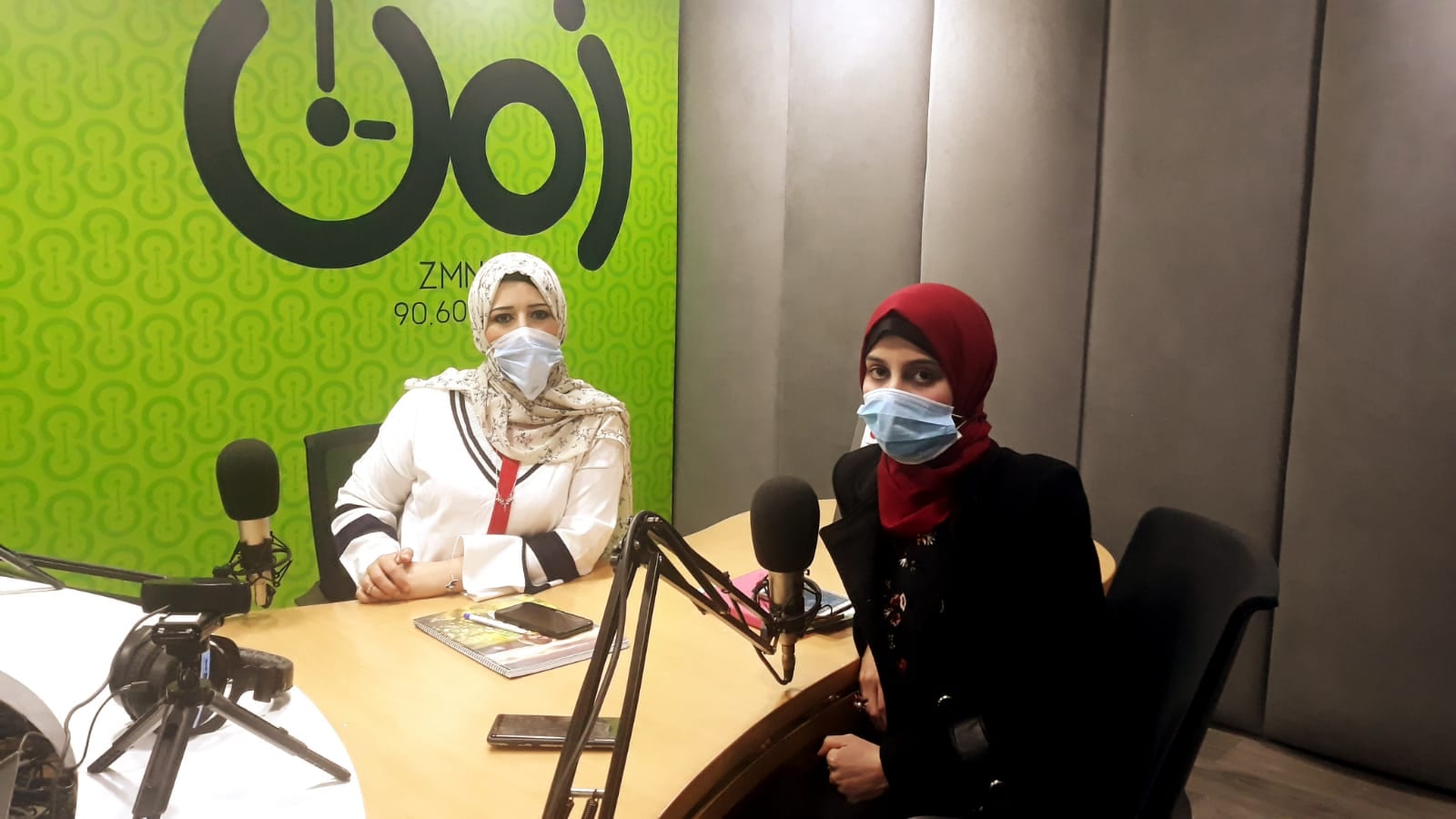
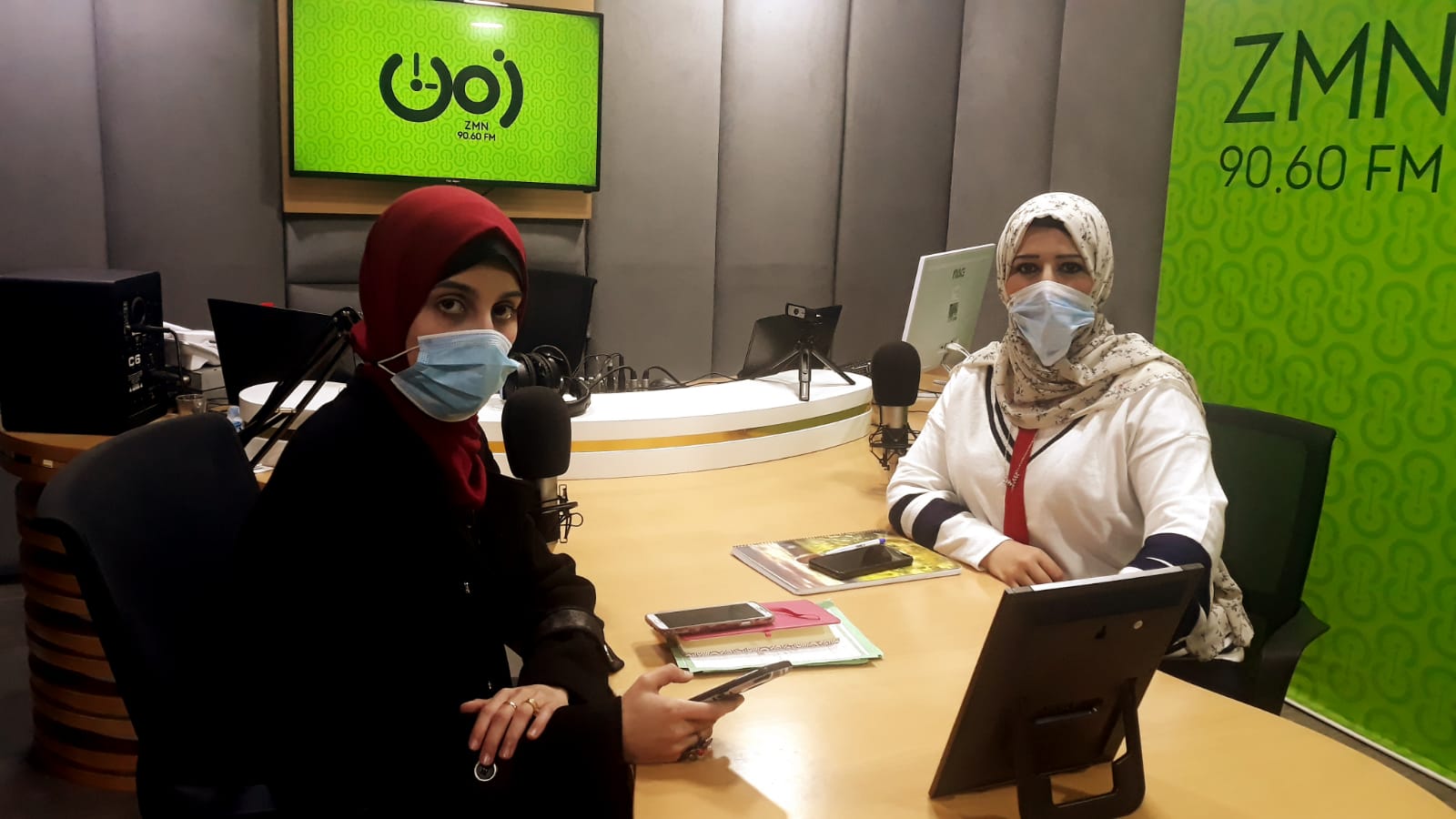
A radio episode on the paper «The challenges of passing the family-protection law»
«There is organised opposition to this law and no political will to implement it — and it in no way contradicts Islamic law»: lawyer Rawan Abu Ghazza of Bethlehem's women's counselling centre on the family-protection law.
“There is organised opposition to this law, and there is no political will to implement it. This law does not conflict absolutely with Islamic sharia.” With this phrase the lawyer Rawan Abu Ghazza of the Psychosocial Counselling Centre for Women in Bethlehem opened her talk in an intervention of hers during a radio episode of the programme “Youth Creations”, which discussed a research paper titled “The challenges of passing the family-protection law”, prepared by the researcher Nourhan al-Tabatibi within the project “Research writings in gender and feminism”, funded by the Government of Canada.
Abu Ghazza said: “The idea of the draft law began in 2004, and 12 drafts were created, because we want to eliminate family violence, and we want to tell society that family violence is a crime. Therefore, it is necessary that there be a law stipulating the criminalisation of family violence and that there be a punishment for its perpetrator.”
The lawyer pointed out that this law treats issues not previously touched on.
Abu Ghazza affirmed that the rates of family violence rose during the corona crisis, pointing to the necessity of passing the law to protect women and children.
From her point of view, the law does not conflict absolutely with Islamic sharia. And there must be greater rights pressure from the women's institutions. They are working now to widen the circle of the law's male and female supporters.
For her part, the researcher Nourhan al-Tabatibi said the paper's problem centres on the challenges facing the draft family-protection law. As for its goal, it is highlighting the importance of the existence of a law protecting the family from violence in Palestinian society, and how to overcome the challenges facing its passage at a time when the rate of violence within the family is rising — reaching in 2019 some 29.9%, according to a statistic of the Palestinian Central Bureau of Statistics.
Al-Tabatibi reviewed the point of view of the rights institutions supporting the law, namely: creating legal procedures that contribute to limiting the cases of violence within the family, such that these procedures allow the bodies charged with enforcing the law to intervene quickly in order to provide protection for the victims of violence within the family; and the law proceeds from a preventive procedural philosophy different from the prevailing criminal legislative policy in the substantive and procedural criminal legislation in force in Palestine.
In return, the researcher set out the reasons for the rejection by the founding council of sharia lawyers in Palestine of the law's draft, according to what came in its statement issued on the fourth of June 2020, namely: its contravention of the Islamic religion and its teachings; its inclusion of a violation of the Palestinian family and a scattering of its rights; its contribution to the loss of sons and daughters, since it allows them to carry out acts contravening the teachings of Islam, allowing them to commit the depravities forbidden by sharia, law, and custom. In addition, the draft law contains a plain targeting of the sharia judiciary, the sharia courts, and the church courts, alongside its cancellation of the personal-status law No. 61/1979, based on the last article in the draft; and that such laws help to shake security and public order, and will lead to killing crimes in a way that threatens civil peace and security.
Al-Tabatibi likewise reviewed the names of lawyers opposing the law, rights institutions with reservations, and others with the law, such as the Ministry of Women's Affairs.
Al-Tabatibi concluded with a historical narration of the government's engagement with the law since 2005, passing through the launch of the national consultations in 2016, when the draft was discussed by the gender-just legislation committee; then the draft was presented to the legislation-harmonisation committee, which made amendments to the draft law. Then the draft law was referred to the Bureau of Fatwa and Legislation, which in turn referred it to the Council of Ministers, whereupon the seventeenth government headed by Dr Rami al-Hamdallah, during its resignation period, referred the draft law to the President in order to issue it — and the office of the President's legal counsellor returned the draft law to the Council of Ministers, considering that a government in the resignation period is a caretaker government not entitled to refer draft laws to the President. And after the swearing-in of the eighteenth government headed by Dr Mohammad Shtayyeh, the draft law was re-referred to the President in order to issue it.
The designations used and the presentation of materials in this programme entail no expression of any opinion whatsoever on the part of the Government of Canada