A radio episode on the Civic Education Corps' role in building youth capacity
«Giving a training lecture to people my own age was a wonderful experience — the interaction was striking» — Aya Khafaja of Pal-Think's Civic Education Corps describes her experience in the corps Pal-Think created to empower young trainers.
“The experience of my giving a training lecture to young men and women of my age was wonderful, the interaction was striking, and the young people had great love and acceptance for the information” — thus did Aya Khafaja, member of the civic-education body at Pal-Think for Strategic Studies, describe her experience in the body Pal-Think launched to empower Palestinian youth in the Gaza Strip in the issues of democracy and human rights.
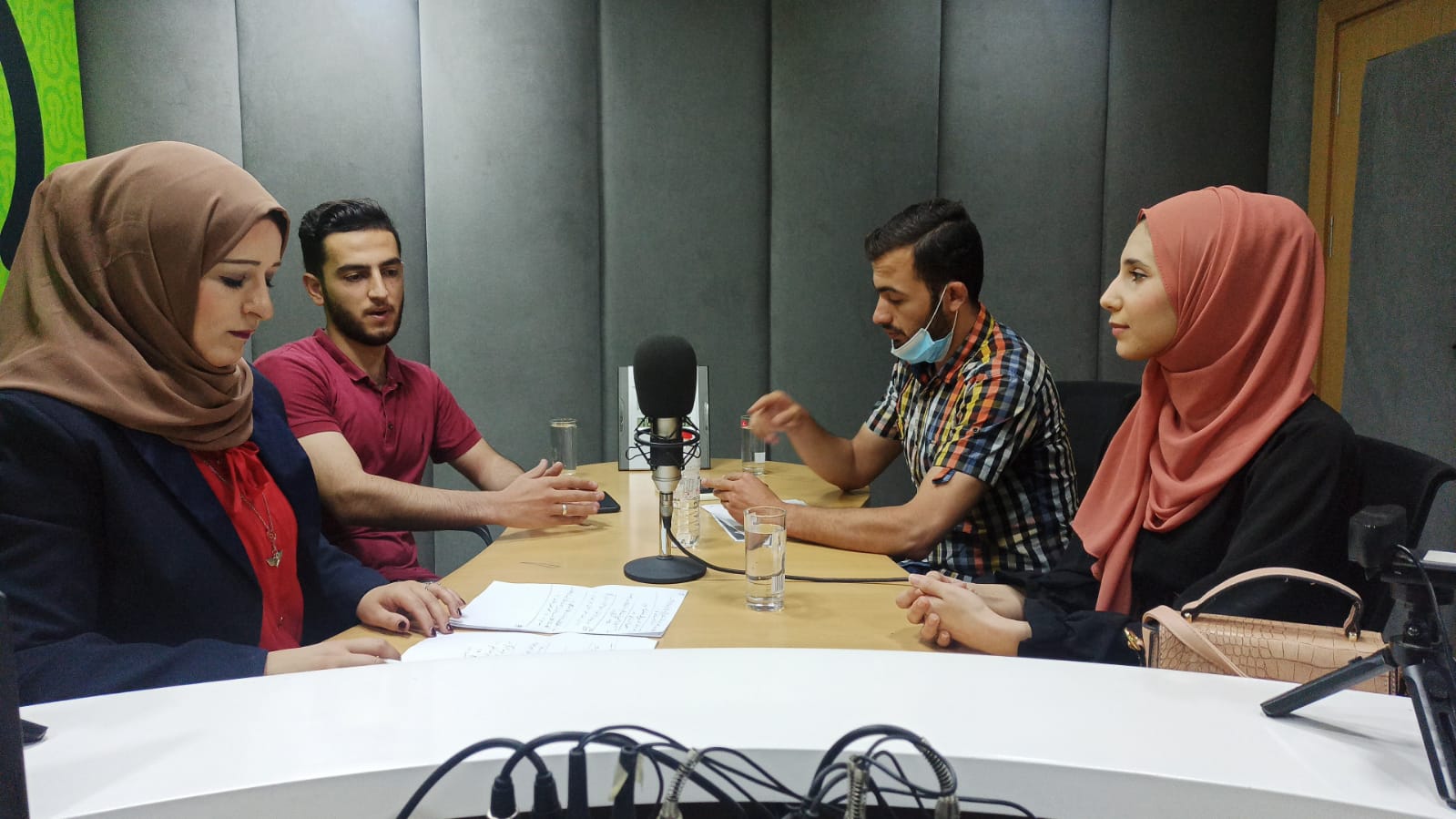
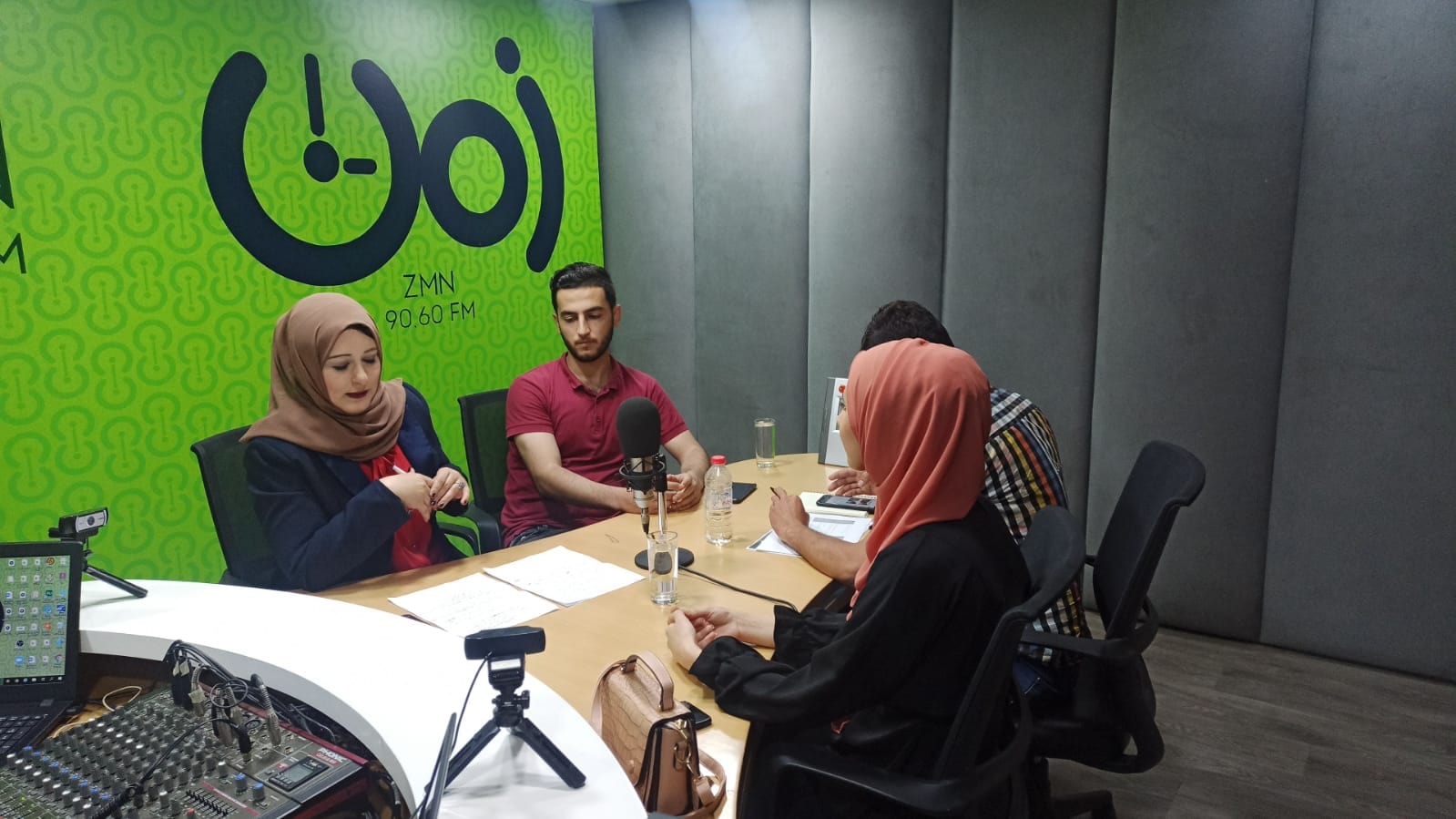
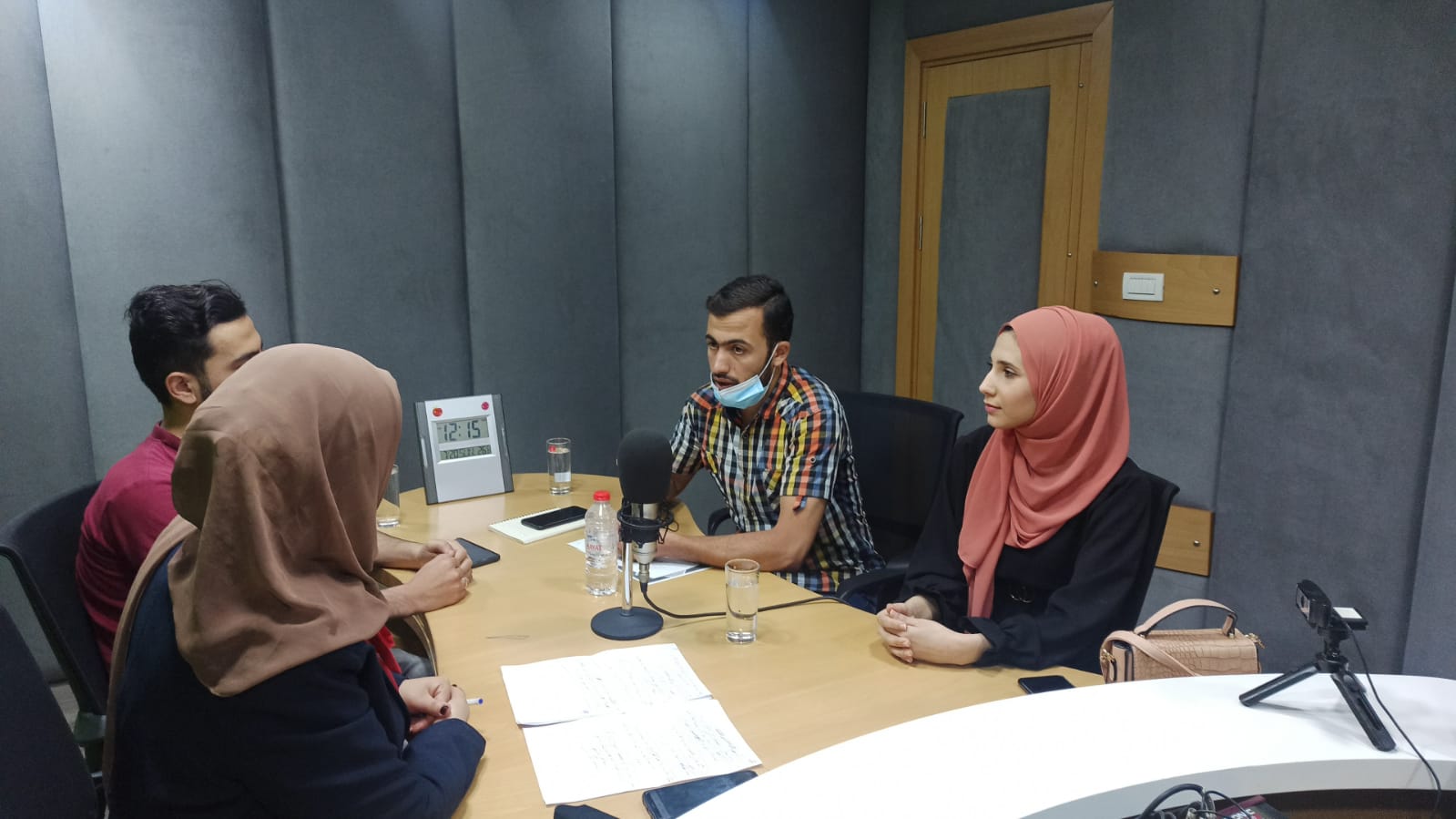
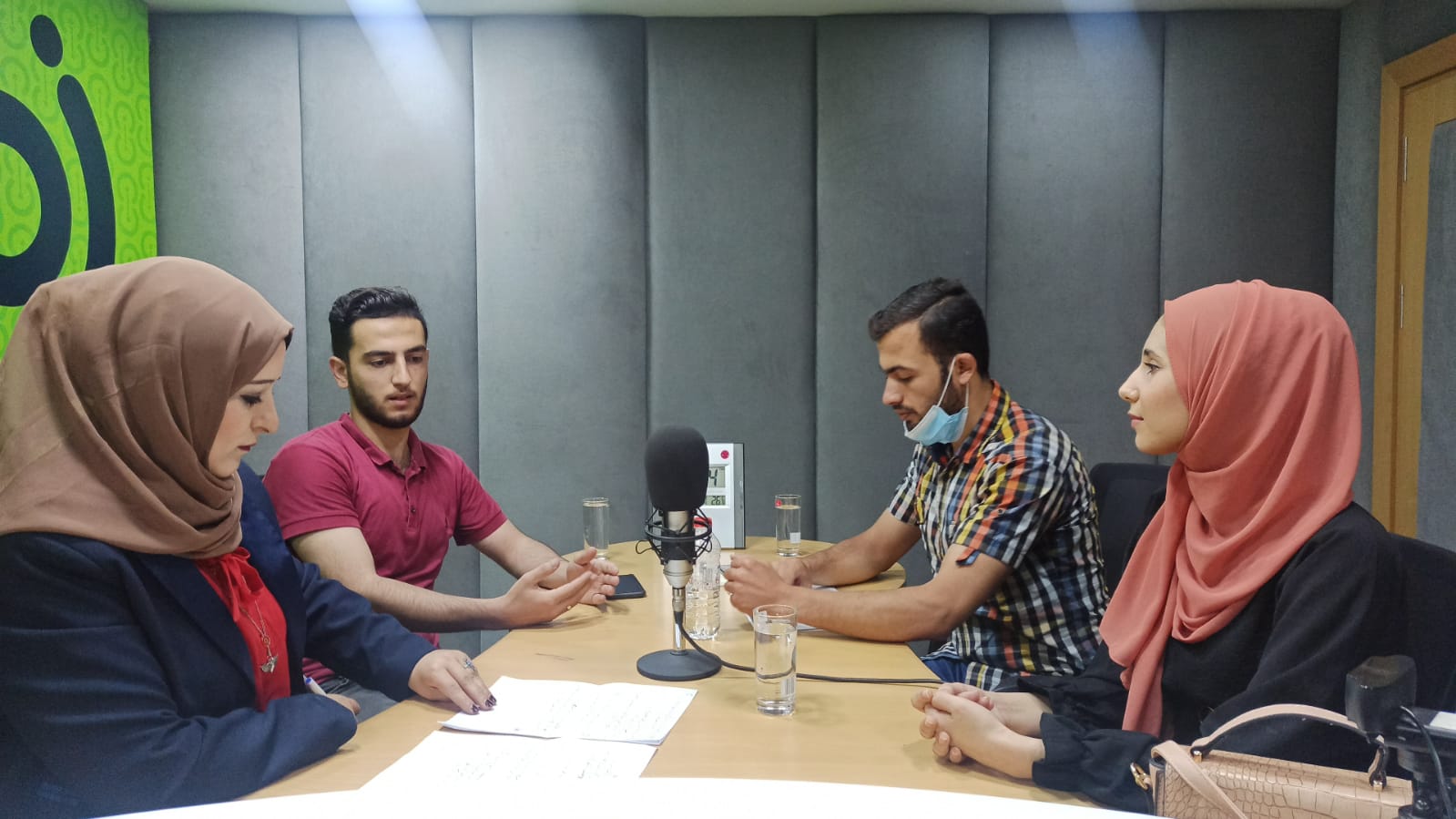
This came during a radio episode titled “The civic-education body and its role in strengthening youth's capacities” within the programme “Dialogue with Youth”, broadcast on the local Zaman radio at noon every Sunday, within the “civic education” project implemented by Pal-Think with funding from the National Endowment for Democracy “NED”.
The meeting's guests were the lawyer Bilal al-Najjar of Pal-Think and the body's members Aya Khafaja and Fares Burjes.
Khafaja opened her remarks by thanking Pal-Think for its attention to youth and giving them the opportunity to express themselves.
She said: “I joined the civic-education body after passing interviews, and found a wonderful welcome upon joining Pal-Think. We received trainings on advocacy, gender, the system of governance in Palestine, and presentation skills; and after the workshops there were radio episodes to speak of our experience in the training, during which the trainers relied on the interactive method and the method of brainstorming”.
She added: “I feel pride at being a member of the body, because the training we received is no light matter, and it qualifies us to pass on that knowledge and experience to our colleagues and young peers — for the topics we trained on were not clear to youth at large but only to specialists. My concepts on the topic of gender likewise changed entirely”.
Khafaja described the experience of delivering a training lecture to her young peers as “the wonderful experience — the interaction was striking, and the young people had great love and acceptance for the information”.
She affirmed the existence of a great absenting of youth from political life in Palestinian society.
She concluded by saying: “I hope all the institutions attend to youth, they being the ones able to change”.
For his part, the body's member Fares Burjes said: “We received diverse trainings, but the training on political participation and the electoral process changed my life, because youth are absented from the electoral process and we did not take our chance in electing, balloting, and standing. Before the training I knew only a little about the electoral system; after the training, I gave a training to a group of university youth on the entire election process, from the announcement of the elections to the issuing of the results”.
He added: “The number of youth at the meeting was around 25, and they had a clear passion for participation in political life, and they enquired greatly about the elections, their system, their steps… etc”.
He affirmed that they were able to give the training in the fullest manner, their experience being rich and wonderful — pointing out that youth are able to accomplish with competence any task civil-society institutions require.
Burjes called on the youth to take part in the trainings and workshops to develop themselves, and likewise called on the institutions to choose the youth deprived of similar opportunities.
He concluded, saying: “Pal-Think allowed us as trainees to use its name and placed its relations with its partners at our service for coordinating with the institutions, and this eased our work greatly. We hope it will adopt us as principal trainers in coming projects”.
For his part, the lawyer Bilal al-Najjar of Pal-Think said his institution has, since its founding, adopted the philosophy of focusing on youth in its activities, because it holds the conviction that societal change can only come through them, they being the most able to bring about real change in society — pointing out that they raise the issues that concern Palestinian society and contribute to its progress and advancement in diverse fields such as the economy, awareness-raising, human rights, and others.
He made clear that the body was a project from which a permanent body sprang — the civic-education body — targeting the outstanding university students of both sexes, who must hold knowledge, however simple, in human rights and gender-based violence, and they were chosen to be within the body. They received intensive training for two weeks on democracy, human rights, gender-based violence, the system of governance in Palestine, the principles of integrity, and the skills of presentation and delivery, and other skills youth need.
Al-Najjar added: “The civic-education body is simply a gathering of young men and women seeking to strengthen the culture of democracy and human rights among youth and strengthen the culture of peer education. The body adopts the method of passing knowledge from one young person to another of the same generation, because the benefit is greater than passing it between two people of different ages”.
He pointed out that the aim of conducting the interviews to choose the applicants is defining their needs to lay down a training programme that suits them. All the topics raised they received with full passion, and the choice was left to them to choose the titles of the training and the radio episodes. Coordination with the institutions was left to the trainee, so they bear part of the responsibility and grow the spirit of leadership in themselves, and to link the trainee with civil-society institutions to market themselves.
He continued: “We trained the trainees to deliver lectures on their own and broke in them the barrier of the dread of delivery and standing before an audience. We were astonished at the trainees' performance in presenting the lectures and workshops, and many of the audience would ask us how they could become like these trainees”.
Al-Najjar affirmed that training society and spreading democracy in it needs cumulative effort, and that Pal-Think always counts on these youth to pass on the trainings and knowledge to all around them to grow society. The training materials the trainees received are likewise available to all on Pal-Think's website.
He likewise mentioned that during the project the civic-education manual was prepared to stand as a fundamental reference for the trainees and for other youth, and that this manual takes up several topics, foremost democracy, human rights, gender-based violence, the system of governance in Palestine, integrity and transparency, and the principles of good governance.
He concluded by saying: “Pal-Think keeps its relation with the trainee after the project's end, because it believes in continuity”.