Pal-Think's Civic Education Corps meets the president of the University of Palestine and presents the civic-education guide
Strengthening relations with higher-education institutions, Pal-Think's Civic Education Corps — with director Omar Shaban — met the president of the University of Palestine, Prof. Jabr Al-Daour.
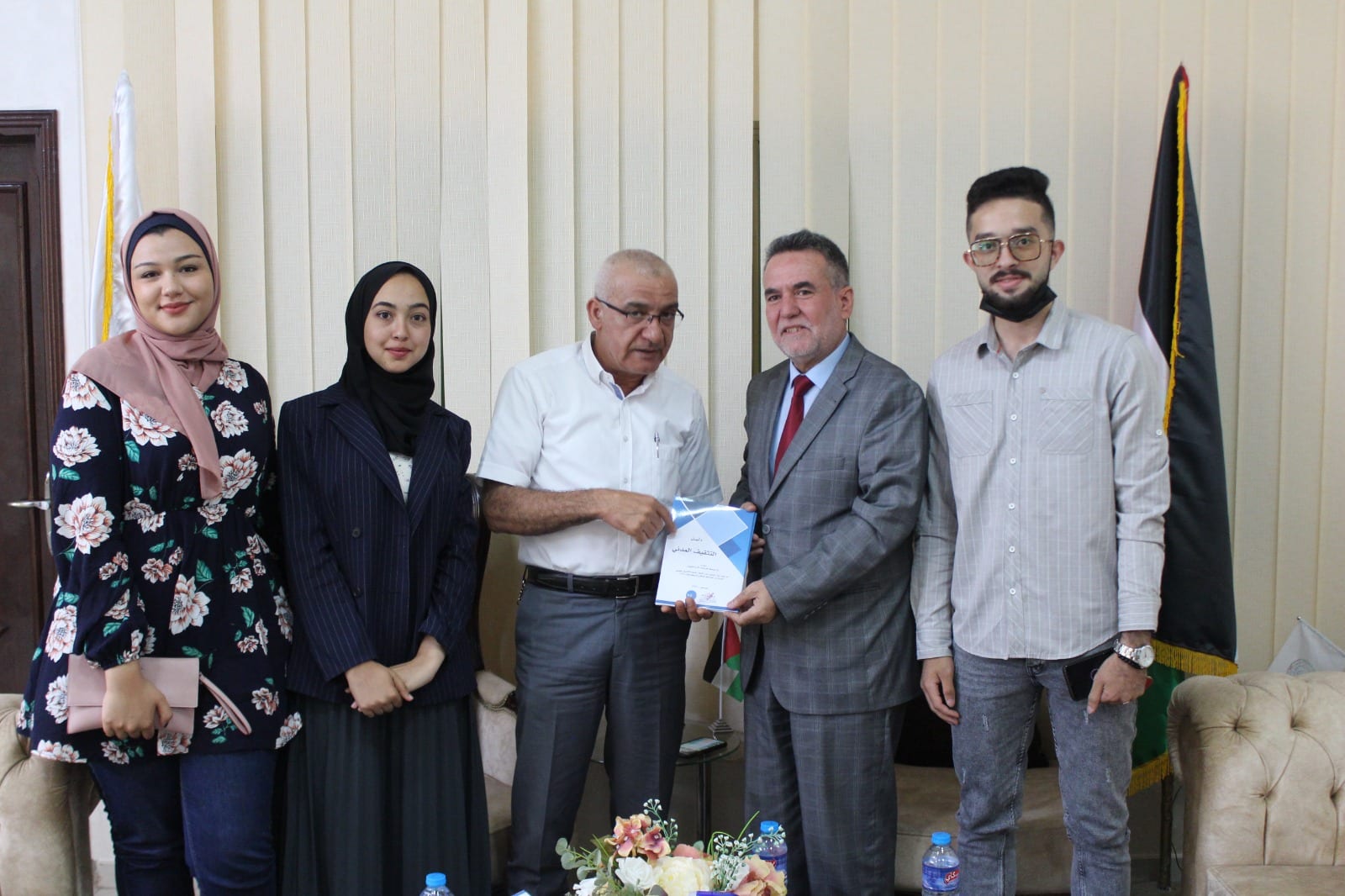
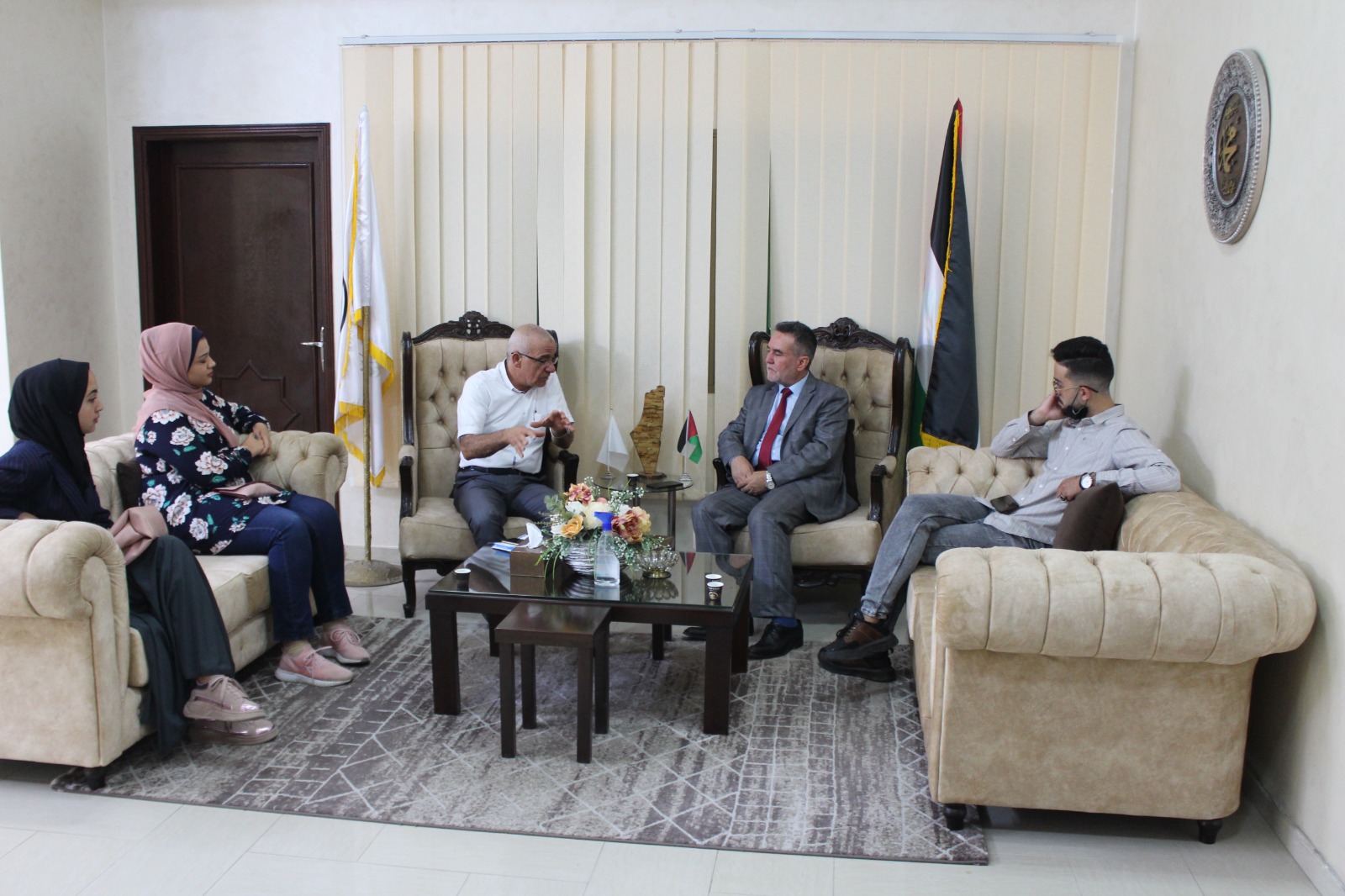
Within the frame of strengthening and developing the relation between Pal-Think for Strategic Studies and the institutions of higher education, the civic-education body at Pal-Think meets the president of the University of Palestine Prof. Dr Jabr al-Daour, with the participation of the director of Pal-Think for Strategic Studies Mr Omar Shaban and the members of the civic-education body at Pal-Think: the student Sami Shaqura, the student Farah Zaqout, and the student Aya Ashour.
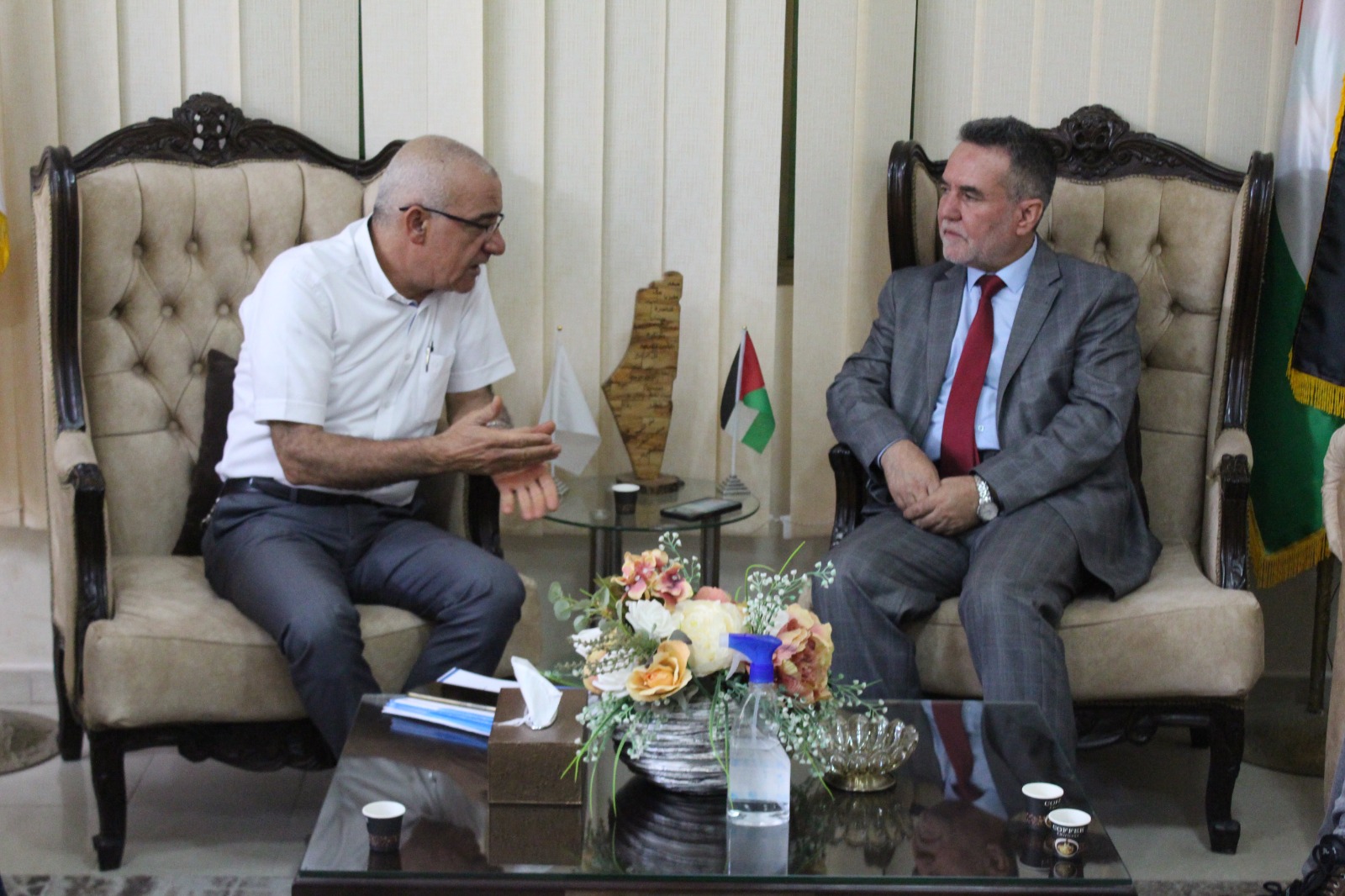
The director of Pal-Think spoke at the visit's start, thanking the University of Palestine for its pioneering role in developing and growing students' skills, and likewise thanked the university's employees for the cooperation and flexibility in coordinating with Pal-Think during the implementation period of the activities of the project “Preparing a civic intellectual”, which Pal-Think implemented with funding from the National Endowment for Democracy “NED”, in cooperation with the universities and civil-society institutions. He showed that Pal-Think believes in the necessity of strengthening cooperation and coordination between the institutions of higher education and civil-society institutions in what serves youth issues, and affirmed that Pal-Think seeks earnestly and continuously to develop and grow the youth and invest in their capacities and skills through carrying out training programmes and preparing studies and research focusing on their issues — youth being the force most able to bring about change and societal influence.
For his part, the president of the University of Palestine Prof. Dr Jabr al-Daour spoke, welcoming Pal-Think's visit and affirming this visit's importance; he then spoke of the University of Palestine and the most important programmes the university comprises, and likewise valued the activities and projects Pal-Think implements, which hold a prominent role in growing and strengthening youth's capacities to be the leaders of tomorrow. He showed that among the most important investments to focus on is investment in youth's capacities in order to empower and develop them in the various fields, and likewise affirmed that the University of Palestine welcomes and encourages the carrying out of any activities or events inside the university — from belief in the importance of strengthening the relation between the institutions of higher education and civil-society institutions.
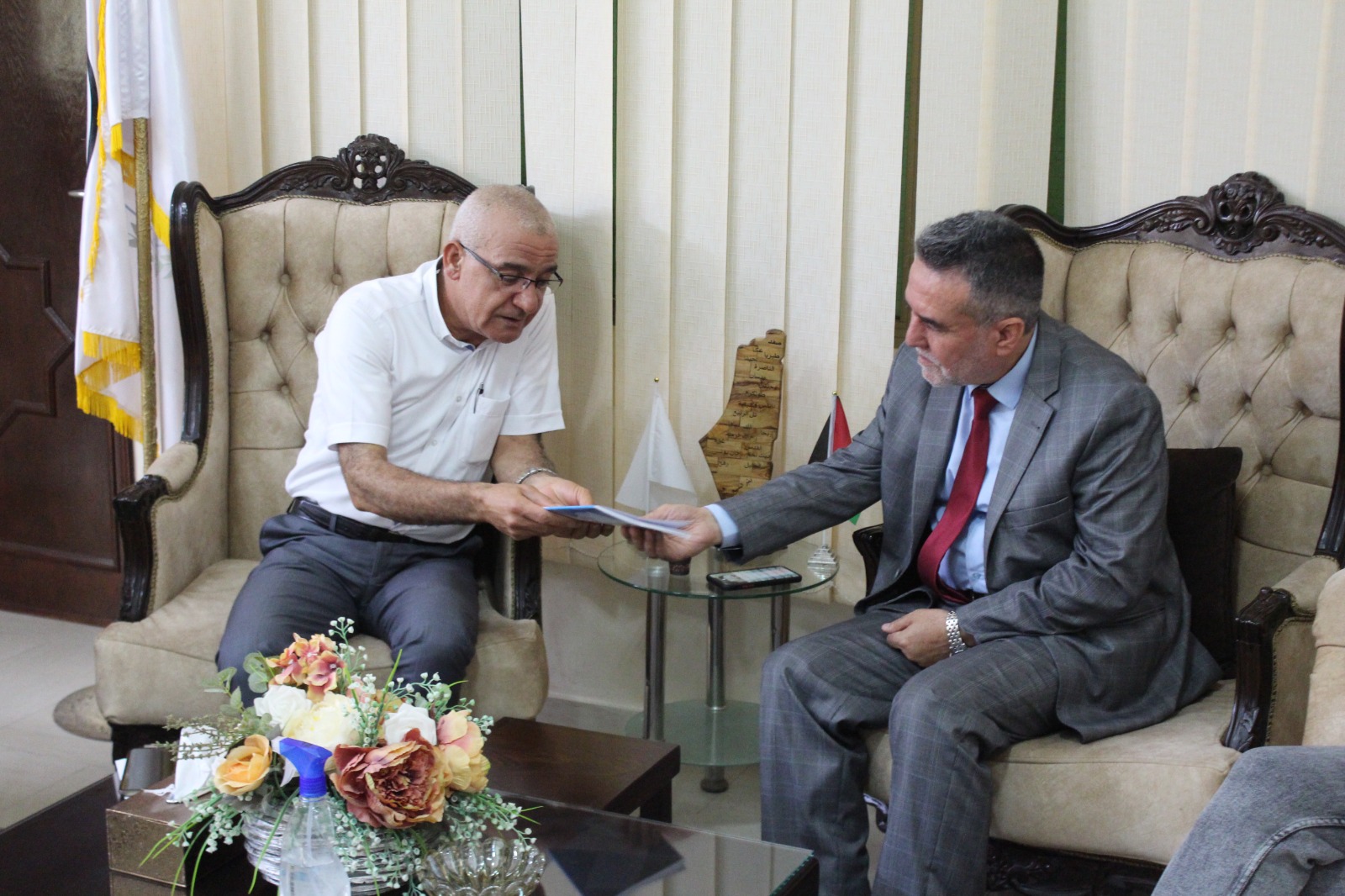
The director of Pal-Think likewise presented a letter of thanks and appreciation to the university and a copy of the civic-education manual, making clear the importance of the information contained in it and affirming the necessity of placing it in the university's library to stand as a permanent reference for students, researchers, and those interested in the issues of democracy, human rights, gender-based violence, the system of governance in Palestine, and integrity and transparency.
For their part, the members of the civic-education body spoke, reviewing their experience during the project's implementation period, and affirming that this project has worked to develop their skills and strengthen their self-confidence, and that they have become more able to speak before an audience.