Pal-Think launches a radio programme: «Democracy and Youth»
Pal-Think launched the radio programme «Democracy and Youth» on Zaman FM — Mondays and Wednesdays — engaging young people in community development and democratic concepts through solutions to social and rights issues.
Pal-Think for Strategic Studies launched a radio programme titled “Democracy and Youth”, aiming to engage youth in society's development and strengthen the concepts of democracy through finding solutions to societal and rights issues — on Zaman FM radio on Mondays and Wednesdays, within the project “Strengthening civil society's role in supporting the elections”, implemented by Pal-Think and funded by the Government of Canada.
This radio programme comes with the participation of a group of young activists among the graduates of the training programme titled “Strengthening youth political participation and spreading the concepts of democracy” within the project — who in turn passed on the knowledge they received to the rest of society's groups through awareness meetings and discussion on rights topics and the concepts of democracy.
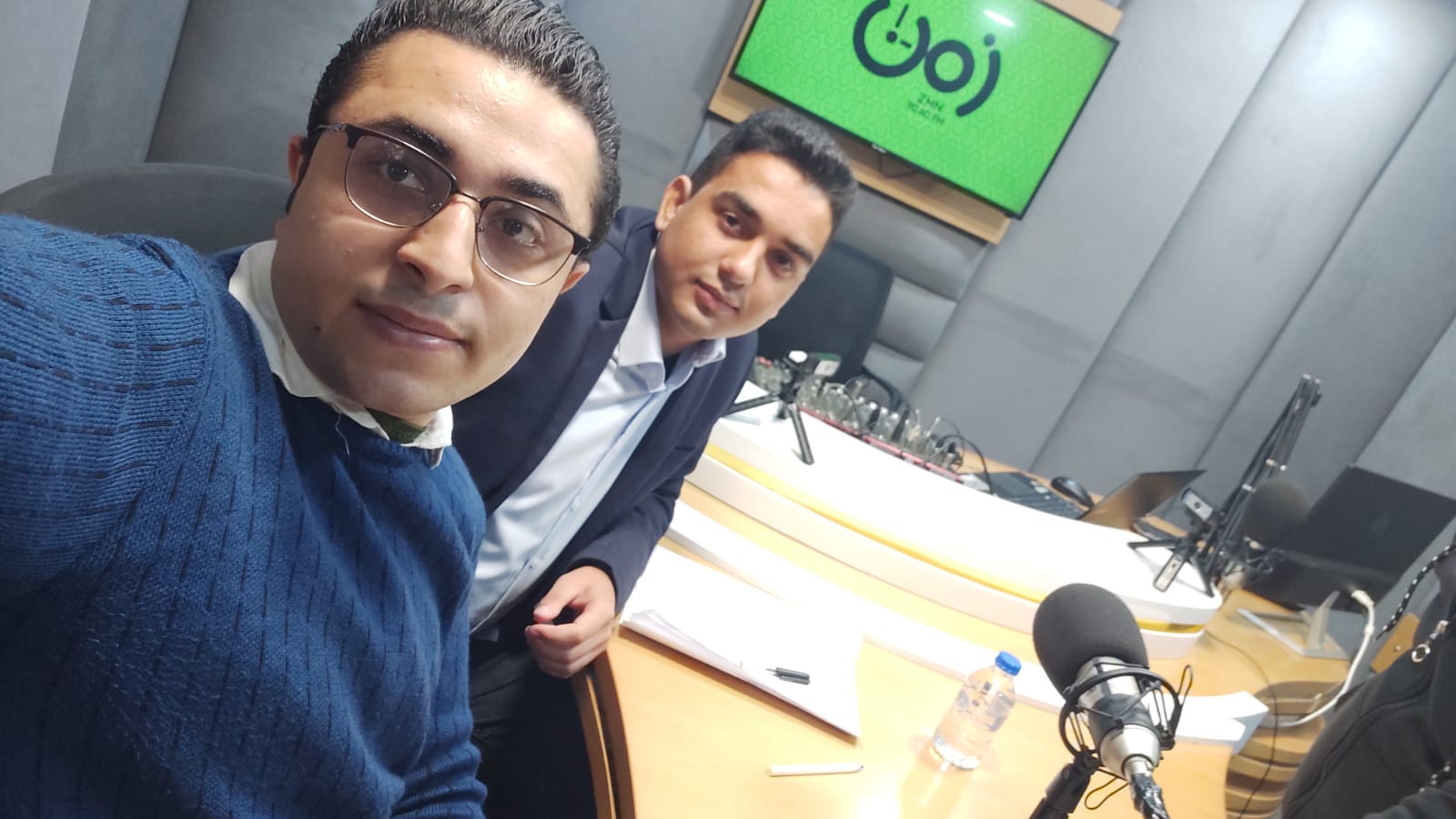
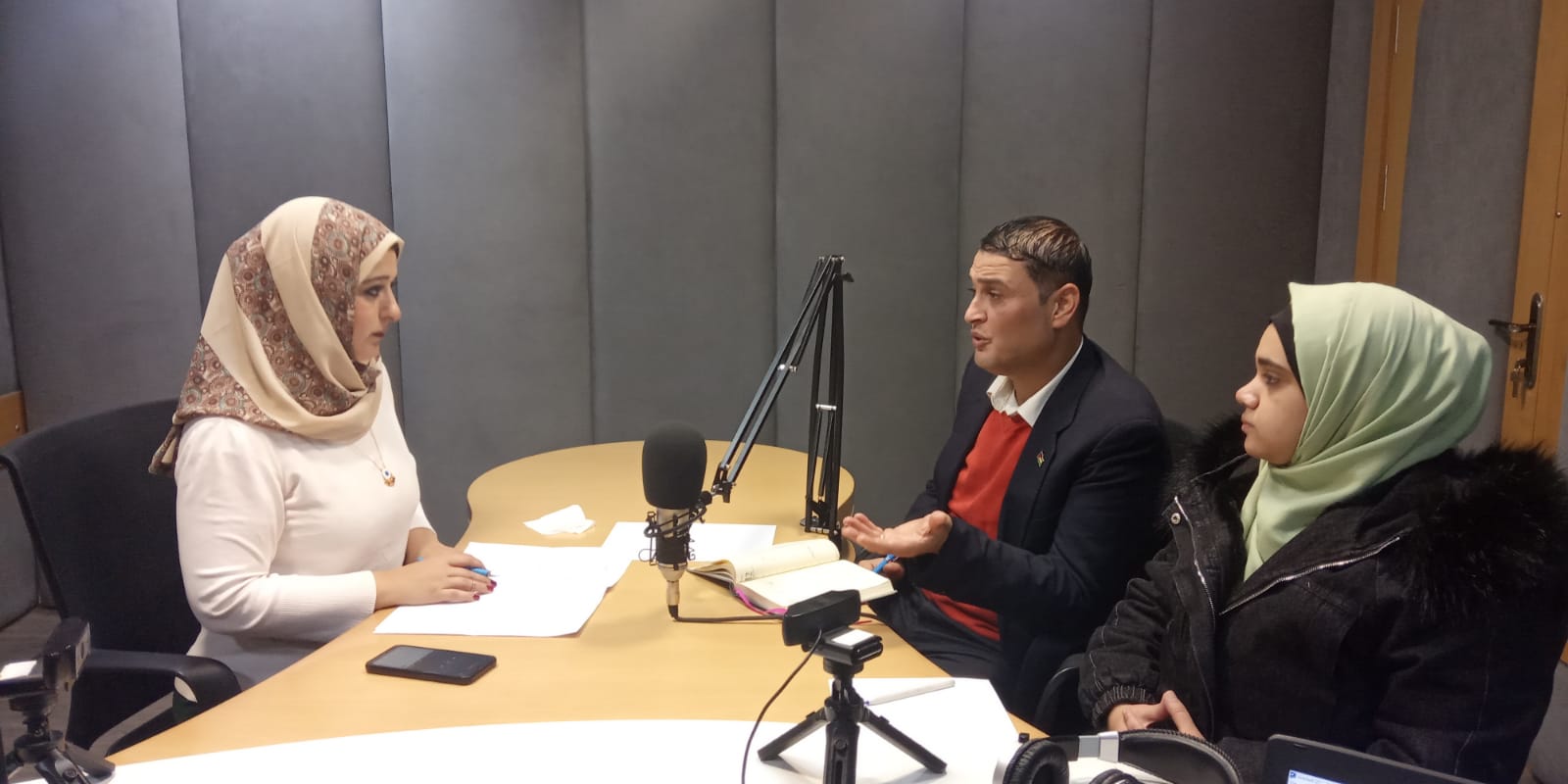
The first episode came under the title “Youth's role in decision-making”, with the participation of the consultant in economy and development issues Dr Raed Helles and the young activist Aseel Zain al-Din, who reviewed the concept of youth according to the United Nations and Palestinian law, the challenges facing youth's participation in political life, and youth's role in the developed states.
Helles likewise explained that a fifth of Palestinian society is educated youth: there are 18 young men and 23 young women in every hundred holding a bachelor's degree.
For her part, Zain al-Din set out the effect of the division, certain parties' monopoly on political life, and the barring of youth from reaching decision-making centres. She likewise reviewed the economic, social, and educational challenges standing in the way of youth's effective participation in society.
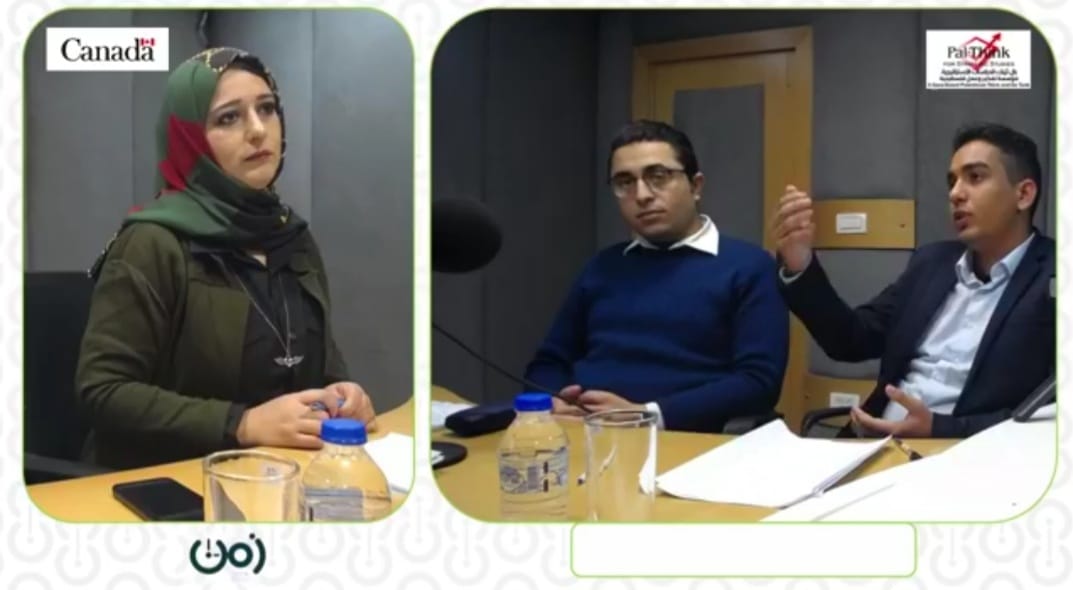
The second episode was titled “The right to access information”, with the participation of: the investigations coordinator at the Independent Commission Bakr al-Turkmani, the lawyer Ashraf Sukkar, and the young activist Malik al-Jarou.
Al-Jarou opened the episode by defining the right to information, its origin, its development, and the stages of its adoption by the General Assembly of the United Nations in 1948, and took up the importance of the state's disclosure of information. Al-Jarou reviewed a study by the AMAN institution showing that 90 per cent of citizens demand the right to access information.
For his part, the lawyer Ashraf Sukkar set out the Palestinian laws that set down the right to access information, such as: the Palestinian Basic Law of 2002, the amended Basic Law of 2003, the publications and press law of 1995, the evidence law and article 103, the Legislative Council's internal regulations, and the criminal-procedures law. He made clear the principles of the right to access information and the cases in which the law set down the non-publication of information.
He mentioned the bodies legally authorised to disclose information: the General Authority for Information, the Palestinian bureau of statistics, the Independent Commission for Human Rights, the Palestinian Initiative for the Promotion of Global Dialogue “MIFTAH”, the NGO network, the Palestinian media centre, the Palestinian news agency “WAFA”, and the Legislative Council.
For his part, the investigations coordinator at the Independent Commission for Human Rights Bakr al-Turkmani said that despite the importance of the right to access information, it still stands in place with the governing parties in Palestine.
He noted that many ministries do not disclose their financial budgets, which causes weak assessment of general-budget policies — pointing to the impossibility of holding officials to account amid the absence of the right to obtain information from its correct sources.
He concluded his remarks with the legal procedures to be followed when requesting certain kinds of information, affirming that the default in matters is permissibility unless a text arrives constraining that.
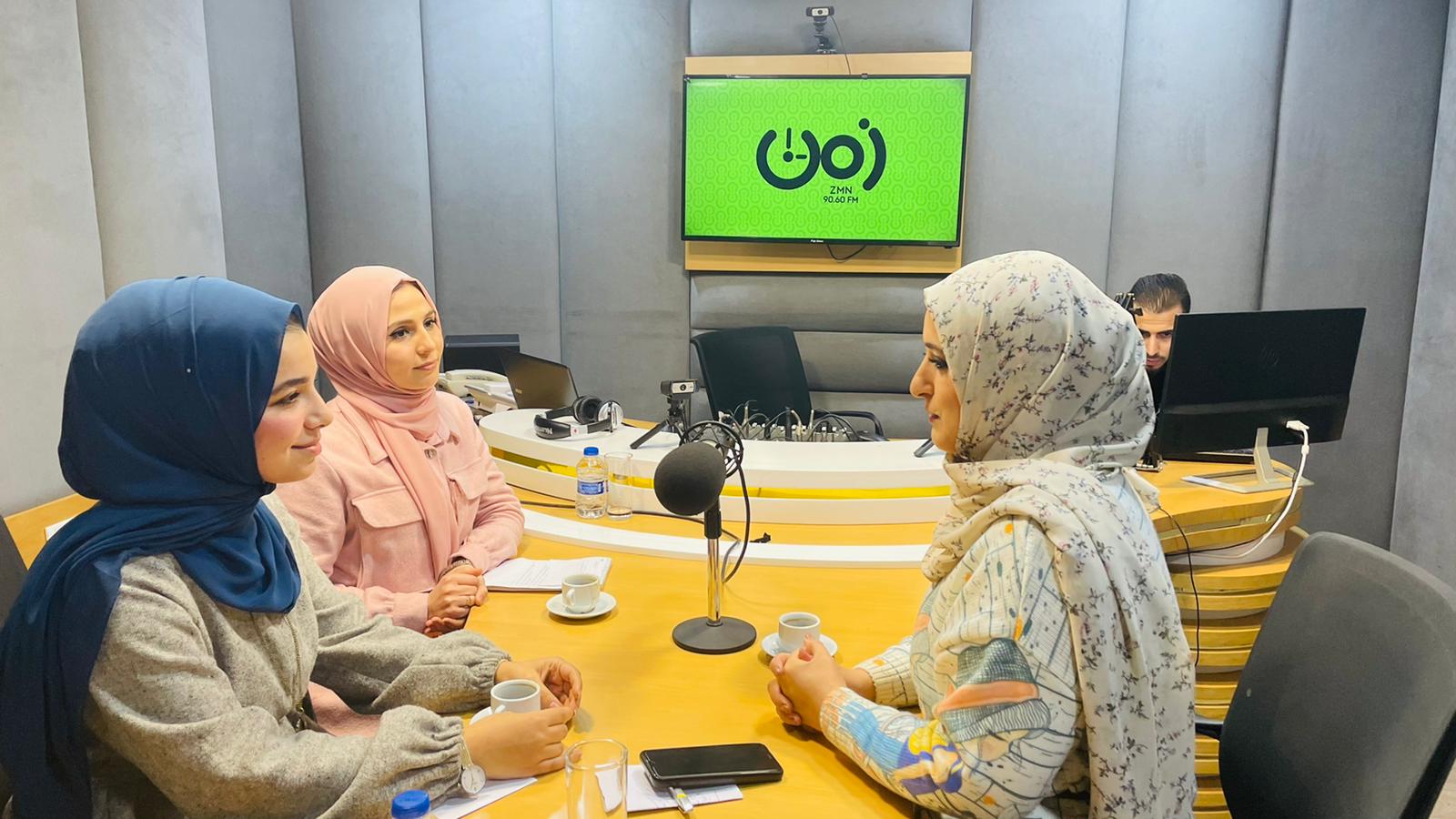
The third episode discussed the issue of gender-based violence, with the participation of Ms Hiba al-Danaf, a rights activist working at the Aisha Association for Woman and Child Protection, and the activists Marwa Qishta and Ahed Abdallah.
Qishta opened her remarks by defining gender, the difference between sex and gender, and the kinds of gender-based violence — physical, legal, sexual, psychological, and verbal, the latter two the most widespread among women.
The activist pointed out that Palestine has not harmonised its laws although it signed the international covenant on political and cultural rights, the CEDAW convention, and the Universal Declaration of Human Rights. She likewise reviewed models of girls forced into early marriage and killed at their husbands' hands.
For her part, she made clear the importance of analysing awareness in gender to bring about change in society, narrow the gap between man and woman, and empower women economically, legally, and politically. She set out many of the widespread behaviours and concepts harmful to women that society adopts, such as: early marriage and deprivation of education.
As for the rights activist Hiba al-Danaf, she defined gender-based violence as any act against any person stripped of will because of culture, customs, and traditions, pointing out that the majority of gender victims are female. Al-Danaf made clear the three cases of social violence: violence based on sex, on age, and on condition — such as those with disability. She affirmed that many abused cases speak to no one of their abuse, stressing the necessity of aligning civil society's interventions with the government's policies to curb the spread of gender-based violence.
She concluded her remarks by saying: “There must be a standing official institution whose fundamental function is to stop the spread of gender-based violence”.
The designations used and the presentation of materials in this programme entail no expression of any opinion whatsoever on the part of the Government of Canada