Peaceful dialogue, and women's political participation: two episodes of «Democracy and Youth»
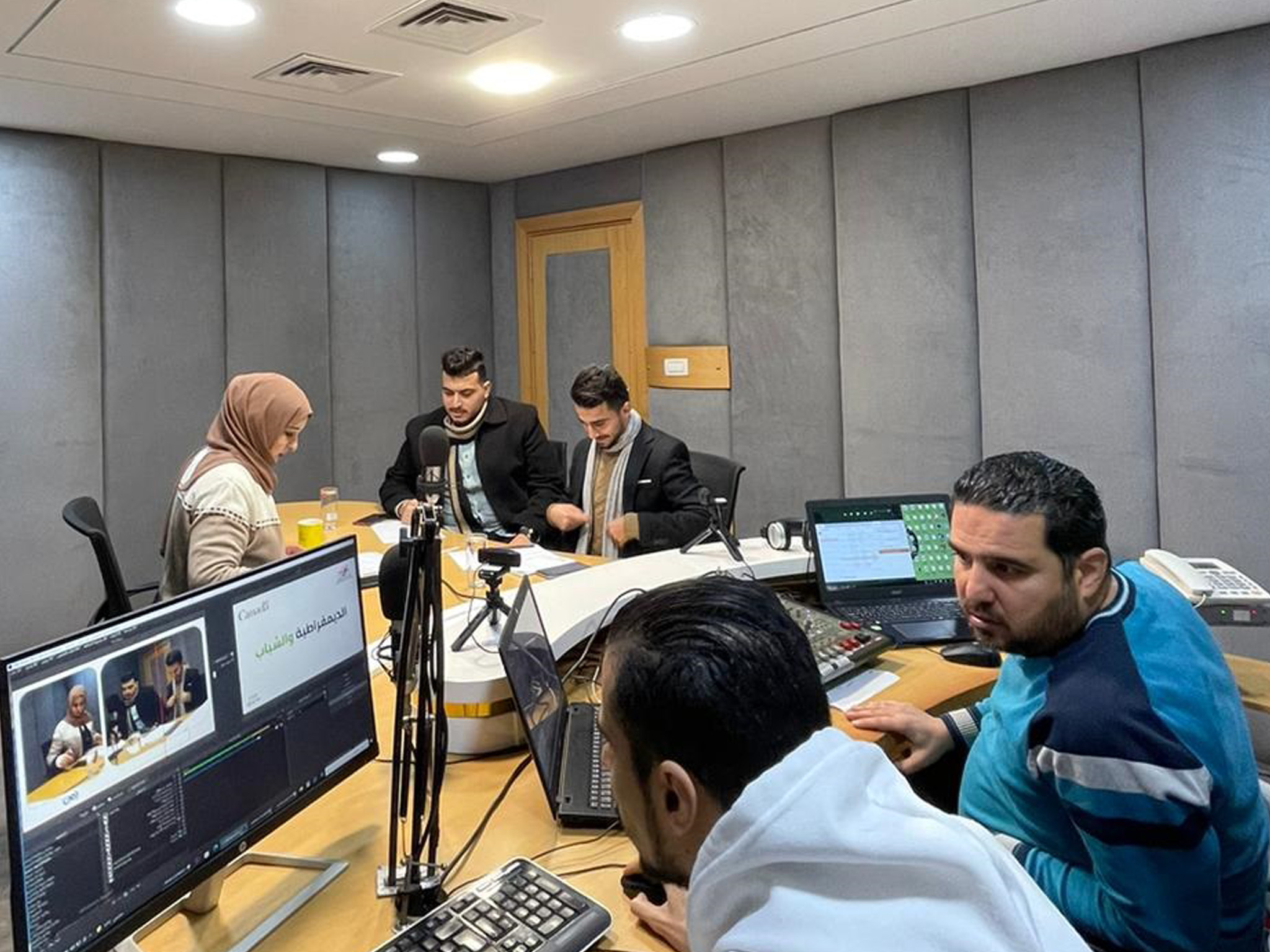
Pal-Think delivered the fourth and fifth episodes of the «Democracy and Youth» radio programme on Zaman FM, under the Canada-funded civil-society elections-support project.
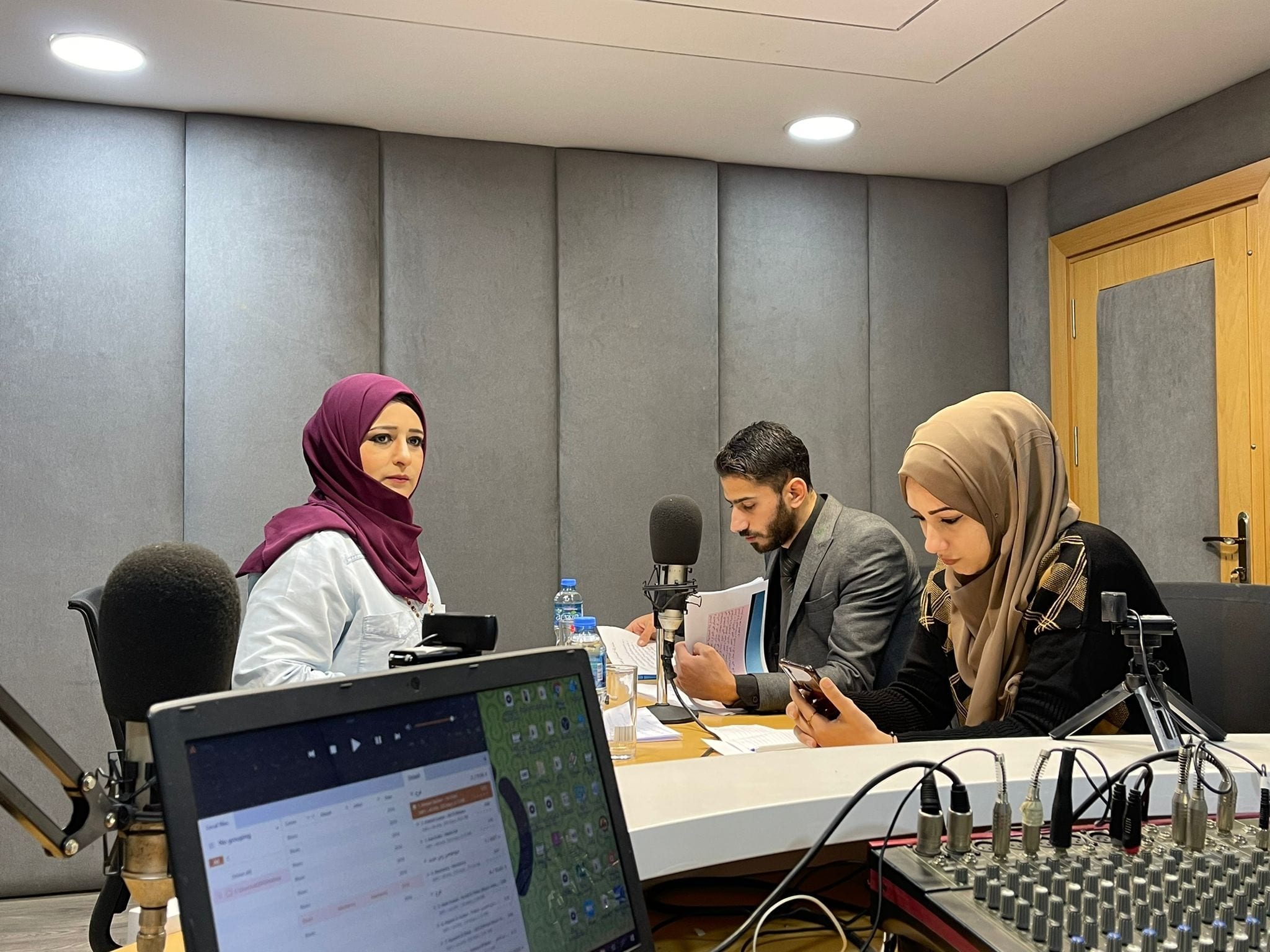
Pal-Think for Strategic Studies carried out the fourth and fifth episodes of the programme “Democracy and Youth”, broadcast on the local Zaman radio at noon on Mondays and Wednesdays, within the project “Strengthening civil society's role in supporting the Palestinian elections”, funded by the Government of Canada.
The fourth episode came under the title “Peaceful dialogue among Palestinian youth”, with the participation of the young activists al-Baraa al-Zayyan and Abdallah Abu Shamla and the legal researcher Dr Mohammed al-Talbani.
Abu Shamla opened his remarks by defining peaceful dialogue and its importance in our Palestinian society, and the obstacles that constrain it — lying in following the ideas of certain rigid ideologies and the non-acceptance of others.
He affirmed that peaceful dialogue is the best means of solving many of the problems standing in society, pointing out that the greatest responsibility falls on the family and the school in planting the culture of accepting the other and differing views from childhood.
For his part, al-Zayyan said the adoption of peaceful dialogue in the life of Palestinian youth can advance society, reviewing the effect of its absence on youth.
He pointed out that the pivotal role of planting and strengthening the culture of peaceful dialogue among youth falls on civil-society institutions.
Al-Zayyan continued, saying: “The most important means of encouraging peaceful dialogue in society are planting the culture of dialogue in children from childhood, carrying out awareness workshops for parents and educating them, rejecting hate speech, and showing its negative effects”.
For his part, the legal researcher Dr Mohammed al-Talbani said peaceful dialogue is a reflection of personal freedom and peaceful coexistence in society.
He explained that several causes have contributed to the absence of peaceful dialogue, among them: social, such as the spread of violence practised within certain customs and traditions, especially in the home, the schools, or the clubs; intellectual, such as intellectual closure caused by the political intolerance resulting from the Palestinian division; and legal, in the age of certain articles and texts of the law and their unsuitability to our current era — in addition to some people's misuse of dialogue's tools and their adoption of insult, slander, and defamation.
The fifth episode was titled “Women's political participation”, and the meeting's guests were: the political researcher Dr Ilham al-Shamali, the young activist Waseem Labad, and the young activist Hadeel Zaqout.
Zaqout said political participation is the practical expression of the theory of the social contract, and that it and democracy are two faces of a single coin.
She discussed the stages of women's political participation — strengthening women's work and freedom, then their collective and individual field work, embodied in standing for election.
The young activist likewise reviewed the causes of women's absence from political life, foremost the shortage of political awareness in many women and the gender-role gap between the sexes.
She concluded her remarks with the challenges of women's participation in decision-making, such as: the weakness of incubation and care from the women's institutions, and the Palestinian division.
For his part, Labad affirmed that many men in Palestinian society do not accept the idea of women's participation in political life despite the pressing necessity of their presence.
He pointed to the rarity of women's presence in important positions in the Palestinian political parties.
The young activist explained that the rate of women's participation in the Palestinian courts, the municipal councils, and the sharia judiciary is negligible compared with men.
He stressed that women's presence in political life and decision-making means fairness for women in society, and that the politicians will not change women's condition in society unless the real will exists.
In the same context, Dr Ilham al-Shamali said during a telephone intervention that the growth of women's political awareness during recent years has become noticeable, pointing to the importance of raising the rate of women's participation in the Legislative Council and in the Palestinian political system.
She added: “The decision to raise the women's quota is not sufficient; we lack democracy, and strengthening it is civil society's role”.
She concluded, saying: “Democracy is the only path to supporting women's issues”.
The designations used and the presentation of materials in this programme entail no expression of any opinion whatsoever on the part of the Government of Canada