«Local elections are a chance to boost youth political participation» — a debate by Pal-Think's youth team
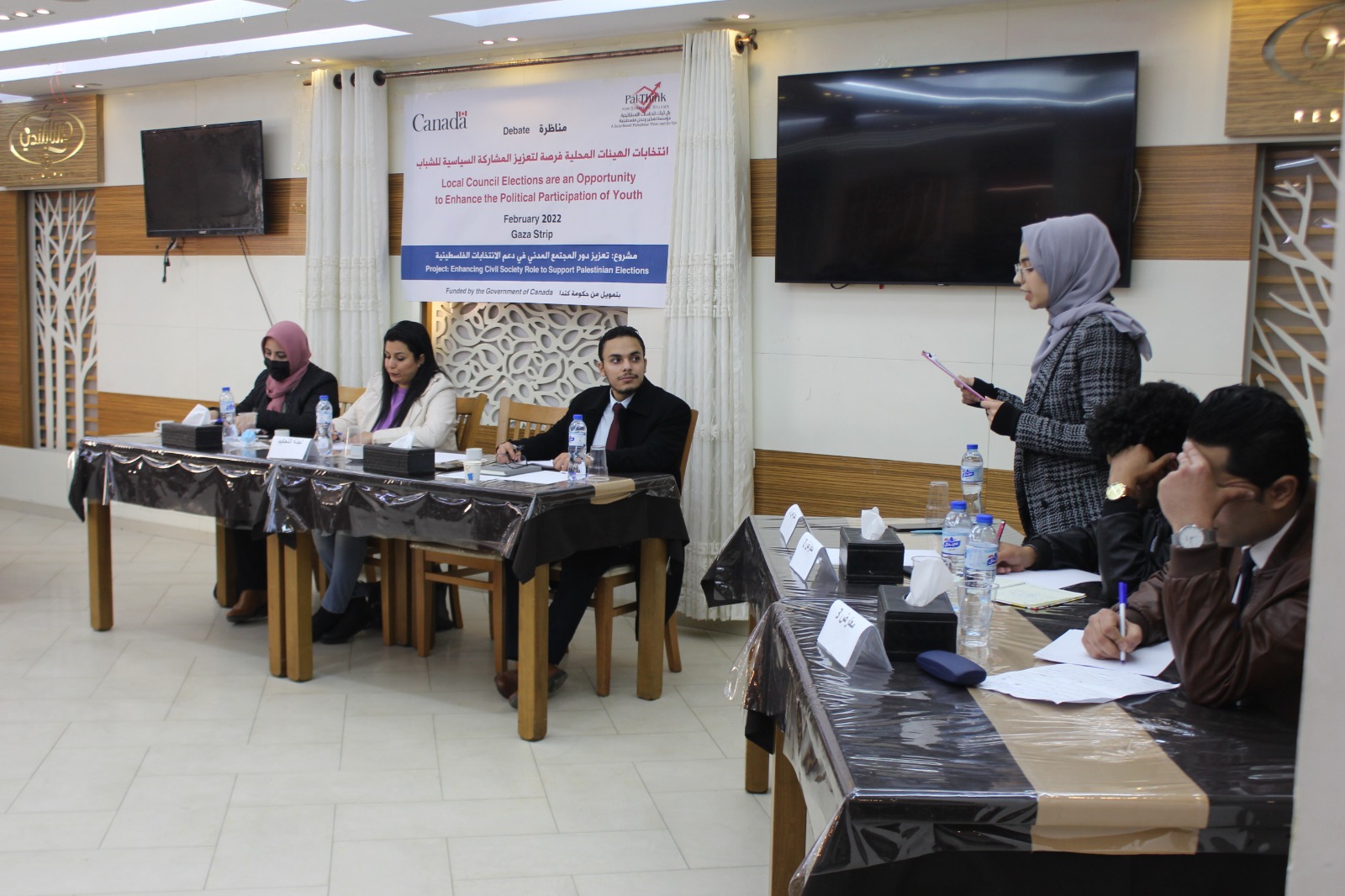
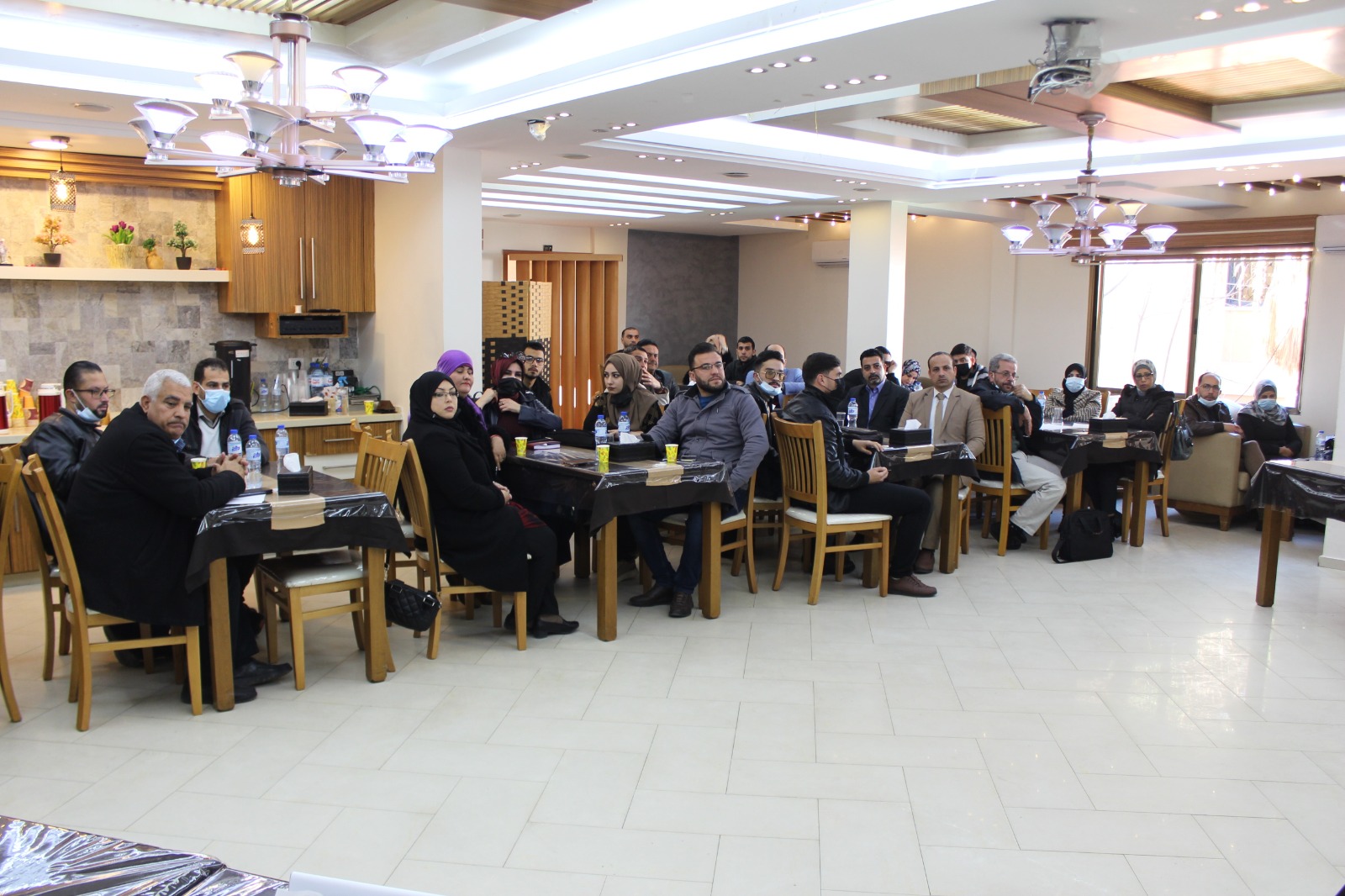
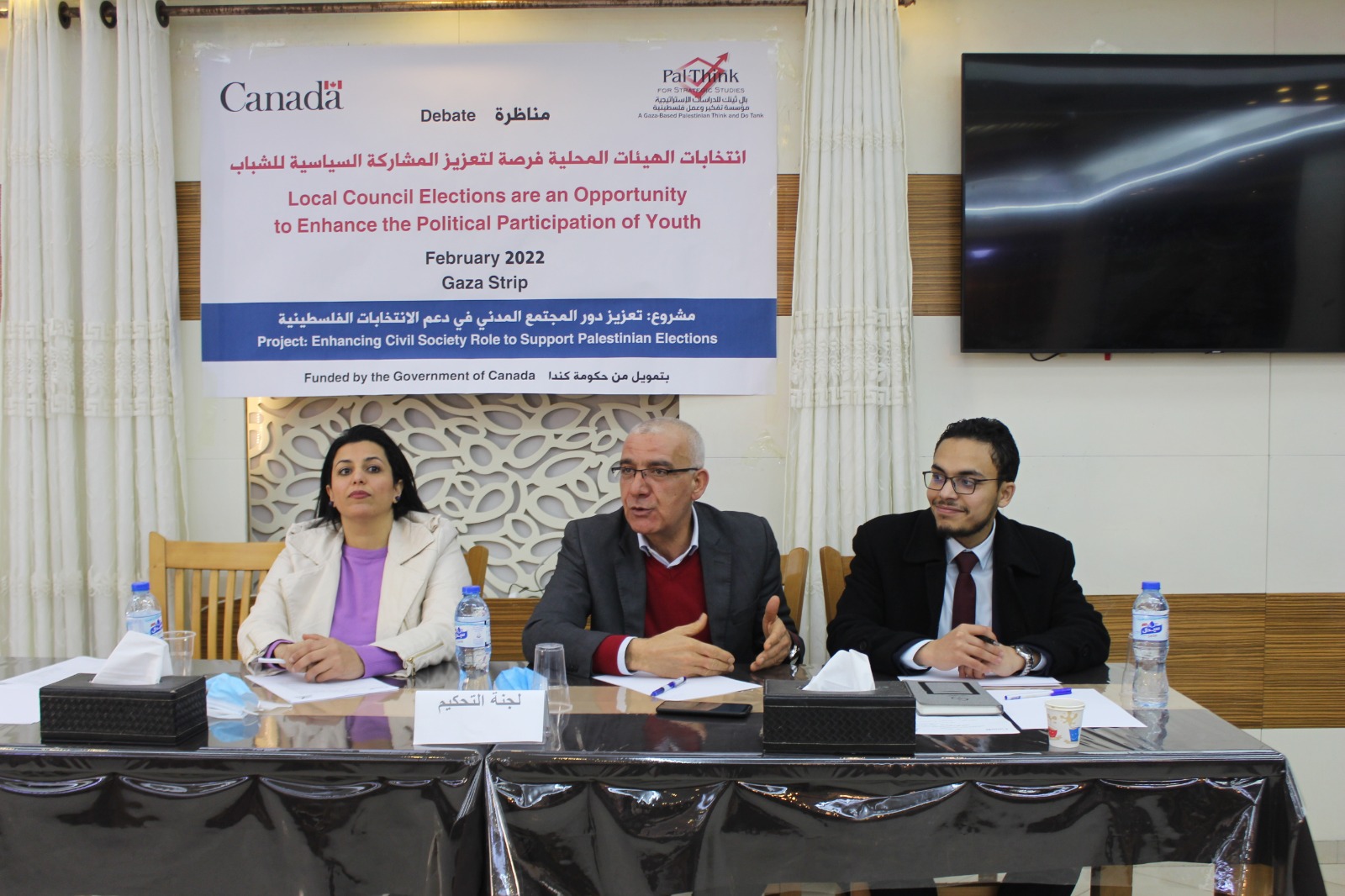
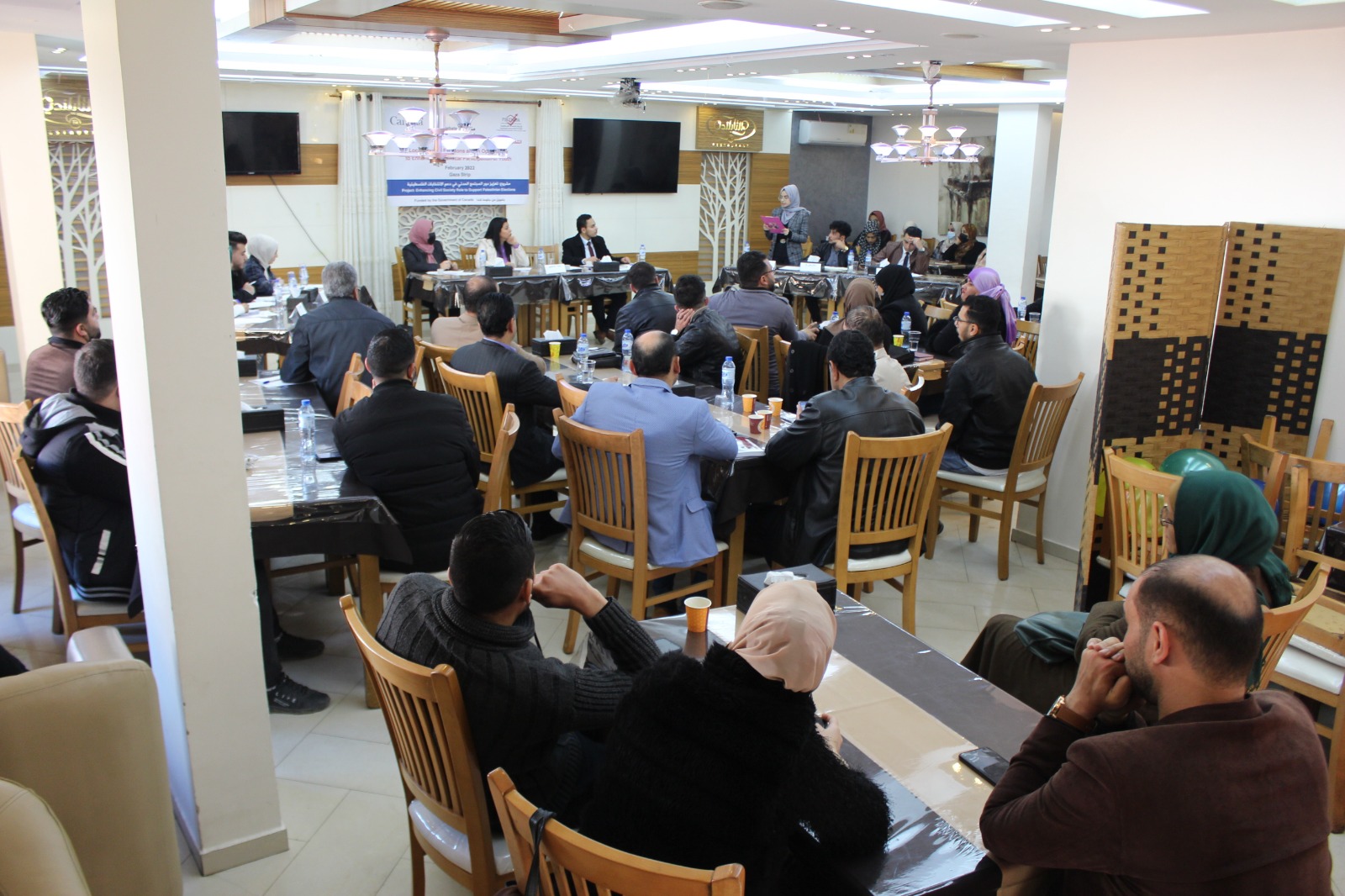
Pal-Think held a youth debate, «Local-council elections are an opportunity to strengthen youth political participation», under the Canada-funded project engaging young people in community development and democratic concepts.
Pal-Think for Strategic Studies organised a youth debate titled “The election of the local bodies is an opportunity to strengthen youth political participation”, within the project “Strengthening civil society's role in supporting the Palestinian elections”, funded by the Government of Canada.
The project aims to engage youth in society's development and strengthen the concepts of democracy, to contribute to finding solutions to societal and rights issues.
The project coordinator Sally al-Sammak opened the debate by welcoming the attendees, and said the debaters chose the debate's topic to be the matter of discussion given its great importance for youth and for Palestinian society, and the support and empowerment of youth that follow from it — affirming that this debate is the participants' first experience after receiving intensive training within the project.
She pointed out that the core of Pal-Think's work is offering real opportunities for youth to express their views before an elite of thinkers and researchers.
For his part, the institution's director Omar Shaban said Pal-Think is a generative institution that works, attends, and makes real partnerships with youth, and has been graduating young generations effective in society since 2007 in cooperation with all the Palestinian and international parties despite the limited means — pointing out that many of the young models Pal-Think incubated are pointed to with pride today.
He added: “We take pride and glory in our work with youth; they are our wealth and the fundamental pillar of Palestinian society”.
During his talk with the debaters, Shaban affirmed that the fundamental goal of the debate is learning peaceful dialogue with the other party and those who differ in opinion.
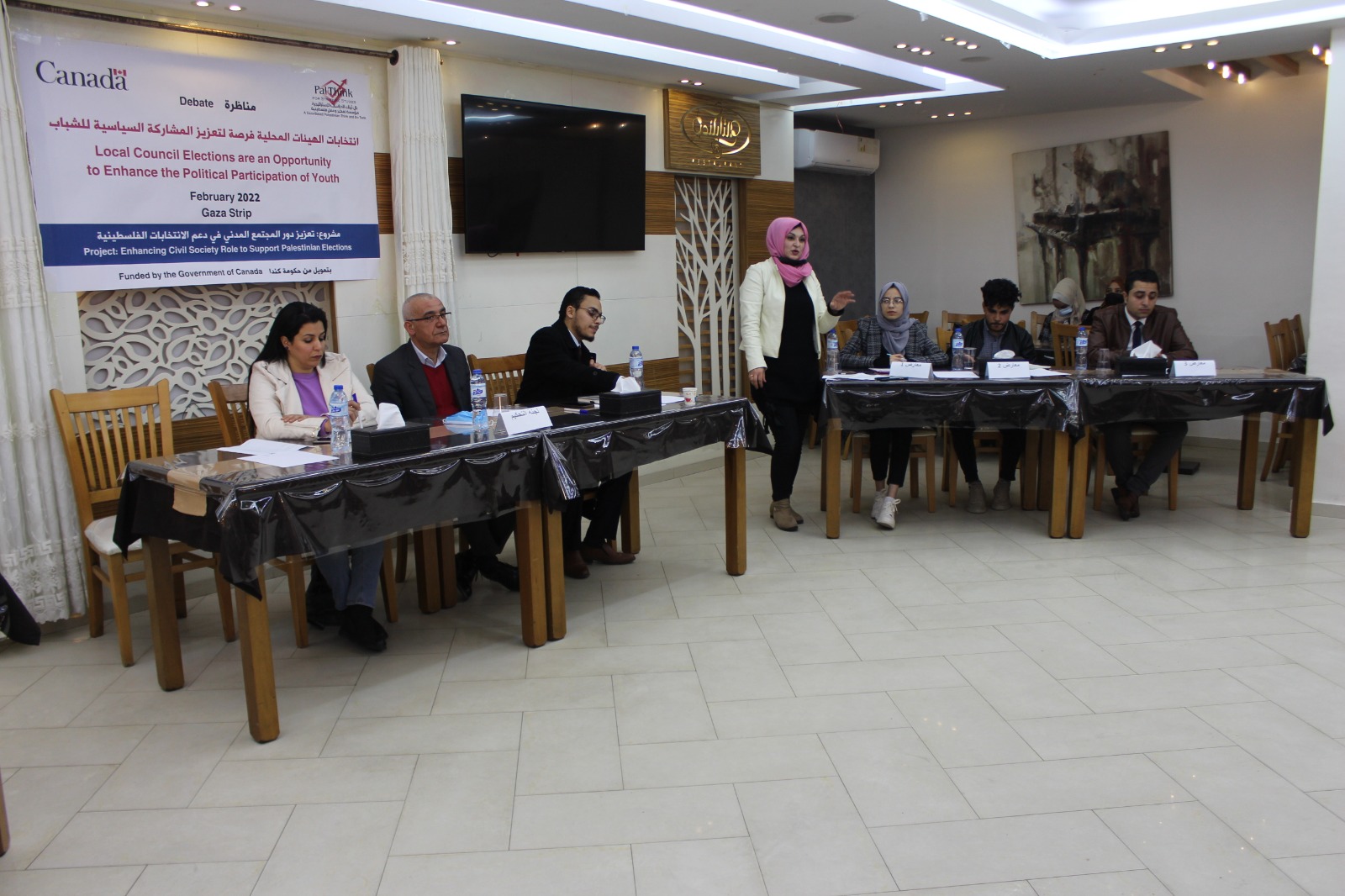
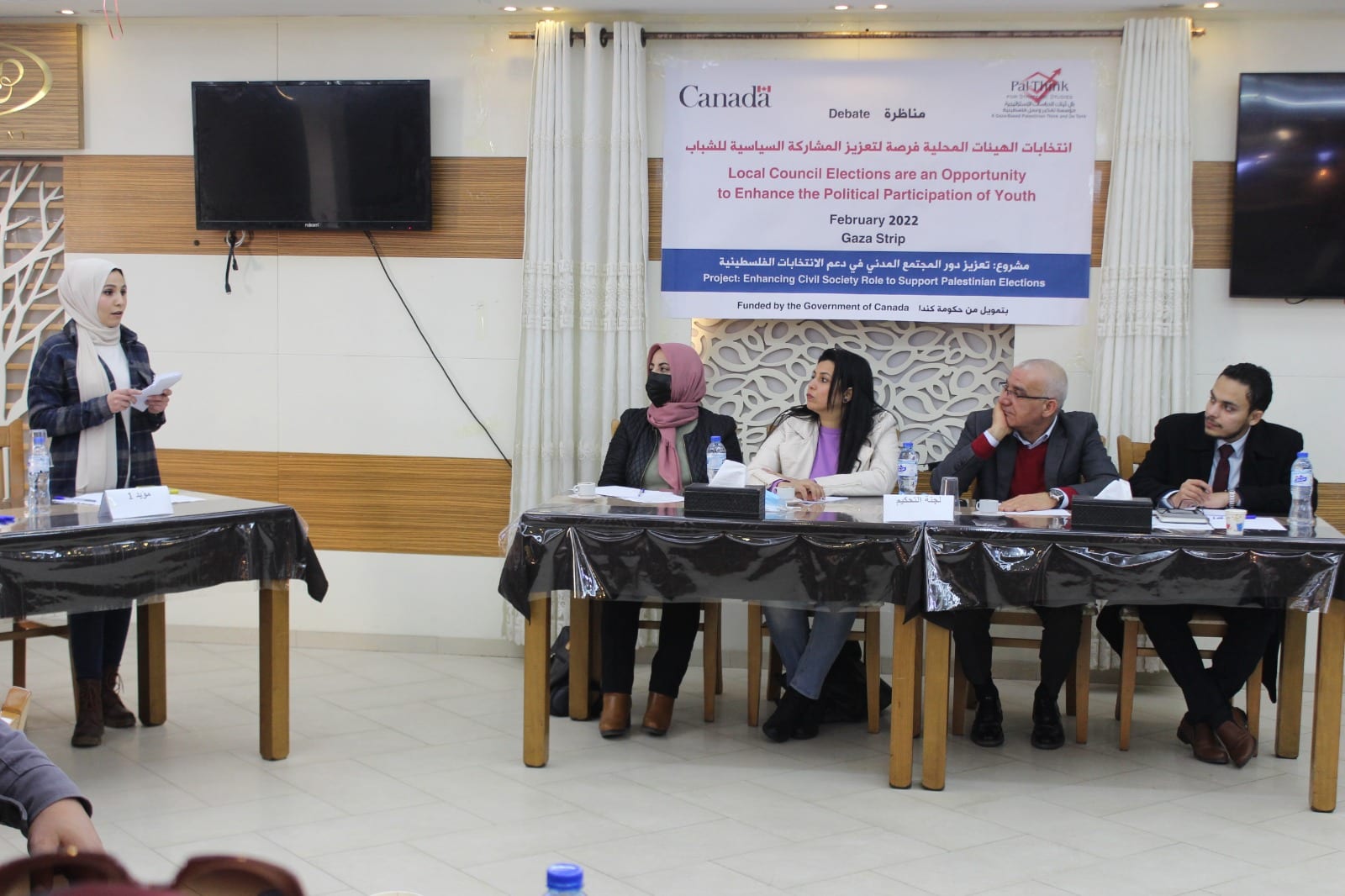
The debate was moderated by the political researcher Dr Talal Abu Rokba, who in turn presented the model on which the youth would rest in the debate, and added: “The basis of this debate is offering a real model for youth founded on rationality in presenting its arguments, one that reviews the knowledge and information offered to the public, using the skills of scientific research whether in gathering information, classifying it, or arranging it — which is what Pal-Think does in strengthening information analysis and planting critical thinking in youth”.
Abu Rokba continued: “This method is fundamental in building future leaderships and can create opportunities for youth in the near future”.
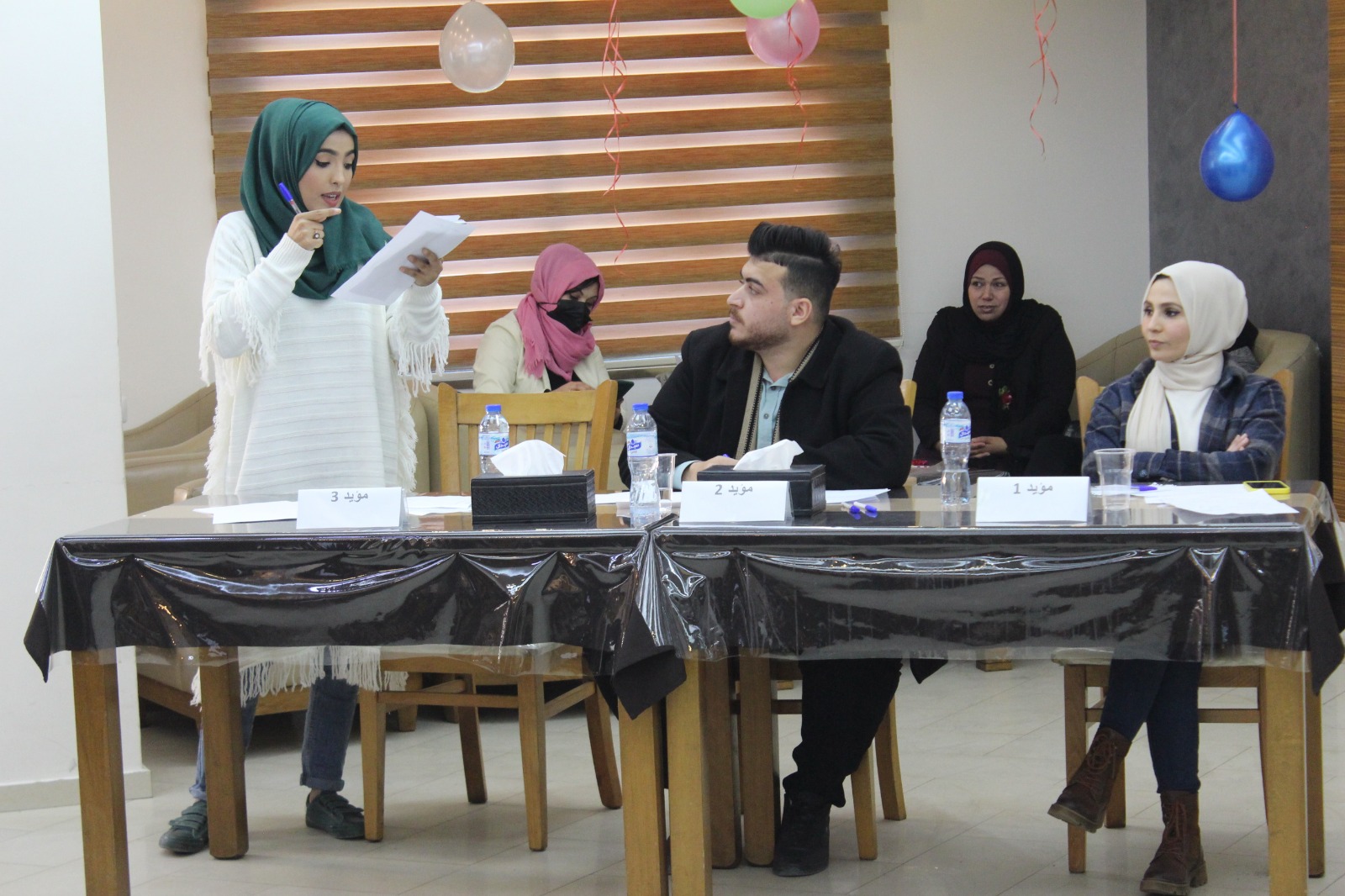
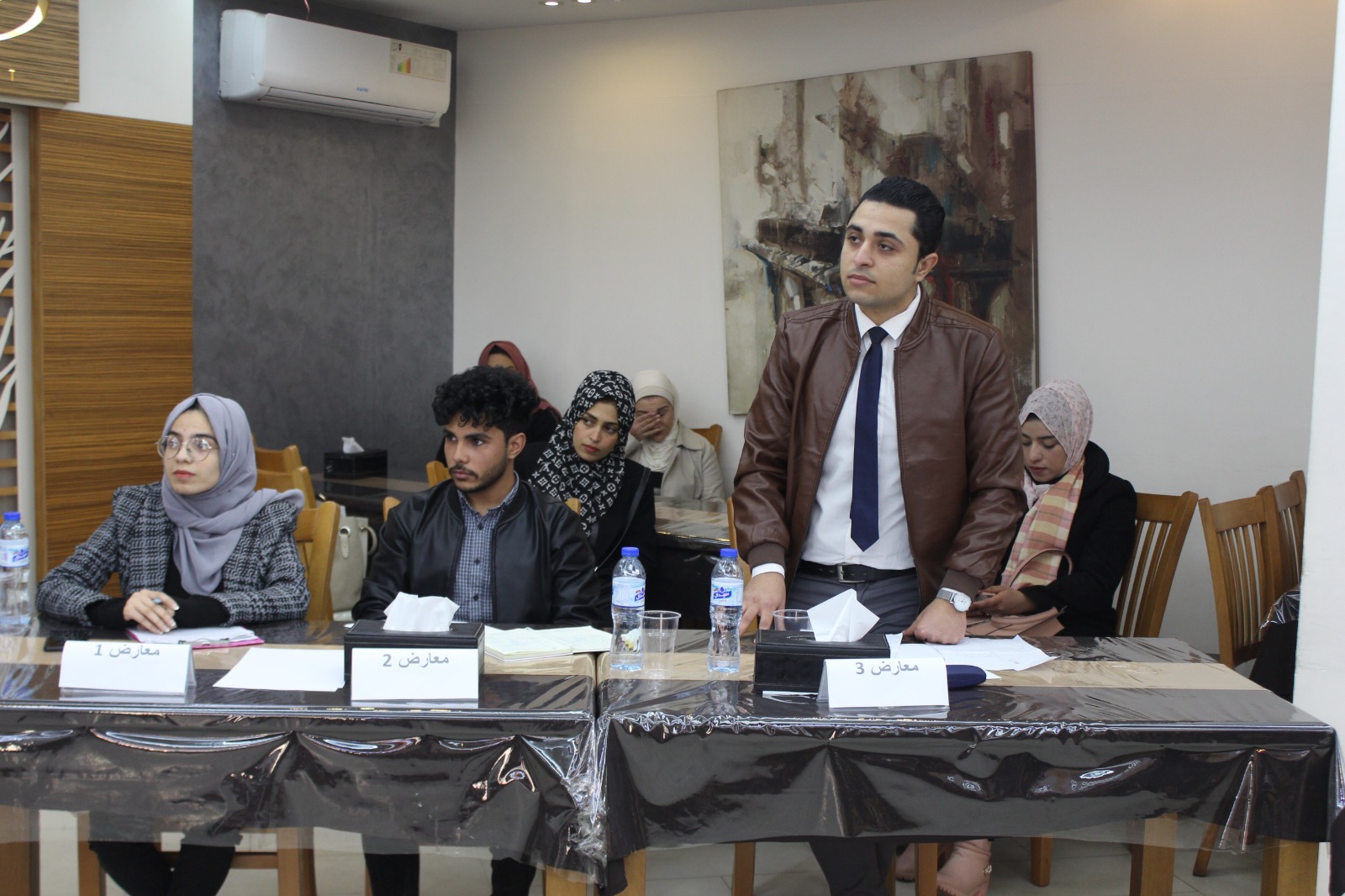
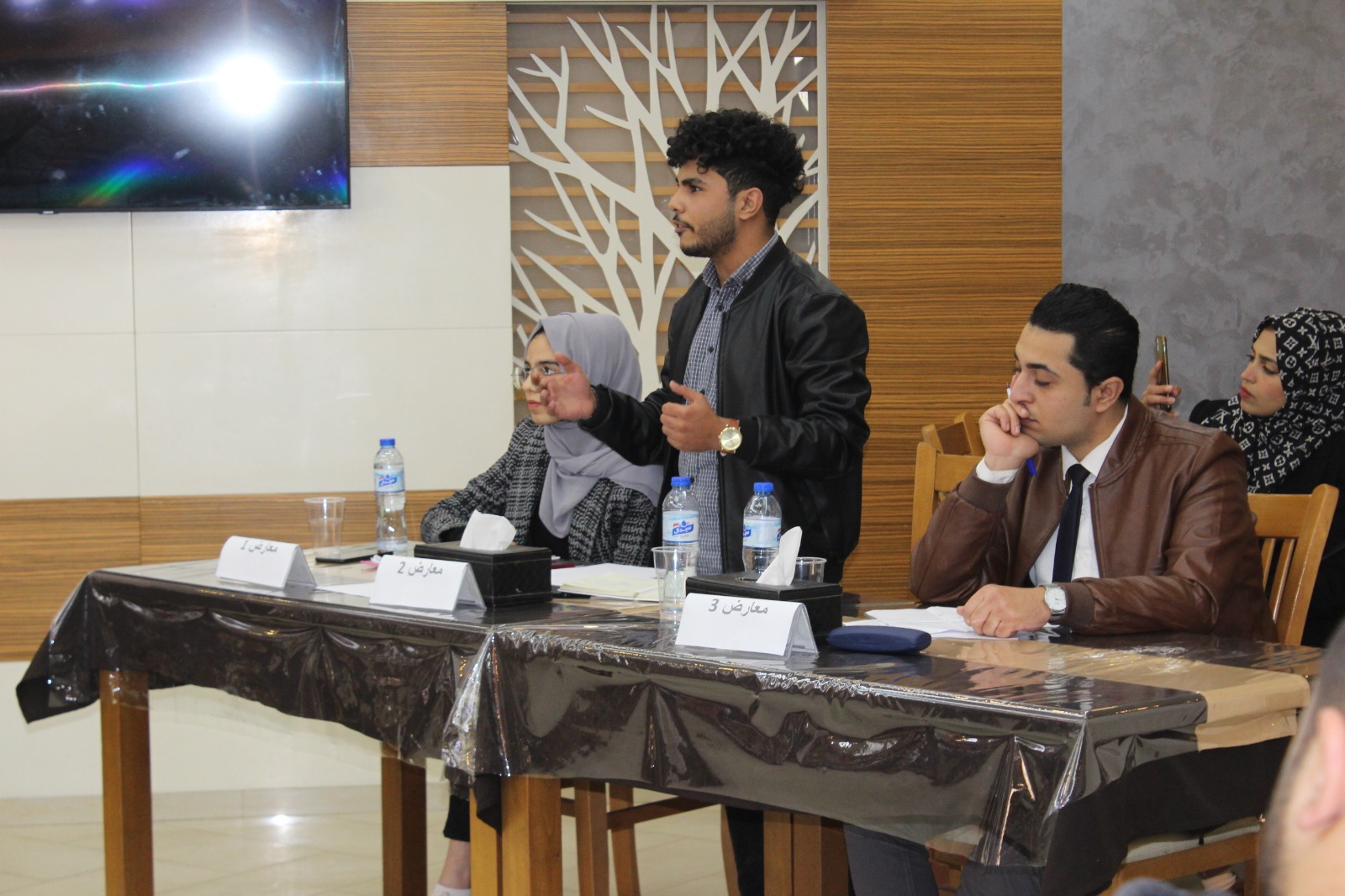
The supporting team was formed of: Aseel Safi, 23 years, an English-language graduate; the journalist al-Baraa al-Zayyan, 24 years; and Ahed Abdallah, 29 years, a projects coordinator.
The principal ideas they defended were:
- The presence of youth in the local bodies through free, fair, democratic elections gives youth an opportunity to achieve their goals and demands and integrate them into the middle and senior leadership levels, strengthens trust between them and the citizens and decision-makers, and develops the concept of citizenship in them.
- Although the age of candidacy for the Legislative Council elections is 28 years and for the presidential elections 40 years — which deprives a large segment of youth of political participation — candidacy for the local bodies is at 25 years, which gives youth the greatest opportunity for political participation.
- Youth's constant dialogue with the mayors and the representatives of local governance is clear proof of youth's belief that the local-body elections are an important opportunity to strengthen their political participation and their presence in decision-making centres.
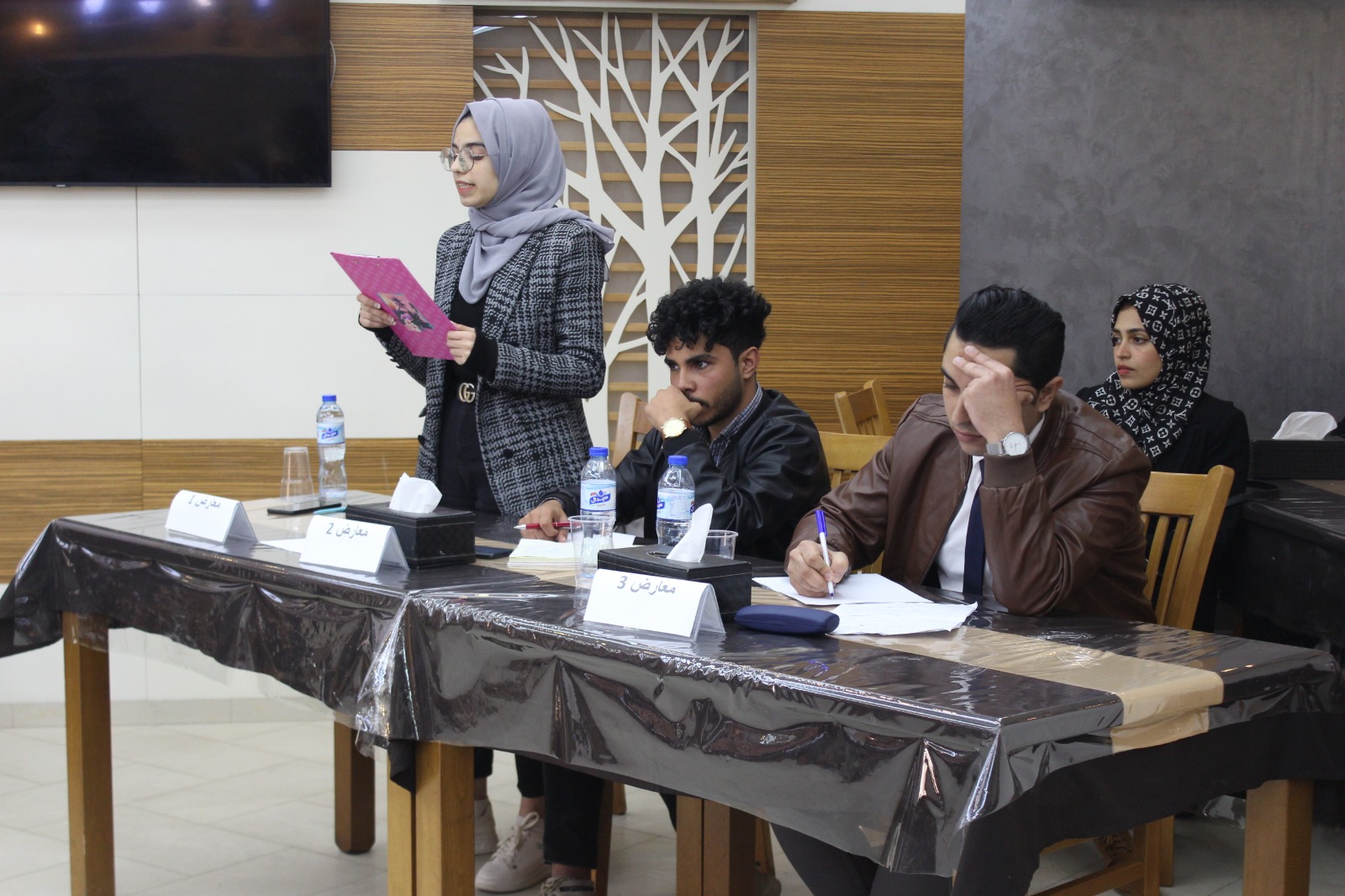
As for the opposing team, it was formed of: Amir Hasanein, 20 years, a law student; Nour Nassar, 21 years, a law student; and the lawyer Ashraf Sukkar.
The opponents rested on several arguments, foremost:
- The absence of real representation of youth of both sexes since the holding of the first Palestinian legislative elections in 1996, which caused youth's abstention from political life.
- The grip of party leaders and senior politicians on the joints of political life deprives youth of the opportunity to enter political life and leaves them unconvinced — which shows in the retreat of youth's participation rate in the local elections of 2017 compared with 2012.
- The local elections are not the real opportunity for youth political participation because they are governed by factionalism and clannism, there being no lists specific to youth.
- The elections being held in the West Bank only, and not held in the Gaza Strip and Jerusalem.
After the debate's end, the judging panel — formed of the media researcher Hidaya Shamoun, the lawyer Fatima Ashour, and the lawyer Omar al-Rozzi — announced the supporting team's victory in the debate.
The panel gave the two teams several recommendations, foremost: that the goal of the debate is planting the culture of peaceful dialogue; that opposing is always harder than accepting the standing argument's ideas; and that debate teaches the method of opposition, not only the adoption of opposing ideas.
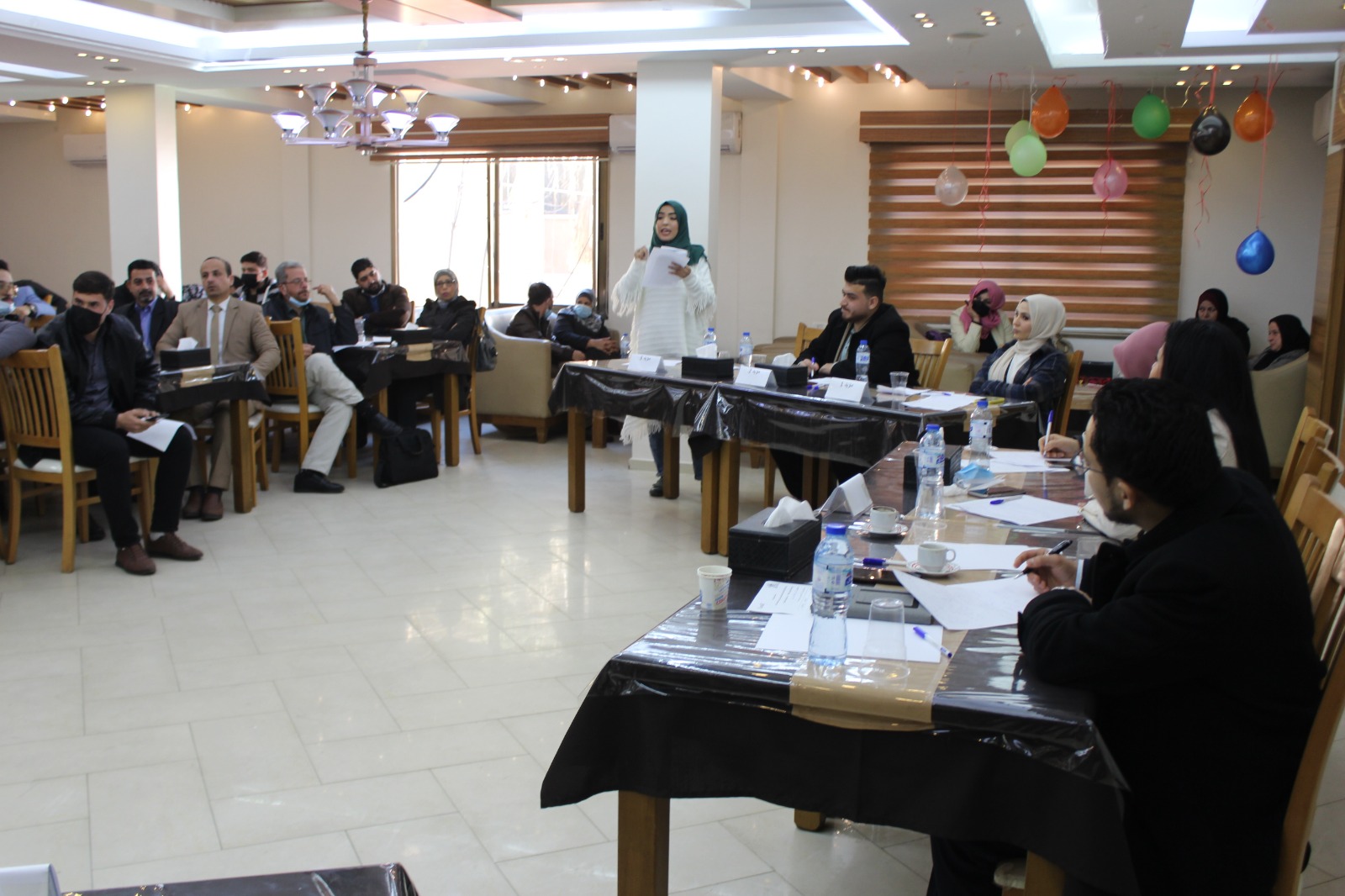
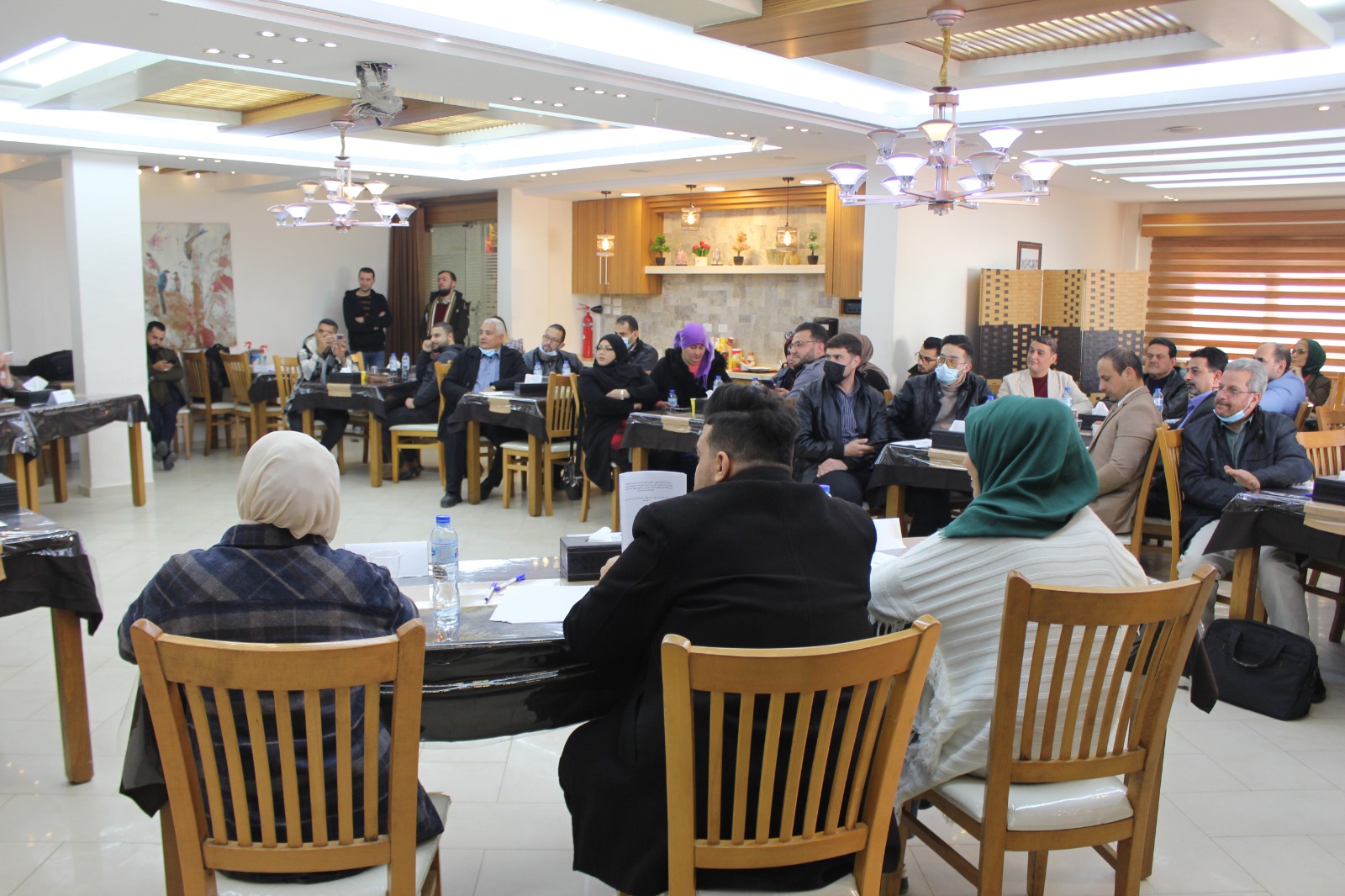
The audience put some questions to the two teams, turning on the elections' integrity, the extent of youth's conviction of their effect on their lives, and youth's capacity to contest the elections with independent lists away from the political parties.
The designations used and the presentation of materials in this programme entail no expression of any opinion whatsoever on the part of the Government of Canada