Pal-Think continues broadcasting its «Youth Dialogue» programme
Pal-Think continues its «Youth Dialogue» radio programme — debates and dialogues widening mutual understanding of community and youth issues — under the «Preparing Young Leaders» project.
Pal-Think for Strategic Studies continues its radio programme “Youth Dialogue”, in which young people discuss different ideas and views through debates and dialogues to widen mutual understanding on community issues — especially those of youth — within the project “Preparing Young Leaders”, which aims to build young leaders in Palestinian society, develop their capacities toward the society's development and progress, and enable them to play their part in decision-making.
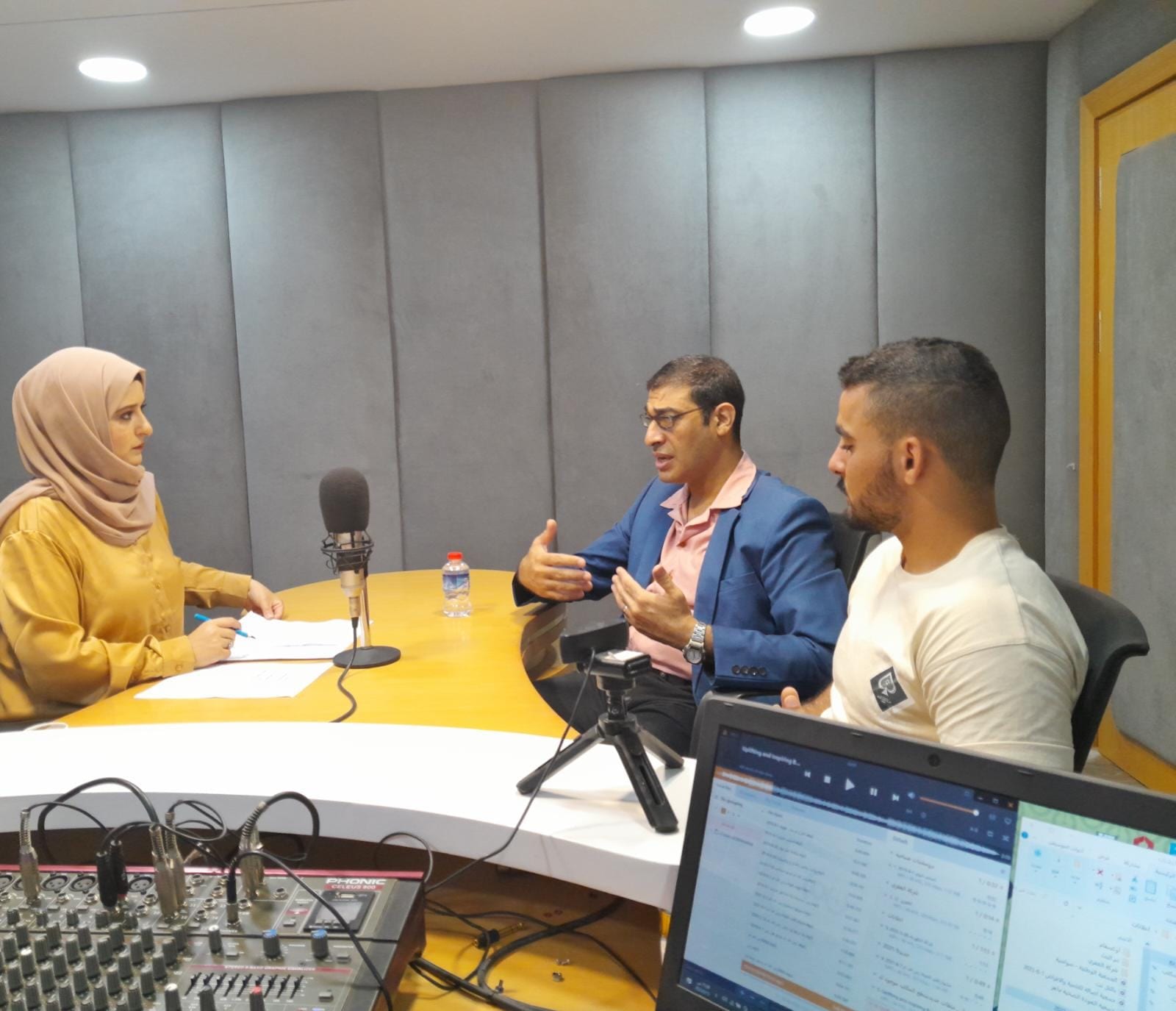
The programme's third episode on the local Zaman radio was titled “The hate speech spreading among youth”, hosting youth activist Mustafa al-Aqqad, a graduate of Pal-Think's “Preparing Young Leaders” programme, and the academic researcher in law Dr Mohammed al-Talbani.
Al-Aqqad began by speaking of his experience in the debates, the mechanisms they learned, and the debates' most important aims in accepting the other — this being the most important thing the young people learned as a means of discussion and dialogue among youth. He also spoke of the concept of hate speech, especially that built on a political basis; of the role of society's leaderships and the factions in the existence of the hate-speech phenomenon; of the role of social-media platforms in amplifying hate speech; and of civil-society institutions' responsibility for curbing hate speech, correcting the course of opinion, and accepting the other view — affirming that peaceful youth discourse among peers has the greatest effect in overcoming hate speech.
Al-Talbani spoke about the concept of hate speech among Palestinians specifically after the Palestinian division, affirming that political affiliation is a principal cause of hate speech among youth. He addressed the topics on which hate speech rests, and touched on freedom of expression and opinion, interactive media's opening of its platforms to citizens and its role in the spread of hate speech — noting the difference between freedom of expression and hate speech. Al-Talbani affirmed that the primary responsibility for hate speech was founded by the factions across their history, which requires of them steps toward renouncing this conduct and correcting it among their members.
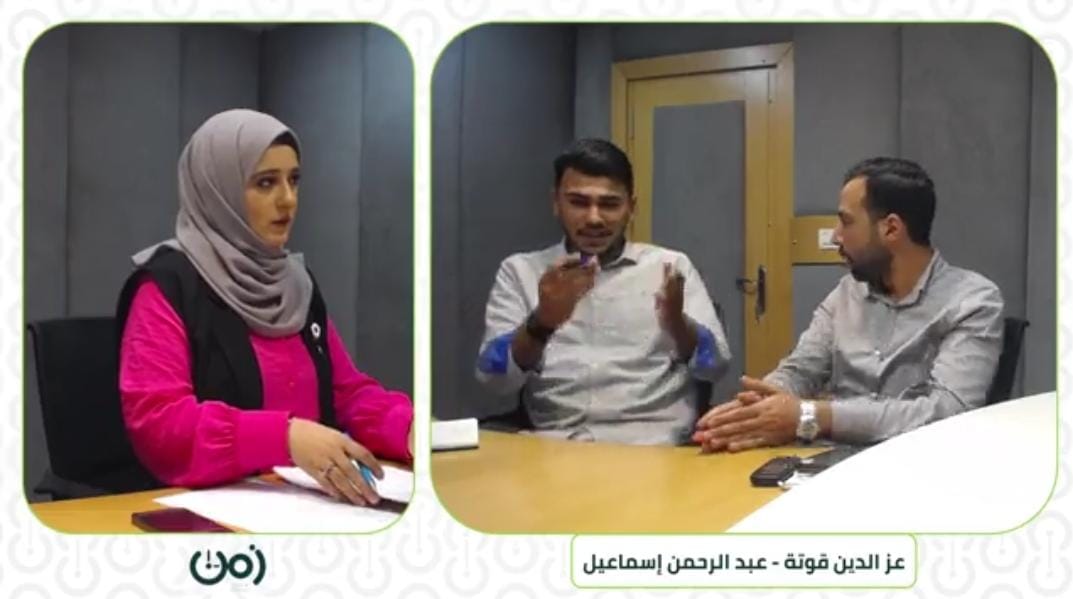
The fourth episode, titled “Student-council elections in the universities”, hosted youth activist Abdulrahman Ismail and the former head of the student council at the Islamic University, Ezz Qouta.
Ismail spoke about representation for university students and student-council elections as a beginning of the practice of democracy among youth, and about the aims of the student councils. Qouta spoke of the importance of holding student-council elections in providing a suitable democratic setting for students at the university, guaranteeing students' rights, and creating a student environment within the university by leaving room for the student blocs to practise their various activities and develop their skills. He also spoke of the laws regulating student-council elections, how students' needs differ today amid fundamental changes, the councils' tasks, and the issues that could fall within their remit.
The two guests spoke of the division's effect in depriving students of elections and obstructing any democratic process, affirming that harmony among the youth eases the electoral process while political decisions are the greatest obstacle to holding those elections.
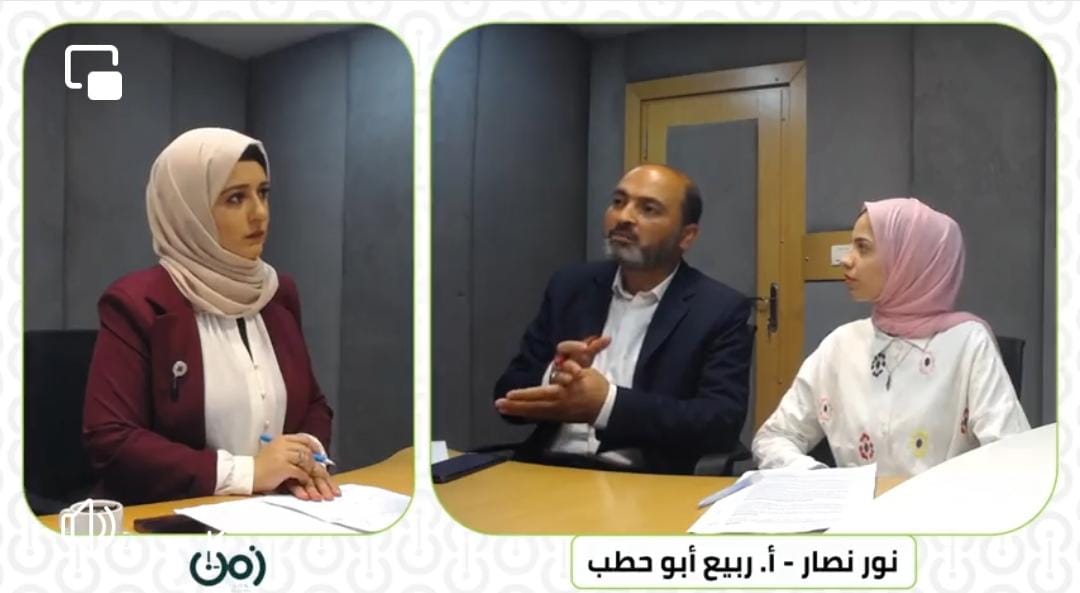
The fifth episode, titled “Youth movements are the most effective way for young people to express their causes”, hosted youth activist Nour Nassar and the writer and political researcher Mr Rabie Abu Hattab, who began by speaking of accepting the other and the importance of programmes that support the language of dialogue. He spoke of the concept of youth movements and the extent of young people's role in solving their own causes, affirming that they hold the greatest role in exerting influence at every level and that Palestinian youth are capable of overcoming the obstacles. Nassar completed the discussion on defining the concepts of youth and youth mobilisation, the aims for which youth movements form, the opportunities that must be opened to young people to express their causes, and the extent of youth movements' influence in solving crises and effecting political and societal change.