Pal-Think holds the closing conference of «Strengthening Palestinian civil society's contribution to shaping Palestine's future»
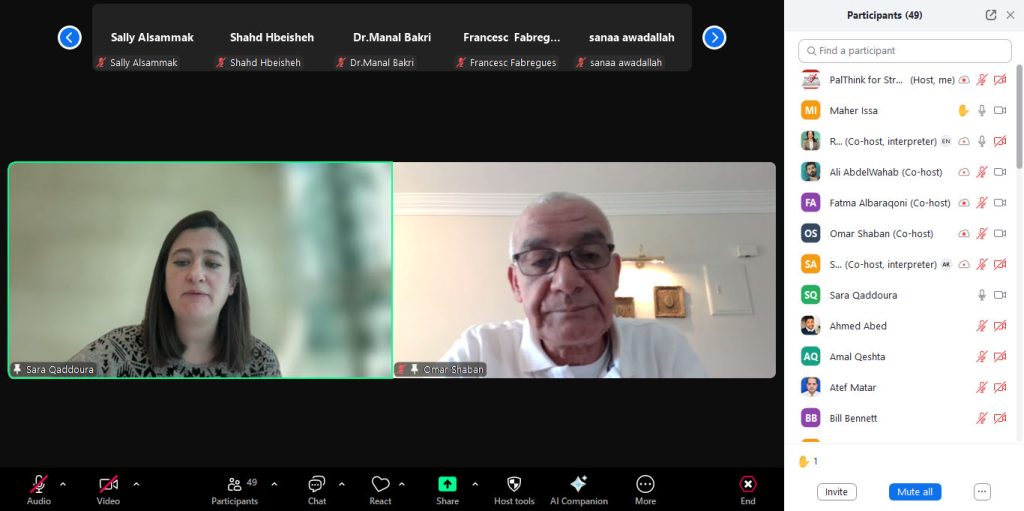
Pal-Think held the closing conference of «Strengthening Palestinian civil society's contribution to shaping Palestine's future» over Zoom, with more than 120 figures from Gaza, the West Bank, East Jerusalem and the diaspora participating.
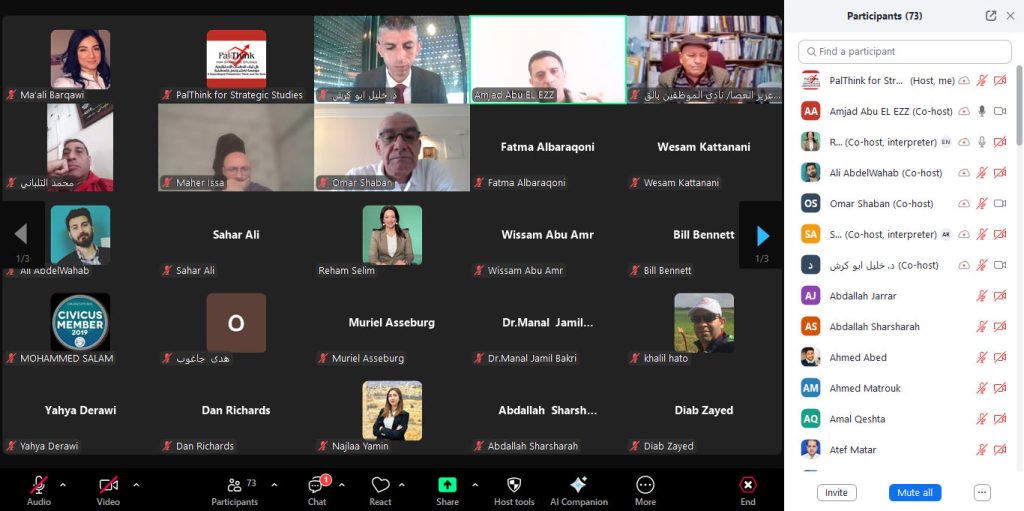
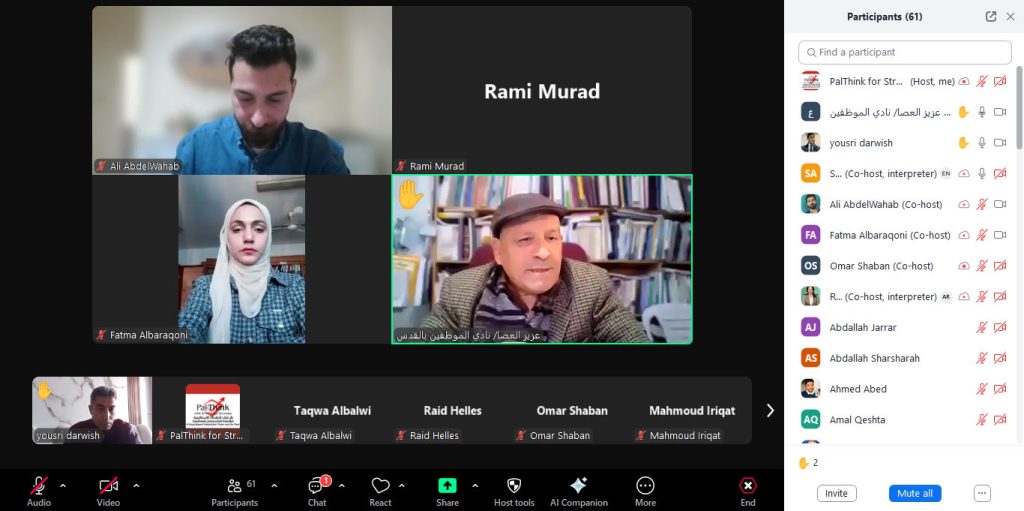
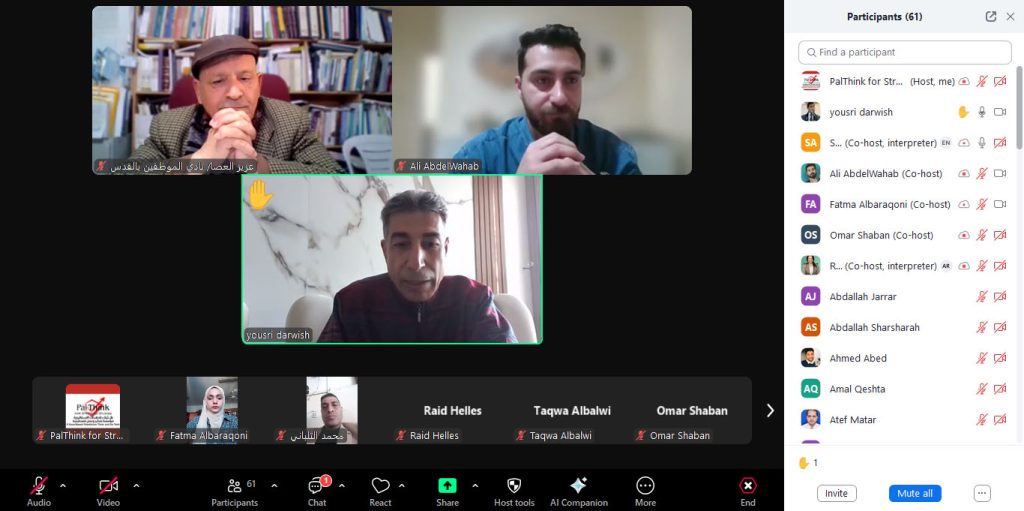
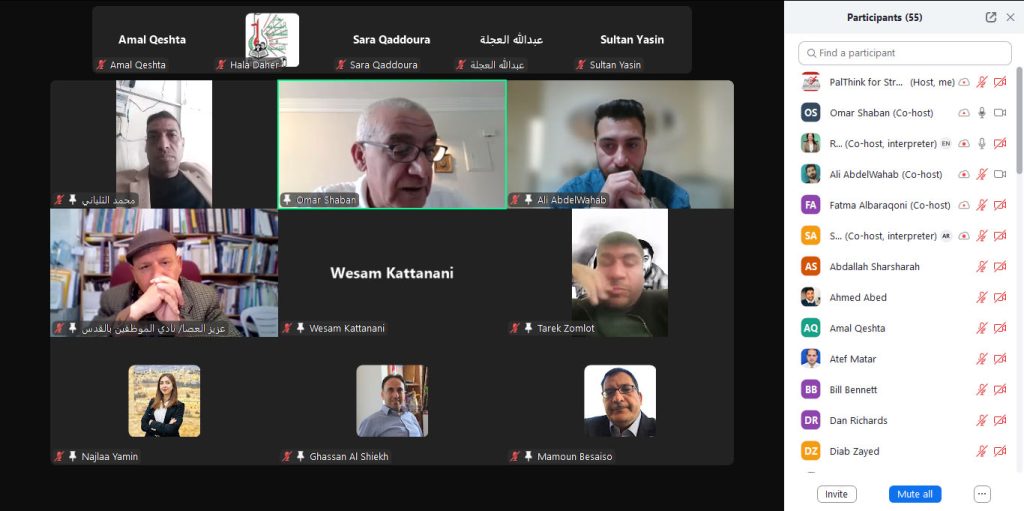
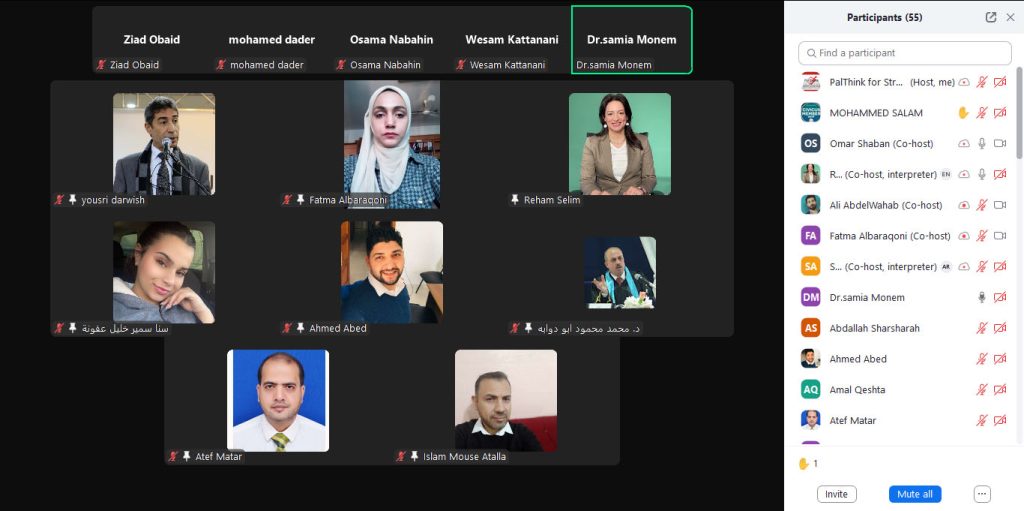
Pal-Think for Strategic Studies organised the closing conference of its project “Strengthening Palestinian civil society's contribution to shaping Palestine's future” via Zoom, with the participation of more than 120 figures from across the Palestinian regions — including the Gaza Strip, the West Bank, East Jerusalem, and the diaspora — in addition to representatives of international institutions.
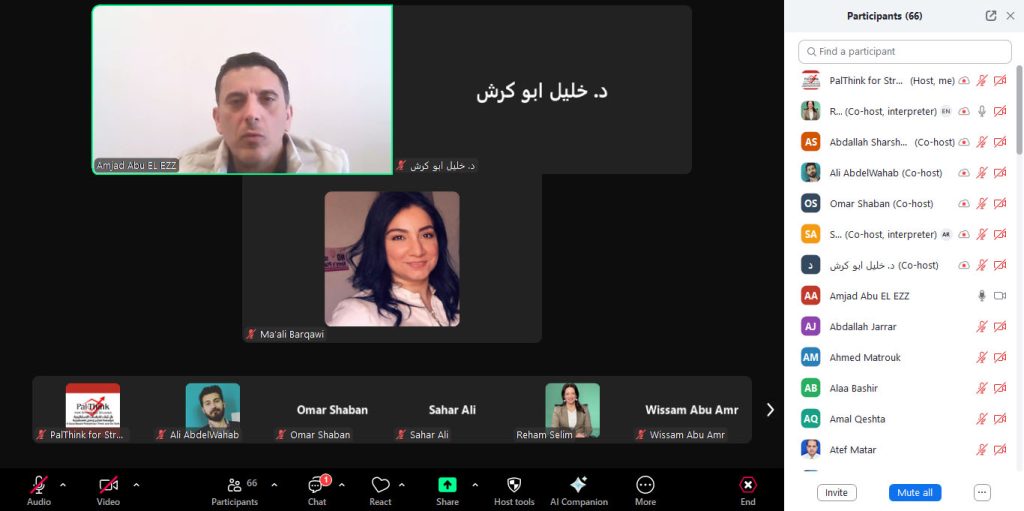
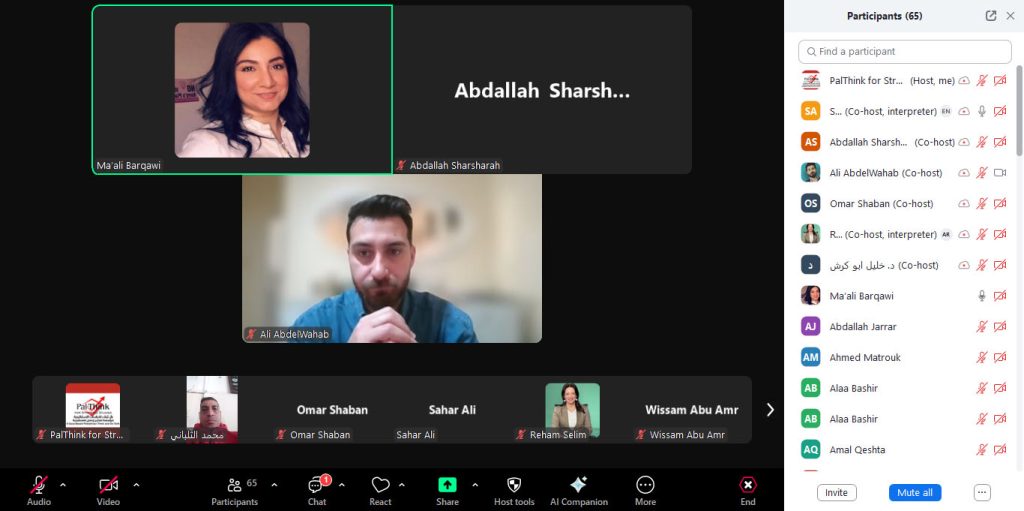
Mr Omar Shaban, director of Pal-Think, opened the conference with a word in which he affirmed that the project came at a critical time for the Palestinian cause and the Palestinian people, especially amid the severe human tragedies the Gaza Strip is suffering from war and destruction. He explained that the project is a purely Palestinian initiative reflecting the collective spirit, aiming to strengthen the culture of dialogue and participation through a coalition of 15 institutions from across the Palestinian regions. For her part, Ms Maali Barqawi, representing the coalition of partner institutions, expressed her appreciation of Pal-Think and Adam Smith International, praising the approach of genuine partnership Pal-Think adopted, which gave the community institutions taking part in the project real space to participate in planning and implementation.
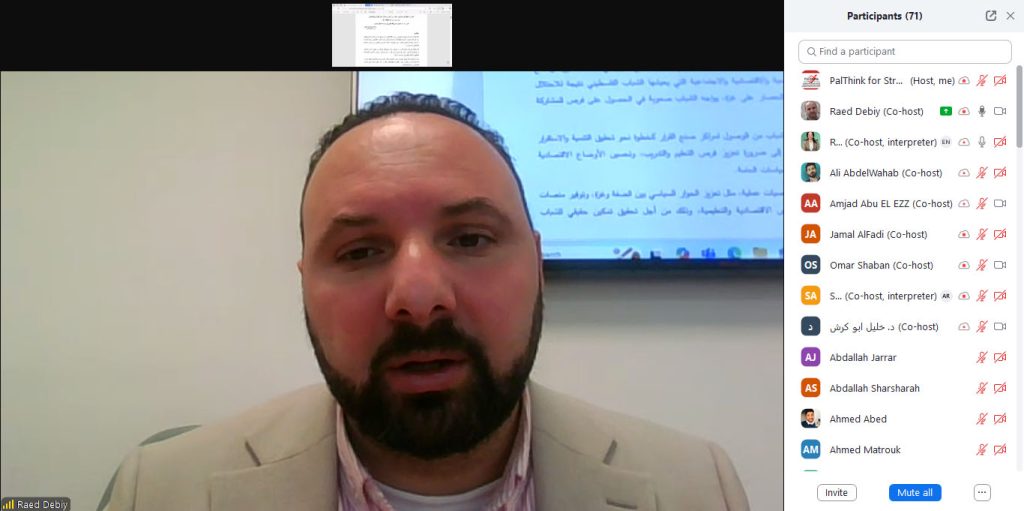
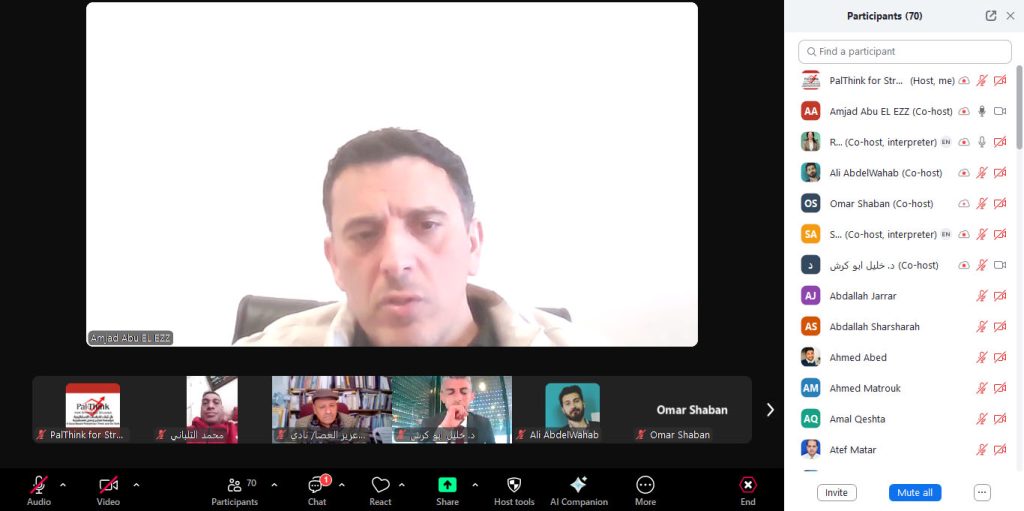
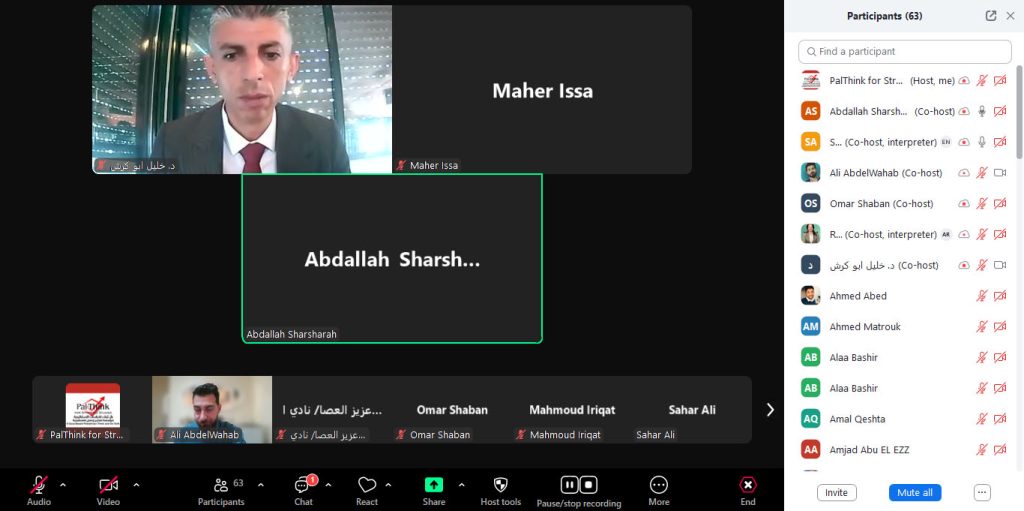
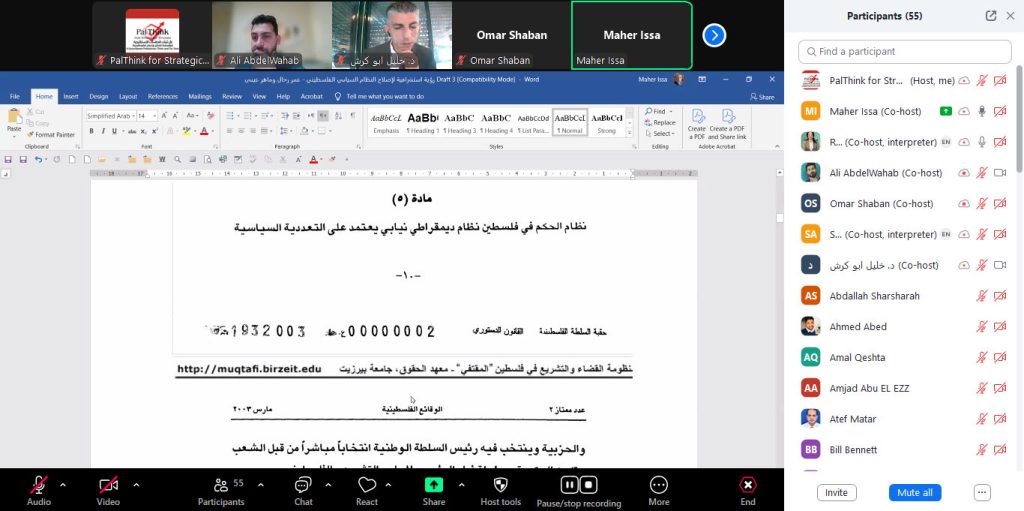
The conference's sessions were spread across five principal axes, presenting seven policy papers prepared by Palestinian researchers from across the Palestinian territories. In the first session, on “the future of governance and political reform in Palestine”, two papers were presented: the first titled “A forward-looking vision for reforming the Palestinian political system”, prepared by Dr Omar Rahhal and Mr Maher Issa, and the second titled “Perceptions and forward-looking visions for the future of governance in Palestine”, prepared by Mr Abdullah Sharshara and Dr Ahmed Rafiq Awad. In the second session, discussing “Palestinian youth and the political challenges”, two papers were presented: “Toward practical strategies for overcoming the crisis of identity and thinking among Palestinian youth after the seventh of October”, prepared by Dr Amjad Abu al-Ezz and Ms Amal Qishta, and “Visions for strengthening youth opportunities to reach decision-making centres in the Palestinian context”, prepared by Dr Jamal al-Fadi and Dr Raed al-Debee. In the third session, titled “the Palestinian economy and the prospects of integration”, a paper was presented titled “The economy of shared opportunities: shaping a unified future between Jerusalem, Gaza, and the West Bank”, prepared by Dr Raed Helles, Ms Taqwa al-Balawi, and Mr Abdel Rahman Sawaifa. The fourth session was devoted to the role of Palestinian women, presenting a paper titled “Palestinian women between the steadfastness of wars and their role in building a post-conflict society in Gaza”, prepared by Ms Mervat al-Zaqzouq and Mr Diab Zayed. The fifth session, centred on “the future of Jerusalem”, presented a paper titled “The future of Jerusalem amid the political and regional changes: a forward-looking reading”, prepared by Mr Rami Murad and Mr Mahmoud Erekat.
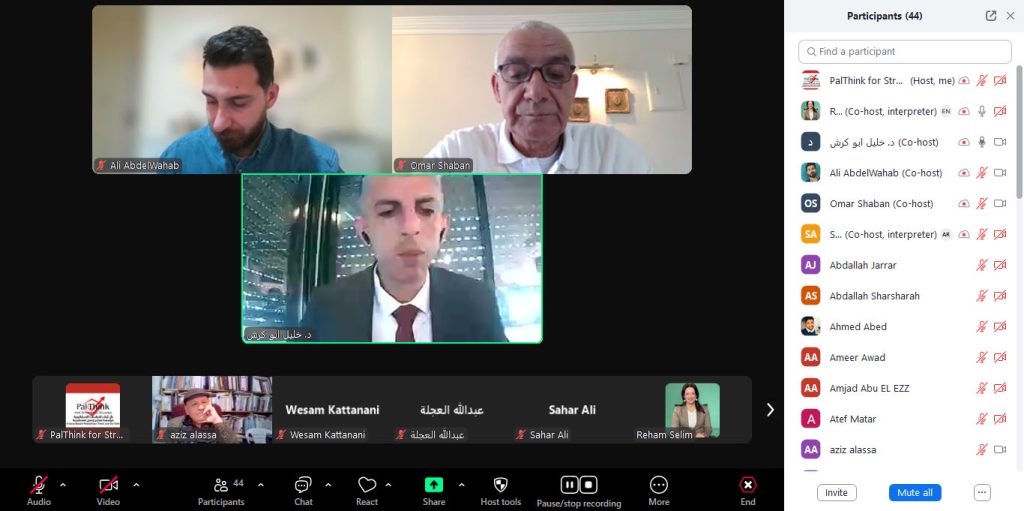
Dr Khalil Abu Karsh moderated the first and second sessions, while Ms Fatima al-Barqouni moderated the later sessions. The conference was marked by strong engagement from the audience, who praised the project's outputs and stressed the importance of investing them politically and socially. Several participants expressed their great appreciation of the level of the policy papers, noting that they reflect mature outputs of a practical character that can be built on in the coming phase. The audience also proposed collecting the papers into a booklet to be distributed to decision-makers and civil-society institutions, in addition to translating them into English to ensure they reach the international community and donors. Proposals also included organising a series of meetings to discuss the papers with civil-society and local institutions, preparing awareness campaigns drawing on the project's outputs, and offering simplified executive briefs to citizens to raise public awareness of the proposed policies. Participants also stressed the importance of building on this initiative to institutionalise community dialogue and widen the coalitions among active institutions across the Palestinian regions, with greater inclusion of youth and women in future initiatives.
At the conference's close, Ms Sarah, representing Adam Smith International, expressed her appreciation of Pal-Think's distinguished implementation, noting that the project marks the start of new paths in coalition-building and in strengthening civil society's role in policy-making. Mr Omar Shaban closed the conference by affirming the need to carry the papers to the widest possible audience, calling for community and institutional pressure on Palestinian decision-makers to adopt the recommendations and translate them into concrete steps contributing to a better future for Palestine.
This event crowns an integrated course of work within a project that aimed, over three months, to strengthen Palestinian civil society's role in shaping public policy by building a coalition of 15 Palestinian community organisations from the different regions. The project rested on organising round-table dialogue sessions addressing fundamental political, economic, and social issues, producing through them policy papers that offer practical solutions to the current challenges. The papers and recommendations presented at this conference form a knowledge and community base that can be built upon in the efforts of political and social reform, helping push Palestinian decision-makers toward adopting policies more inclusive and responsive to the needs of Palestinian society.