Lecture: Principles of the Palestinian Basic Law
Pal-Think delivered the lecture «Principles of the Palestinian Basic Law» under the NED-funded Youth Forum for Policy & Development project, hosting a legal researcher.
15 July, 2019
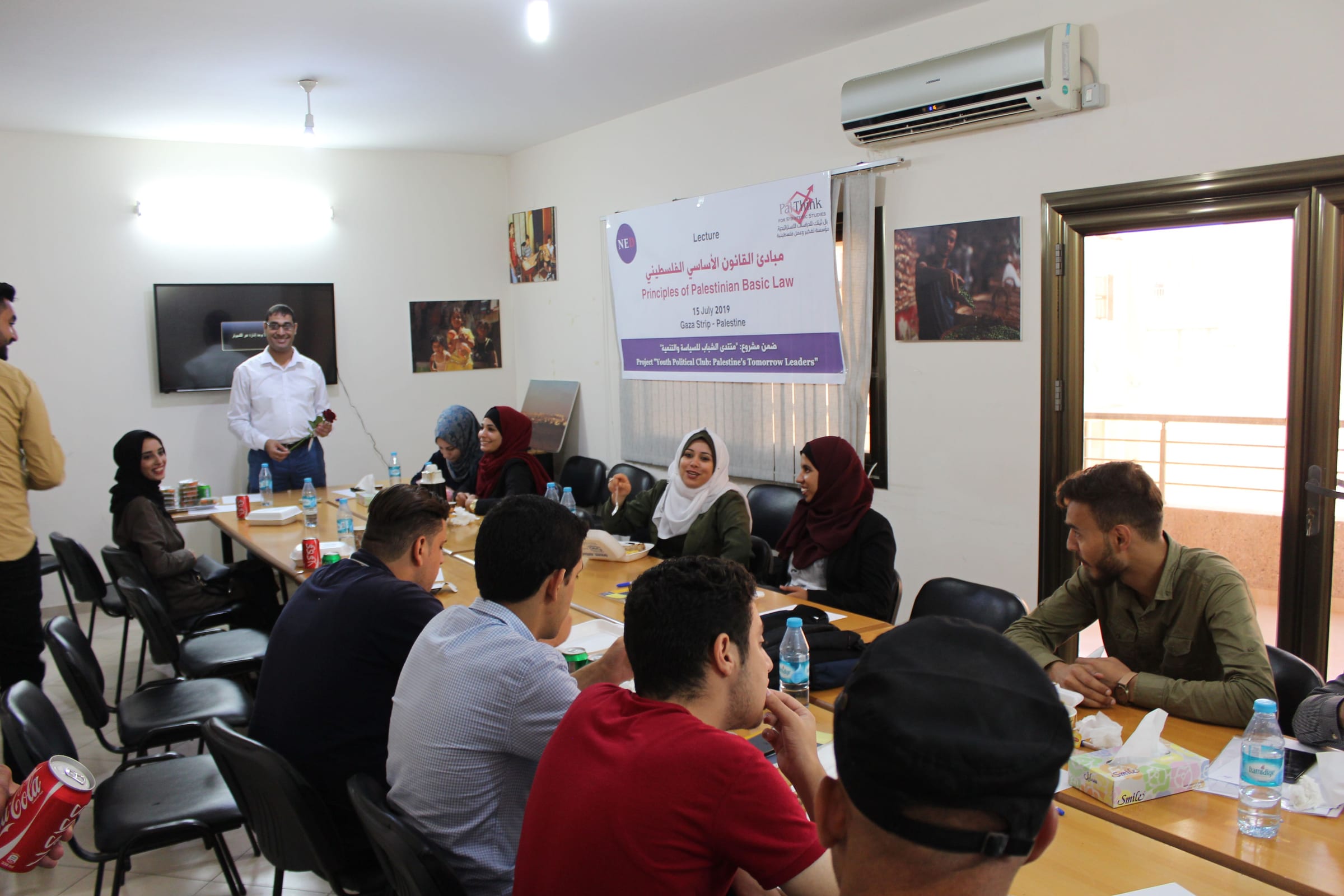
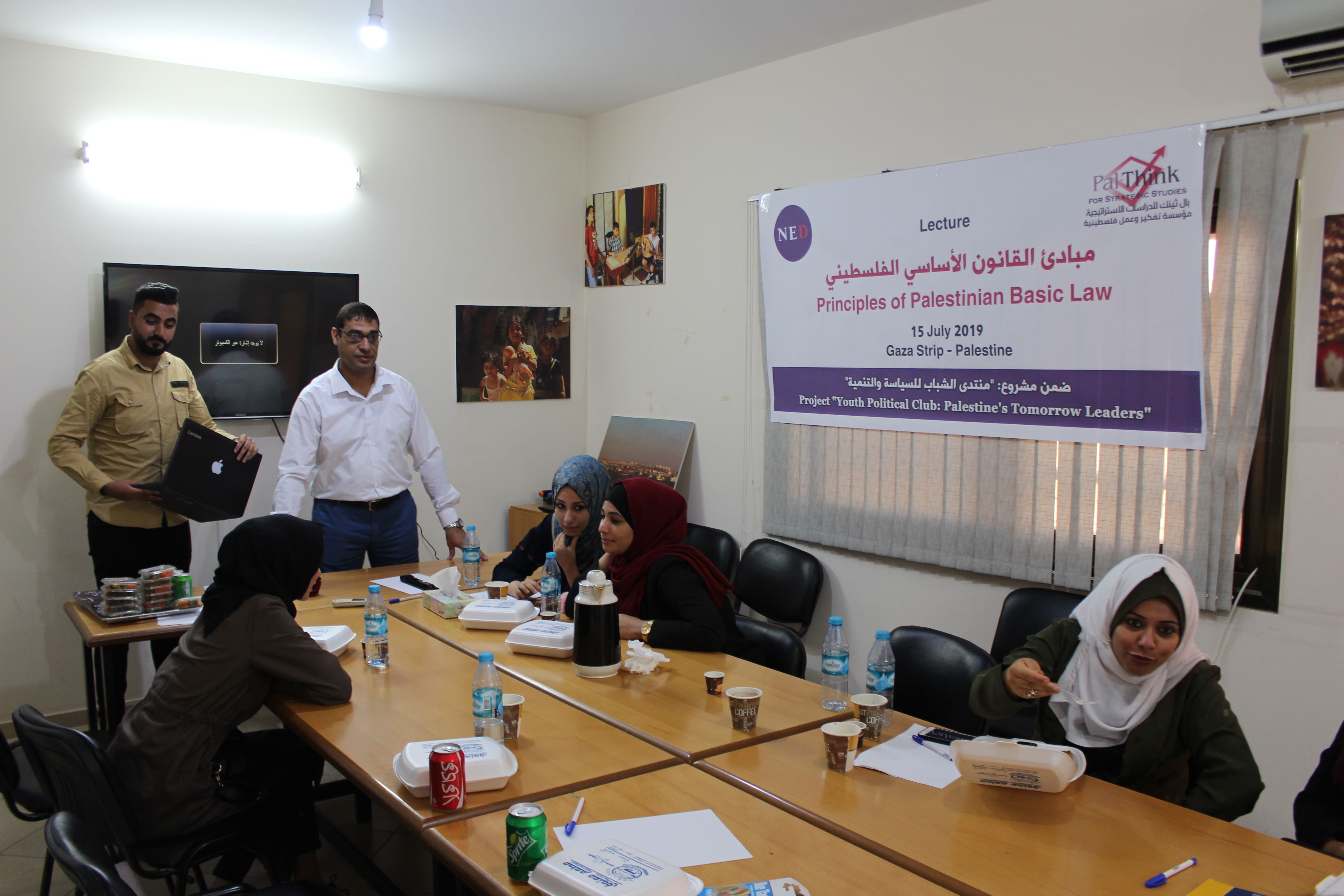
Gaza — The Pal-Think for Strategic Studies institution carried out a lecture titled “The principles of the Palestinian Basic Law”, within the project “The Youth Forum for Politics and Development”, which comes in cooperation with the “National Endowment for Democracy (NED)”. Pal-Think hosted the researcher Mohammed al-Talbani, with the participation of a team composed of 25 youth (13 females : 12 males) within the age category 18–24, who have the passion to learn about politics and development.
The lecture aimed at increasing the targeted category's legal awareness of the issues of the Palestinian Basic Law and the constitutional principles contained in it, in what reflects on the public rights and freedoms, the political system, good governance, and democratic life.
The researcher Mohammed al-Talbani opened the encounter by speaking of two principal axes. The first axis comprised talk of the Palestinian Basic Law: Mr al-Talbani took up several subjects, among them the concept of the Palestinian Basic Law, its features, its development and role, the ways of setting and amending the constitutional rules, in addition to constitutional life after and before the establishment of the Palestinian National Authority.
In the second axis Mr al-Talbani took up the constitutional principles contained in the Palestinian Basic Law, discussing several axes, among them: the concept and importance of the principle of the separation of powers, the principle of the peaceful transfer of power and popular sovereignty, and the political protection of political, social, economic, and cultural rights. The second axis likewise comprised discussion of several principles, among them the principle of the constitution's supremacy and the guarantees of respect for its provisions, and the principle of the independence of the judicial authority and the judicial guarantee of the rule of law. The encounter was interspersed with a number of questions and enquiries that were discussed and answered.