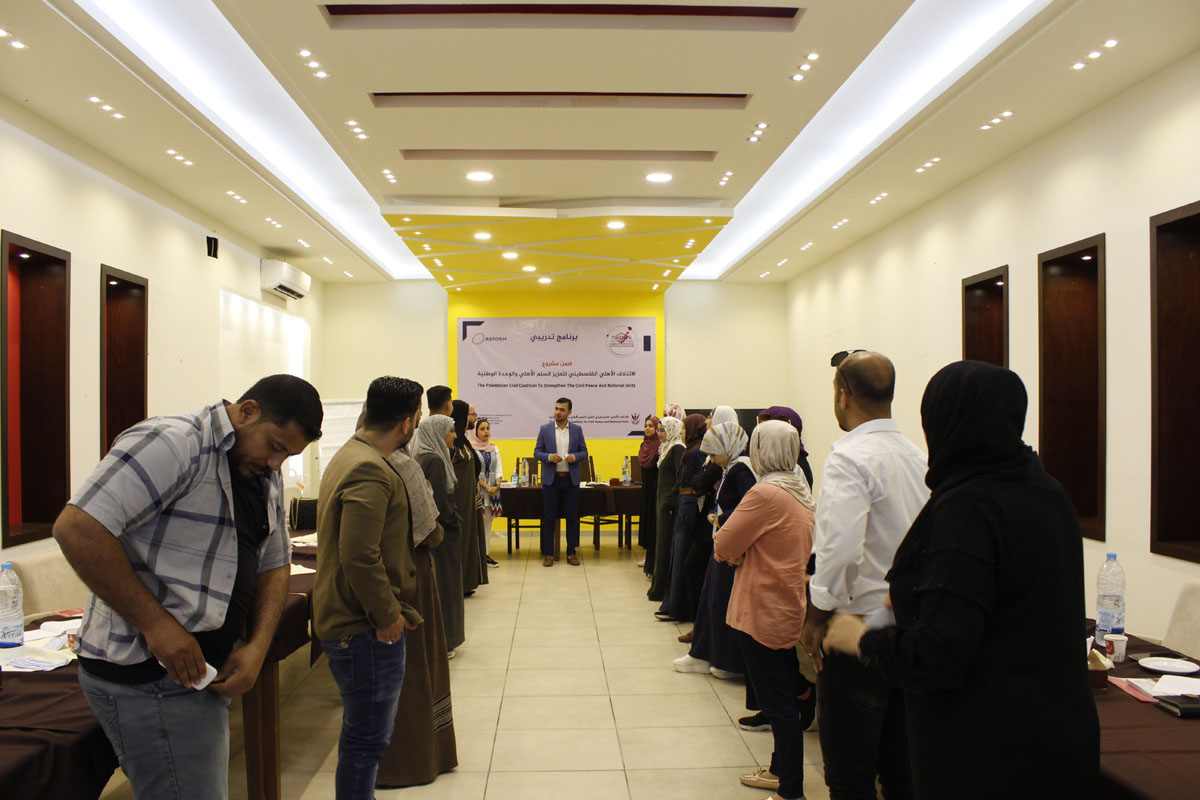
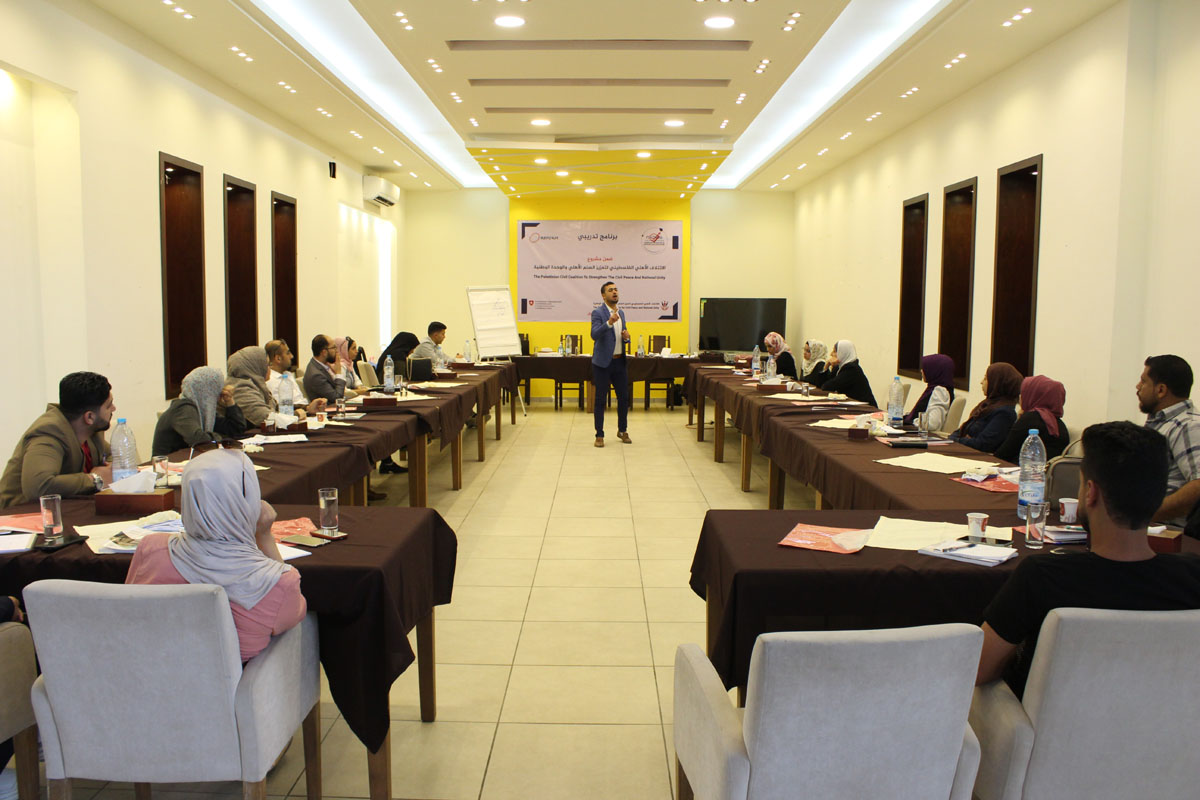
Pal-Think delivers a training programme for civil peace and national unity
Pal-Think delivered a training programme under «Strengthening cooperation among civil institutions for social harmony», implemented with the Swiss government to advance community reconciliation and civil peace.
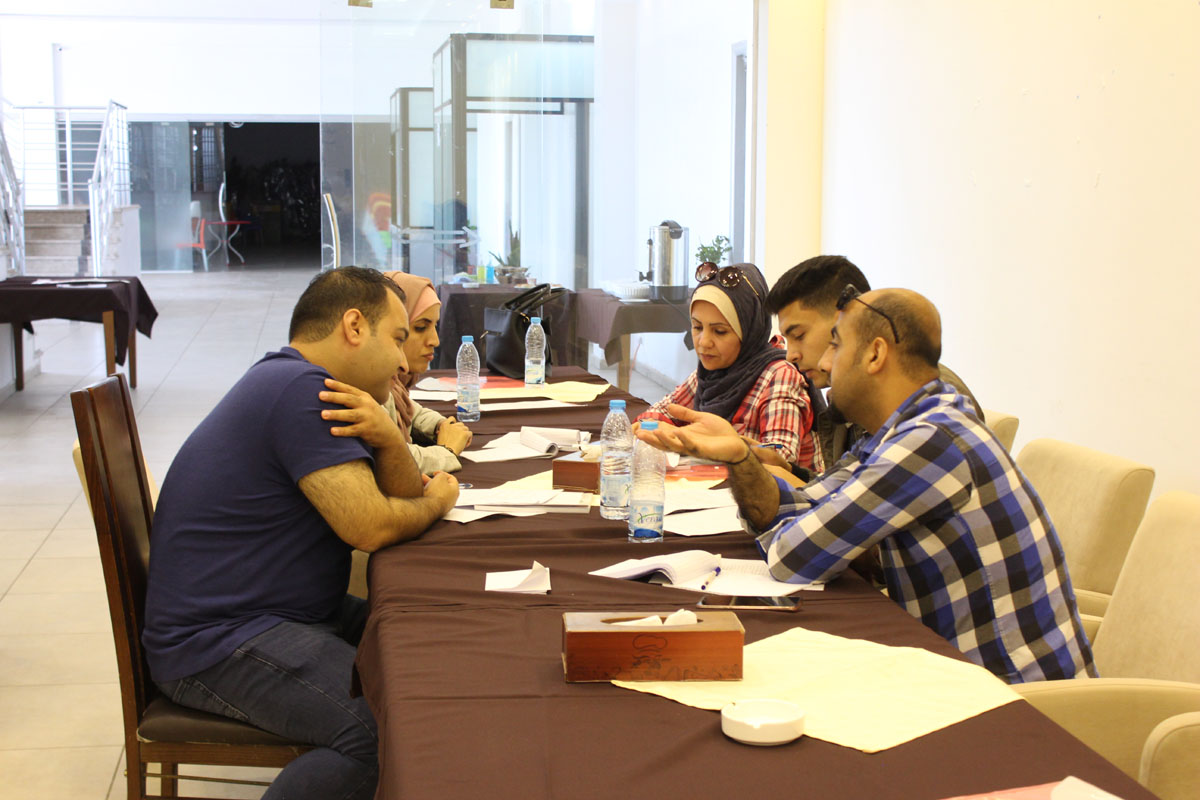
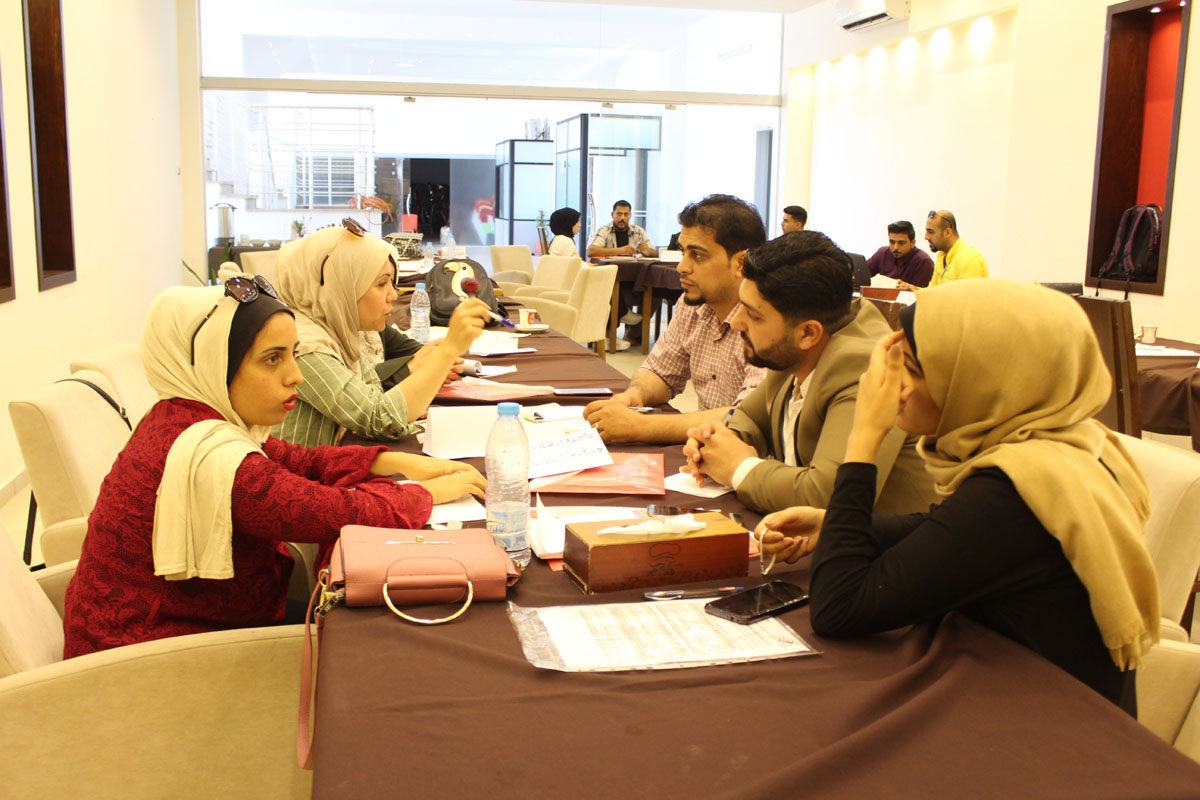
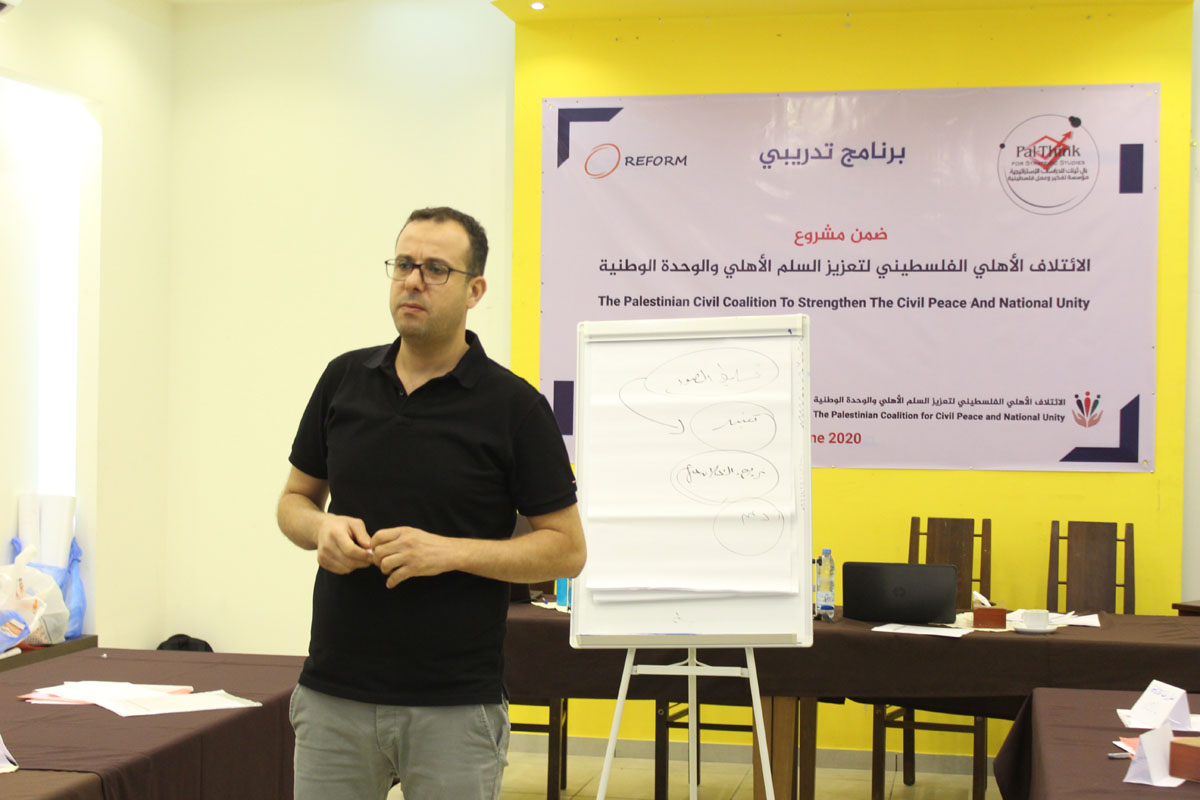
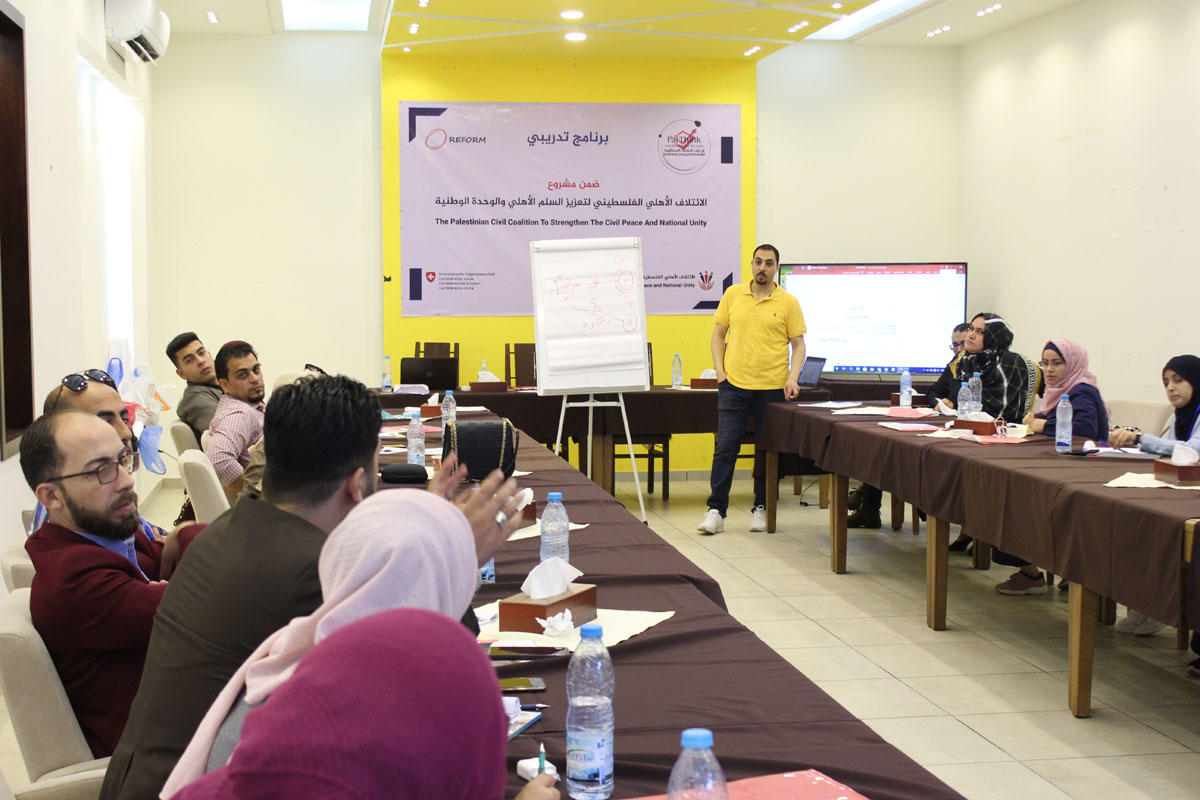
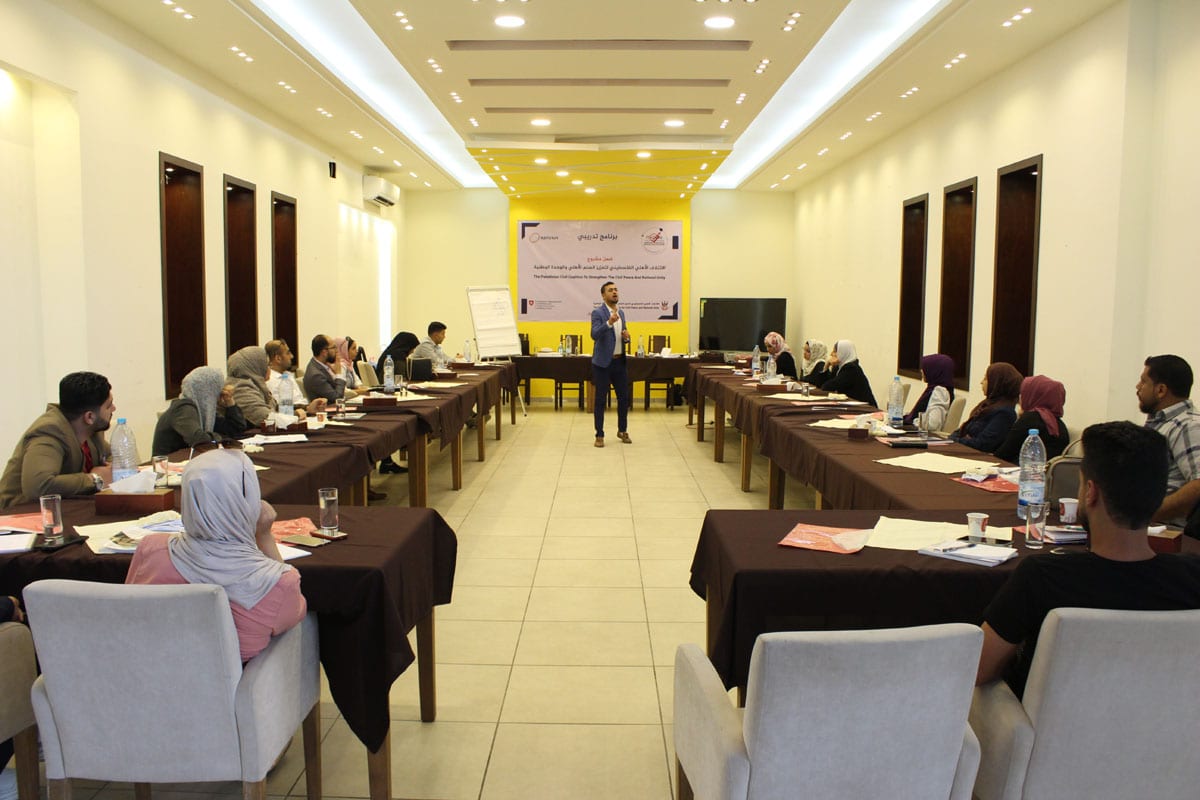
Pal-Think for Strategic Studies carried out a training programme within the project “Strengthening cooperation between civil institutions for communal harmony”, implemented by “Pal-Think” in partnership with the Swiss government, to work on strengthening communal reconciliation and civil peace — through the formation of the “Palestinian Civil Coalition for Strengthening Civil Peace and National Unity”, which comprises 49 civil institutions in the northern and southern Palestinian governorates. These will work through the project on carrying out joint communal activities and initiatives targeting all society's strata and calling for the joining of efforts to achieve national reconciliation — thereby activating the role of the coalition's members to be positive influencers toward contributing to strengthening civil peace.
The training aims to develop the partner institutions' capacities in the field of national reconciliation and communal peacebuilding through acquainting them with the principles of human rights and the international laws that call for protecting society and achieving peace; also acquainting the partners with the correct peaceful instruments that contribute to achieving reconciliation, and highlighting civil society institutions' role in strengthening communal and comprehensive reconciliation.
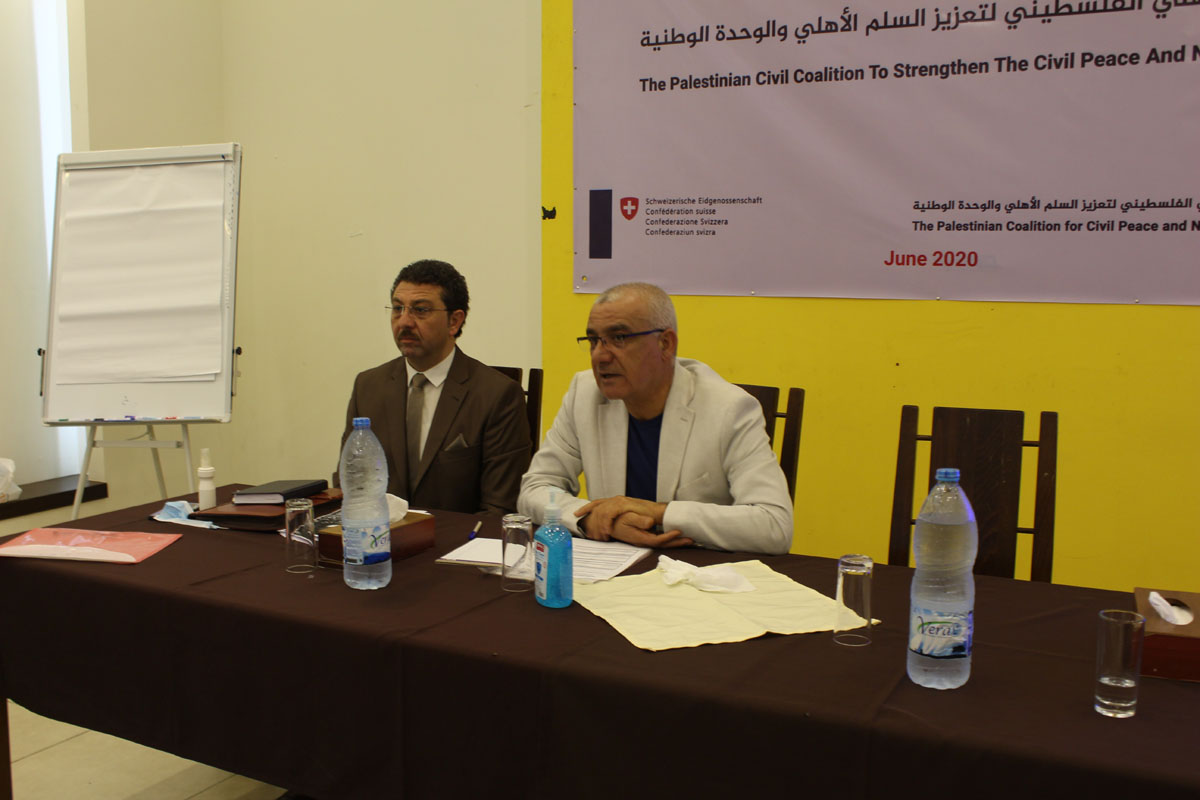
The training was opened by the director of the Pal-Think institution, Mr Omar Shaban, welcoming the attendees and affirming Pal-Think's continuous role in supporting civil peace, and the importance of strengthening cooperation and networking between civil society institutions for the sake of strengthening communal reconciliation and peace — which in turn will work to strengthen Palestinian unity and end the condition of the Palestinian division. From here came the idea of founding the coalition and its launch, to reactivate civil society institutions' role in strengthening national reconciliation.
For its part, Pal-Think hosted at the beginning of the training the specialist in diseases and epidemics Dr Mohammed Abu Rayya, to speak of the coronavirus, its appearance, its symptoms, and how to prevent it — in adherence by Pal-Think to the coronavirus prevention measures and in following of the recommendations and instructions issued by the World Health Organization and the Palestinian Ministry of Health.
The first day of the training began with the lawyer Bilal al-Najjar, who took up in it topics related to international human rights law, its origin, development, and divisions, and the international legality of human rights, its characteristics and sources — pointing to the difference between international human rights law and international humanitarian law, and the ways and mechanisms of strengthening and protecting human rights in the Palestinian condition.
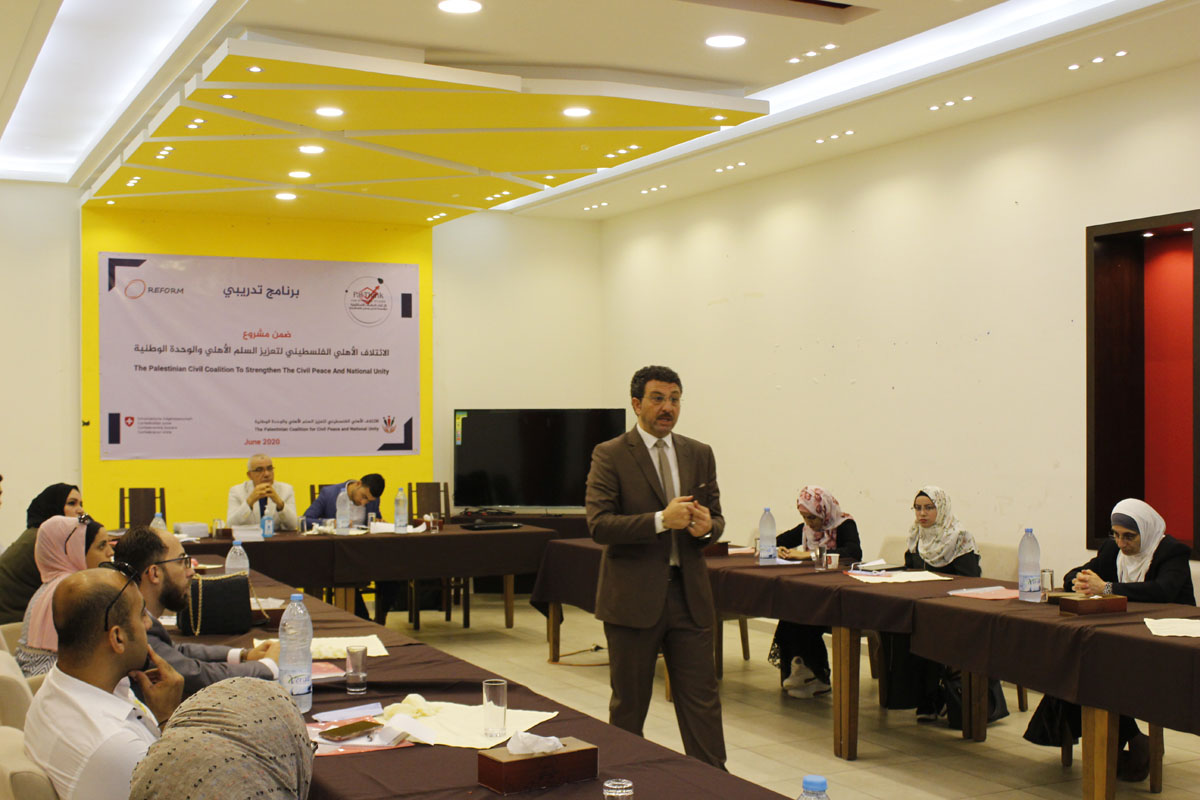
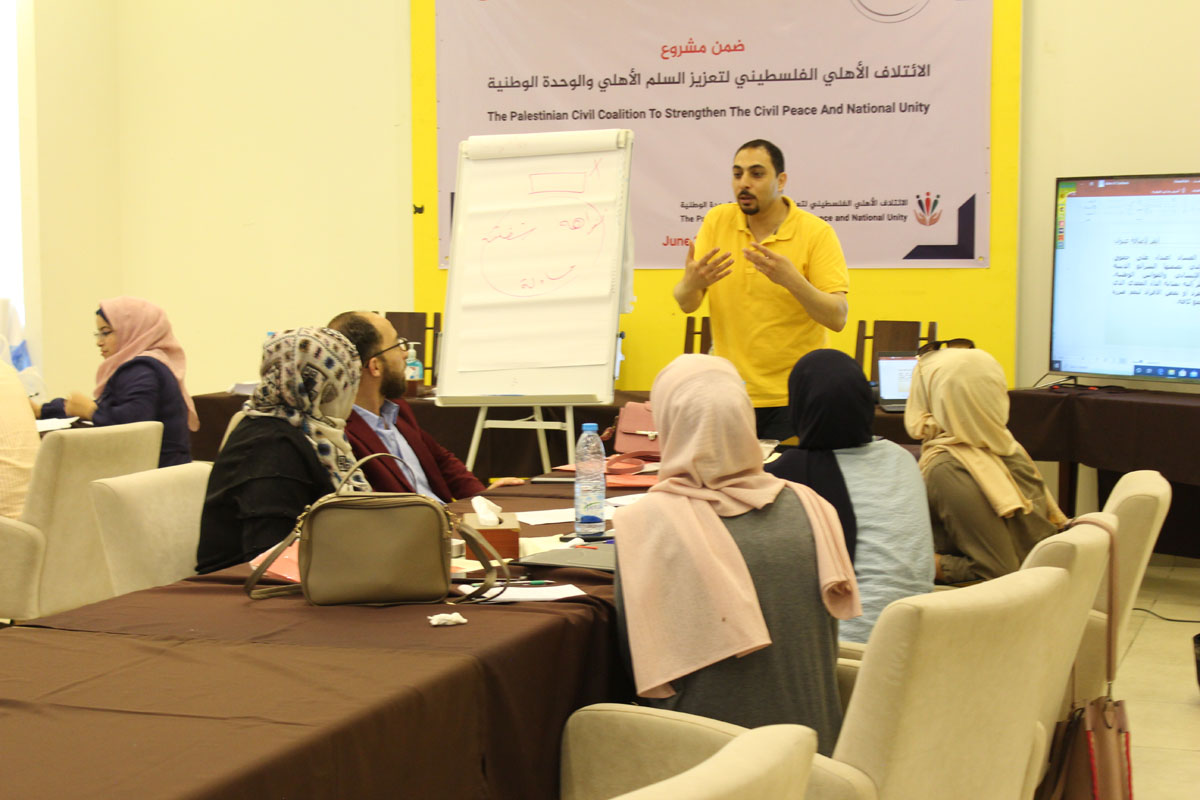
On the second training day, the lawyer and researcher at the Independent Commission for Human Rights, Mr Bakr al-Turkmani, spoke on the principles of integrity and transparency in the work of the civil institutions and the mechanisms of combating corruption — making clear the concept of corruption, its manifestations and forms, and the effect of corruption's spread on the work of civil society institutions. Al-Turkmani likewise set out the legal system for combating corruption in Palestine, and the national integrity system.
The human-development trainer Mr Saji Obaid likewise spoke on the third training day on the skills of lobbying and advocacy and the mechanisms of cooperation between civil-work institutions for the sake of strengthening civil peace and national reconciliation — setting out the concepts related to lobbying and advocacy, and speaking on the way of determining a problem of priority to work on as a lobbying and advocacy campaign, in addition to setting out the stages any lobbying and advocacy process passes through, and the mechanisms of determining the target audience of the advocacy process.
At the close of the training programme, the representatives of the civil institutions members of the coalition expressed their thanks to the Pal-Think institution for carrying out such trainings, hoping for the holding of more encounters and trainings of a kind to strengthen and develop the skills of the workers in the grassroots institutions.