The training programme «Developing youth entrepreneurship skills» opens
Pal-Think opened the Atlas Network-funded training «Developing youth capacities in entrepreneurship skills» — seven consecutive days developing young people's knowledge and skills in Palestine's entrepreneurship environment.
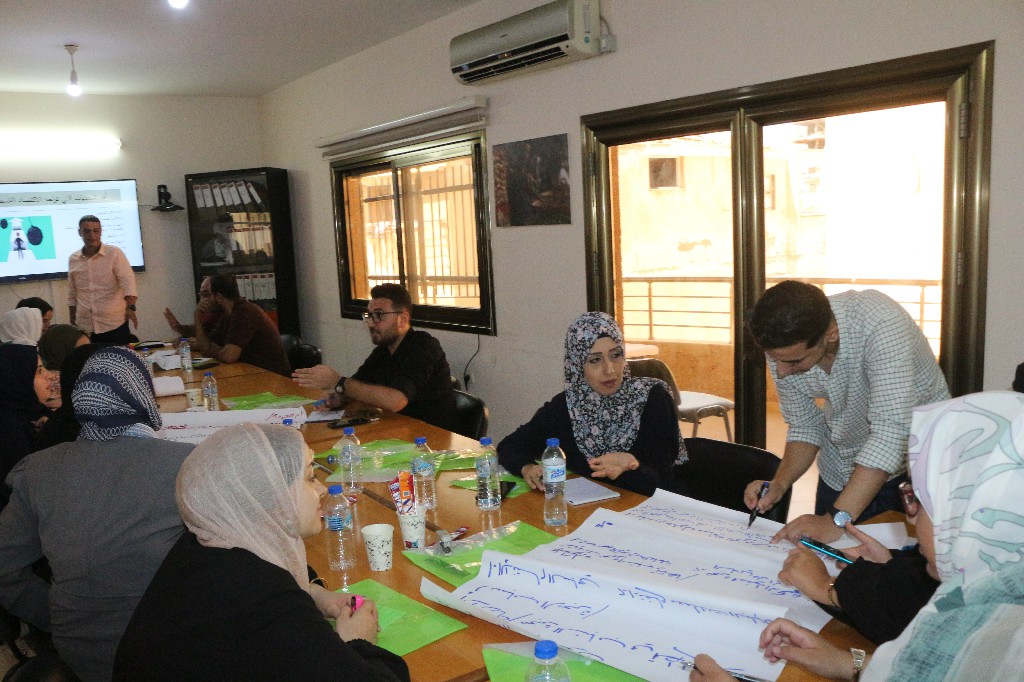
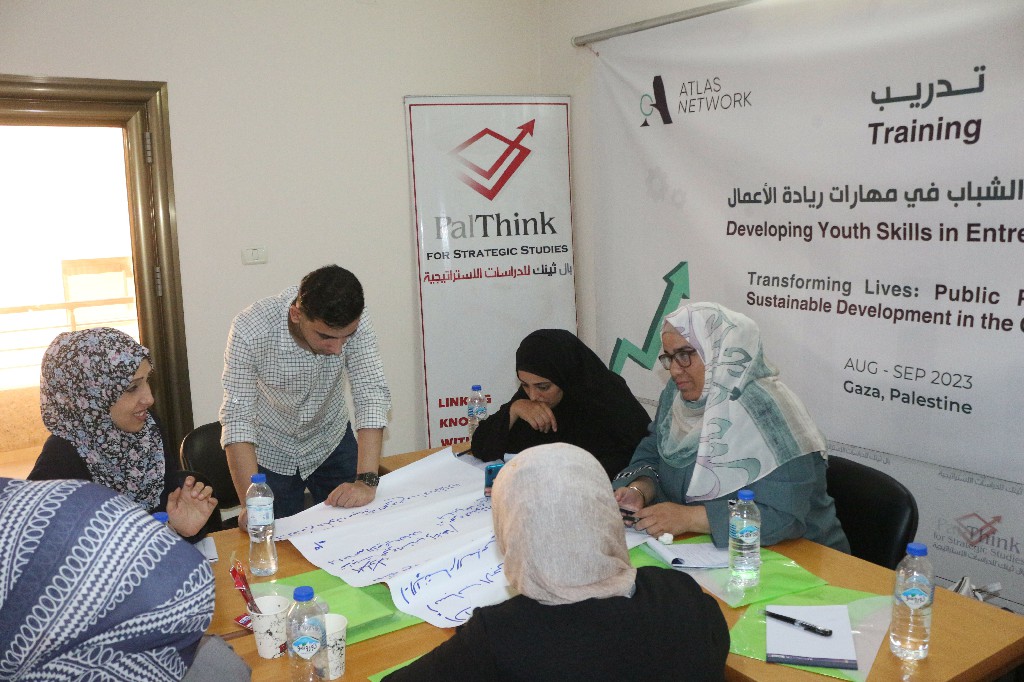
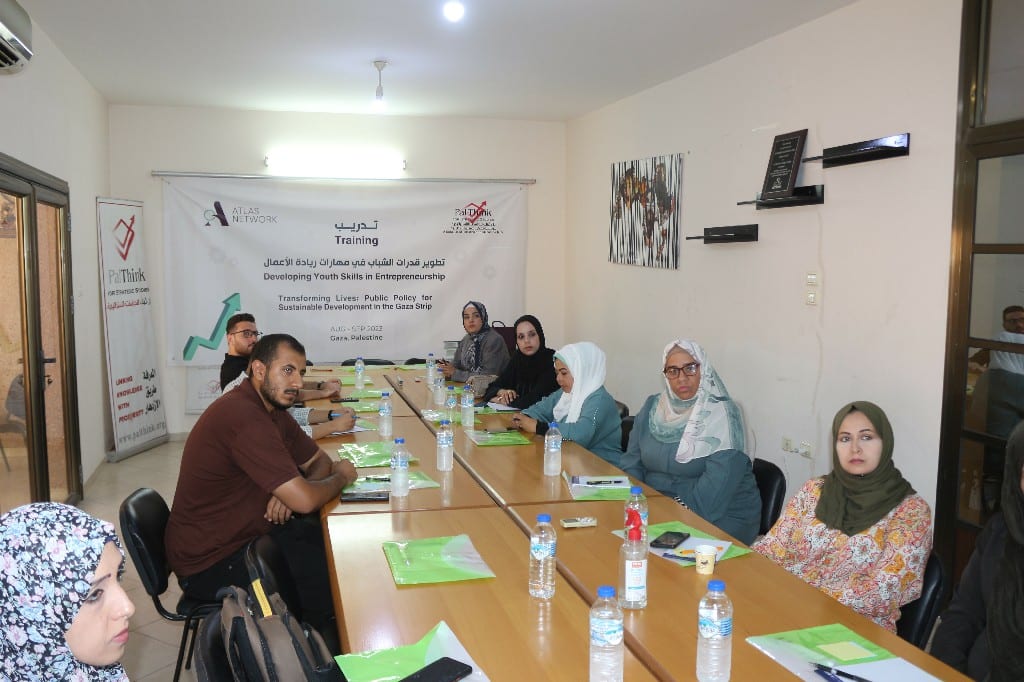
Pal-Think for Strategic Studies opened a training programme titled “Developing youth capacities in entrepreneurship skills”, funded by the Atlas Network and running for seven consecutive days. The programme aims to develop young men and women's knowledge and skills around the entrepreneurship environment in Palestine, and thereafter to contribute to producing working papers that discuss the challenges and aspirations of the business environment — specifically the issues and topics related to the economy, entrepreneurship, and youth.
The project targets 20 young people of both sexes working in local community institutions in the marginalised areas of the Gaza Strip, to raise the capacities of those institutions' staff and train them in discussing developmental issues and preparing working papers and memoranda on economic development in Palestinian society — particularly development that targets youth.
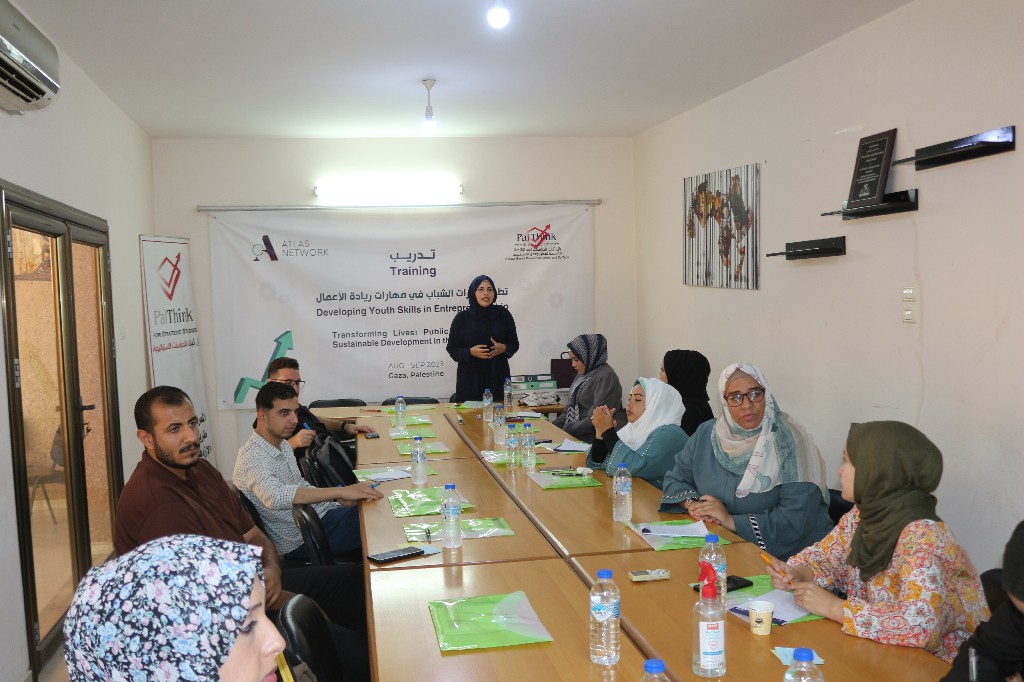
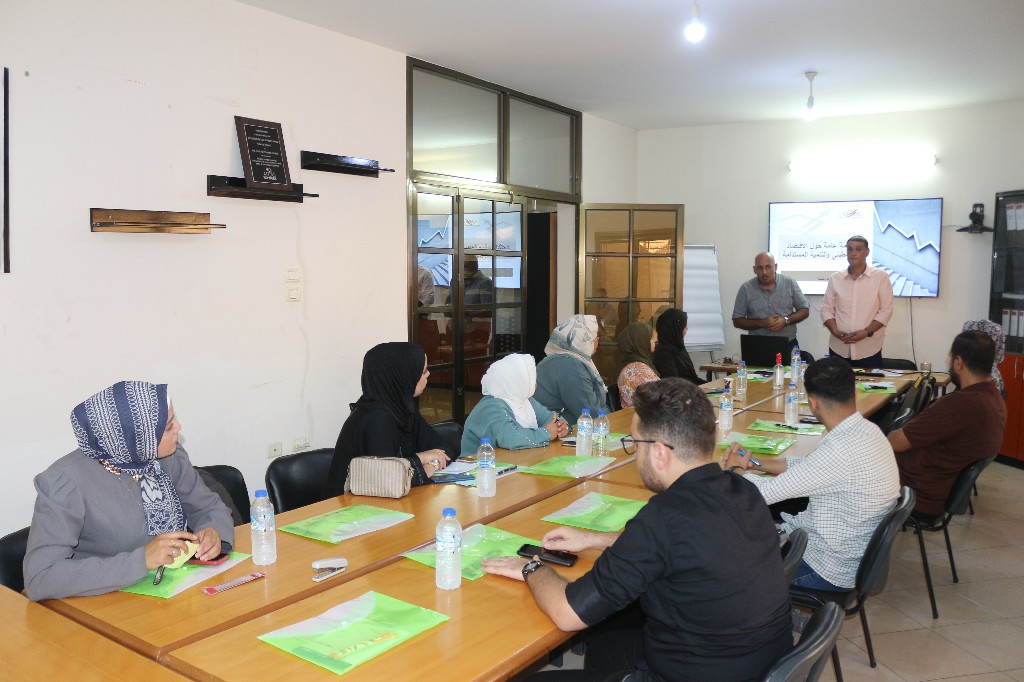
The training was opened by the project coordinator at Pal-Think, Sally al-Sammak, welcoming the trainees representing the community and local institutions, and affirming Pal-Think's constant concern to build lasting partnerships and cooperation with the institutions and those working in them, to discuss all issues related to community and economic development, especially youth topics. Al-Sammak pointed to the stages of implementing the project after the training programme, and walked the trainees through the training programme and its methodological and administrative details.
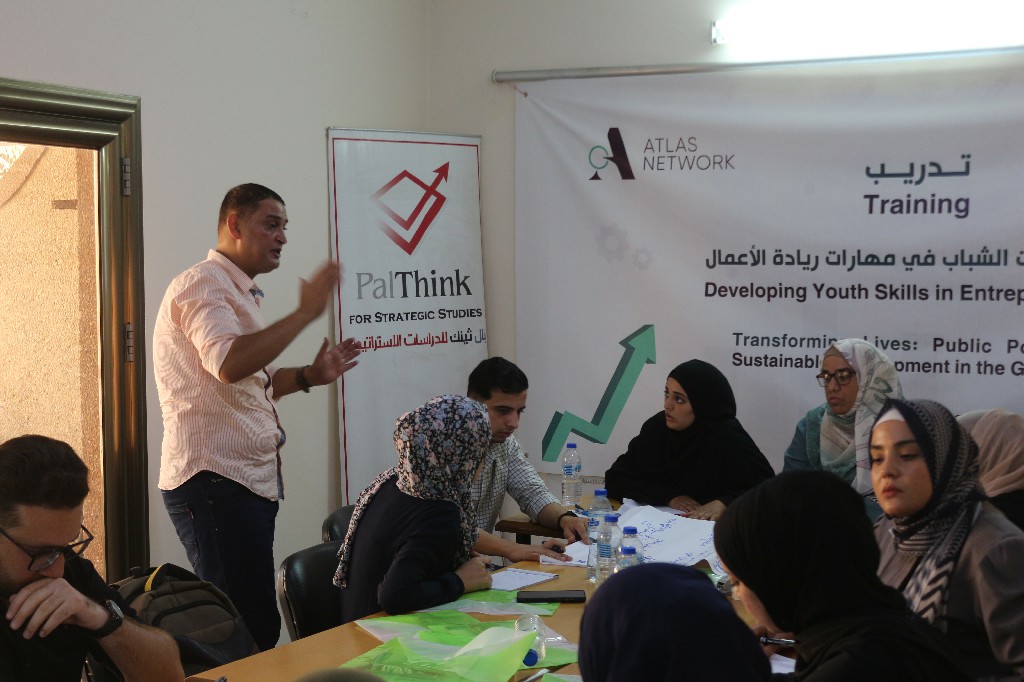
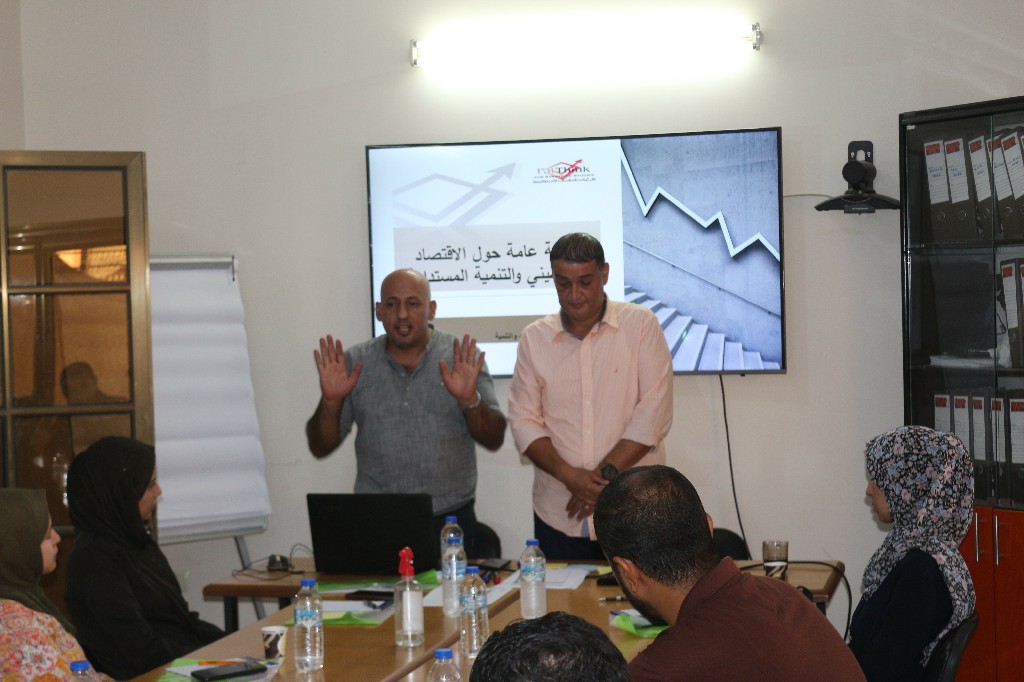
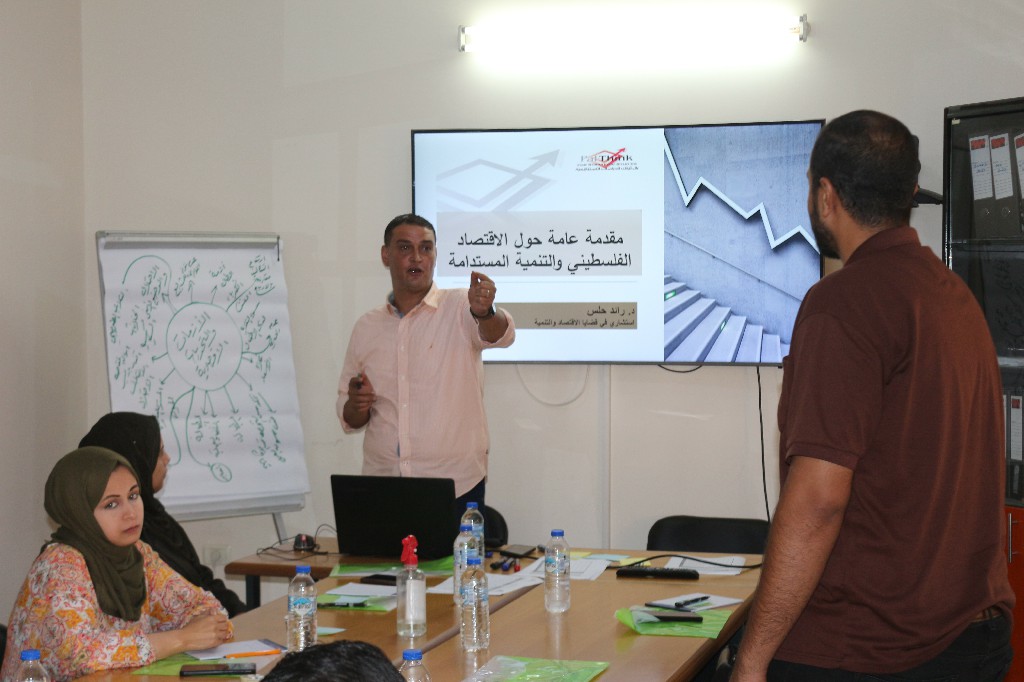
The training package on the first day carried material on the economy and sustainable development in the Palestinian territories, with trainer Raed Hellis, a consultant on economic and development issues; the training also discussed the most important initiatives and strategies implemented to strengthen sustainable development in the Palestinian territories.
It is worth noting that the second phase, following the training, will give the trainees the opportunity to write their ideas on entrepreneurship in Palestinian society: the project's outputs will be the production of three policy papers, to be presented and discussed in workshops with experts and specialists in sustainable-development issues, in addition to radio episodes addressing all the challenges and obstacles facing the Palestinian economy in general — and limiting development opportunities in particular — as well as discussing the horizons and aspirations of the economic future.