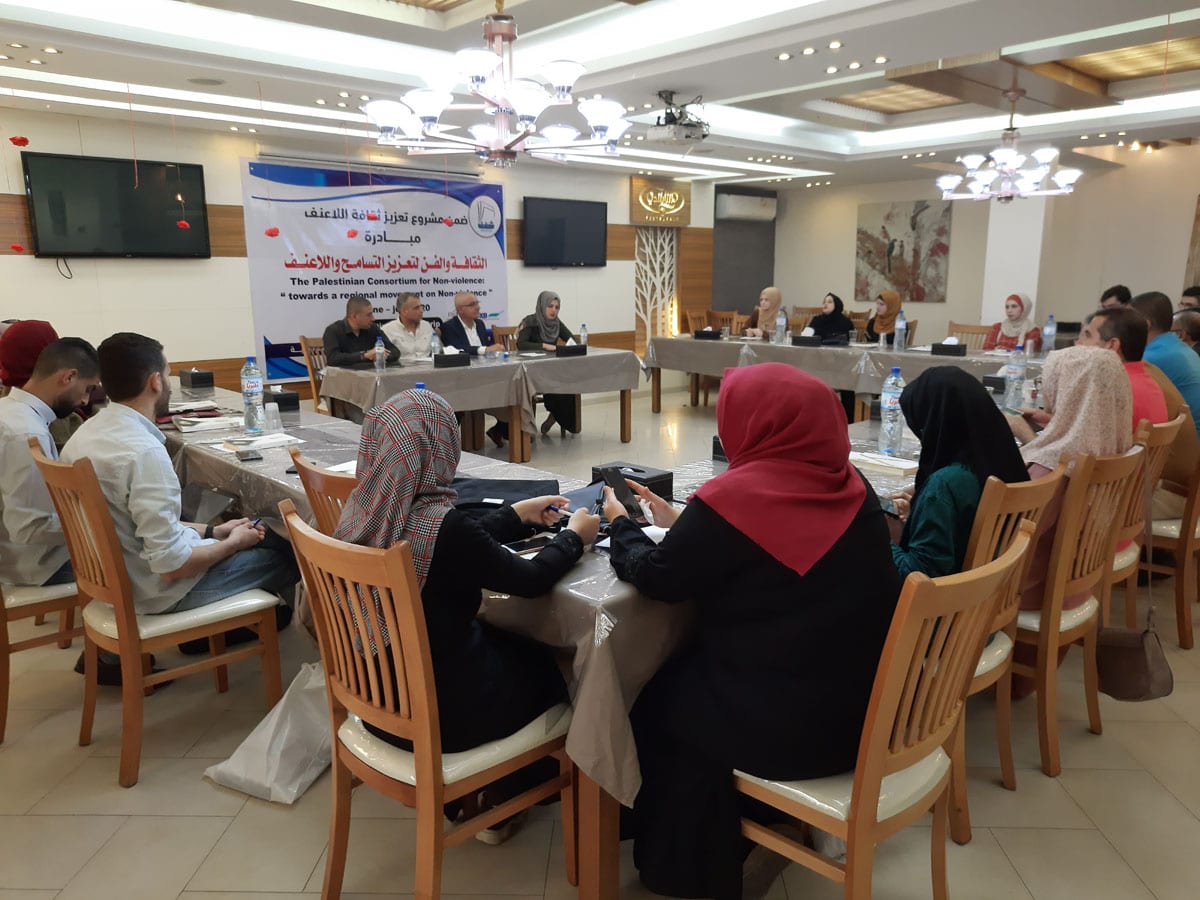
With Pal-Think, the Shaghaf team delivers «Culture and art for tolerance and nonviolence»
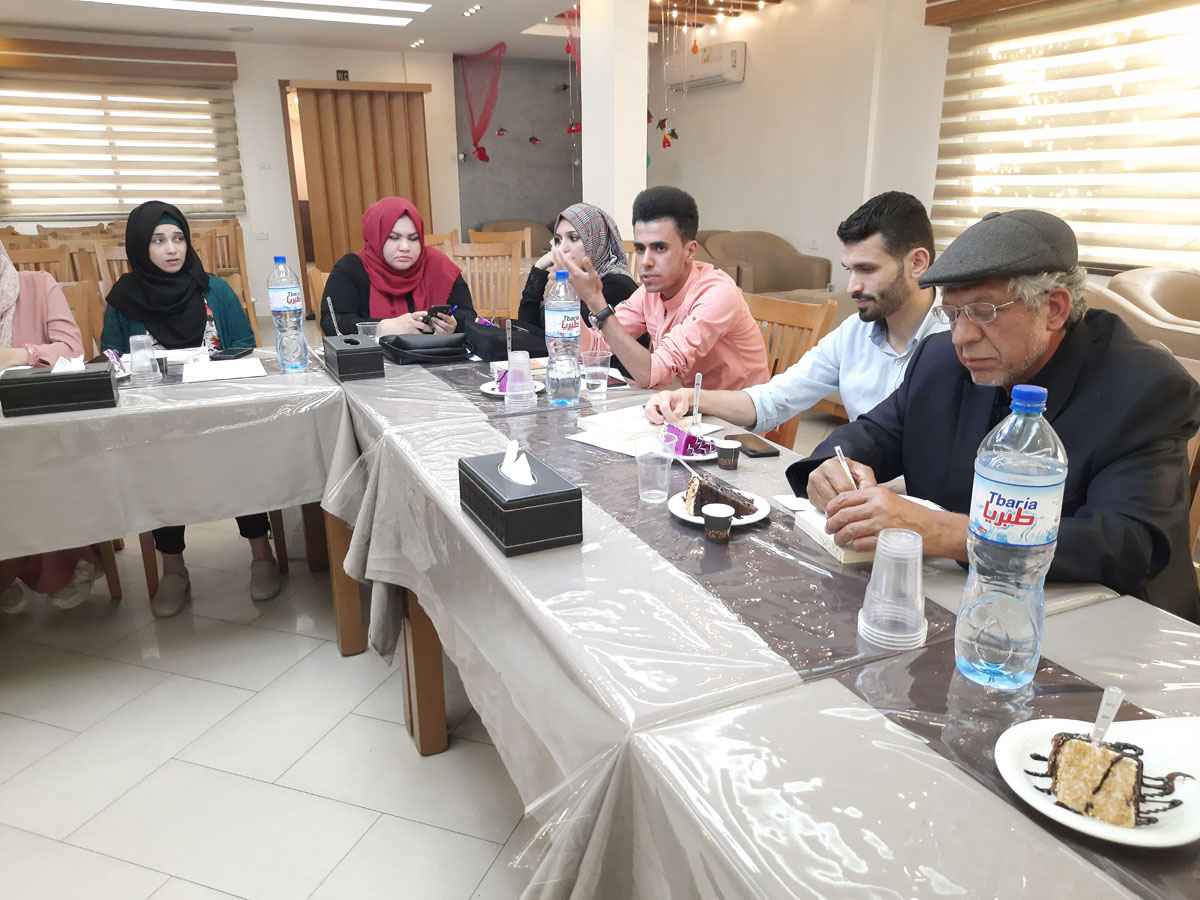
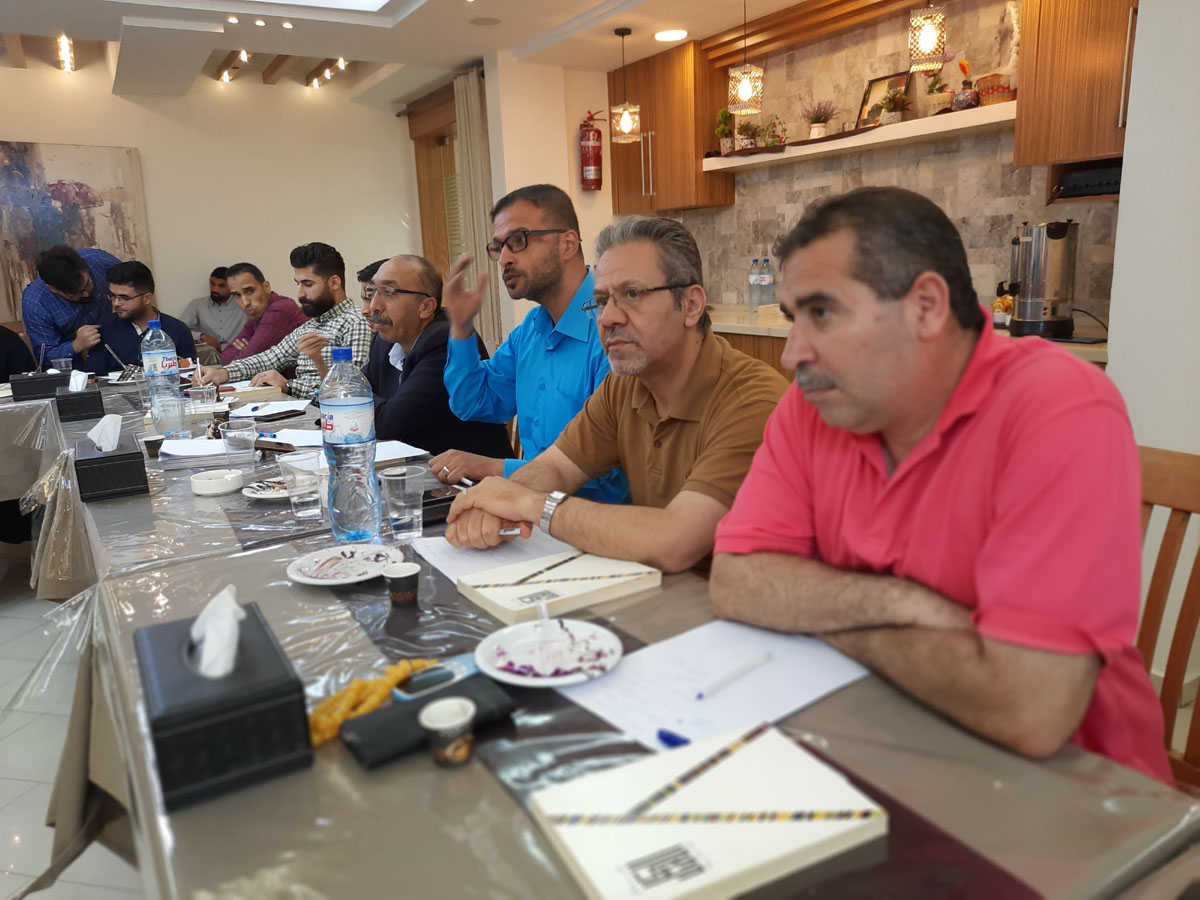
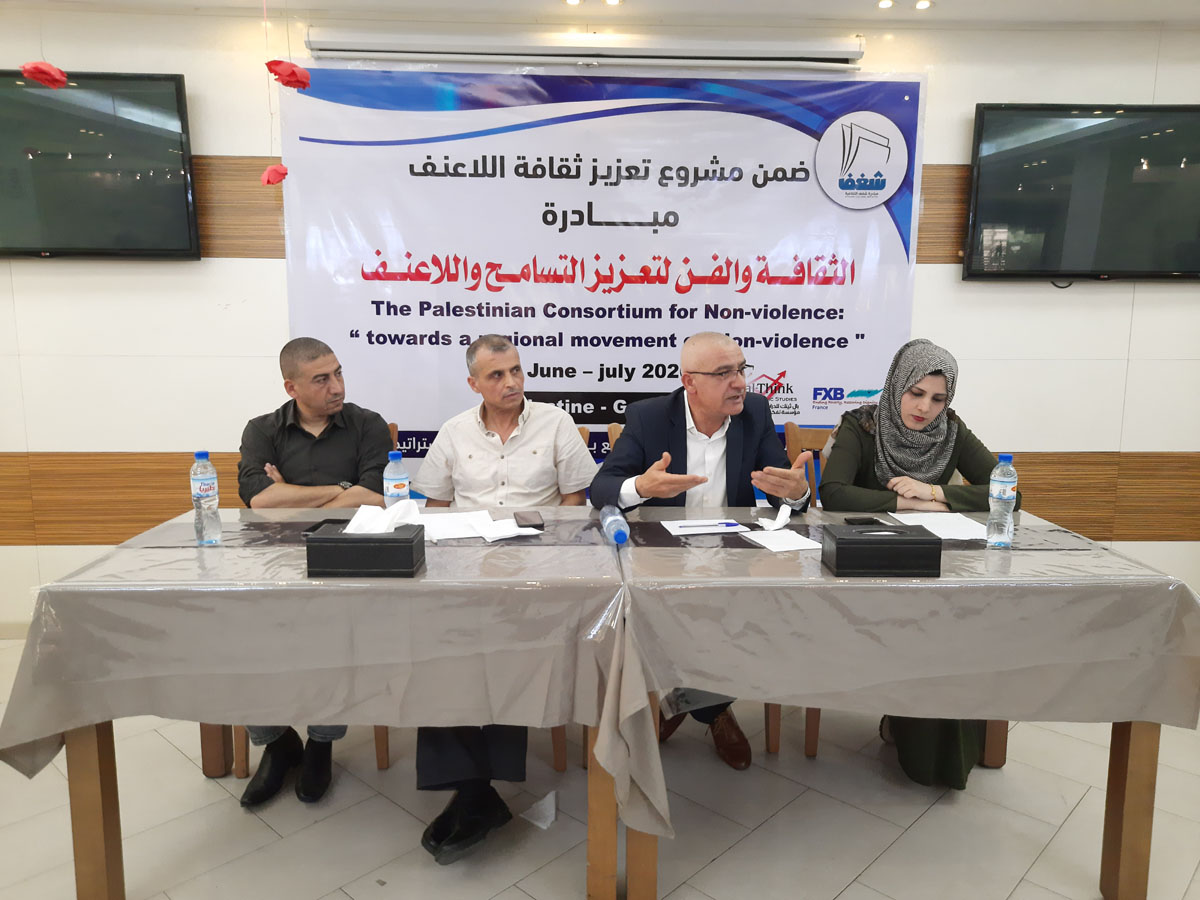
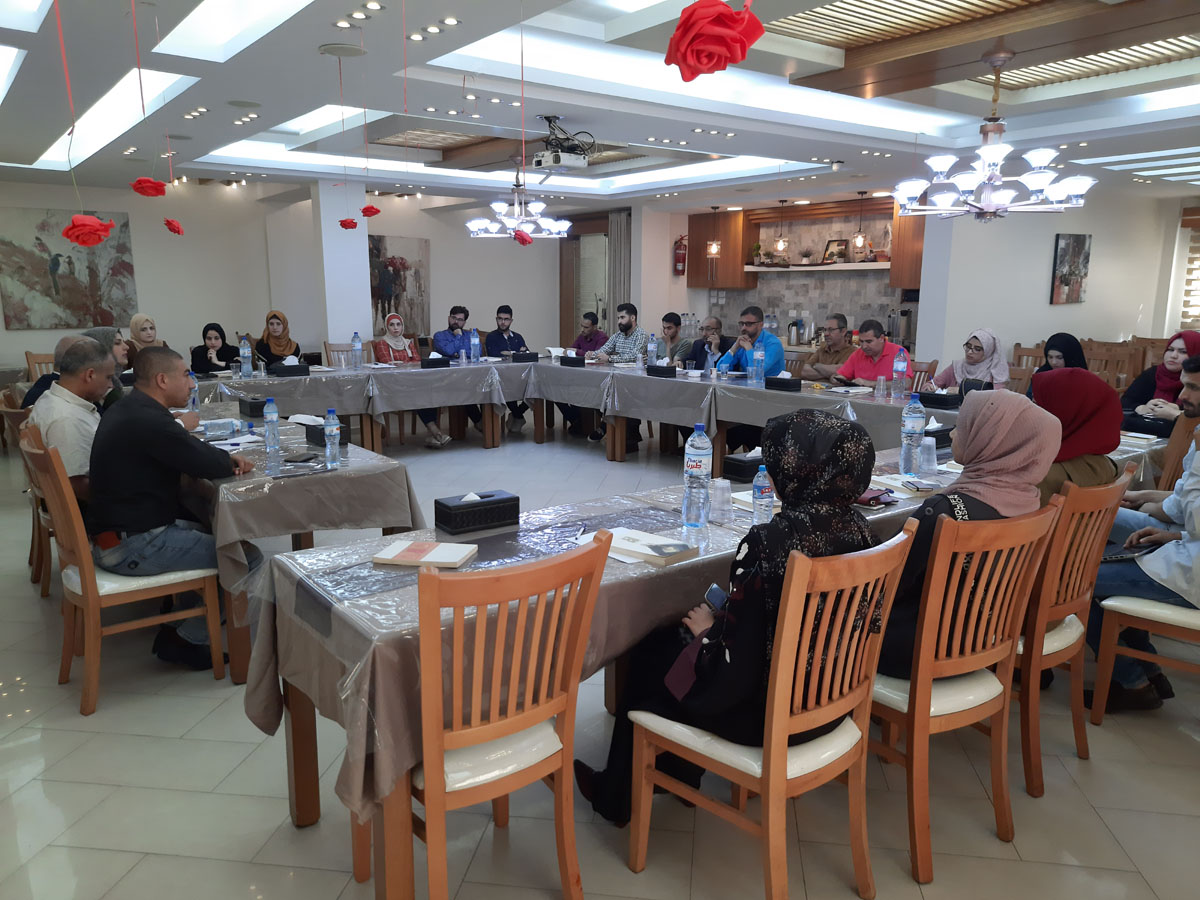
The Shaghaf cultural initiative delivered «Culture and art for tolerance and nonviolence» with Pal-Think and France's FXB — young intellectuals, poets, novelists and musicians attending — under the nonviolence project.
The Shaghaf cultural initiative carried out the initiative “Culture and art for strengthening tolerance and non-violence”, in partnership with the “Pal-Think for Strategic Studies” institution and the French FXB institution, with the attendance of an elite of educated youth, poets, novelists, and musicians — within the project “Strengthening the culture of non-violence”, which seeks to spread the philosophy and culture of non-violence as a way of life.
The encounter was opened by the founder of the Shaghaf initiative, Mr Yusri al-Ghoul, welcoming the attendees, and he said that many intellectuals today live in an ivory tower. And despite the oneness of our language and our nationhood, often some of us overbear the other; therefore we speak today of the role of art and culture for the sake of elevating the Palestinian human being. And we thank the “Pal-Think” institution, which always takes the initiative and says: we are with you and ready to contribute to elevating society.
For his part, the director of the “Pal-Think” institution, Mr Omar Shaban, said: “We value and appreciate all these initiatives that come out from the youth without awaiting any help from donor bodies or officials; and Pal-Think always seeks to strengthen civil peace and call for the ending of the Palestinian division — it has worked through several projects on networking the institutions in the northern and southern Palestinian governorates to strengthen cooperation among them to achieve communal reconciliation”
He added: “This division has frozen many of the Palestinian people's achievements — there is no people able to achieve its communal and political requirements while fragmented. Despite that, we can avoid all the problematics and problems resulting from the imposed pressures by way of non-violence, national unity, and strengthening peaceful dialogue — and this is what Pal-Think aims at through its project 'Strengthening the culture of non-violence'”, adding: “We are a diverse people, and dialogue brings us peace, and through it the other is discovered.”
He continued: “We at Pal-Think deliberately cooperated with the local institutions because we believe that civil society must take its role and be at the forefront, especially the youth gatherings such as Shaghaf. And I ask the youth to believe in dialogue when dealing with the other.”
Worth mentioning is that the initiative contains five periodic encounters, during which a world novel speaking of non-violence will be discussed; encounters will likewise be devoted to playing music and carrying out activities that strengthen the value of dialogue and tolerance among the young participants.
In the same context, the director of the “Democracy and Conflict Resolution” centre, Iyad Abu Hjayer, said: “The two languages of art and music are human; everyone understands them. Look at Naji al-Ali, who summed up the Palestinian cause through 44 thousand caricatures. The civilisations in which the values and concepts of justice and tolerance do not exist — their destiny is extinction and collapse.”
Abu Hjayer reviewed the experiences of Rwanda and South Africa and the horrors of the civil war in them, then their adoption of justice, forgiveness, and communal reconciliation. As a result of that, Rwanda's economic growth rate reached 9%, the highest in the world, and it was able to become one of the finest states of the African continent.
The participants' interventions ran around the possibility of applying justice and spreading the culture of non-violence in Palestine, and the difficulties of achieving communal reconciliation.
For her part, the novelist Basma al-Mashharawi (23 years old), one of the participants, said: “The initiative is valuable because it targeted a subject that concerns every Palestinian home. It is also beautiful that there are several partnerships between the institutions in a single initiative, because this strengthens the language of dialogue, and a person becomes acquainted with the ideas of others. In truth, those who care for art and music are the ones who most understand the language of dialogue and believe in it.”
As for the young woman Manal Obaid (25 years old), one of the participants, she said: “Art, from my point of view, is a kind of culture. The more educated a person is, the more tolerant they are. We want to deliver our message of non-violence by way of writing, image, and music.
It is recalled that the “Shaghaf” initiative is a youth cultural gathering aiming to create a cultural condition among the youth in the Gaza Strip.