Pal-Think continues the Future Foresight project in Palestine — second session, in partnership with 15 community organisations
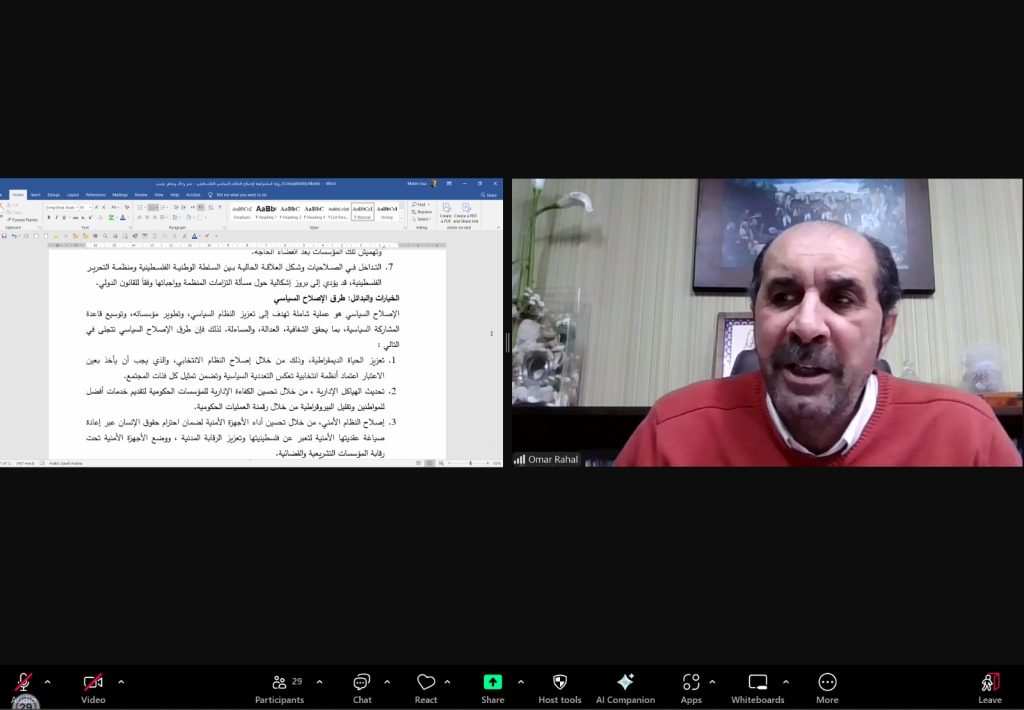
Amid the current political transformations, the Hebron Community Centre — with Bunyan, Rozana, Dar Al-Shabab and the SHAMS centre — held an interactive round table discussing two policy papers on Palestinian political reform.
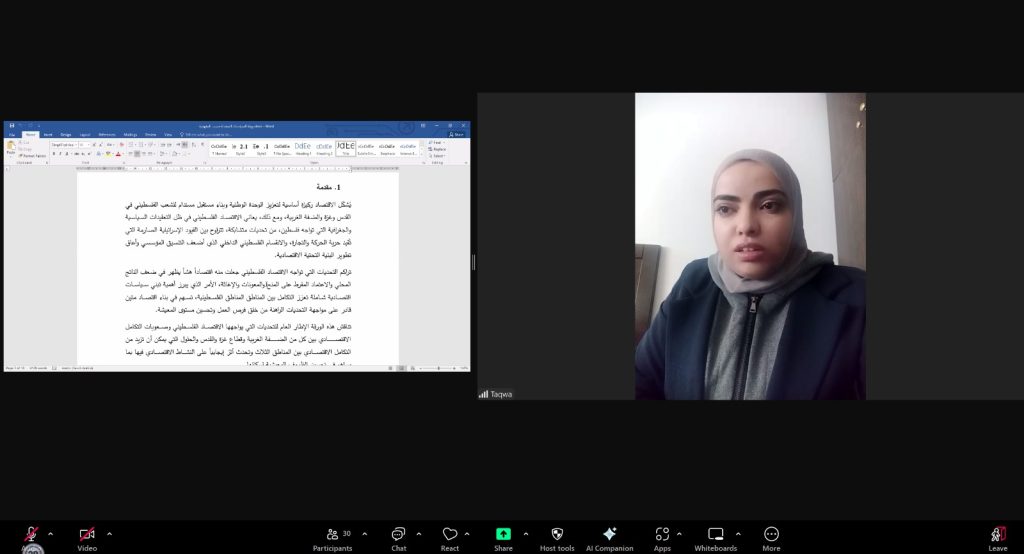
Amid the current political transformations and challenges, the Hebron Community Centre — in partnership with the Bonyan Association, the Rozana Foundation for the Preservation of Palestinian Identity, the Dar al-Shabab Authority for Culture and Development, and the “Shams” Human Rights and Democracy Media Centre — organised an interactive round table to discuss two policy papers on Palestinian political reform and economic integration between Jerusalem, Gaza, and the West Bank.
The session came under the project “Strengthening Palestinian civil society's contribution to shaping Palestine's future”, implemented by Pal-Think for Strategic Studies in partnership with a coalition of 15 Palestinian community organisations from the occupied Palestinian territories.
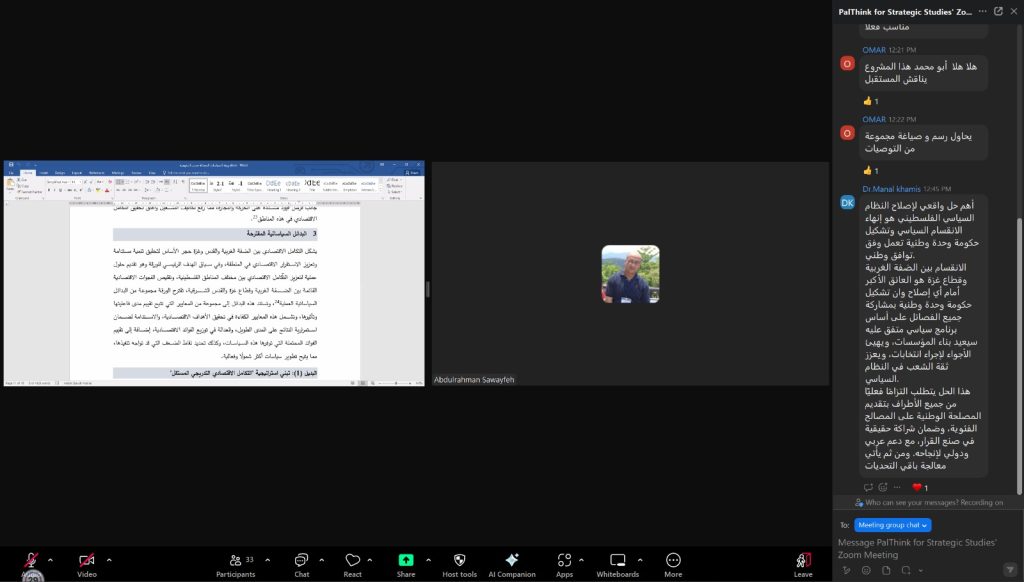
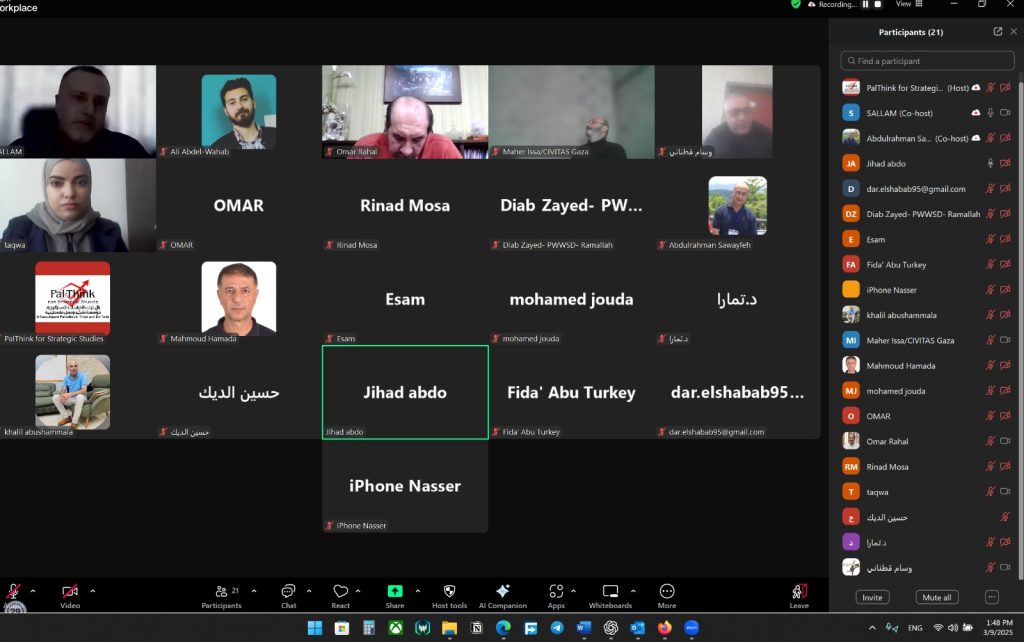
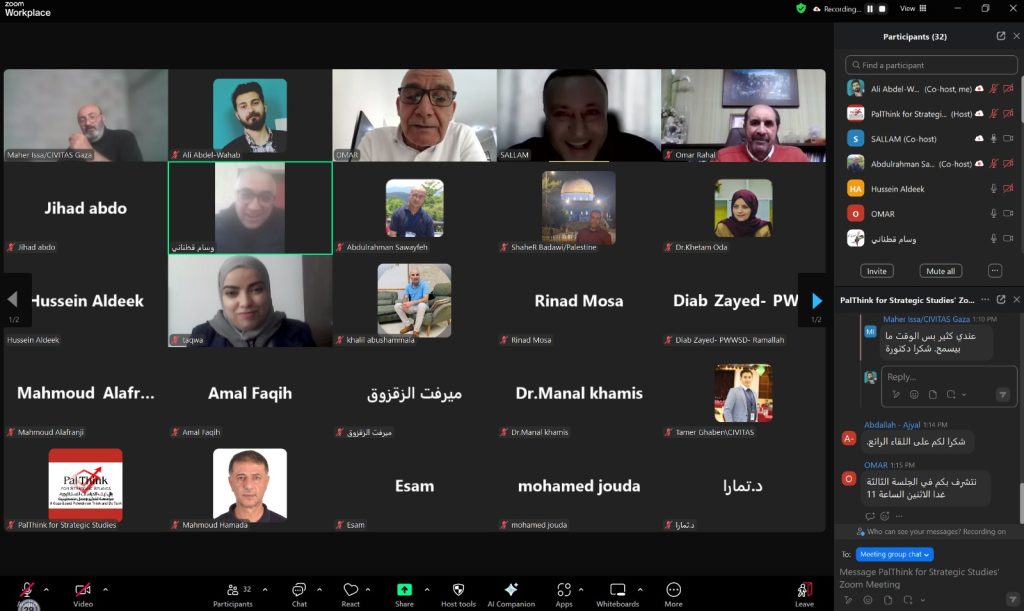
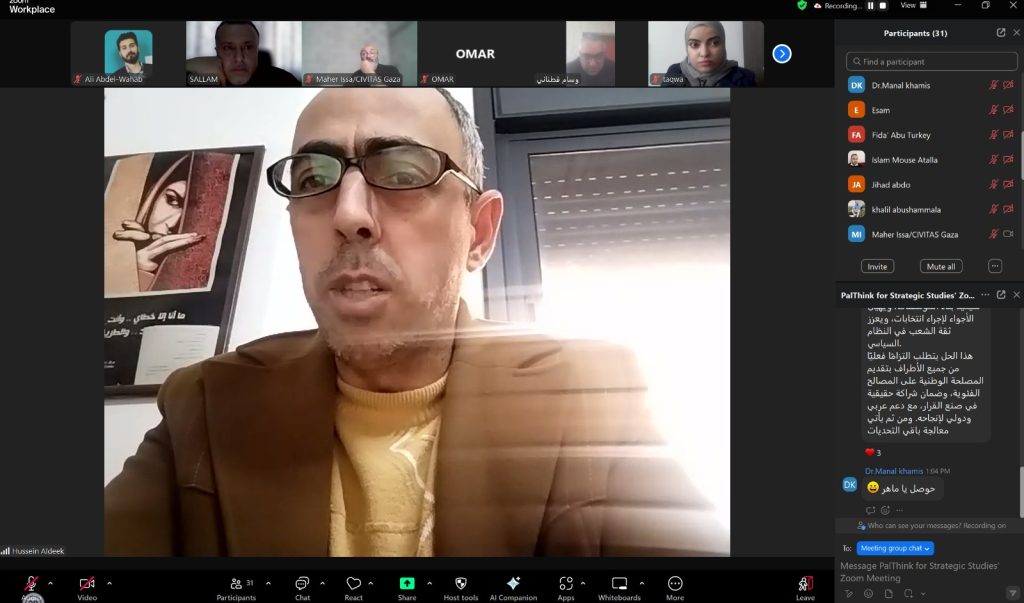
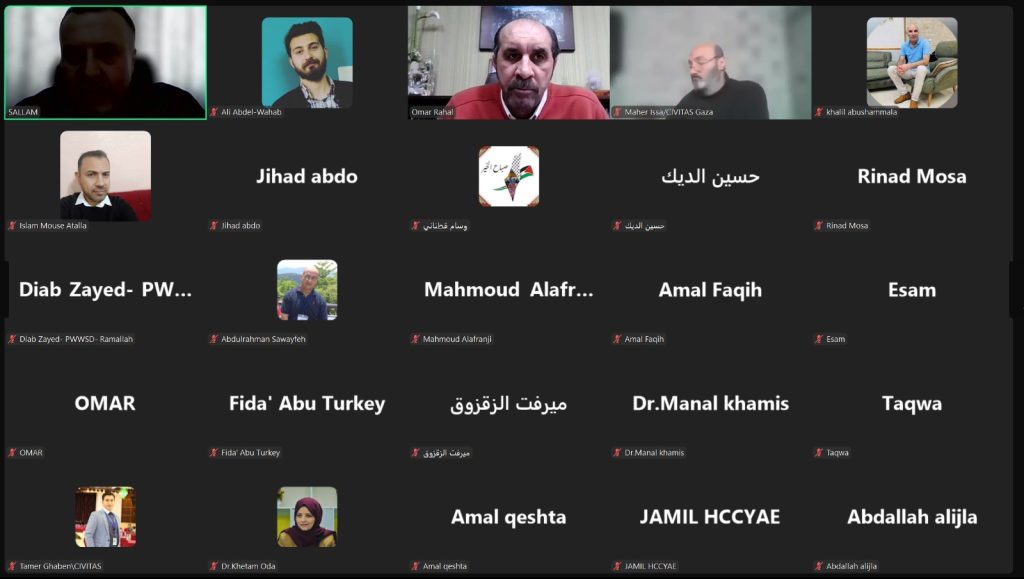
The session convened on Sunday 9 March 2025, with the participation of more than 30 researchers and interested attendees from different specialisations via Zoom. The discussions took up two principal axes: reform of the Palestinian political system, and economic integration among the different Palestinian regions amid the political and economic changes.
The first paper, titled “A forward-looking vision for reforming the Palestinian political system”, prepared by Dr Maher Issa and Dr Omar Rahhal, addressed the chief challenges obstructing the development of the Palestinian political system, focusing on rebuilding political legitimacy, activating the Palestinian institutions, and guaranteeing a fair distribution of economic resources. The paper recommended reviewing the economic and commercial legislation and fostering a fairer environment that prevents monopoly and strengthens development opportunities across the sectors, including religious tourism and the environmental economy.
The second paper, titled “The economy of shared opportunities — shaping a unified economic future between Jerusalem, Gaza, and the West Bank”, prepared by Dr Raed Helles, Taqwa al-Balawi, and Abdel Rahman Sawaifa, addressed the mechanisms for achieving Palestinian economic integration despite the political challenges — stressing the importance of revisiting the Paris economic protocol, addressing the restrictions imposed on trade and the crossings, and investing Palestinian natural resources such as the water and the gas fields off Gaza. The paper also set out ways to strengthen human development and draw on national competences to support the productive sectors, and to move toward an integrated green economy that supports small enterprises and contributes to sustainable development.
The round table closed with a series of discussions on the ways of achieving effective political reform that supports Palestinian economic integration, with emphasis on continuing research into these issues by preparing further policy papers and organising dialogue sessions that contribute practical recommendations to Palestinian decision-makers. The session also produced a set of essential recommendations, chief among them: pushing toward legislative and administrative reforms that redistribute resources and wealth fairly; focusing on investing Palestinian natural resources instead of depending on external markets; reviewing the Paris economic protocol and finding alternatives to strengthen Palestinian financial independence; strengthening e-commerce and technological investment to counter the restrictions imposed on movement and trade; and developing policies to support green economic development and stimulate small and medium enterprises.
This event flows from the importance of the aforementioned project in strengthening Palestinian civil society's role in policy-making by building a coalition of Palestinian community organisations and organising round-table sessions that discuss vital political and social issues. Through these activities, research papers will be produced that contribute practical solutions to the challenges facing Palestine. The project will also help deliver the policy recommendations decision-makers need, strengthening the chances of achieving the required reforms across the different aspects of Palestinian life.